
France in 14-days? Are you planning a trip to France? If so, chances are Paris will be your first stop. Okay, you can do Paris in 7 days. But if you really want to fully engage with Paris as well as other areas in France, then there is no way you can do it in a 7-day French itinerary. Therefore, this post contains a 14-day itinerary, 7 days in Paris as well as some additional recommendations on places to visit in France for your second week.. When visiting France, you will simply need more than 7 days.
Contents
- 1 Our Experience for a France Two Week Itinerary
- 2 Itinerary Part 1: France in 7 Days - Paris Only
- 3 Ten Great Photo Spots in Paris
- 3.1 Jardin du Luxembourg
- 3.2 The Eiffel Tower: Background, Climbing Options, and Dining Experience
- 3.3 Next is the Galleries Lafayette, a Real Hidden Gem
- 3.4 The Musée d’Orsay Is One of Paris’s Most Beloved Museums
- 3.5 Next, the Sacre Coeur Basilica of de Montmartre
- 3.6 Moulin Rouge
- 3.7 The Louvre Museum in Paris
- 3.8 The Notre-Dame Cathedral and Saint-Chapelle; Both on the Île de la Cité
- 3.9 The Statue of Liberty in Paris?
- 3.10 And Finally, the L'arc de Triomphe
- 4 Paris Day 8 Optional - Plan a Day Trip to the Loire Valley in Central France or the Versailles Palace
- 5 Week 2 of Your 14-Day France Itinerary
- 6 Option 1: NW France - Normandy & Brittany
- 7 Option 2: 7 Days Bordeaux in Southwestern France
- 8 Option 3: The Grand Arc of Eastern & Southern France
- 8.1 #3.1 Provence: Sunlight, Scenery & Timeless Villages
- 8.2 #3.2 Côte d’Azur: Mediterranean Glamour & Coastal Beauty
- 8.3 #3.3 Lyon: France’s Gastronomic Capital
- 8.4 #3.4 Chamonix: The High‑Alpine Adventure Capital
- 8.5 #3.5 Dijon: Burgundy’s Elegant Capital
- 8.6 #3.6 Reims: The Capital of Champagne
- 8.7 Options How to Explore the Grand Arc of Eastern & South France
- 8.8 Option 3A: Provence & Cote d'Azur Road Trip:
- 8.9 Here is Our Suggestion How to Spend 7 days on Your Provence & Cote d'Azur Road Trip:
- 8.10 Option 3B: River Cruise: Avignon to Lyon
- 8.11 Option 3C: Lyon, Chaminox-Mont Blanc and The Champagne Region Road Trip
- 9 Alternative Places to Visit in Other Parts of France
- 10 Conclusion:
Our Experience for a France Two Week Itinerary
Over the years, Cos has traveled to Paris, the French Capital, many times, sometimes on vacation, but mostly on business. He made his first visit in 1973 and had an incredible dinner experience at the famed La Tour d'Argent restaurant overlooking the Notre Dame Cathedral.
France is truly a wonderful country with a rich history. Since the COVID pandemic in 2020, Cos and Robin have made three trips. The first, in 2021, covered Paris, Bordeaux, the Seine River from Paris to Normandy, as well as the Loire Valley. The second, in 2022, was to Alsace-Lorraine on a river cruise on the Rhine and a separate visit to the Côte d'Azur (i.e., French Riviera) and Provence. And the third, in 2024, the "piece de la resistance", was a second visit to Bordeaux and a return to Paris, this time for the Paris 2024 Olympics. While each trip had its "best ever" moments, there was no question that the combination of the Olympics in this Parisian venue, which maximized the iconic venues as a backdrop, was like no other.
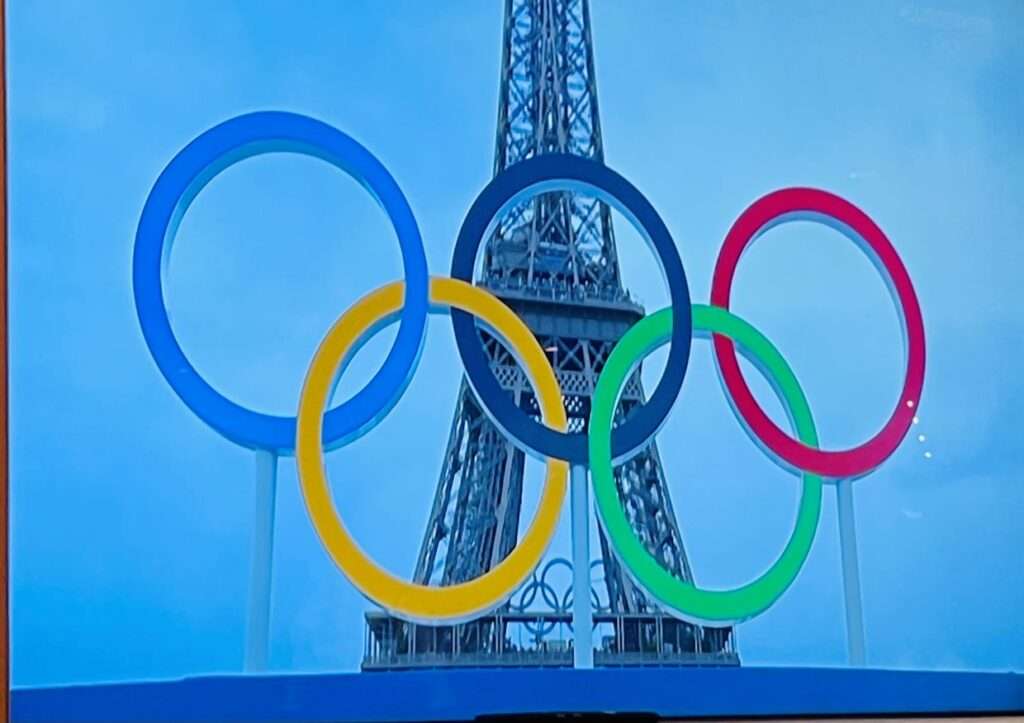
However, they are not finished with France. They plan to return in the fall of 2026, and will spend time in Paris, then once again down to Provence and visit Arles and Avignon. But this time they will travel up the Rhône River to Lyon, visit Chamonix, then Dijon and Reims in the Champagne Region, and end their French tour, after visiting neighboring Luxembourg and Belgium, in Britany on the West Coast. What a trip; stay tuned for their new posts on this 2026 visit.
Itinerary Part 1: France in 7 Days - Paris Only
Okay, we will start with Paris. Paris in 7-days is doable. But there is so much to do in Paris, that if you only plan for 7-days, you will definitely feel that you left too early. Nevertheless, given that many of our readers are not as fortunate as we are to spend extra time, as we are retired, we recognize that 7 days may be your travel limit. Therefore, given 7-days, following below are our ideas on when, where and what to do in Paris.
When to Visit Paris?
As the popular song "I Love Paris", written by Cole Porter, and made famous by Bing Crosby, Frank Sinatra and Maurice Chevalier, says "I love Paris every moment, every moment of the year". If you can love Paris every moment of the year, than we assume you can go there any time of the year. Not just in the high season. Why not? While, it "sizzles" in the summer, we recently visited in July and August (Paris 2024 Olympics) and it was wonderful. Spring and fall are perfect times, and even when it "drizzles" in the winter it can be wonderful. Therefore, the best time to visit Paris is anytime, perhaps even in the winter when there are fewer people.
Where to Stay in Paris?
Ideally, when you visit any city you usually will want to stay close to or in the city center. That may not necessarily be the best idea in for in the "City of Light". There are a number of reasons.
First, Paris does not necessarily have a true city center, the city is fairly spread out. Unfortunately, most places to stay between the Eiffel Tower and the Notre Dame Cathedral will likely be expensive. Also, if you want to stay in a luxury hotel there, like the Four Seasons/George V Hotel, which we visited, they are very expensive, much more than $1000 per night.
Second, we strongly recommend using the Metro (see below). It is safe and easy to follow once your get your bearings and will get you to wherever you want to go in the city. we use it extensively when we are in Paris.
We have stayed on the east-side of Paris in Vincennes, on the west-side in La Defense and on the left-bank in the area of Montparnasse, all considered on the outskirts. We have also visited Montmartre, where the Sacre Coeur Basilica of de Montmartre is located. It too can be a convenient place to center your visit.
If you are a foodie, like us, then you may want to decide where to stay based on the restaurants where you might want to eat. There are great local restaurants all over Paris, so this may not help you choose a place to stay. We constantly remarked that the French restaurants really know how to cook even the simplest meals with a flair. In any case, go local, no need to eat at any of the many US fast-food restaurants that are all over Paris. Please check out some our recommendations for best places to eat in our Restaurants Post.
Paris, France: What to do in 7-days?
There is so much to do in Paris that the only way we can make a good recommendation about a 7-day itinerary is to know your preferences. Do you like museums? Or, do you like to go shopping? Do you like to check out the wonderful architecture and spend some time in the beautiful gardens? Do you want to visit famous churches and cathedrals? Are you like us and want to see the famous people buried in the Pere-Lachaise Cemetery?
Since, there are so many things to do, check out all our photos and plan your own 7-days. Also, make sure to check out all the tours and activities that can be easily arranged with a tour guide through Get Your Guide. Click Below:

The best way to see Paris. Get Your Guide has hundreds of tours and adventures that you can do while in Paris, or a day trip from Paris. Check them out here.
How to Get to Paris
Paris is one of the most easiest places in the world to travel to. As the Capital of France, it is also the main entry point into the city. There are two main ways to travel to Paris:
1. Flying (Best for long‑haul travel)
Flying is the fastest and most common way to reach Paris from North America, Asia, Oceania, Africa, and South America. Paris has three airports, each with different strengths. Here are the specifics of the three airports and the best ways to get into the city.
-
Charles de Gaulle (CDG) — Main international hub; best for most global routes.
-
RER B train to city center: 35–40 min, ~€14
-
Taxi: €50–70 flat rate
-
-
Orly (ORY) — Smaller, easier, often cheaper for certain airlines.
-
Metro Line 14 direct: ~25 min, €14
-
-
Beauvais (BVA) — Budget carriers only; far from Paris.
-
Shuttle to Porte Maillot: ~1h 15m
-
2. High‑Speed Train (Best for European travel)
If you’re already in Europe, trains are almost always the smartest choice — fast, comfortable, eco‑friendly, and they drop you directly in central Paris. If entering from the North, you will arrive at the Gare du Nord train station.
Key routes:
-
London → Paris (Eurostar): 2h 16–20 min, from ~€44 one‑way if booked early
-
Brussels → Paris: ~1h 20m
-
Amsterdam → Paris: ~3h
-
Geneva, Zurich, Milan, Barcelona via TGV/Eurostar extensions
Why trains are great:
-
No airport security lines
-
City‑center to city‑center
-
50× lower CO₂ emissions than flying
-
Comfortable for families and couples
How to Get Around Paris?
If this is your first visit to Paris, when you first arrive, consider doing a hop-on, hop-off bus tour or river cruise on the Seine. Either will give you a general idea of the city and will provide a great view of the City of Lights. In Paris, we recommend the Big Bus Tours, as they will point out most of the recommended tourist locations.

Paris is a large city with so much to do. If first time to the city, explore the city from up high, with a one or two day tour around the city on the double decker big bus.
Once, you get a hang of the difference between the left and right banks, and the various neighborhoods (called arrondissements and numbered) then you are now prepared to take the Metro to move around the city. Paris has perhaps the best public transport system in the world, and it is one of the best things in Paris. Taking the Metro is the best way to get around Paris. Even though the single trip cost was raised to four euros during our visit for the 2024 Olympics, it was well worth it for the convenience of getting to the Olympic events. During the Olympics, there was a very heavy armed police presence which made the subway seem incredibly safe, although we found the system to be safe whenever we visited. Like everywhere else, just be sensitive to your surroundings, avoid dark or poorly lit areas, and you will be fine.
Ten Great Photo Spots in Paris
Paris has some of the best "Instagram-able" photo places in the World. Please enjoy 10 of our favorites as you spend your seven days in Paris. :
Jardin du Luxembourg
Here is our new favorite, Jardin du Luxembourg, from our recent trip to the 2024 Paris Olympics. We were simply doing a walking tour around the left bank near Montparnasse when we discovered the beautiful and peaceful garden. Great place to have a picnic lunch, which many did.
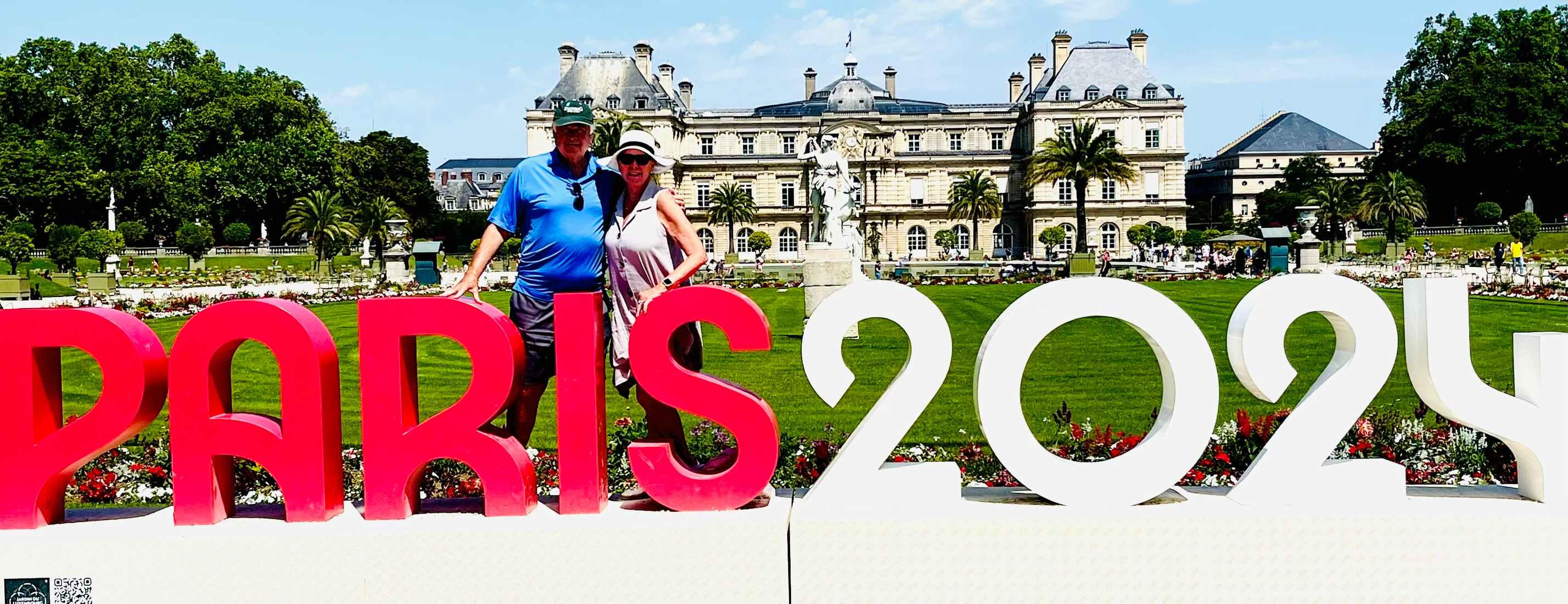
There is no question about it, it is a beautiful garden and a hidden gem that we didn't even plan to visit. We just stumbled on it. Here are some of our other favorite main attractions mostly from our previous trips to Paris. Plan your own 7-day itinerary around these various beautiful places.
The Eiffel Tower: Background, Climbing Options, and Dining Experience
The Eiffel Tower (La Tour Eiffel) was built for the 1889 Exposition Universelle, a world’s fair celebrating the 100th anniversary of the French Revolution. Designed by Gustave Eiffel, the tower was originally meant to be temporary, yet it quickly became the defining symbol of Paris. Standing 330 meters tall, it remains one of the most visited landmarks in the world, admired for its iron lattice architecture, sweeping views of the Seine, and its role as a cultural icon featured in countless films, artworks, and travel dreams.
Visitors can experience the tower in several ways, including walking up the stairs or taking the elevators. The stairs are open to the second floor, and climbing them is a surprisingly fun, energetic way to appreciate the structure’s engineering up close. It’s about 674 steps, but the ascent is broken into manageable sections with viewing platforms along the way. Elevator tickets take you either to the second floor or all the way to the summit, where panoramic views stretch across Paris — from Montmartre and the Arc de Triomphe to the Champ de Mars below. Many travelers enjoy visiting in late afternoon so they can see the city in daylight, then watch the tower sparkle after sunset.
The Eiffel Tower also has a restaurant, Le Jules Verne, located on the second floor. It’s a Michelin‑starred dining room with floor‑to‑ceiling windows and a private elevator reserved for guests. The experience is undeniably memorable — refined French cuisine, elegant service, and dramatic views — but whether it’s “worth it” depends on your travel style. If you love fine dining and want a once‑in‑a‑lifetime splurge, it’s a beautiful setting. If your priority is simply enjoying the tower and the views, you can skip the restaurant without missing the essence of the experience. Many travelers prefer to enjoy the tower itself, then have dinner at a nearby brasserie in the 7th arrondissement for a more relaxed (and far less expensive) evening.
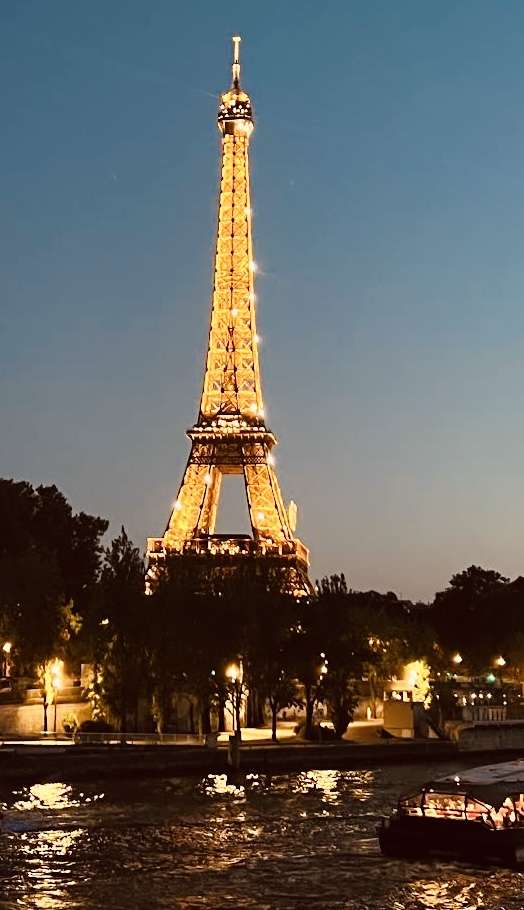
A place you must visit is, of course, the Eiffel Tower. You can get some great panoramic views of the city from the tower.
Next is the Galleries Lafayette, a Real Hidden Gem
Galleries Lafayette is one of Paris’s most iconic shopping destinations and historical buildings — a grand Art Nouveau department store that feels as much like a cultural landmark as a retail space. It is considered the best shopping mall in all of Paris. It opened in 1894, its sweeping balconies, ornate ironwork, and the famous glass dome create a dramatic interior that draws visitors even if they’re not planning to shop. Located on Boulevard Haussmann, the store spans multiple levels filled with French fashion, luxury brands, gourmet foods, and home décor. It’s a great stop for first‑time visitors who want a closer look at Parisian style or simply enjoy wandering through one of the city’s most beautiful indoor spaces. Inside, you’ll also find La Terrasse, a casual rooftop café, and several restaurants throughout the store. Dining here is pleasant, especially if you want a break during a full day of sightseeing, but it’s not considered a must‑do culinary experience compared to Paris’s many neighborhood bistros.
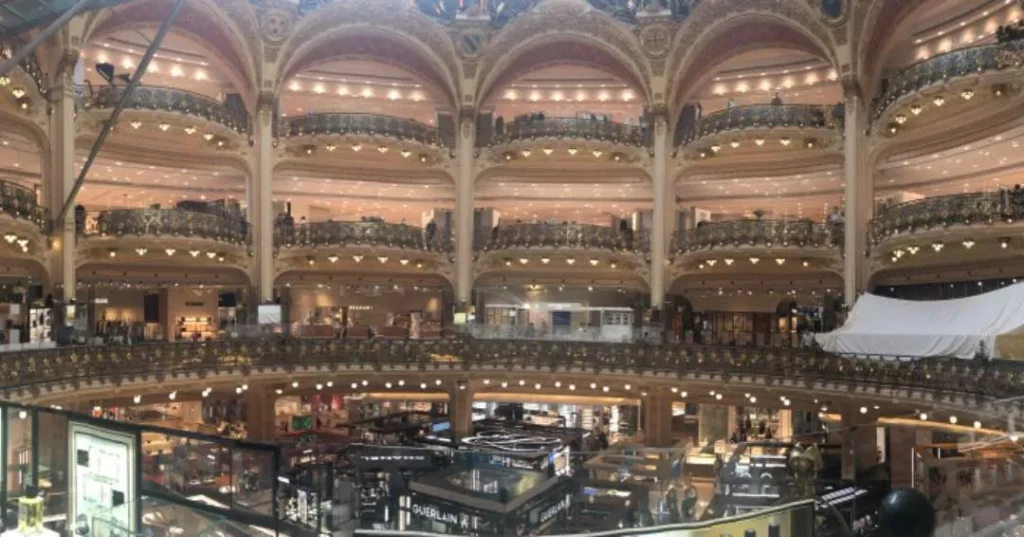
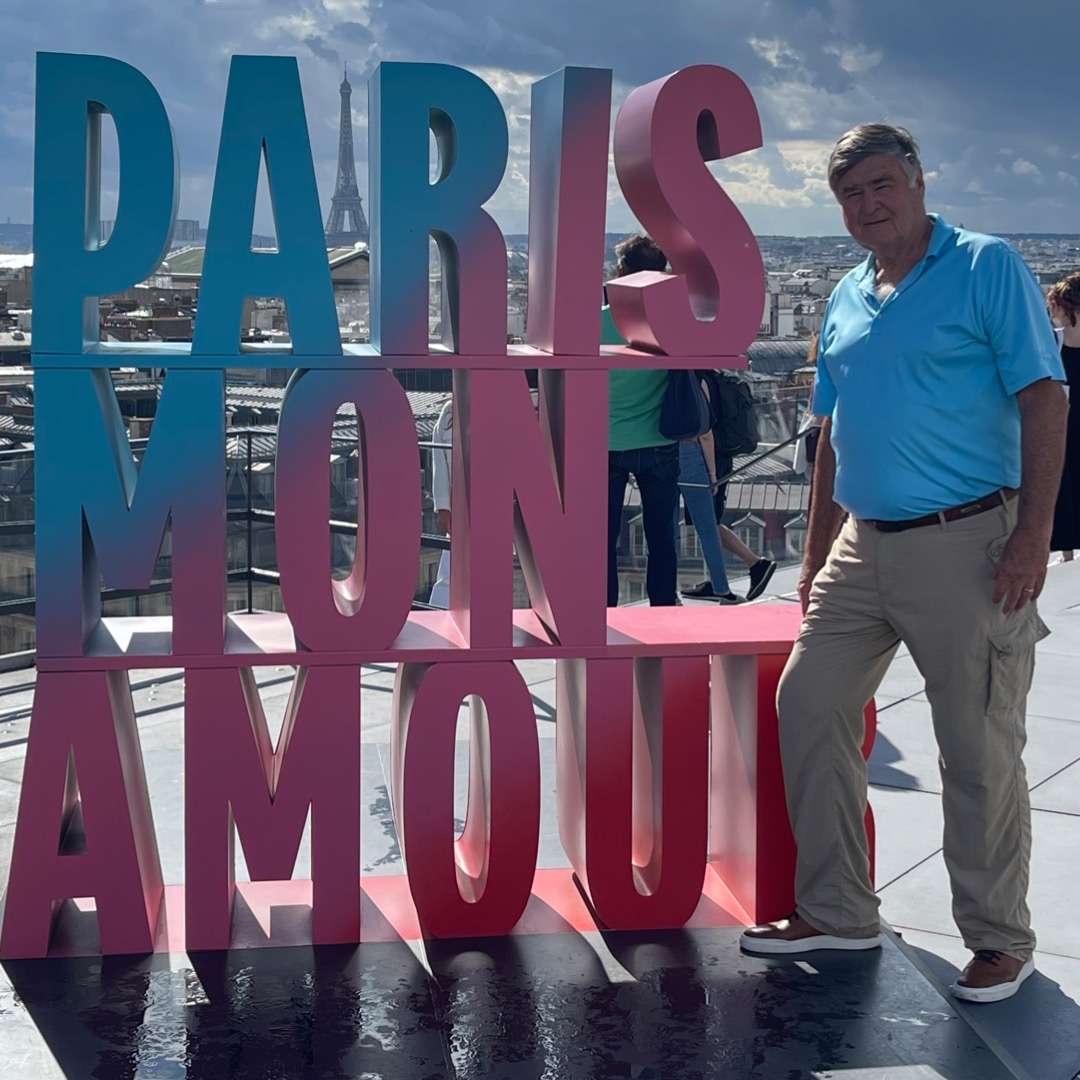
One of the highlights is the rooftop terrace, which offers free panoramic views over Paris — including the Opéra Garnier, Montmartre, and the Eiffel Tower in the distance.
The Musée d’Orsay Is One of Paris’s Most Beloved Museums
The Musée d’Orsay is a soaring Beaux-Arts railway station transformed into a temple of 19th‑century art.

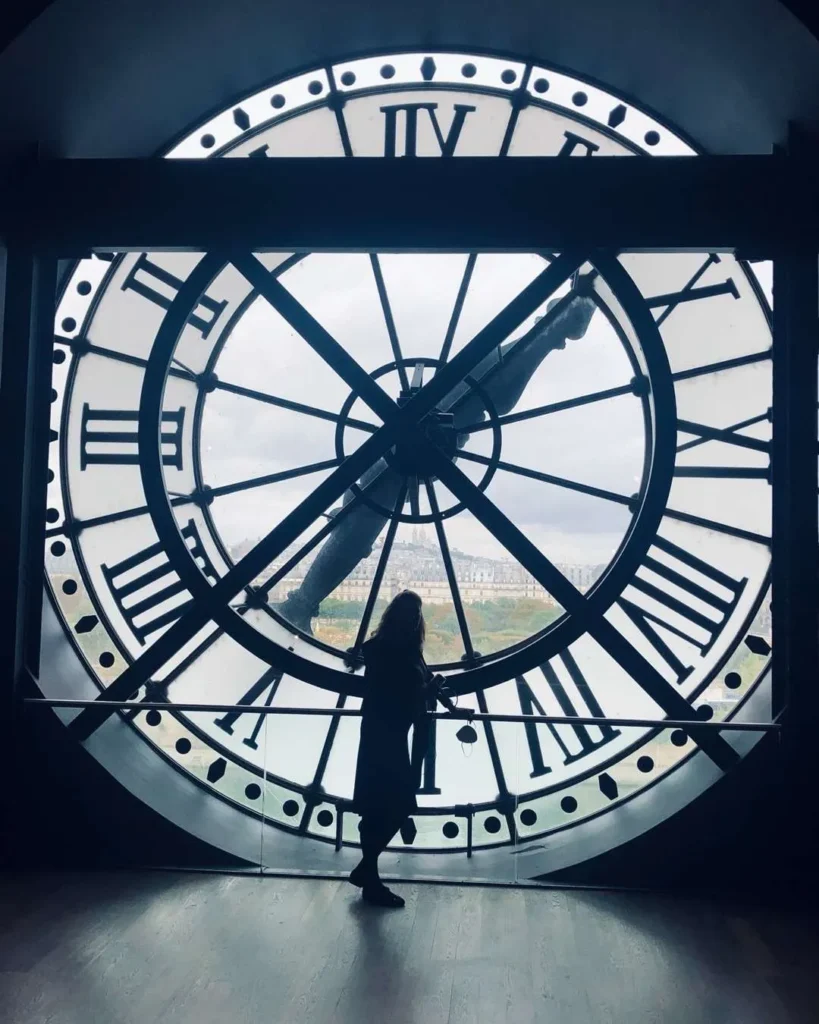
Opened in 1900 as the Gare d’Orsay, the building itself is part of the experience: its massive iron arches, glass ceilings, and grand clock windows create an atmosphere that feels both historic and cinematic.
Inside, the museum houses the world’s premier collection of Impressionist and Post‑Impressionist masterpieces, including works by Monet, Renoir, Degas, Van Gogh, Cézanne, and Gauguin. For many travelers, it’s the perfect blend of manageable size, breathtaking architecture, and iconic artworks — a great choice for a first time visit to Paris or anyone who wants a deeper look at the evolution of modern art.
A visit typically takes two to three hours, and the layout makes it easy to explore at your own pace. The upper floors offer stunning views through the original station clocks, while the central nave showcases sculptures bathed in natural light.
There’s also a café and restaurant inside, both pleasant options if you want a break during a full day of sightseeing. The museum restaurant, with its chandeliers and Belle Époque décor, is beautiful, though most travelers consider it more of a lovely convenience than a must‑visit dining destination. The real highlight is the art itself — and the chance to experience one of Paris’s most atmospheric cultural spaces.

Next, the Sacre Coeur Basilica of de Montmartre
Sacre Coeur is visible from most places in Paris and is well worth a visit. This is a gorgeous church with an outstanding view of Paris, well worth the effort. You can almost feel the presence of former artists who made this their neighborhood, from Monet to Matisse, from Toulouse-Lautrec, to Picasso.
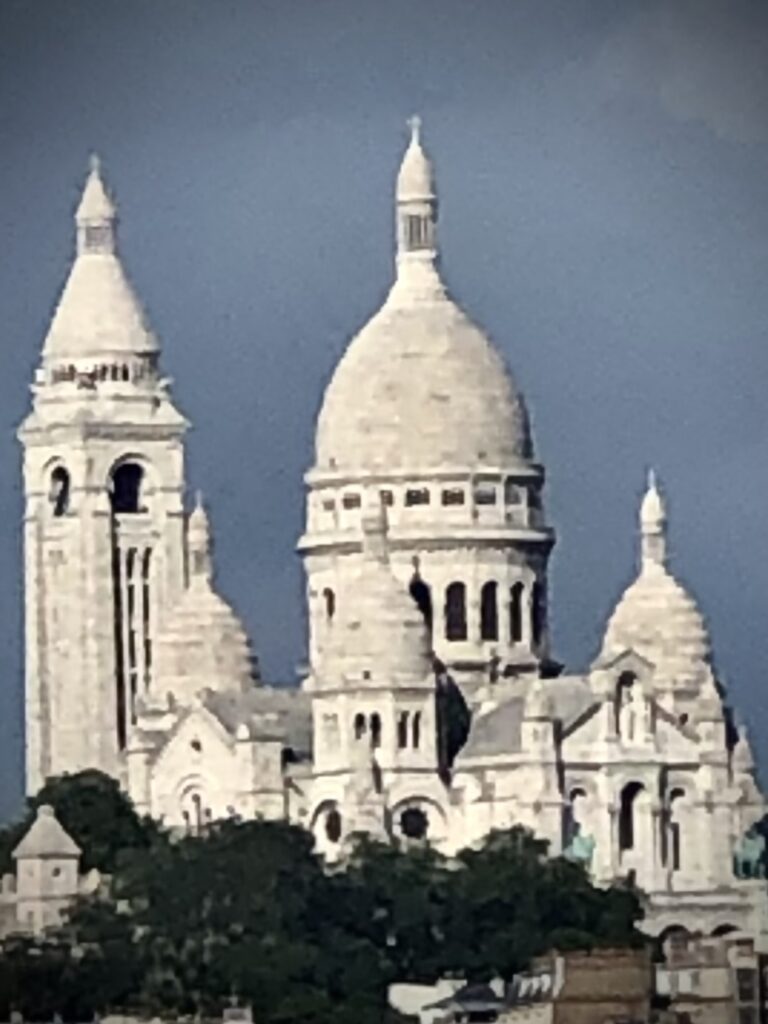
The Paris Metro is a great way to get around. However, if you take it to the Sacre Coeur, be prepared to walk up some steep stairs. Alternatively, you can take the funicular, as the Metro stops are not too close to the Sacre Coeur Church.
Moulin Rouge
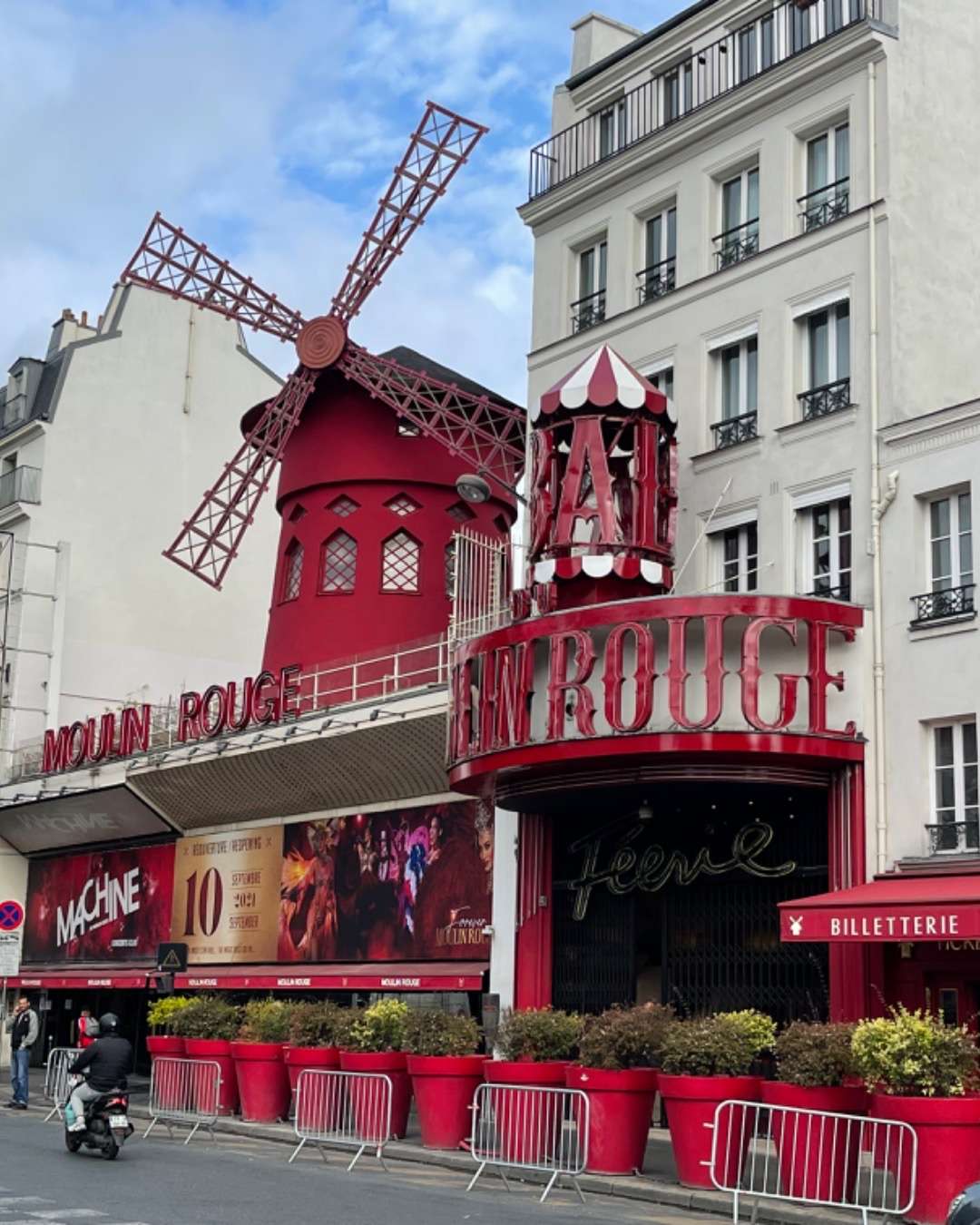
Just down the hill from Sacre Coeur is the famous Moulin Rouge, with its legendary somewhat racy Parisian cabaret performers. Made a little more famous by the Movie and the Broadway Show, it was fun to see the real thing with the windmill. If you are traveling with your family and you plan to see the show, leave the kids home as this is the raciness is the real thing.
The Louvre Museum in Paris
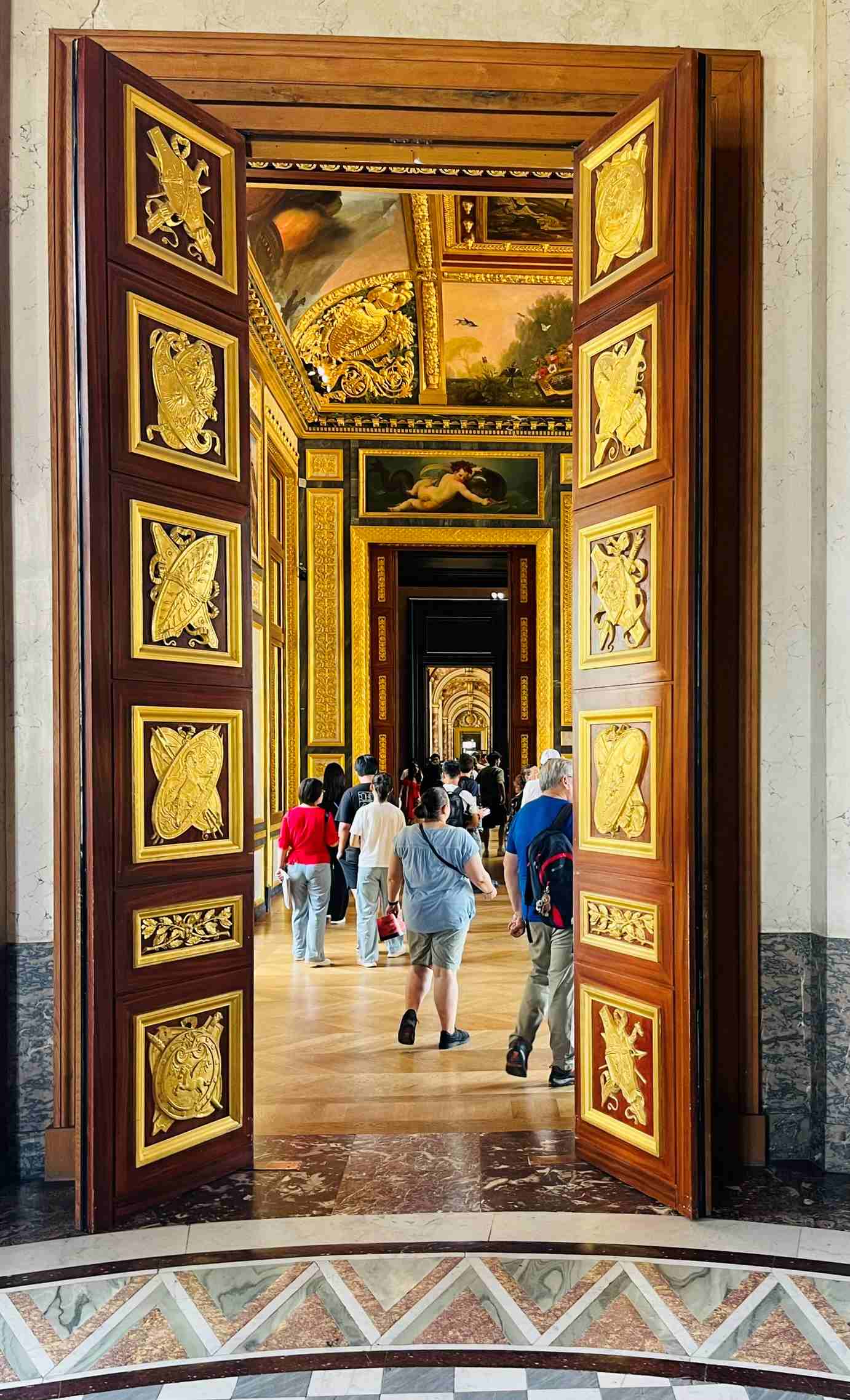
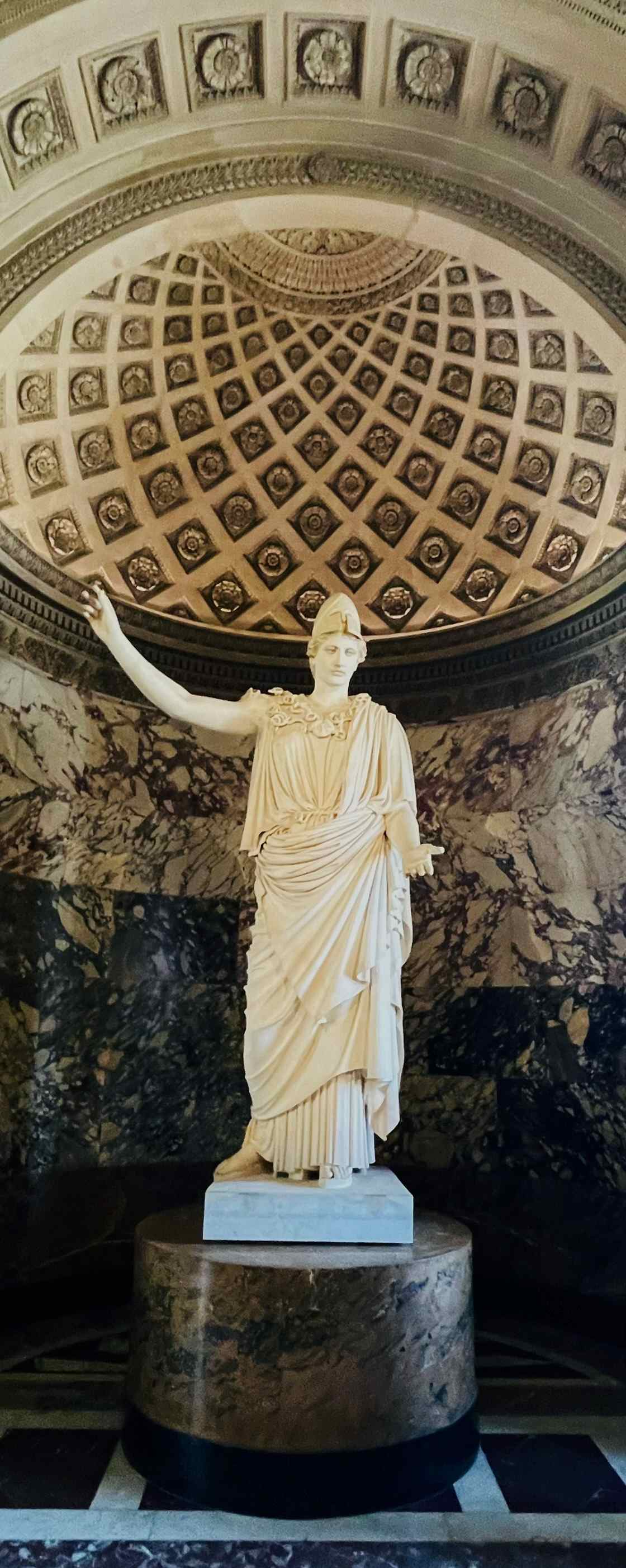
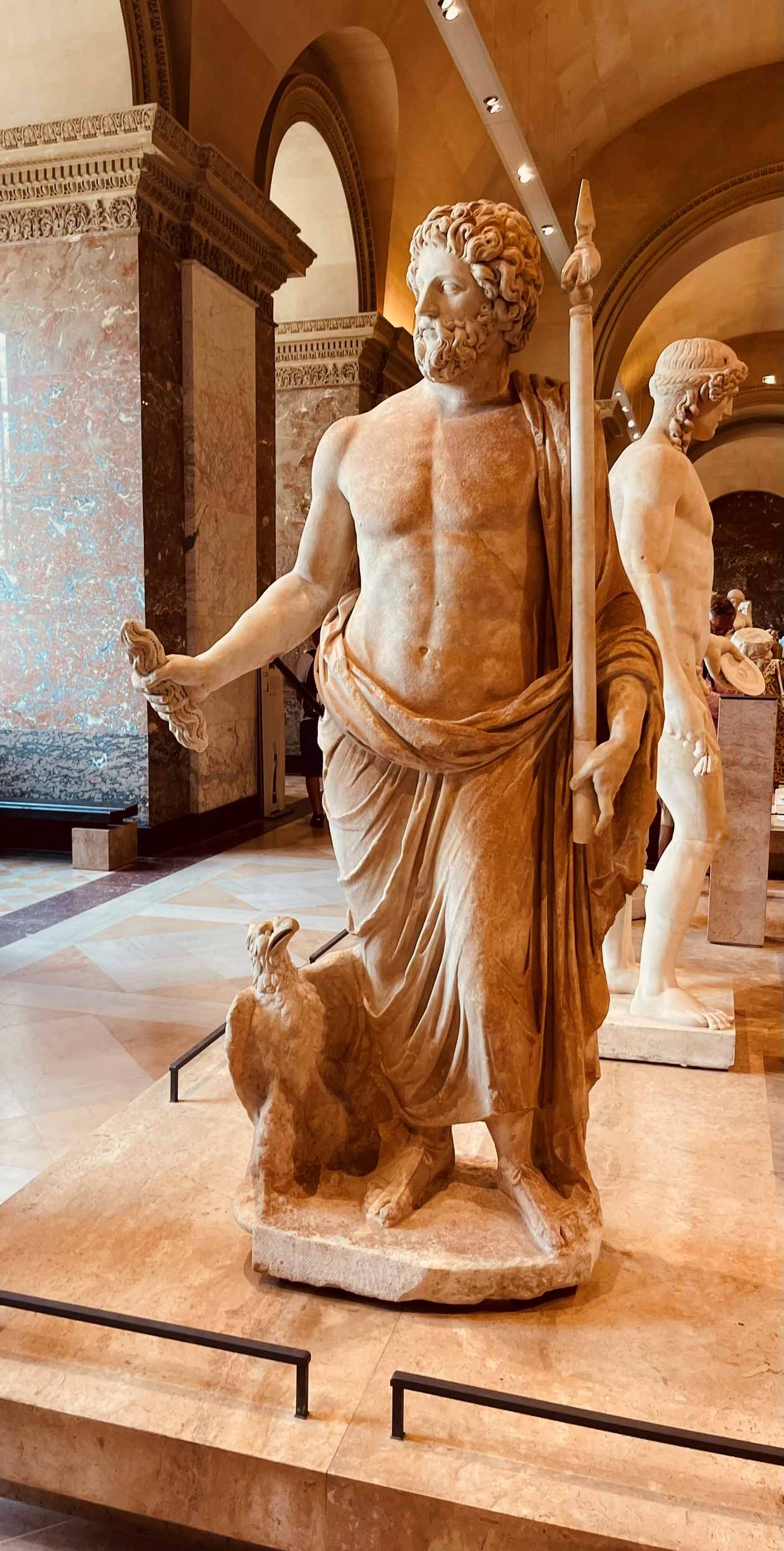
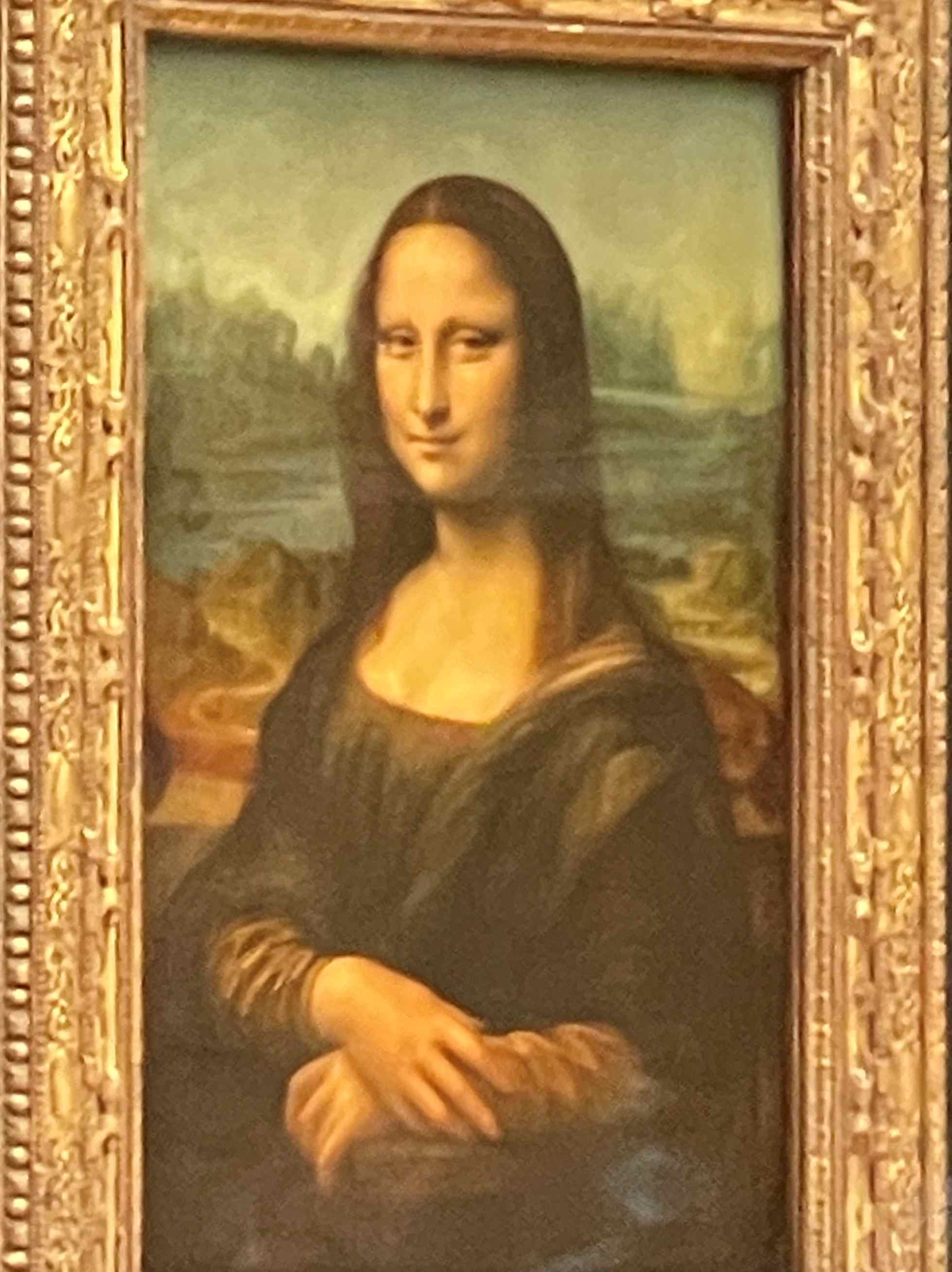
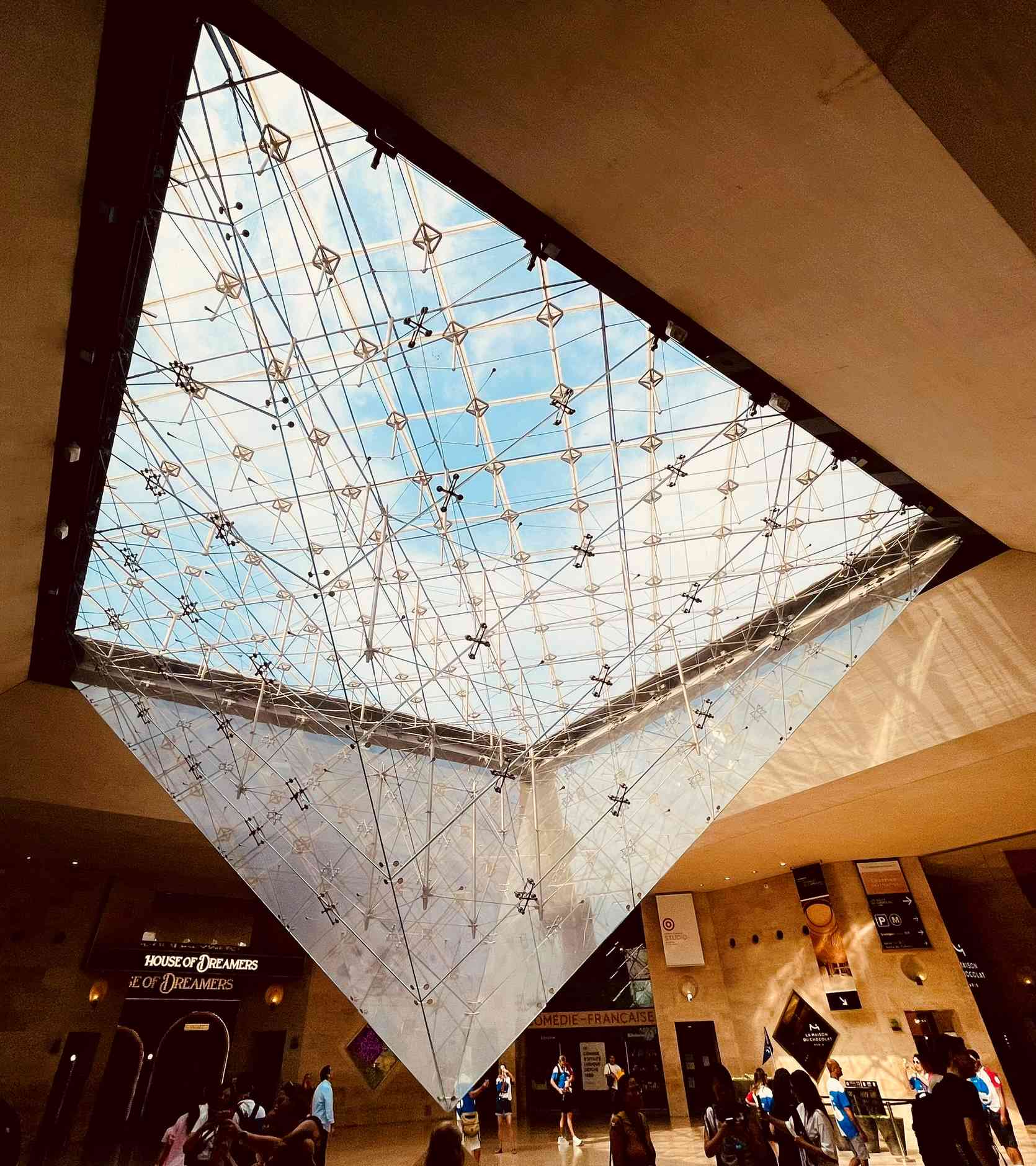
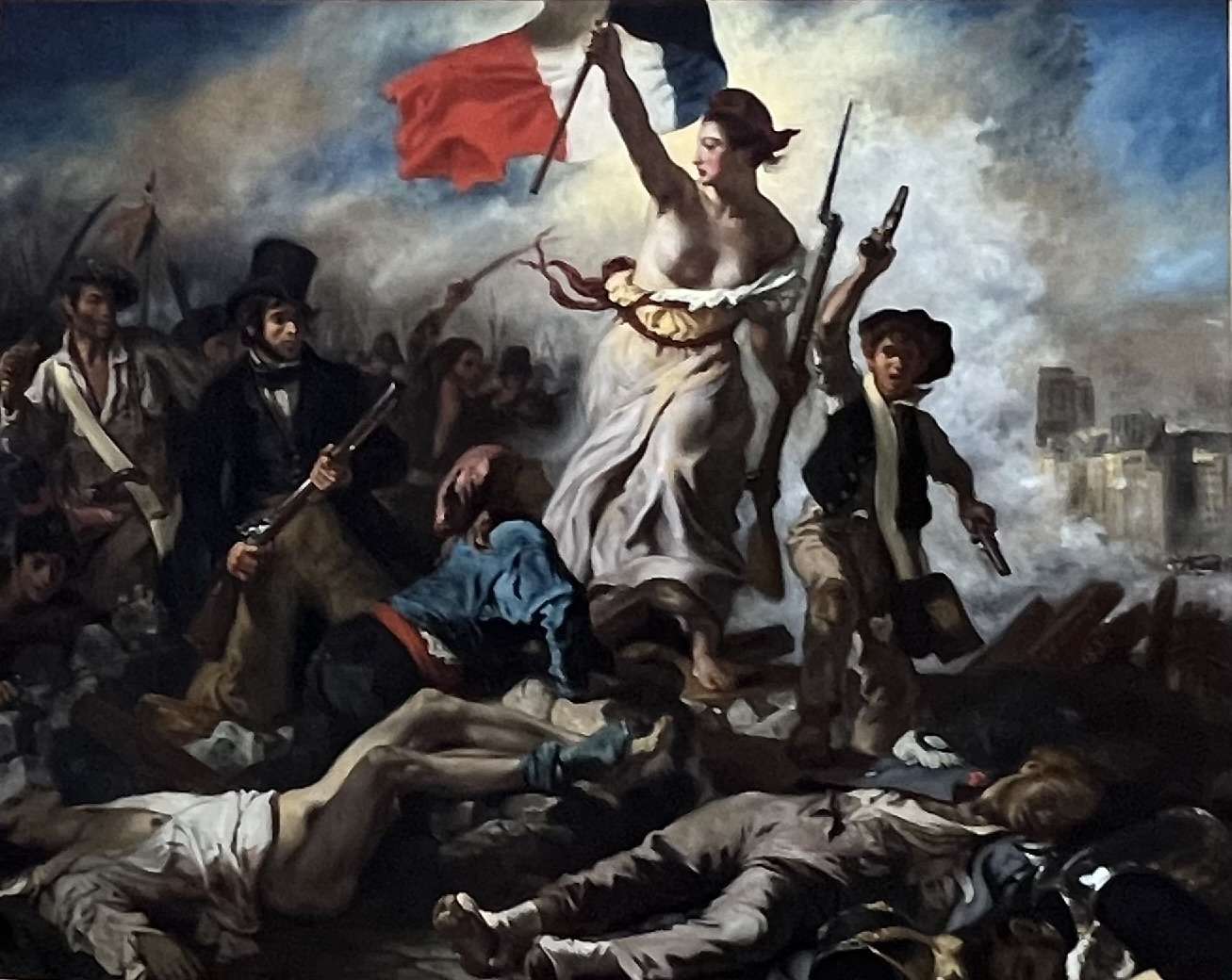
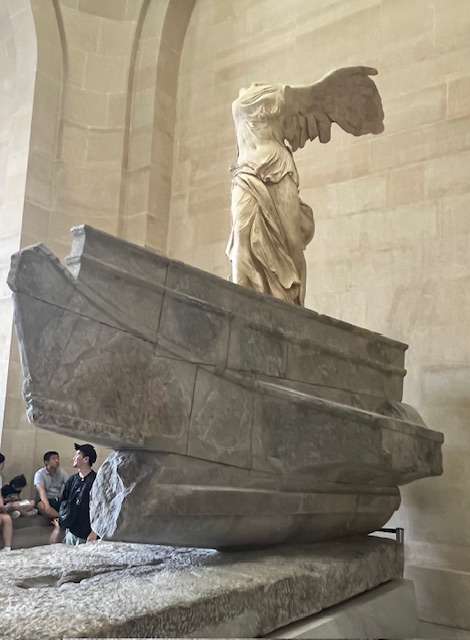
One of the truly great places to visit in Paris is, of course, the Louvre Museum. We did visit the Louvre Museum in both 2022 and 2024. We took a guided tour in 2024, which clearly made all the difference. In many ways, this tour introduced us to parts of the Louvre we had never seen! Our tour was part of our hospitality package that we arrange at the Paris 2024 Olympics.
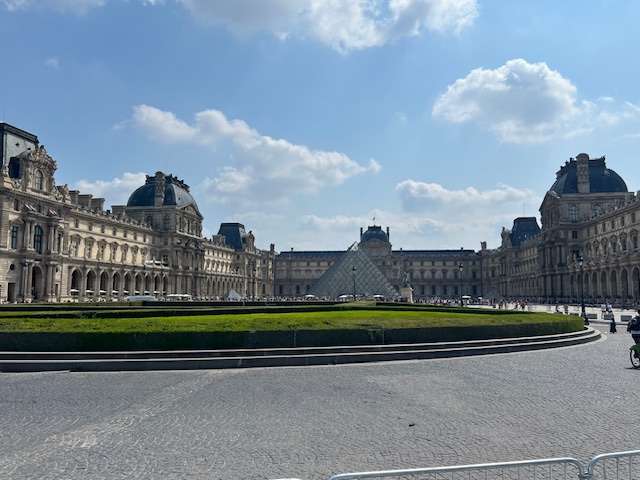
Here, are some of our favorite pictures of the museum:
The Notre-Dame Cathedral and Saint-Chapelle; Both on the Île de la Cité
Taking a guided tour on the Île de la Cité, where both the Notre-Dame Cathedral and Saint-Chapelle are located is a great way to spend an afternoon.


You can book your tour to both of these incredible churches on Viator:

Get more out of your visit to Paris with a private guided tour of the Île de la Cité and its top attractions. Choose a 2, 3, or 4-hour tour duration to suit your needs, interests, and schedule. Check out the Notre-Dame Cathedral, Conciergerie (Marie Antoinette’s prison), and Sainte-Chapelle, with different inclusions for each tour duration.
For more information about the Cathedral Notre-Dame please visit our post "50 Famous Cathedrals in Europe". While Notre-Dame didn't reopen after the fire in 2019 for the Paris 2024 Olympics as promised, it is now reopened, and still a great place to visit as one of the world's truly beautiful Gothic Cathedrals. We couldn't visit Notre-Dame when we visited Paris in 2021 or 2024, as the Cathedral we still being restored. Nevertheless, we were lucky to attend a great Vivaldi concert at Sainte-Chapelle during the evening. We took an amazing walk along the Seine River after the concert and watched the flashing lights on the Eiffel Tower; What a treat! Please see our Favorite Theaters Post for more information about Saint-Chapelle and the concert.
The Statue of Liberty in Paris?
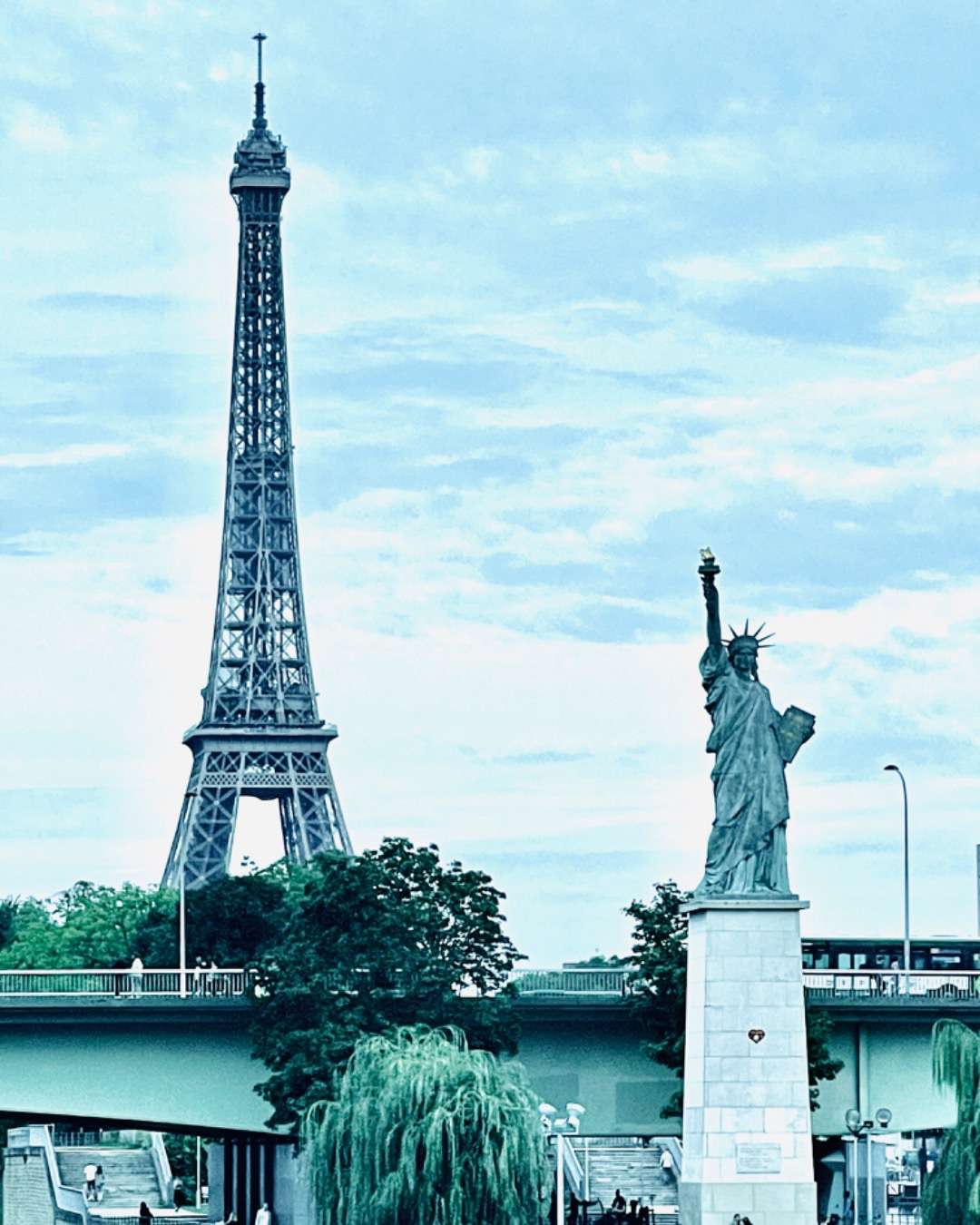
In the USA we are all thankful that France gave us the Statue of Liberty, a symbol of liberty, freedom, and enlightenment — both for the United States and for people around the world. However, we never knew that there was another one in Paris until we took the cruise on the Seine River. Who knew that there were more Statues of Liberty than the one in New York City? There are at least eight: five or six in Paris, one in Argentina, and of course NYC.
And Finally, the L'arc de Triomphe
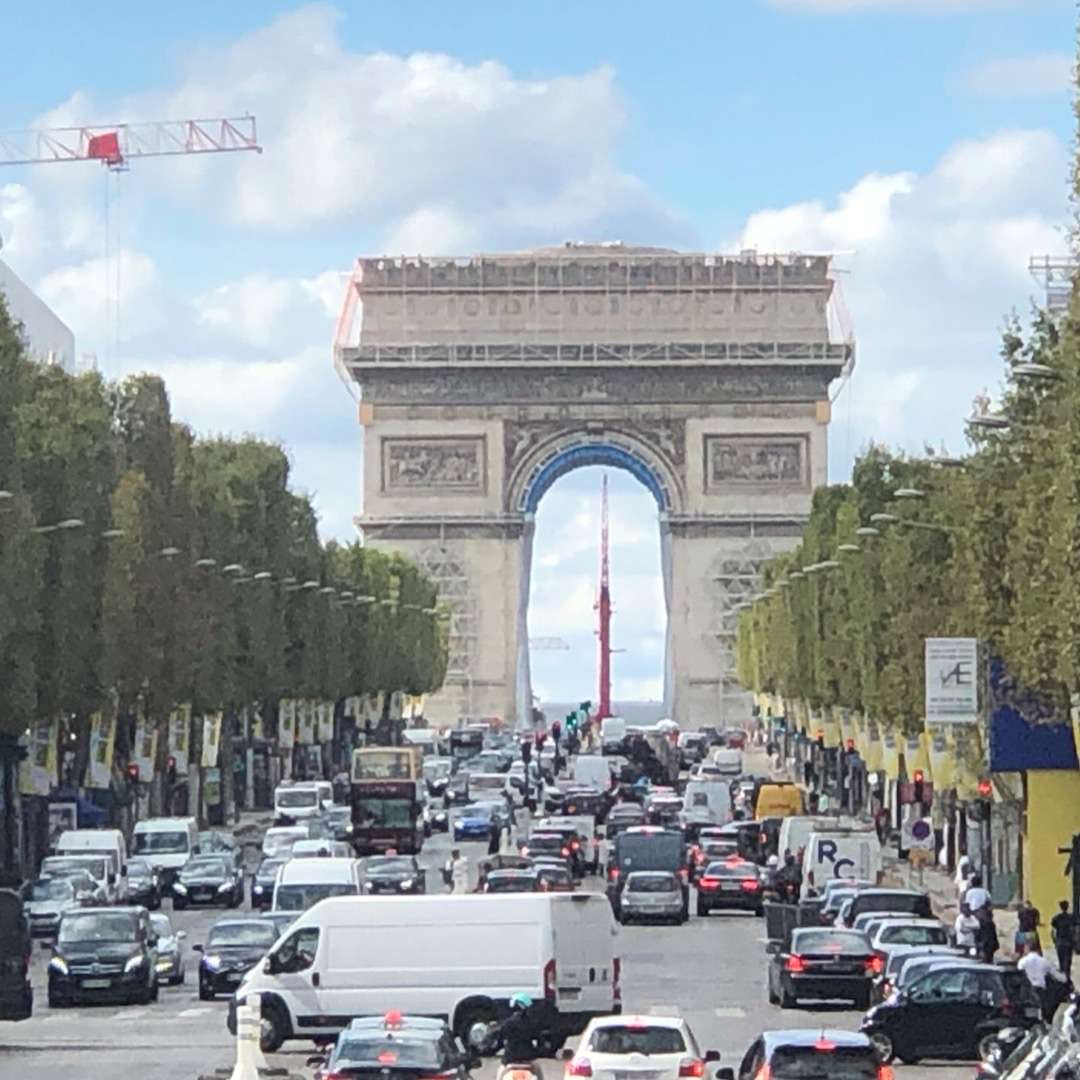
Everyone will recognize L'arc de Triomphe with the typical French traffic.
Paris Day 8 Optional - Plan a Day Trip to the Loire Valley in Central France or the Versailles Palace
Using Paris as a home base, an option you have is to spend an extra day in Paris and travel to for a one or two hour drive to either Versailles or to the Loire Valley.
Versailles Palace
A great option for a day trip is to get a private driver or take a train to the Versailles Palace and visit an absolutely unforgettable place. If you are on a budget, we recommend the train and arrange a tour when you arrive. You can book your tour with Get Your Guide, click below:

Visit the elegant Palace of Versailles on a guided tour. Skip the long lines and enter through a separate entrance.
During the Olympics, the equestrian events were staged here, a truly breathtaking venue.
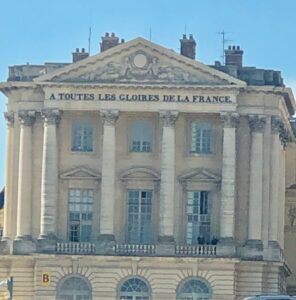


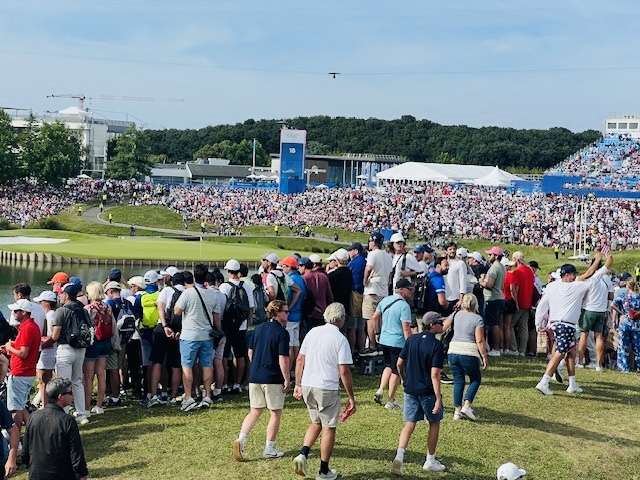
Versailles is very close to the National Golf Course where the 2024 Men's and Women's Olympic golf Championships were held. Scottie Scheffler was the Men's Champion.

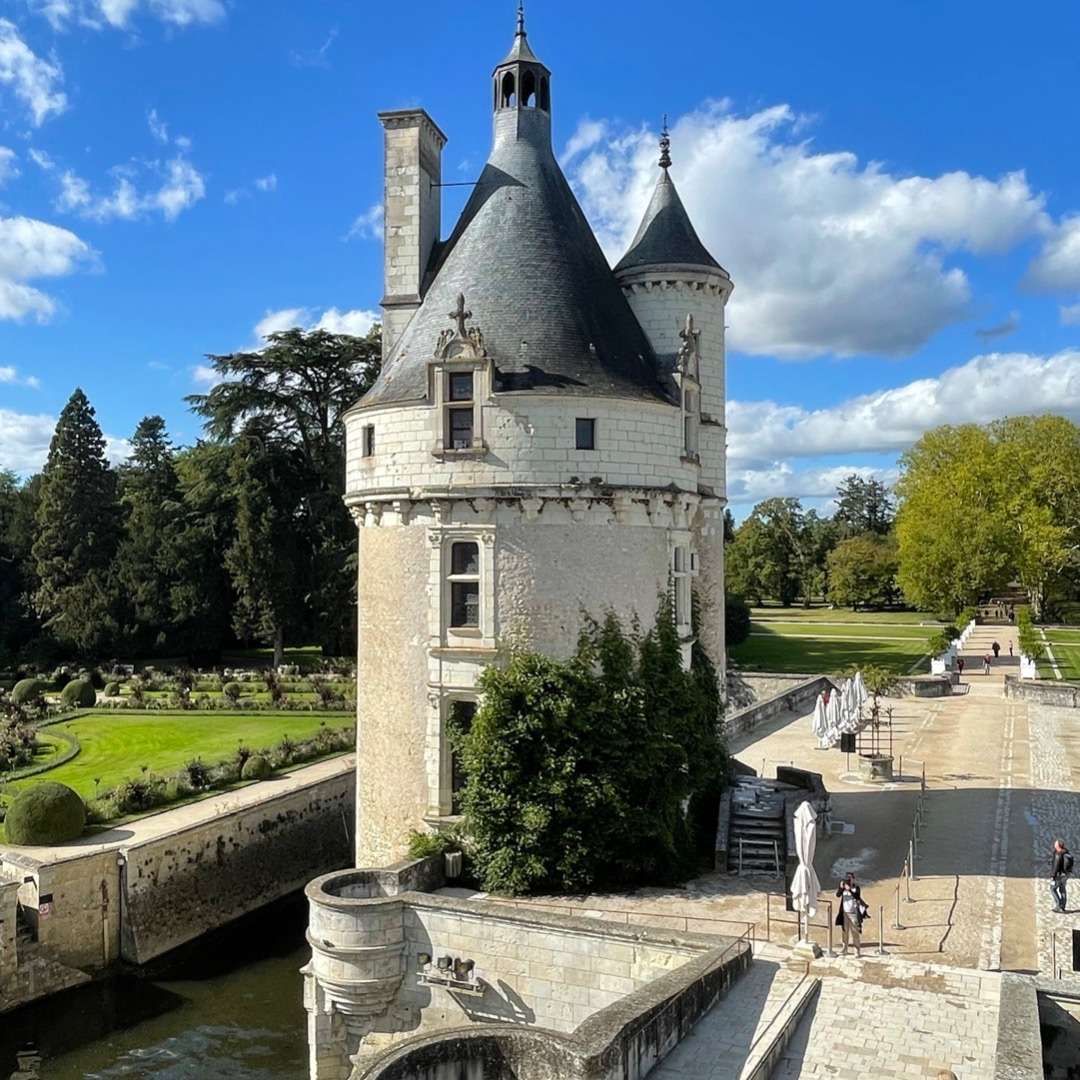
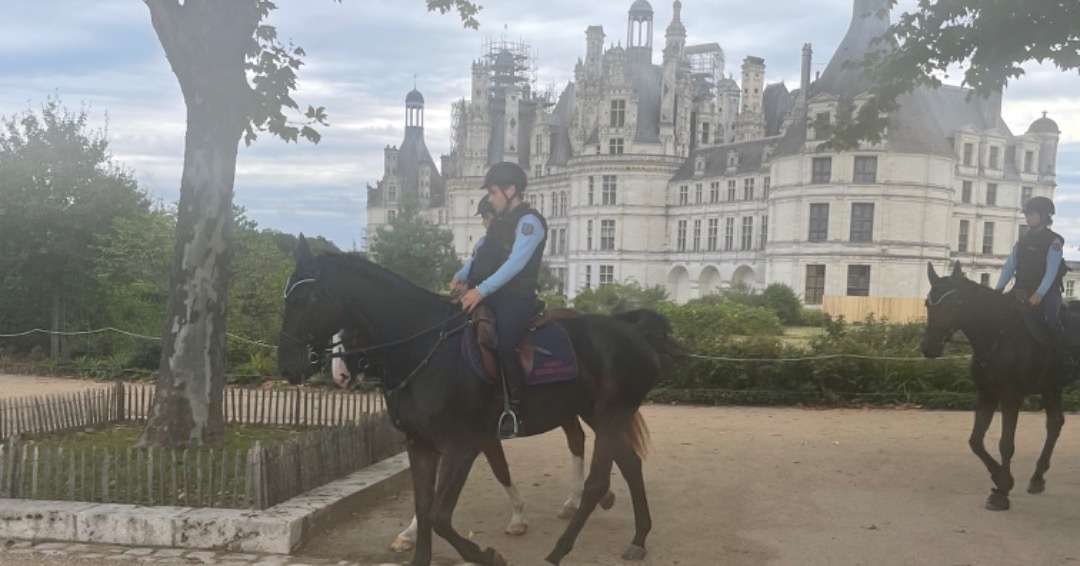
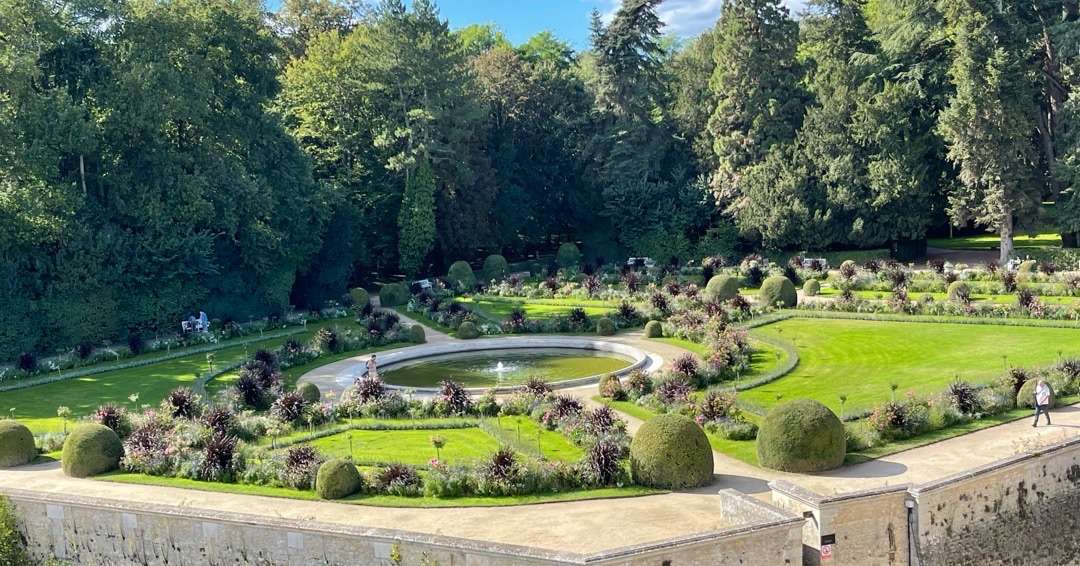
While we were Paris we took a day trip to the Loire Valley. While in the Loire Valley, we visited the Chateau de Chambord, which is probably the most well-known. We also visited the Chateau de Chenonceau, which is actually located literally on the river Cher. We visited the Loire Valley on a full day tour from Paris. It was a long day. We recommend actually going out and staying there for a few days. You will enjoy and learn even more about this beautiful area. There are some great wine areas here as well including the regions of Muscadet on the Atlantic coast and Sancerre and Pouilly-Fume in north-central France.
Loire Valley
The Loire Valley is located in the center of the country and is home to some of the grandest chateaus anywhere in the world. We found a tour on Get Your Guide that included two chateaus and a drive through the Loire Valley.

Escape Paris for a magical day in the Loire Valley. Explore fairytale castles, wander charming Blois, and enjoy a local wine tasting along the way.
Some Favorite Paris Restaurants
We were lucky to have had lunch at Michelin one starred Apicius on 9/11/2021. It was a glorious day, just perfect to sit in this garden setting behind the Champs-Elysees. We enjoyed every single bit of it, from the wine service, to the food, to the impeccable service. The garden setting is extremely pleasing to the eye and makes for a delightful ambiance. A highlight in Paris for sure.
During our 2024 visit we were able to have dinner one evening at the La Dome Cafe, the one Paris restaurant Anthony Bourdain recommended if you go nowhere else. He was right! The Maitre d set the tone, making it feel as if your attendance was long awaited. He made sure we felt special. From there, service continued to impress us (and that was before the food arrived). Top that off with an ambiance that was both comfortable and lush and you have a winner!
Benoit Paris is a classic…everything you want in a French restaurant…a Michelin star, 100 years old and located in the center of the city. For more information about French Restaurants, please see our post Bib Gourmand vs Michelin Star.
Week 2 of Your 14-Day France Itinerary
We have three different geographic options how you can spend the second week of you two week France itinerary:
- North Western France: Normandy & Brittany
- South Western France: Bordeaux Cruise
- South & Eastern France: Provence, Cote d'Azur & Champagne Regions
Option 2 is recommended as a cruise, although you could also do this area as a road trip. The two other options include a river cruise alternative, but also specify alternatives which are also road trips.
Option 1: NW France - Normandy & Brittany
We can recommend two ways of seeing this part of the western coast of France on the Atlantic Ocean. The first option (1A) involves a cruise and the second (1B) may be the best road trip in France.
Option 1A: Normandy & Seine Cruise
Robin and Cos took a 7-Day River Cruise to Normandy on the Seine River from Paris in 2021. This was undoubtedly the best river cruise that we have taken, as it was combined with a 7-Day Bordeaux cruise (see Option 2 below).
Giverny
On the way out to Normandy the cruise made a number of stops. The first was Giverny, the home of famous painter Claude Monet.


Rouen
Another Stop was Rouen. Rouen is known for its Gothic architecture, Joan of Arc history, Impressionist art connections, and its role as Normandy’s historic capital.
Rouen is inseparable from the story of Joan of Arc. She was imprisoned, tried, and burned at the stake here in 1431 at Place du Vieux‑Marché. The Historial Jeanne d’Arc museum stands in the very building where her trial occurred and she is featured on this restaurant façade.


The Cathedral at Rouen is the cities' most famous landmark. Monet was so impressed that he painted the façade more than thirty times. The Cathedral is classic Gothic and has the highest, very impressive, spire in France reaching 151 meters.

Golf d' Etretat
The last stop prior to arriving in Normandy, was the town of Etretat, a remote rural coastal area on the Atlantic Ocean. Along with two other passengers we had the opportunity to play golf at this amazing golf course overlooking the ocean. Here is a picture of the local church overlooking the cliff leading down to the ocean.

Sainte-Mere-Eglise
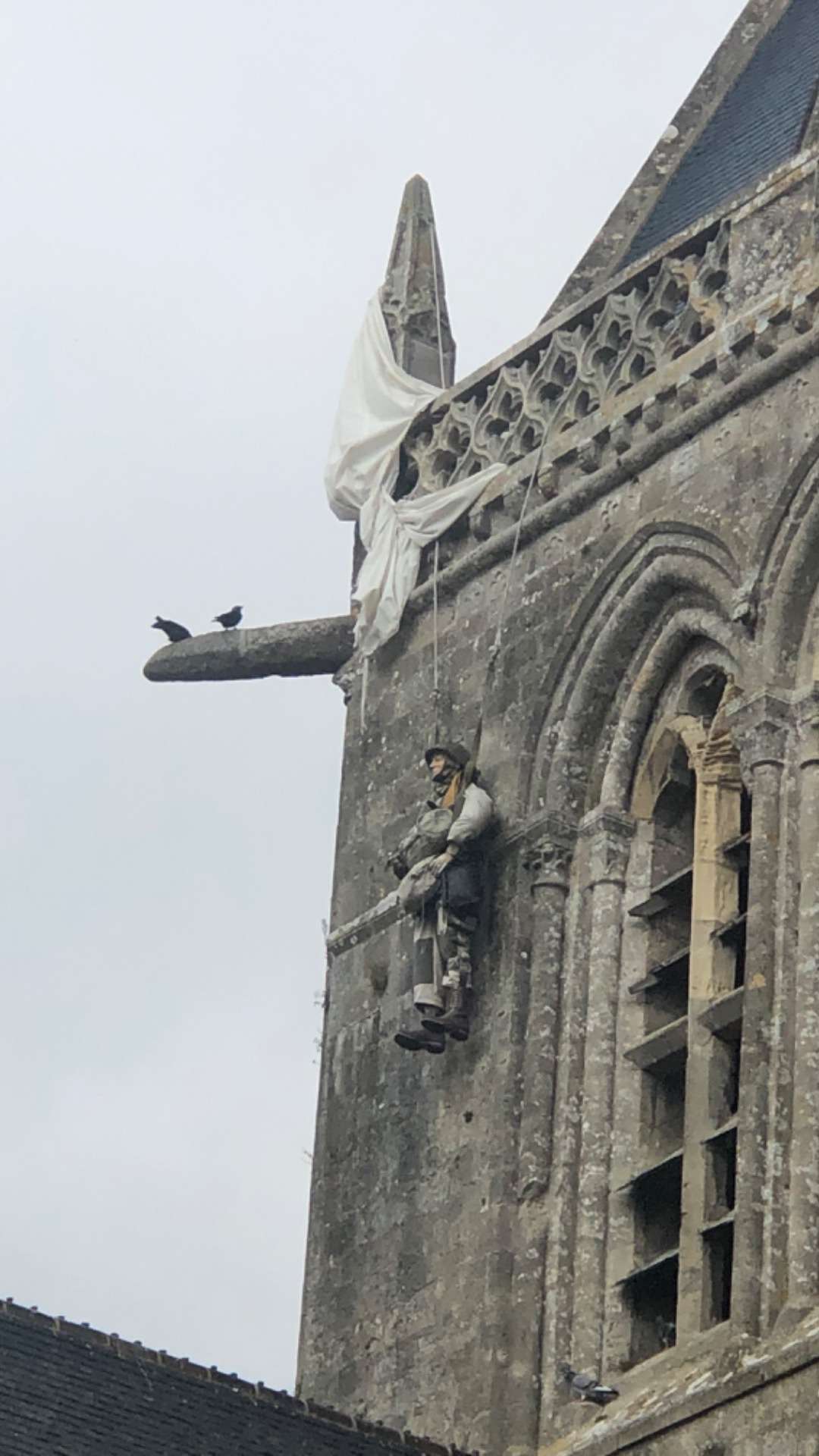
Before arriving in Normandy, we stopped for lunch (see Our Favorite Restaurants) in Sainte-Mere-Eglise. We had a wonderful ham and cheese buckwheat crepe while checking out the famous church. WWII paratrooper John Steele hung on the steeple and pretended to be dead before he was captured.
Normandy
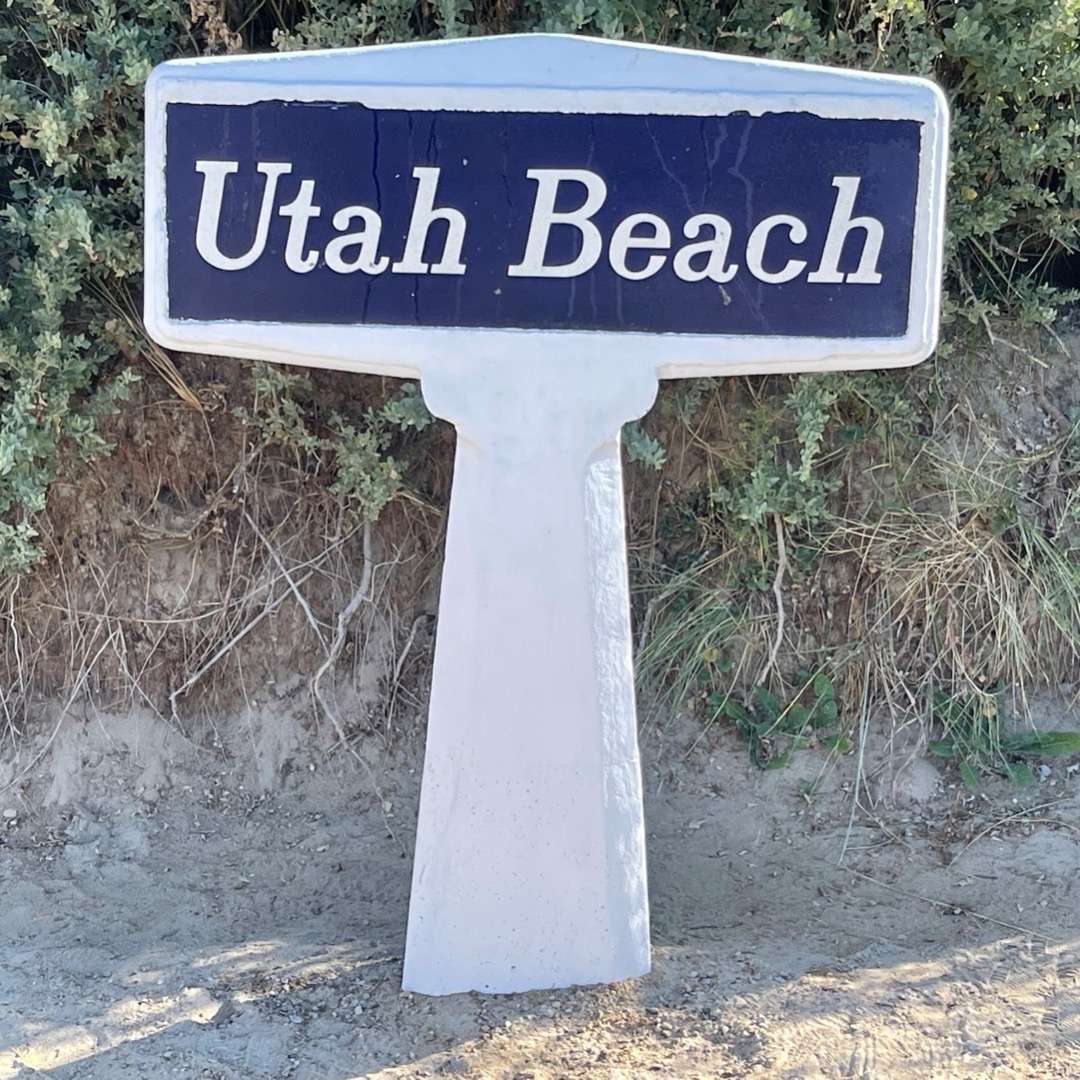
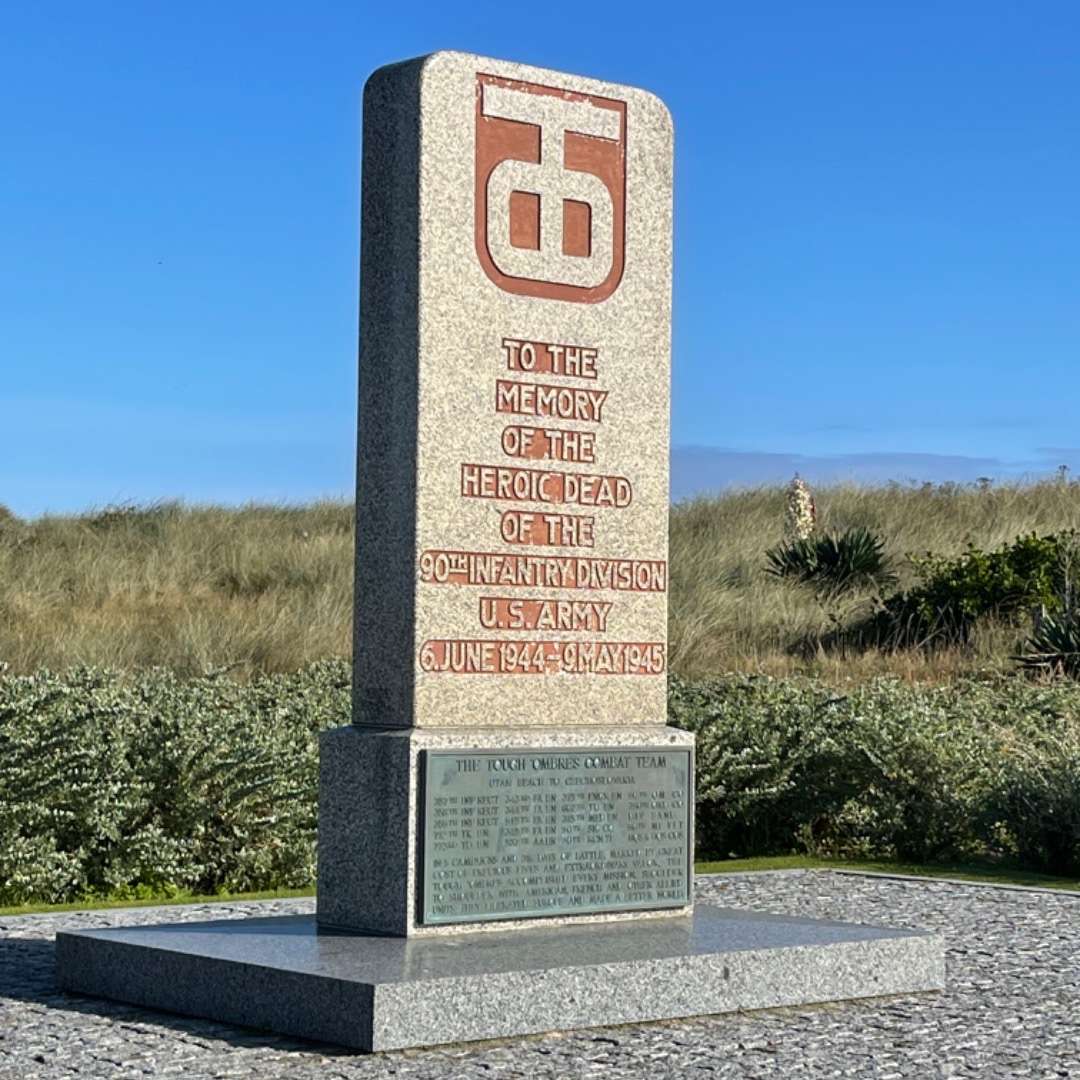
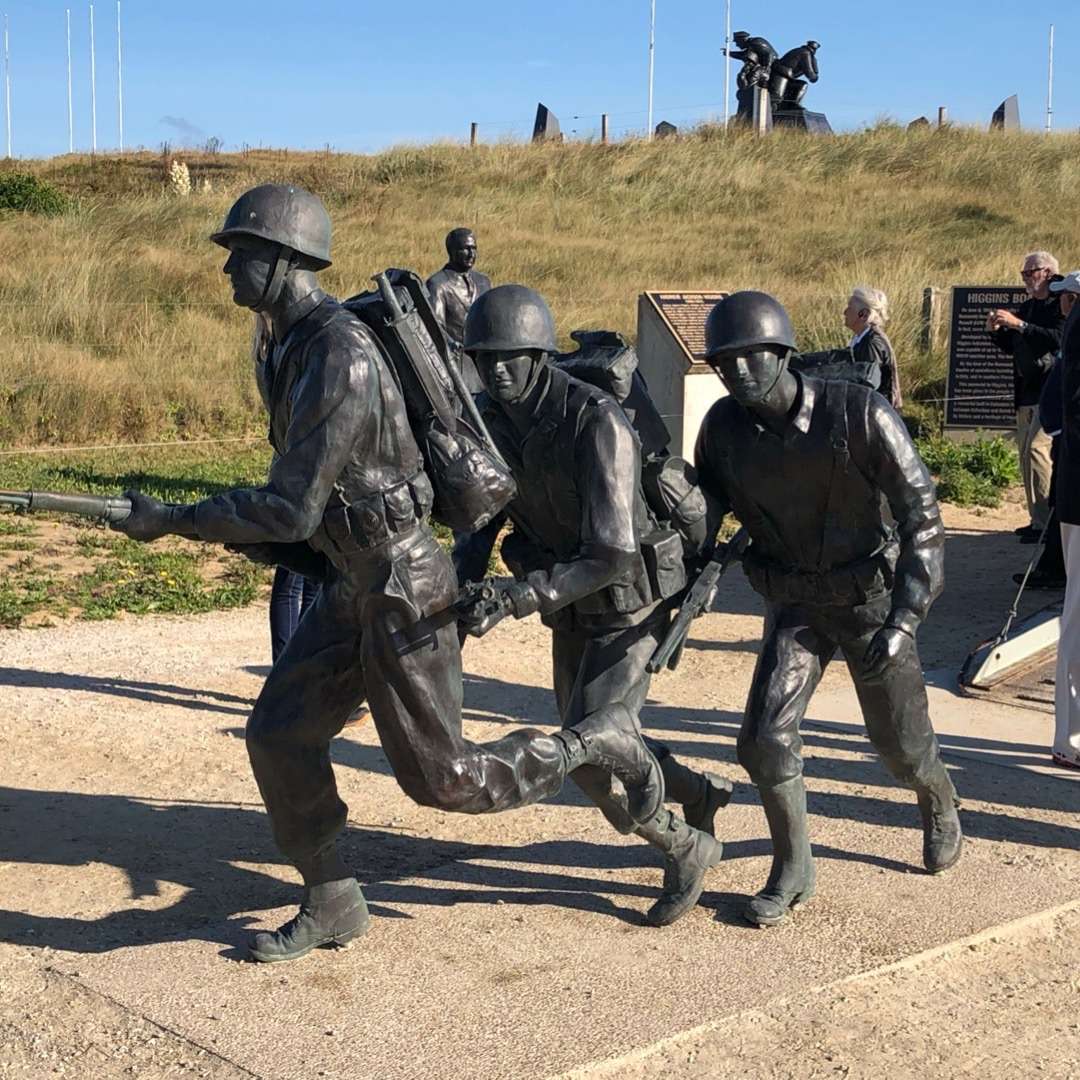
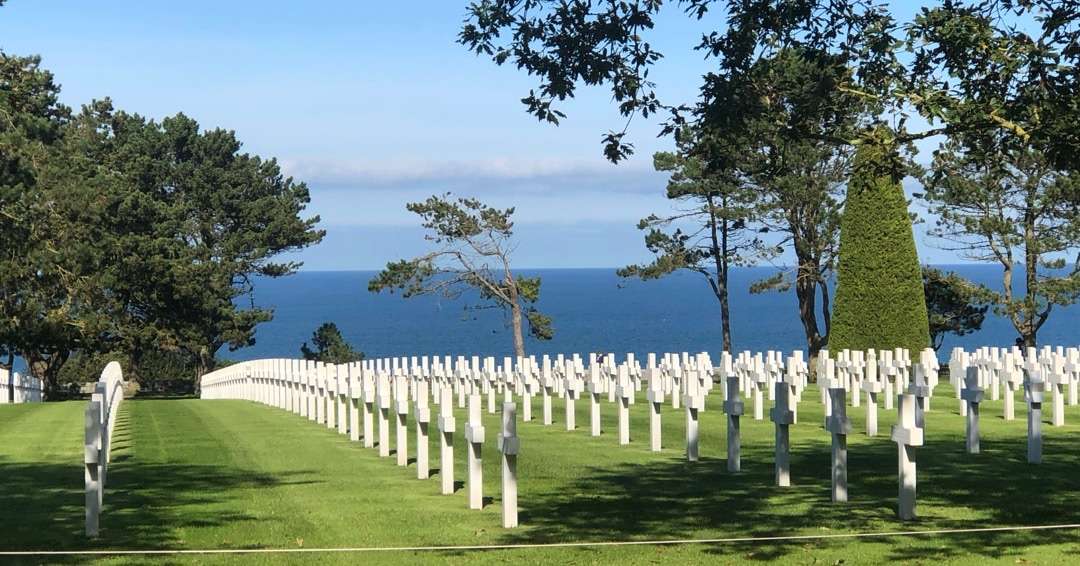
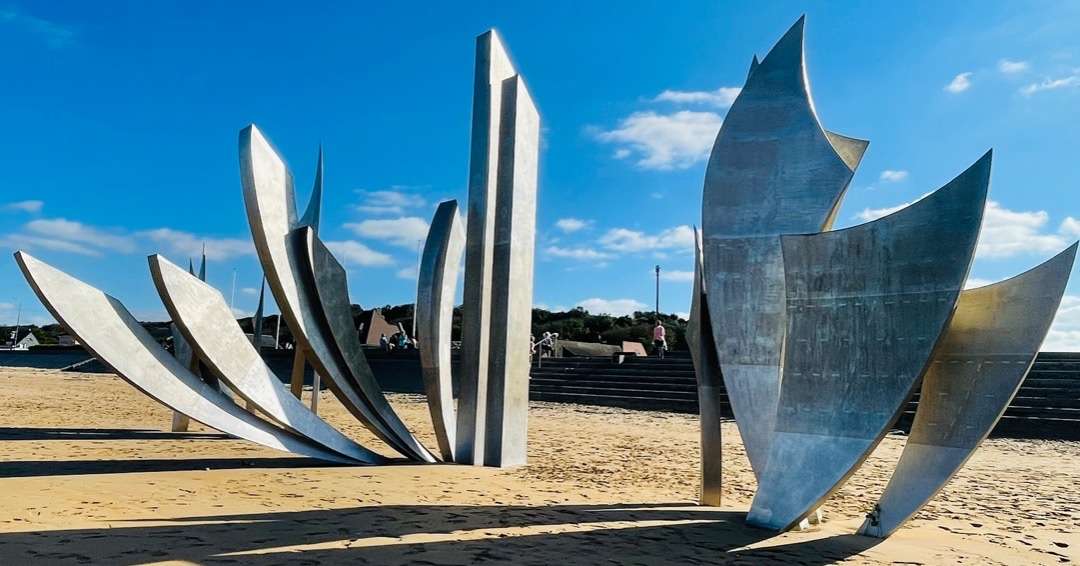
We finally made it to Normandy, and, as expected, it was the highlight of the cruise. If you have been to France and never been to Normandy, you owe it to yourself to make this trip, get to the French coast and really experience the WWII memorial. In 2021 we visited the Utah and Omaha Beach memorials as well as the American Cemetery. Totally dispelling any rumors that the French don't like Americans, the local people that we met were very friendly and made a point of letting us know their appreciation for what our American Heroes did to save their country. This visit was truly moving and very emotional for us.
Option 1A: Road Trip and Focus on Brittany
Our second recommended option to visit the Normandy/Brittany area is to take a train ride into the area, and then obtain a rental car to tour both areas. Robin and Cos plan to do this in the fall of 2026. They will be taking a train from Paris down to the town of Rennes where they will be able to start their 7-day road trip in the area. If you want to focus on visiting Brittany and therefore probably don't wish to take the Normandy river cruise, we highly recommend this option. The train ride from Paris to Rennes departs from the Montparnasse train station in Paris and takes 2 1/2 hours to reach Rennes.
Focus on Brittany and Mont Saint-Michel
In France, just south of Normandy on the Atlantic Coast is the area known as Brittany, given it's Celtic roots, and its most famous landmark, technically on the Normandy border, Mont Saint‑Michel.

Visiting Mont Saint-Michel has been on Cos's Bucket list for a long time. Cos and Robin expected to visit it in 2021 as part of their River Cruise, but not enough people on the cruise wanted to do the excursion, it was expensive, and the excursion was cancelled. Needless to say, they were disappointed and unfortunately they had to fight with the cruise company to get their deposit back.
Brittany has one of the most distinctive cultural identities in France, shaped by prehistoric settlement, Celtic heritage, and centuries of political autonomy. Romans conquered the region in 57 BCE, and after Rome’s decline, waves of Celtic migrants from Britain (Cornwall, Devon, Wales) arrived in the 5th–6th centuries, giving Brittany its name and language. Brittany formally joined France when Anne of Brittany married Charles VIII and later Louis XII, leading to the 1532 incorporation treaty guaranteeing local privileges. Today, Brittany remains one of the six Celtic nations, retaining its Breton language and cultural identity.
Option 2: 7 Days Bordeaux in Southwestern France
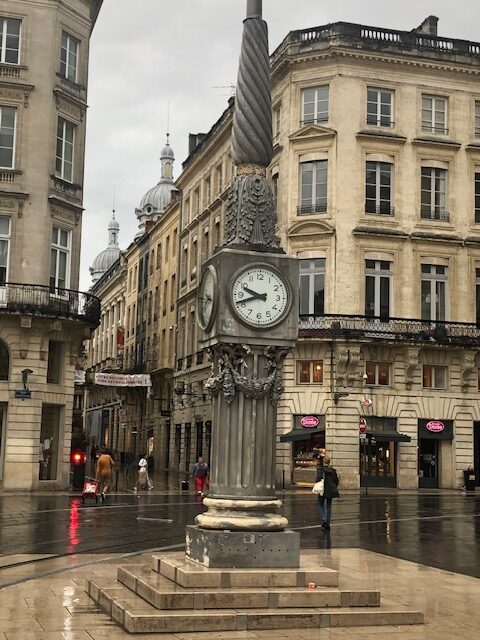
The Southwest France area around Bordeaux is known as Bassin d’Arcachon. Bordeaux is the center piece, and one of those French cities that quietly exceeds every expectation. It blends grand 18th‑century architecture, a walkable riverfront, and a relaxed southern lifestyle with the prestige of being the world capital of wine. The historic center—often called “Little Paris”—is filled with limestone buildings that glow gold in the afternoon sun, elegant squares, and café‑lined boulevards. It’s sophisticated without being pretentious, and lively without feeling overwhelming.
Cos and Robin's Visit to Bordeaux
We made two trips to Bordeaux. The first in 2021 as of part our 14-day Bordeaux and Normandy combined Uniworld cruise. Bordeaux is a wonderful place to visit, not only for the wine tasting, but also for the wonderful architecture, food and overall French culture. It is also very easy to get to Bordeaux, as a high-speed train runs regularly between Montparnasse in Paris and Bordeaux. We highly recommend you use this train option to get you to Bordeaux. Check below for booking the train.

The easiest way to book European Train Tickets and Passes. We use Rail Europe to book all our train travel in Europe. It provides a nice service and can offer rail passes at a discount.
During our second visit in 2024, we attended two Olympic Football matches prior to the actual opening ceremony of the 2024 Olympics. We stayed in Bordeaux to view the opening ceremony on TV, finishing a bottle of Saint‑Émilion we had purchased earlier. This was certainly much better than sitting in the rain in Paris.
Food Specialties in Bordeaux: Les Dunes Blanches
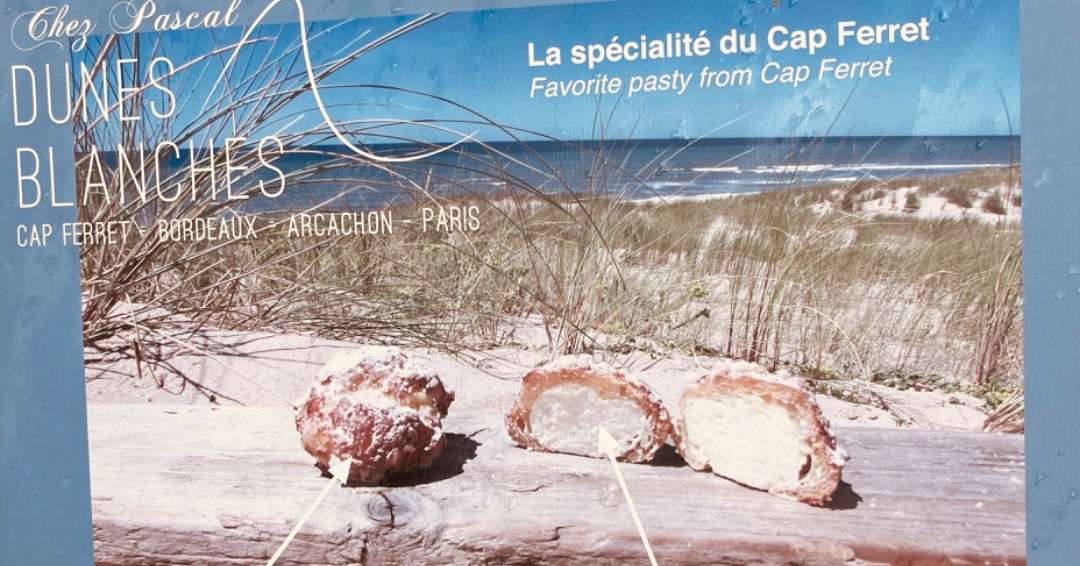
Bordeaux has some unique food as shown by the Dunes Blanche pastry poster below which are quite tasty. The pastry originated in the Cap Ferret area which is a long, slender peninsula on the Atlantic coast of southwestern France, separating the Bassin d’Arcachon from the open ocean. The Dunes Blanches, a light, airy choux pastry, is filled with sweet vanilla cream and dusted with sugar. They were created in the 2000s by the pastry shop Chez Pascal, and they became an instant sensation in Bordeaux, and across the entire Bassin d’Arcachon.
Where to Stay in Bordeaux
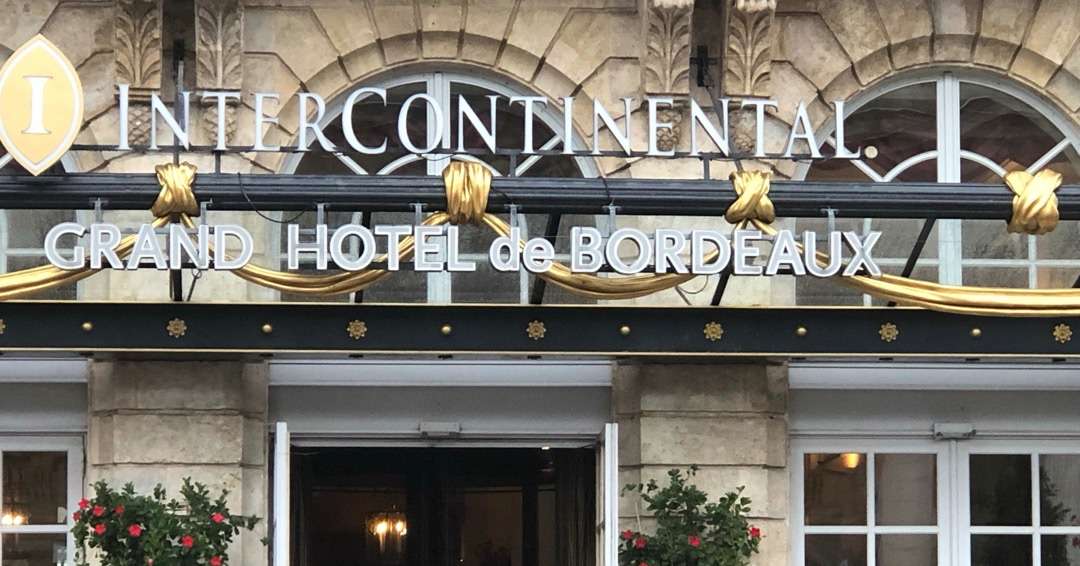
There are a number of nice, classic places to stay in Bordeaux, but the classic place is the Grand Hotel in the center of town.
Attractions in Bordeaux
In addition to vineyards, there are many landmarks to visit and things to do in Bordeaux.
Vineyards
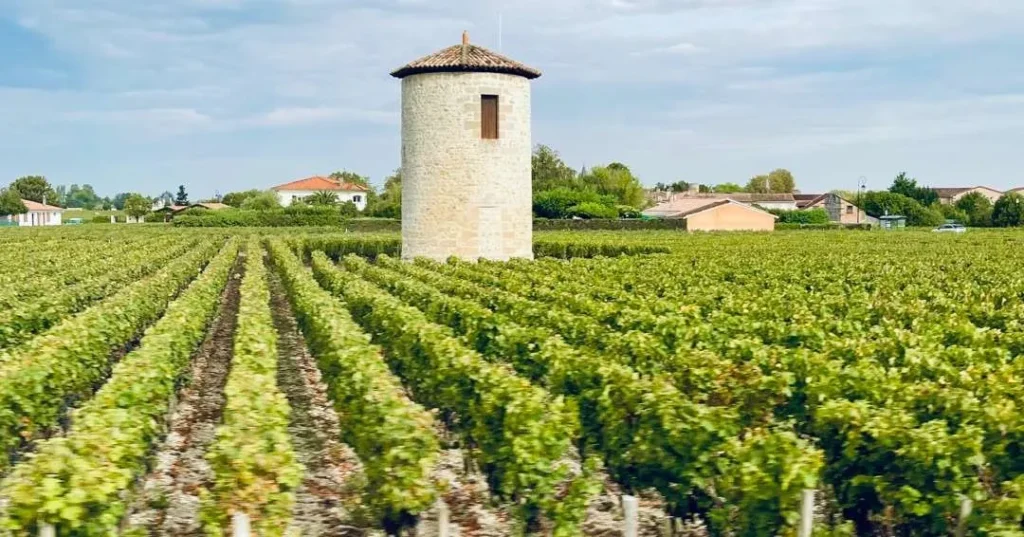
First, we do need to highlight the Vineyards. What makes Bordeaux truly special is how seamlessly the city connects to the surrounding wine country. Within minutes, you can be in Saint‑Émilion, Médoc, Pessac‑Léognan, or Sauternes, tasting wines at centuries‑old châteaux and wandering through vineyard landscapes that look unchanged since the days of Napoleon. Add in the Miroir d’Eau reflecting pool, the revitalized Garonne riverfront, and a food scene driven by oysters, canelés, and modern bistros, and Bordeaux becomes one of France’s most rewarding destinations—equal parts culture, cuisine, and countryside charm.

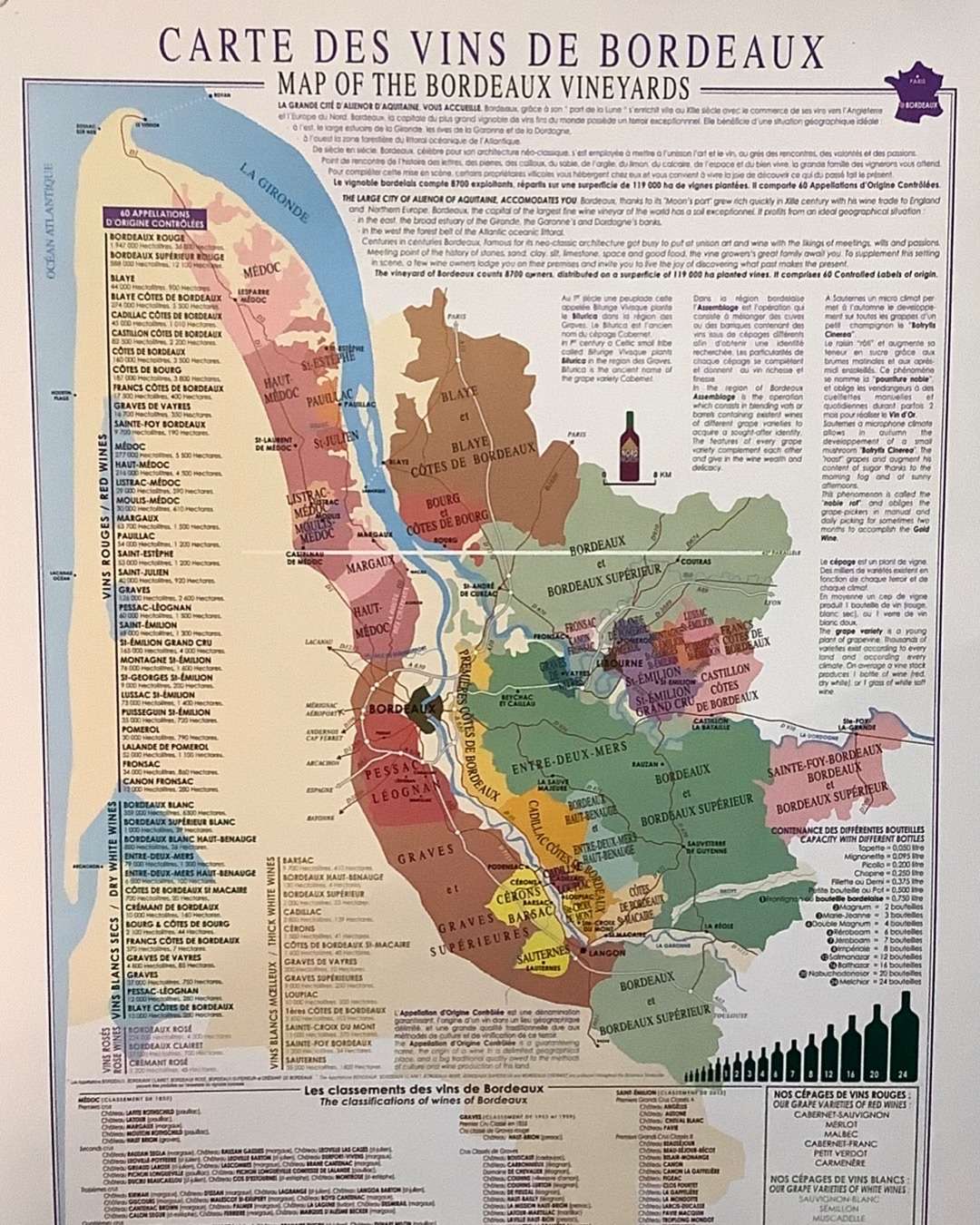
Well known for its outstanding red wines, Bordeaux is a complex wine area as shown on the map of the Bordeaux Vintages. Perhaps even more meaningful than Paris's Left and Right Banks, Bordeaux has its famous Medoc vintage of wine on the Left Bank and the even more famous St-Emilion vintage on the Right Bank. The smaller town of St-Emilion is protected as a UNESCO World Heritage site A very liveable city,
Cathedrals
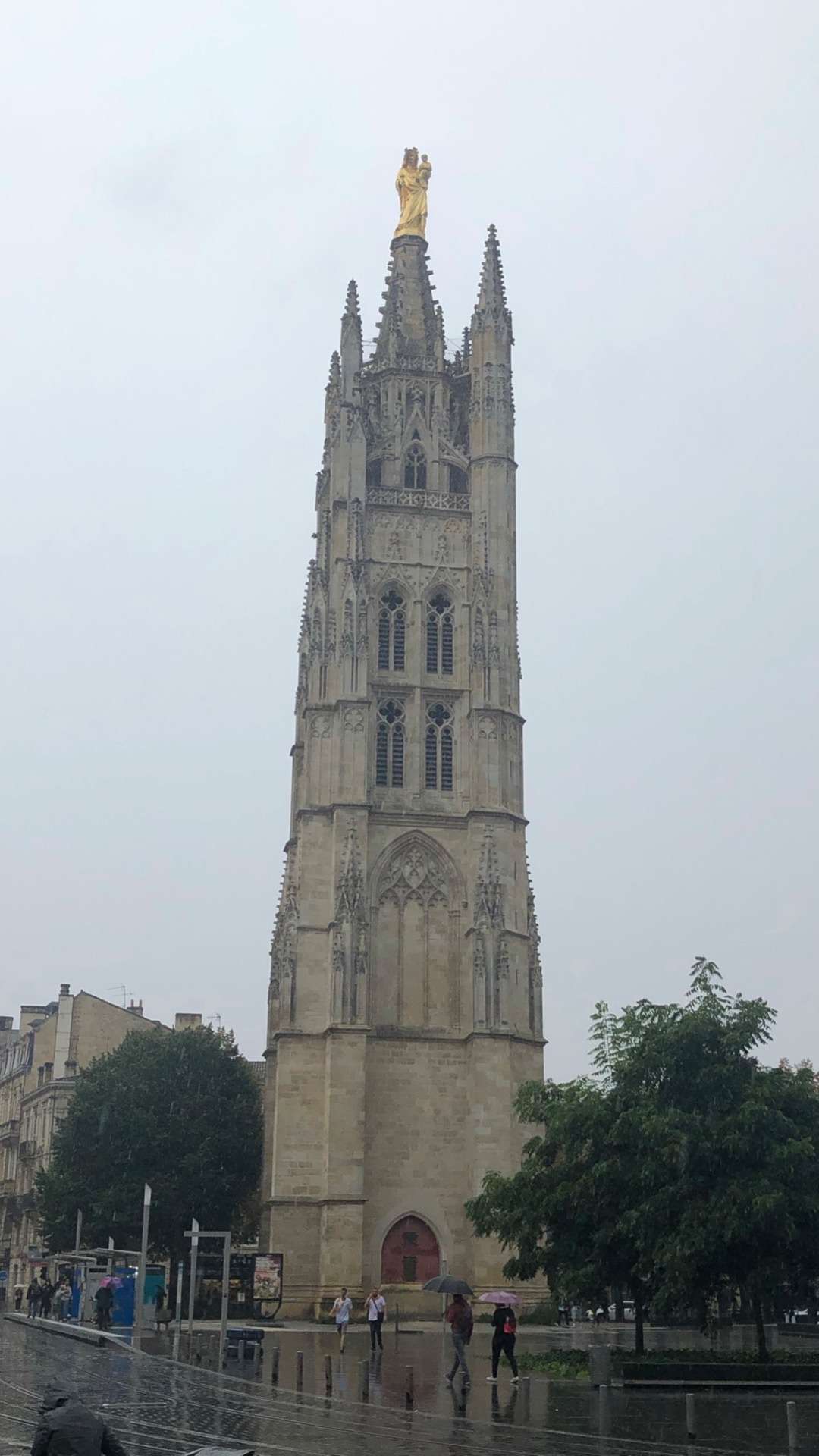
Bordeaux’s grandeur is shaped not only by its riverfront and golden limestone architecture but also by its trio of monumental churches, each anchoring a different part of the city’s identity. Saint‑André Cathedral is the headline landmark—a soaring Gothic masterpiece paired with the freestanding Pey‑Berland Tower, giving Bordeaux a skyline worthy of a former royal city. Just a short walk away, the Basilique Saint‑Michel rises even higher, its 114‑meter spire dominating the Garonne and lending the Saint‑Michel district an unmistakable silhouette. And in the quieter northern quarter, the Basilique Saint‑Seurin offers a completely different atmosphere: Romanesque stonework, ancient crypts, and centuries of Camino de Santiago history layered into its foundations.
Together, these churches create a sense of scale and depth that surprises visitors. They make Bordeaux feel both medieval and metropolitan, spiritual and lively—a city where each neighborhood has its own architectural anchor and story.

Excursion Tours In and Around Bordeaux
You can rent a car and travel around Bordeaux on your own. This can be a great way to explore both the Cap Ferret and the Bassin d’Arcachon. You do not need it to explore Bordeaux which has an excellent tram system, and is an easy walking city.
However, we highly recommend you consider taking a river cruise and cruising on the Garonne and Dordogne Rivers. It is the easiest way to explore the entire region, both the left and right banks. If you do nothing else, definitely get a tour guide, either via the cruise line, or on you own, and let them help you explore both the wine country and the city of Bordeaux. We found our tours on Get Your Guide:

Discover the 2 most famous wine-growing regions of Bordeaux, Médoc and Saint-Émilion, on a wine tasting tour to 3 wineries. Walk around a UNESCO-listed village and enjoy a picnic break in a Château.
Option 3: The Grand Arc of Eastern & Southern France
This region forms a sweeping arc across eastern and southern France — a tapestry of sunlit coastlines, lavender‑scented countryside, Alpine peaks, gastronomic capitals, and historic cities shaped by Roman, medieval, and royal heritage. It’s where France’s most iconic landscapes converge: the Mediterranean brilliance of the Côte d’Azur, the painterly calm of Provence, the culinary prestige of Lyon, the dramatic mountains of Chamonix, the Burgundian elegance of Dijon, and the Champagne‑rich traditions of Reims. Together, they create one of France’s most diverse and rewarding travel zones, offering everything from beach days and vineyard tours to cathedral visits and high‑alpine adventures.
#3.1 Provence: Sunlight, Scenery & Timeless Villages
Provence is the France of imagination — golden light, olive groves, lavender fields, and stone villages perched above rolling valleys. The region moves at a gentle pace, shaped by markets overflowing with herbs, honey, and ripe fruit, and landscapes that inspired Cézanne, Van Gogh, and generations of artists. Roman history runs deep here, from the monumental amphitheater in Arles to the majestic Pont du Gard. Provence is sensory, slow, and deeply atmospheric, offering a perfect blend of culture, cuisine, and countryside charm.
What to See in Provence
Provence is a region of timeless beauty, where every landscape feels like a painting come to life. Visitors can wander through the lavender fields of Valensole, explore the ochre cliffs and pastel streets of Roussillon, and climb to the hilltop villages of Gordes and Ménerbes for sweeping views over the Luberon. Roman history is everywhere — from the perfectly preserved Pont du Gard aqueduct to the amphitheaters of Arles and Nîmes. Art lovers can follow in the footsteps of Cézanne in Aix‑en‑Provence, while food lovers dive into Provençal markets overflowing with olives, honey, herbs, and sun‑ripened produce. Provence is a place where scenery, culture, and cuisine blend seamlessly, offering endless discoveries at a gentle, sun‑drenched pace.
#3.2 Côte d’Azur: Mediterranean Glamour & Coastal Beauty
The Côte d’Azur — or French Riviera — is where the Mediterranean sparkles brightest. It’s a coastline of turquoise bays, palm‑lined promenades, and chic seaside towns that blend effortless elegance with cinematic scenery. From artistic enclaves to glamorous harbors, the Riviera offers a mix of culture, beaches, and luxury that feels unmistakably French.
What to See on the Côte d’Azur
The Côte d’Azur dazzles with Mediterranean glamour and cinematic scenery. In Nice, visitors stroll the palm‑lined Promenade des Anglais, explore the pastel lanes of the Old Town, and enjoy world‑class museums dedicated to Matisse and Chagall. Just along the coast, Antibes offers a perfect mix of sandy beaches and artistic heritage, while Cannes blends luxury boutiques with a lively waterfront. For postcard‑perfect charm, the hilltop village of Èze delivers breathtaking views over turquoise bays, and Saint‑Tropez pairs golden beaches with a chic harbor lined with yachts. Nature lovers can escape to the Îles de Lérins, hike the coastal trails of Cap d’Antibes, or swim in hidden coves near Villefranche‑sur‑Mer. The Riviera is a place where beauty feels effortless — a sunlit stretch of coast where every stop offers its own version of paradise.
#3.3 Lyon: France’s Gastronomic Capital
Lyon is the beating heart of French cuisine — a city where food is culture, tradition, and art. Its historic center, a UNESCO World Heritage Site, blends Renaissance architecture with hidden traboules (secret passageways) and lively riverfronts. Lyon’s culinary scene is unmatched, from traditional bouchons serving hearty Lyonnais dishes to Michelin‑starred restaurants pushing modern French gastronomy forward.
What to See in Lyon
Explore the Old Town (Vieux Lyon), climb to Fourvière Basilica for panoramic views, and wander the Presqu’île’s elegant squares. Visit the Halles de Lyon‑Paul Bocuse for gourmet delights, and stroll along the Rhône and Saône riverbanks. Lyon is a city of atmosphere, history, and unforgettable meals.
#3.4 Chamonix: The High‑Alpine Adventure Capital
Chamonix sits in the shadow of Mont Blanc, offering some of the most dramatic mountain scenery in Europe. It’s a paradise for hikers, skiers, climbers, and anyone who loves crisp alpine air and towering peaks. The town blends adventure culture with cozy chalets, lively cafés, and breathtaking viewpoints.
What to See in Chamonix
Ride the Aiguille du Midi cable car for jaw‑dropping views of Mont Blanc, take the train to Montenvers to see the Mer de Glace glacier, and explore alpine trails that range from gentle walks to challenging hikes. In winter, Chamonix becomes one of Europe’s premier ski destinations. It’s France’s ultimate mountain escape.
#3.5 Dijon: Burgundy’s Elegant Capital
Dijon is refined, historic, and deeply tied to Burgundy’s wine culture. Its medieval and Renaissance architecture, mustard shops, and grand squares create a city that feels both cultured and intimate. Dijon is the gateway to the legendary Route des Grands Crus, where some of the world’s finest wines are produced.
What to See in Dijon
Visit the Palace of the Dukes of Burgundy, explore the Musée des Beaux‑Arts, and follow the Owl Trail through the historic center. Nearby vineyards like Gevrey‑Chambertin, Vosne‑Romanée, and Nuits‑Saint‑Georges offer world‑class tastings. Dijon is a perfect blend of history and gastronomy.
#3.6 Reims: The Capital of Champagne
Reims is where French royalty was crowned for centuries — and where the world’s most celebrated sparkling wine is born. The city blends Gothic grandeur with Champagne‑house prestige, offering a mix of history, architecture, and indulgence.
What to See in Reims
The Cathedral of Notre‑Dame de Reims is one of France’s greatest Gothic masterpieces, famous for its stained glass and coronation history. Visit Champagne houses like Veuve Clicquot, Taittinger, or Ruinart for cellar tours and tastings. The nearby vineyards of Épernay and the Montagne de Reims complete the experience. Reims is elegance in every sense.
Options How to Explore the Grand Arc of Eastern & South France
We don't recommend attempting to visit all six of these impressive regions in a short 7-day tour. Therefore, we have developed three different options on how we recommend you explore the South and Eastern Regions of France. They are:
- 3A - Provence & Cote d'Azur Road Trip: Fly, Drive or take a train from Paris to Nice, Rent a Car, and begin a Road-trip
- 3B - River Cruise: Avignon to Lyon
- 3C - Lyon, Chaminox-Mont Blanc and The Champagne Region Road Trip
Here are the specifics for each of these options:
Option 3A: Provence & Cote d'Azur Road Trip:
Provence and the Côte d’Azur capture the very essence of southern France — a sun‑soaked blend of lavender fields, hilltop villages, Mediterranean beaches, and effortless elegance. In Provence, the rhythm is slow and sensory: golden light on stone farmhouses, markets overflowing with olives and herbs, and landscapes that inspired Cézanne and Van Gogh. Just to the east, the Côte d’Azur shifts the mood to coastal glamour, where turquoise bays, palm‑lined promenades, and chic seaside towns like Nice, Antibes, and Saint‑Tropez define the French Riviera’s iconic allure. Together, these regions offer a perfect balance of rustic charm and refined coastal beauty, making them one of France’s most irresistible destinations. If using Nice as a home base, a day trip into Monaco to visit Monte-Carlo is also a great way to expand the visit.
Cos & Robin's Visits to the Area
Cos & Robin visited this area for the first time in the summer of 2022 and returned on a cruise in 2025. They toured a number of amazing places: Nice, Marseille, Cannes, Avignon, Arles, Aix-en-Provence, Châteauneuf-du-Pape, Saint-Tropez, along with Monte-Carlo in neighboring Monaco. These are all famous cities and towns on the Mediterranean coast that make up this incredibly beautiful region.
During their first visit, they stayed on the beach in a small town, La Seyne-sur-Mer, just south of Toulon, France. Surprisingly, this was great for visiting the western wine region including Avignon. they spent a very special day touring vineyards around Châteauneuf-du-Pape with a guide from England who was intent on showing us that there were many amazing wines from vineyards in the area that challenge the throne of Châteauneuf-du-Pape.
Next, they based their location much closer to Nice, in a small hill-top town, Mougins, just north of Cannes in the Provence-Alpes-Cote d'Azur region. Mougins is a wonderful village (commune) with gourmet restaurants and a very strong arts culture. Also, this was a great place to visit a number of small towns, and even take a tour of Monte-Carlo, which can be done on an amazing small tour with a local guide from Get Your Guide. Find your tour with Get Your Guide, below:

Experience the charm of the Côte d'Azur. Visit Eze, a medieval village and perfume Fragonard, the marvelous principality of Monaco, and the circuit of Formula 1.
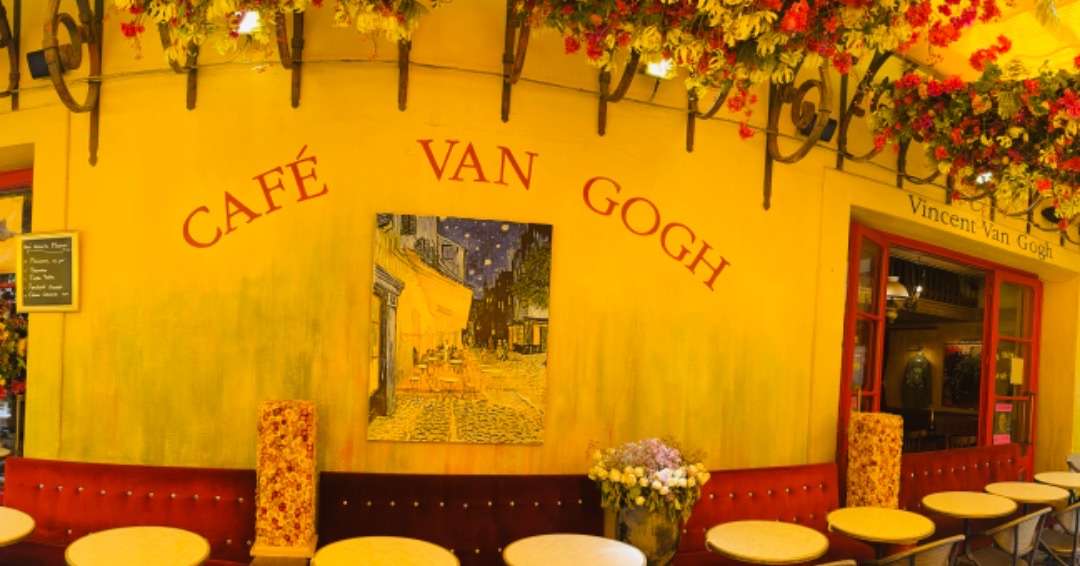
The also visited which is their Arles favorite town. Here, they explored this beautiful ancient city and learned even about Van Gogh's time here (1888-1889). In Arles, Van Gogh painted over 300 of his famous paintings. This is also where he was institutionalized after he cut off his ear. We have been lucky to see his series of paintings of cypress trees at the Met in New York and olive trees in Amsterdam; all were painted at a furious pace while in Arles.
While in Arles, you must have a beer at Le Cafe van Gogh. You can't miss this place…bright yellow, the color of sunflowers. Said to have inspired an 1888 painting by Vincent van Gogh. (Café Terrace at Night).
Here is Our Suggestion How to Spend 7 days on Your Provence & Cote d'Azur Road Trip:
- First Day #1 - Arrive at the Nice Côte d’Azur airport, stay in Nice or nearby in Carnes or in Mougins.
- Second Day #2 - Find a Beach resort either in Nice, East of Nice or near Antibes
- Day 3 - Spend some Beach Time on the French Riviera, and then head west to Marseille or nearby.
- Day 4 - Visit Arles - Check out Cafe Van Gogh and other Van Gogh locations
- Day 5 - Visit Avignon and Châteauneuf-du-Pape - Consider Wine Cruise
- Day 6 - Return to the NIce Area and visit additional local attractions.
- Day 7 - Visit Monte Carlo, and depart from Nice
While we recommend that you rent a car, it is possible to tour this area by public transportation by taking regional trains. Rather than driving, we took a train roundtrip from Toulon to Avignon.
Option 3B: River Cruise: Avignon to Lyon
River cruises on the Rhône River are very popular and are operated by a number of companies. Cos and Robin will be taking the Viking 7-day cruise from Avignon to Lyon in the fall of 2026. Should you select this option, with Viking or another river cruise operator, as part of the cruise you will be able to discover many of the same places you would have visited on the Road-Trip Option (#B), such as the Roman Provence at Les Arènes d’Arles and the Pont du Gard. You will also explore the world’s largest Gothic palace at Avignon’s Grand Palace of the Popes, and excite your palate in Lyon, capital of French gastronomy. You will also be able to savor local wines, hunt for truffles and see how chèvre cheese is made.
While this option will likely be more expensive than the Road-Trip Option, you will be able to see many of the same places with less personal stress and no need to repack your bags. You can do an additional pre-extension add-on to the cruise and stay in Avignon, Nice r other places in Southern France prior to the cruise.
Option 3C: Lyon, Chaminox-Mont Blanc and The Champagne Region Road Trip
This option is another road-trip option, starting in Lyon and spending time in the Mountain, Burgundy and Champagne regions of France. In the fall of 2026, Cos and Robin will be doing this 7-day tour after they compete their Avignon to Lyon Rhône River cruise. They plan on spending time in Lyon to enjoy the food scene and briefly vising Chaminox, before heading up to Dijon and Reims. They'll provide more detail to this option early in 2027 after they take the trip. Visiting both the Burgundy and Champagne regions will round out their visits to the various wine regions in France, as these two regions have long been on their bucket-lists.
Burgundy and Champagne Regions
For the wine enthusiasts among us, two places that will make up another French 7 day itinerary are the combined eastern France wine regions of Burgundy and Champagne. Visiting Burgundy and Champagne in France offers a unique blend of cultural, historical, and gastronomical experiences. Here are some highlights of each region:
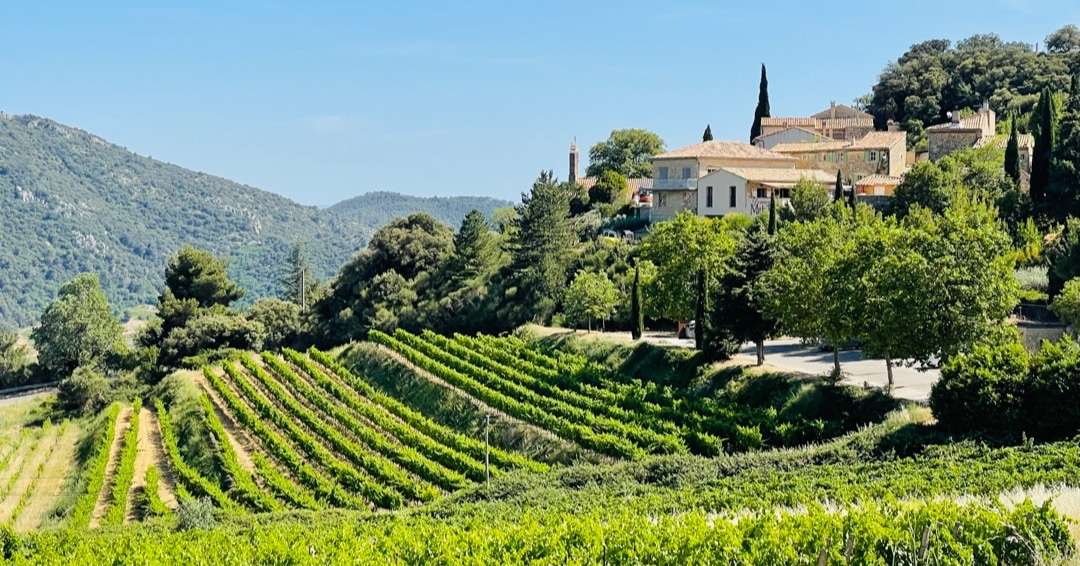
Burgundy
- Wine: Burgundy is world-renowned for its exceptional wines, particularly Pinot Noir and Chardonnay. You can explore vineyards, participate in wine tastings, and visit wine cellars in towns like Beaune and Dijon.
- Architecture: The region boasts stunning medieval and Renaissance architecture. Highlights include the Hospices de Beaune, a Gothic masterpiece, and the Cathédrale Saint-Lazare d’Autun.
- Scenic Beauty: Burgundy’s landscape is dotted with picturesque villages, rolling vineyards, and historic châteaux. It’s perfect for leisurely drives and scenic walks.
Champagne
- Sparkling Wine: Champagne is the birthplace of the world-famous sparkling wine. You can tour prestigious Champagne houses in Reims and Épernay, learning about the intricate production process and enjoying tastings.
- Historical Sites: The region is rich in history, with landmarks like the Reims Cathedral, where French kings were crowned, and the ancient Roman city of Reims.
- Gastronomy: Champagne offers exquisite culinary experiences, from Michelin-starred restaurants to charming local bistros, often paired with the region’s signature bubbly.
Both regions offer a delightful mix of wine, history, and scenic beauty, making them must-visit destinations for any traveler.
Alternative Places to Visit in Other Parts of France
If the five options we presented for the second week of your two-week French vacation weren't enough to get your interest, then one last option might be to visit the North Eastern part of France, better known as the Alsace Lorraine Region. Cos and Robin visited Alsace Region on a Rhine River Cruise in 2022. This river cruise starts in Amsterdam, travels mostly through Germany, and after passing through Alsace Lorraine ends in Basel, Switzerland. So, this is not a true 7-day option for France, but it could be of interest as an alternative road-trip alternative.
Alsace Lorraine Region of France
The Alsace Lorraine region of France sits literally next to Germany on the western bank of the Rhine River. We visited two great charming villages, Strasbourg and Colmar, both of which have a strong German influence, as having been a part of Germany for much of their history.
Strasbourg
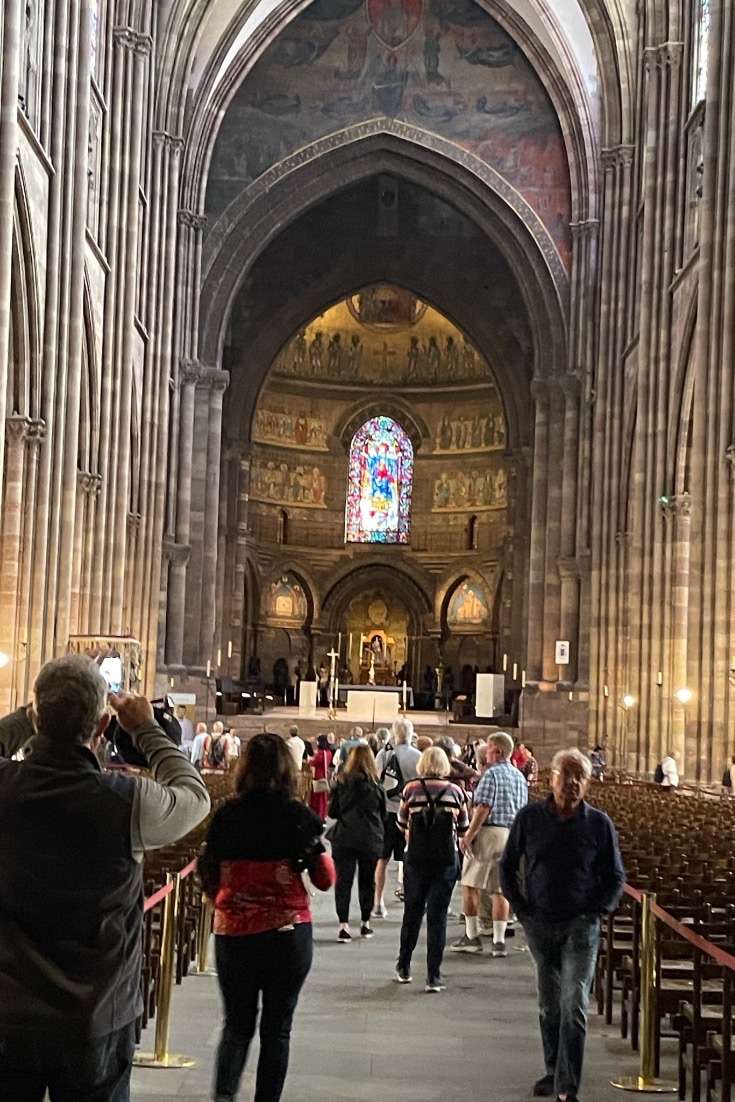
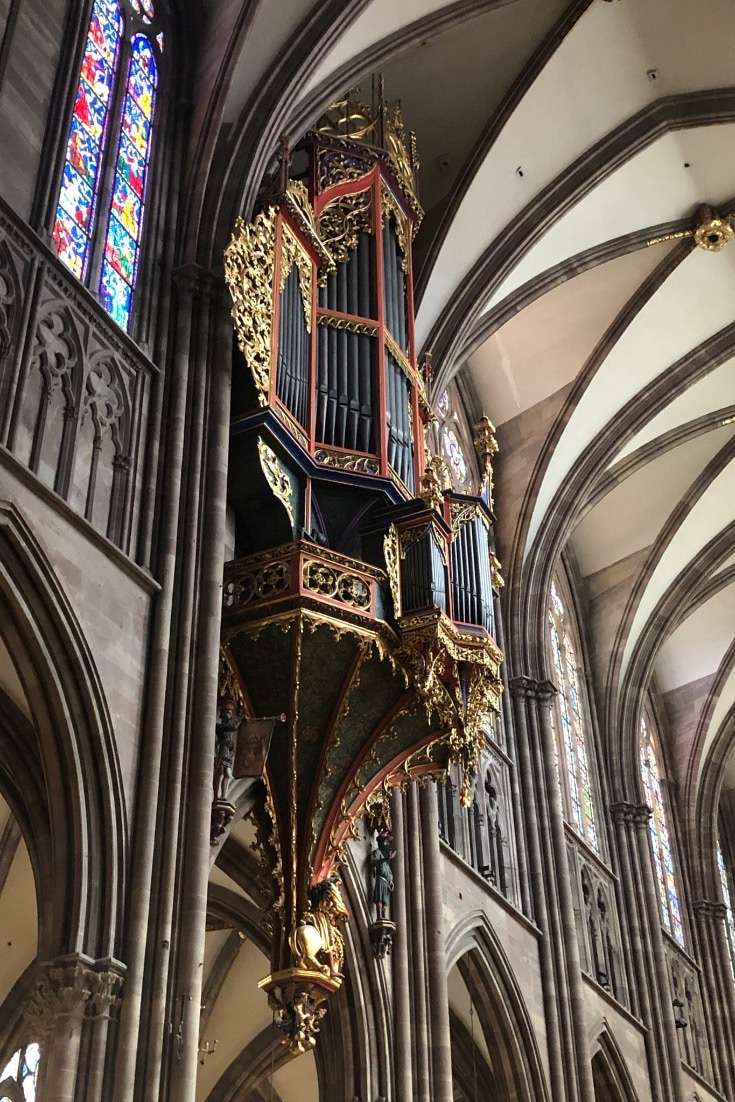
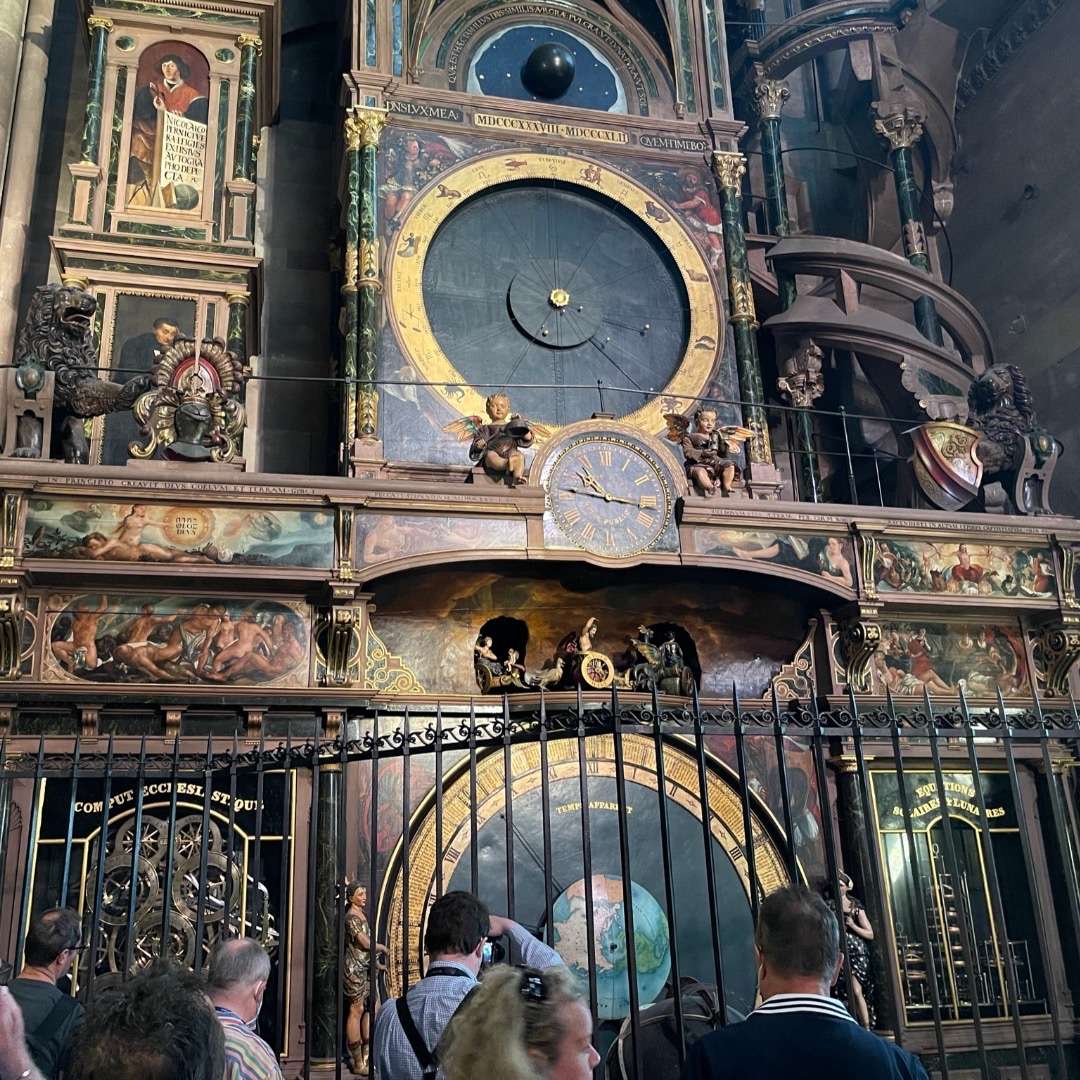
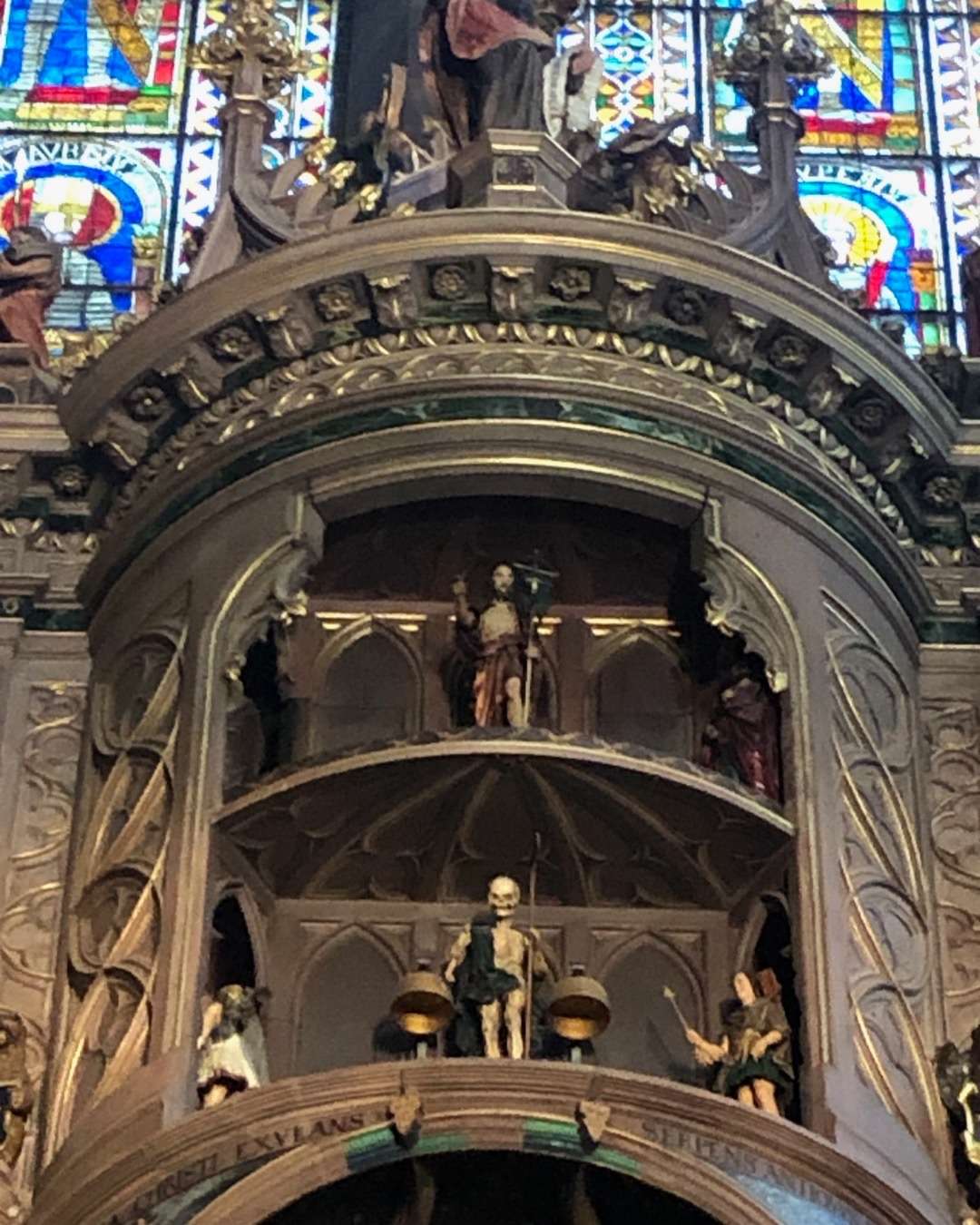
Traveling North to South, Strasbourg is the first French city you come to on the Rhine. The Strasbourg Cathedral (Cathedrale Notre-Dame-de-Strasbourg) is considered one of the finest examples of Gothic architecture in the world. The astronomical clock located in the south transept of the cathedral is one of the most famous features of the cathedral. People are mesmerized by the intricacy of the mechanics. To read more about the famous Strasbourg Cathedral please visit our post "50 Famous Cathedrals in Europe".
Colmar
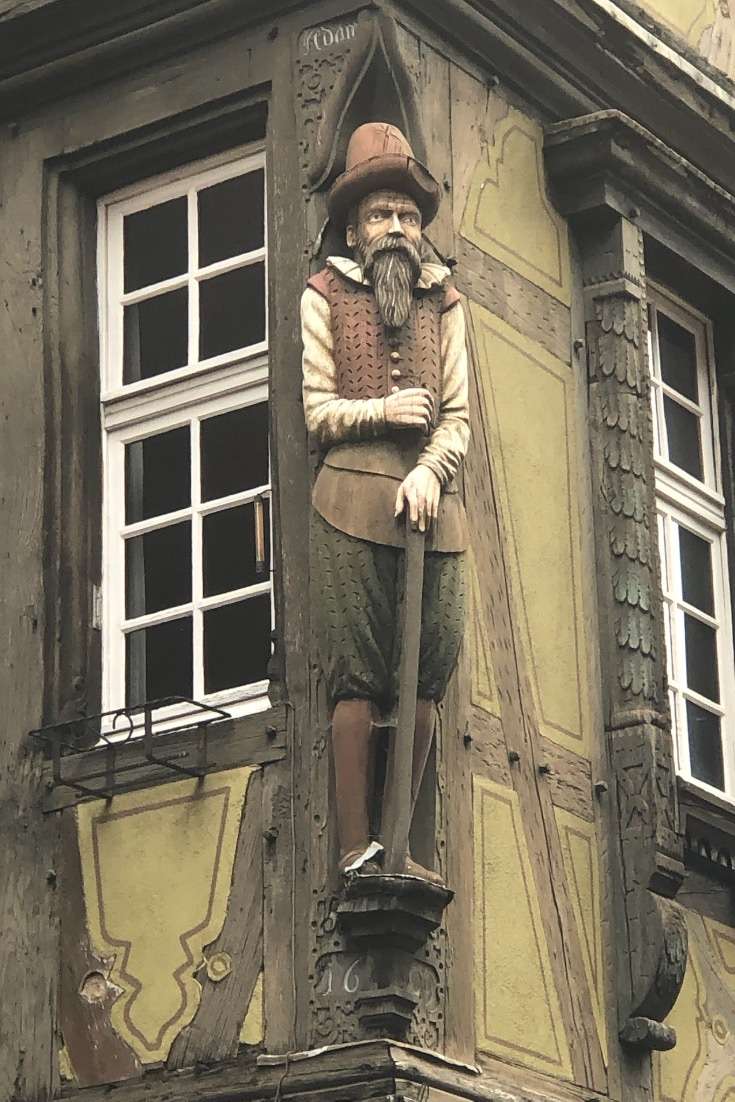
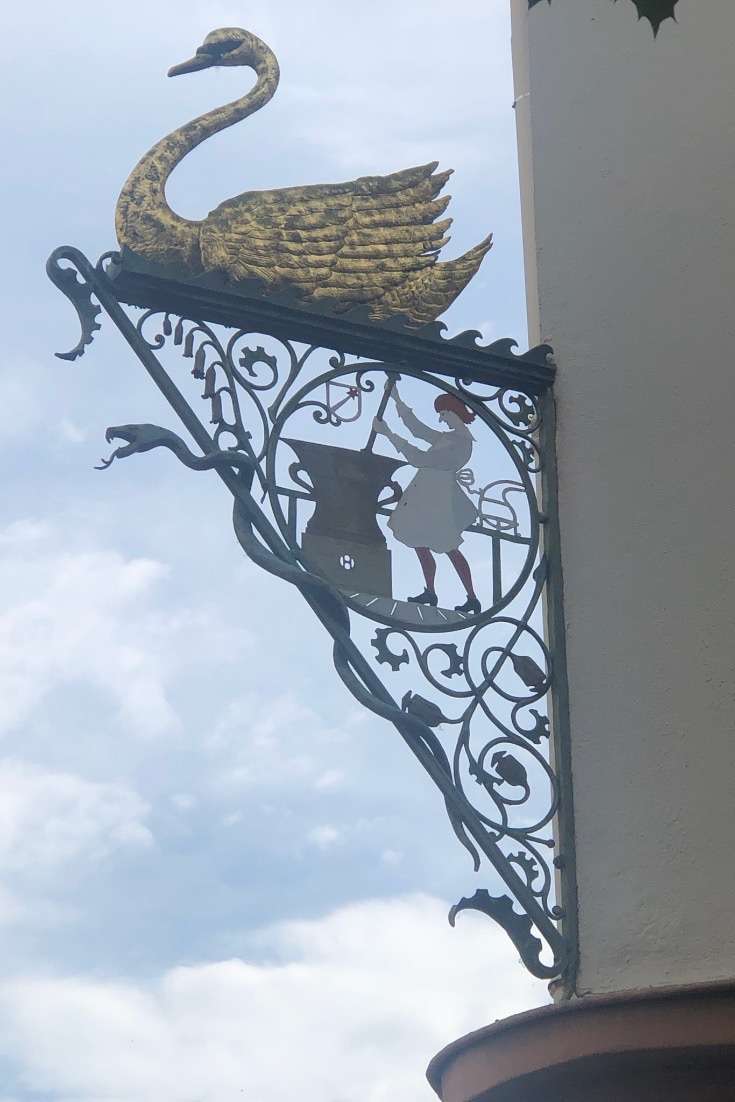
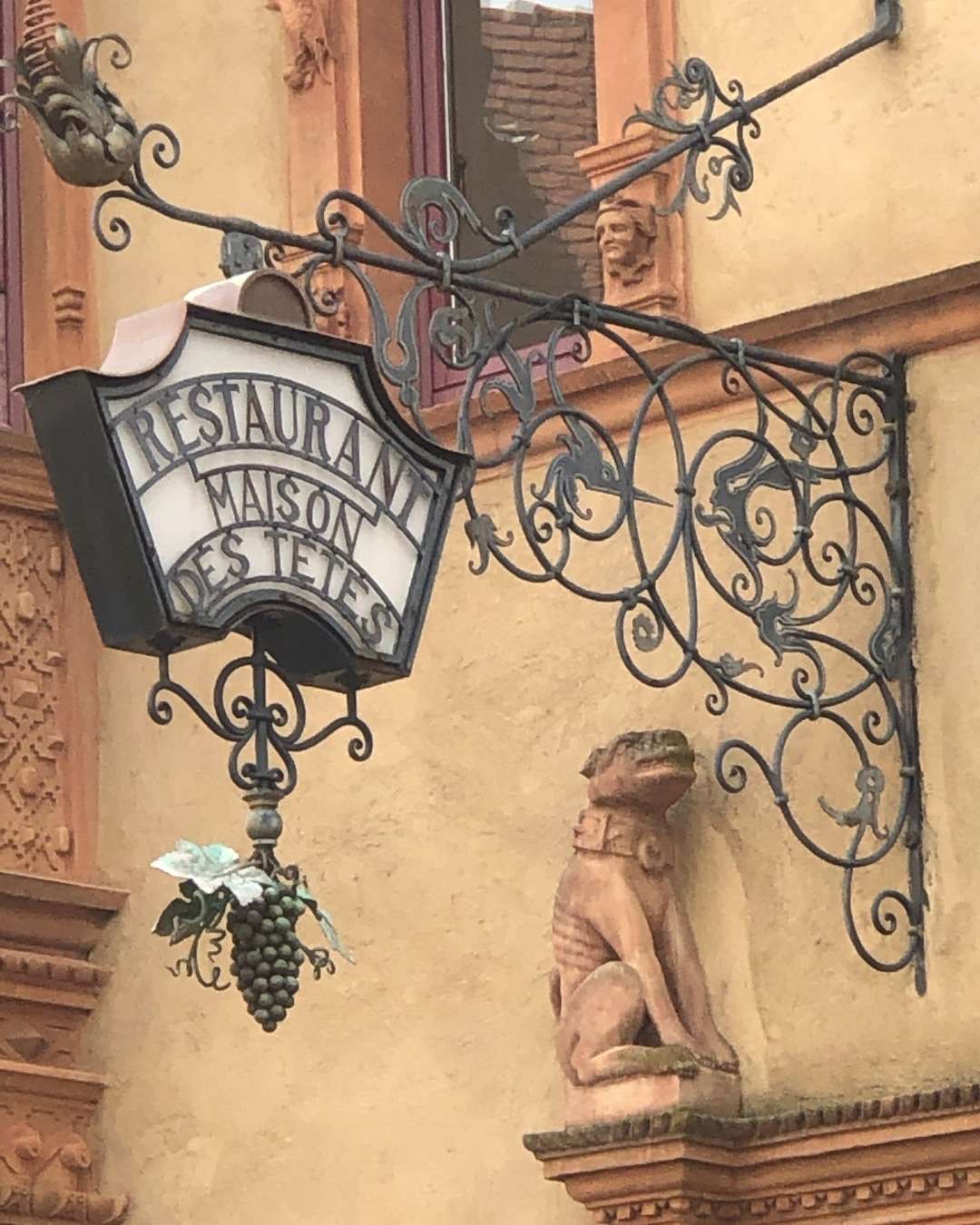
Colmar is the next French city we visited on the Rhine. It considers itself to be the capital of Alsatian wine. It has a strong German influence as can be seen by the traditional German guild signs. The city is known for its well-preserved old town with its narrow cobbled streets lined with pastel-hued buildings.
Conclusion:
If you been to France before, or if is this your first trip, hopefully our French Two Week Itinerary will be of great help to you in planning your next trip. If you want more information about how a two-week tour in France might tie-in to other trips youo might be planning on taking in Europe, please check-out these two other posts:
If you want some more additional advice on how you can best manage your own DIY Travel™ planning, please see our DIY Travel™ Planning Post: Ultimate DIY Travel™ Guide for Couples.
As Rick Steves says: "Keep on Travelling."
0 Comments