
Interested in visiting Arizona? If so, you have come to the right place. In this post we will explain the best time of year to visit Arizona, and present some of the best places in the state to visit.
Contents
Best Time of Year to Visit Arizona
The best time to visit Arizona varies depending on your preferences and itinerary. However, generally speaking, spring and fall are the most ideal seasons to enjoy the state’s natural and cultural attractions without facing extreme weather or crowds.
However, to be more specific, the best time to visit Arizona really depends on what part of the state you’re going to and the kind of experience you want:
Southern Arizona (Tucson, Phoenix, Scottsdale, Sedona)
-
Best time to Visit Phoenix: Best Months October through April, high season and cooler temperatures. Snowbird Season lasts until April.
-
These months bring warm, sunny days and cooler evenings, perfect for hiking, golfing, exploring the desert, and sightseeing without the extreme summer heat.
-
Avoid: June–August, these are the hottest months in the low desert—it’s very hot (daytime temperatures often 105–115°F / 40–46°C).
Northern Arizona (Grand Canyon, Flagstaff, Page, Monument Valley)
-
Best Time: Late spring (May–June) and early fall (September–October), fewer crowds
-
Summer (July–August) is pleasant in the higher elevations with warmer temperatures, but it’s the peak season at the Grand Canyon.
-
The Winter chill brings snow and cold in Flagstaff and the Grand Canyon South Rim—great for fewer crowds, but some roads/trails may be closed
Special Highlights
-
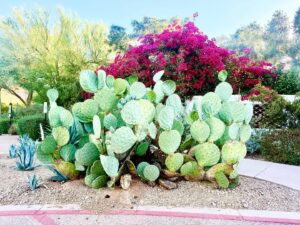
Arizona's Vibrance - Wildflowers & Cactus Blooms: March–April in the Sonoran Desert (spectacular around Phoenix and Tucson).
-
Fall Colors: Late September–October in northern Arizona (Aspen trees in Flagstaff, Oak Creek Canyon near Sedona).
-
Winter Escape: January–February is perfect for snowbirds—Phoenix and Tucson are warm and sunny while much of the U.S. is cold.
For most travelers, March–April and October–November are the sweet spots—average temperatures in the low 80s, and warm days and cool nghts are pleasant across the state, smaller crowds than peak summer, and plenty of seasonal beauty.
Best Time to Visit Phoenix
Unless you are driving into Arizona from a nearby state, such as Las Vegas in Nevada, your first place to experience Arizona will likely be Phoenix and the Phoenix Sky Harbor International Airport (PHX)..The Greater Phoenix Metropolitan Area has a population of more than five million people. It’s not only Arizona's capital but also the largest city in Arizona and the fifth most populous city in the United States.
Downtown Phoenix blends arts, history, dining, sports, and desert city vibe all within walking distance. It’s especially fun in the cooler months when you can stroll from museums to restaurants to ballgames without worrying about the summer heat.
As stated above, October through April is the best time to visit Phoenix. The summer months are the hottest months with high temperatures in excess of 100 degrees. The extreme heat, while a dry heat, is simply unbearable. To make it worse, June 15 through September 30 is considered the monsoon season, with daily afternoon showers. Unfortunately, the showers don't cool off the summer heat enough as the hot temperatures don't go away.
Why Spend Time to Visit Phoenix?
Phoenix, Arizona, often called the “Valley of the Sun,” has a lot more to offer than just days of sunshine. Here are the main reasons people love visiting and having a great time:
Year-Round Sunshine & Desert Beauty
-
Phoenix averages over 300 sunny days a year, with great weather making it a perfect escape from colder climates.
-
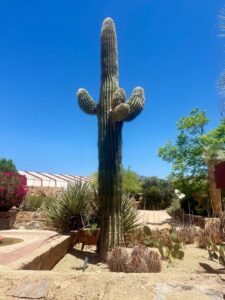
The surrounding Sonoran Desert is full of iconic saguaro cacti, rugged mountains, and colorful sunsets.
Outdoor Activities and Outdoor Adventures
-
Hiking & Scenic Views: Camelback Mountain, Piestewa Peak, and South Mountain trails are famous for their panoramic city and desert views.
-
Day Trips: It’s a great base for Sedona’s red rocks (2 hrs), the Grand Canyon (3.5–4 hrs), or Scottsdale’s desert preserves.
-
Golf: Over 200 golf courses in the metro area. We particularly like the ones near Camelback Mountain.Also, the Waste Management Phoenix Open is one of the great outdoor activites. Pleae see our golf post for other great golf courses.
Culture, Arts & History
-
Heard Museum – one of the best in the U.S. for Native American art and culture.
-
Phoenix Art Museum – Southwest’s largest fine art museum.
-
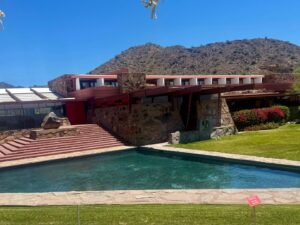
Taliesin West – Frank Lloyd Wright’s winter home and architectural school (UNESCO World Heritage site).
-
Desert Botanical Garden – stunning desert plants and seasonal exhibits (like Chihuly glass, please see our Seattle Post)
Food & Dining
-
A thriving Southwestern and Mexican-inspired food scene.
-
James Beard award-winning chefs and inventive farm-to-table dining.
-
Local treats: prickly pear margaritas, Sonoran hot dogs, and mesquite-grilled dishes.
Shopping & Relaxation
-
Scottsdale (next door) is known for upscale shopping, galleries, and resorts.
-
Luxury spas and resorts make Phoenix a favorite for relaxation getaways.
Events & Sports
-
Spring Training Baseball (Cactus League in March) – fans flock in from all over.
-
Music & Festivals: Phoenix Open (golf), Arizona State Fair, and cultural festivals.
-
Professional sports: NBA’s Suns, MLB’s Arizona Diamondbacks, NFL’s Cardinals, NHL’s Coyotes.
Visit Scottsdale and Eat Big
When visiting Phoenix, it is a mistake not to spend some time in Scottsdale. From relaxed lunches to lively evenings, Cos and Robin's time in Paradise Valley and Scottsdale in 2026 was a bit of a foodie whirlwind—in the very best way. They began at Hearth 61 in Paradise Valley, where the menu celebrates simple, beautifully prepared dishes cooked over an open hearth, a fitting nod to the area’s heritage.

Lunch at Cielo at ADERO offered a peaceful midday escape, with sweeping desert views that seem to stretch on forever. By contrast, dinner at Luna by Giada in downtown Scottsdale brought a completely different energy—vibrant, stylish, and buzzing well into the evening.
In between meals, they stepped into history at Frank Lloyd Wright’s Taliesin West, his remarkable winter retreat. The architecture and desert landscape blend seamlessly. And, of course, a stop at PGA Scottsdale added a touch of classic Arizona leisure to the mix.
A few days in Scottsdale, and a handful of unforgettable experiences—and just enough time to realize they'll need to come back.
Best Time to Visit Arizona: The Grand Canyon
The Spring while a dry heat, and Fall are the best times to visit the Grand Canyon. You can visit in the summer, but it will be ncrowded, and we don't recommend the winter.
Rafting through the Canyon on the Colorado River
The Grand Canyon is certainly a must see when visiting the northern part of Arizona. There are multiple ways to see the Canyon. Cos rafted down the Colorado River in his younger days. Back in the 90s, Cos took a pontoon raft with a guide. This was a safer ride than your own raft. Plus, he got to depart the canyon by helicopter. You can hike out, but you had better be in good shape as it is all straight up.
Depending on the time of the year, you can definitely get an exciting ride with some pretty challenging rapids. That is probably the best way to see the Canyon, and you have a number of options as to how many days you are on the river. You can put in the river up in Page, Arizona. And you have a number of ways to leave in addition to a tough hike up the cliff. If you choose this option, make sure you book it far in advance.
Visiting the South Rim
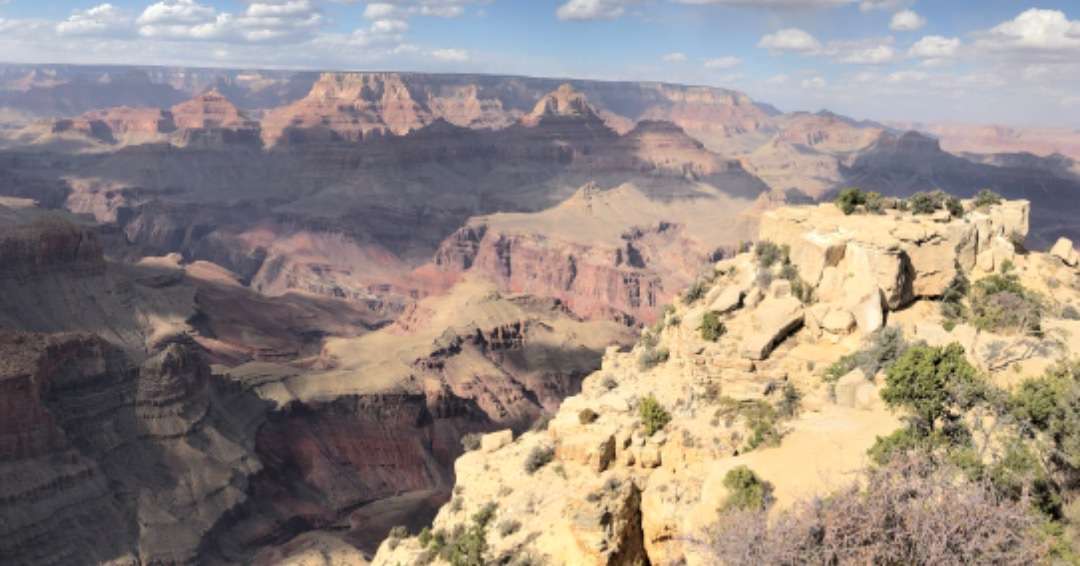
Most people will visit on the South Rim which has some great views and plenty of hikes and other attractions to keep the kids busy. To get there, it is just a short ride from Flagstaff and an hour longer from Sedona.
Cos and Robin revisited the Grand Canyon in 2026. Cos realized this was the fifth time he had come to the Grand Canyon. It never gets old, and there is usually something new to see. On this trip, for the first time, their visit to the Grand Canyon was part of a Road Scholar Northern Arizona Tour. The tour began at the Desert View Watchtower, rising unexpectedly from the landscape like something ancient and storied. Designed in 1932 by Mary Colter, the tower was inspired by Ancestral Puebloan structures, and it feels every bit as though it has stood here for centuries.

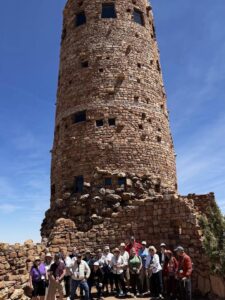
From the top, the views stretch endlessly — the Colorado River winding far below, the Painted Desert in the distance, and a sense of vastness that’s hard to put into words. It’s both a lookout and a quiet introduction to the deeper cultural history of this land.

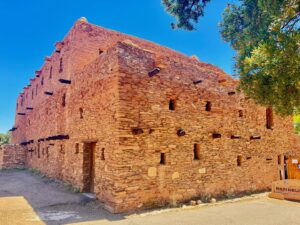
Moving west along the South Rim, the architecture continues to tell its story — each building thoughtfully placed, each one adding to the experience without ever competing with the canyon itself. We first passed the Hopi House, one of the most famous historic buildings on the south rim.
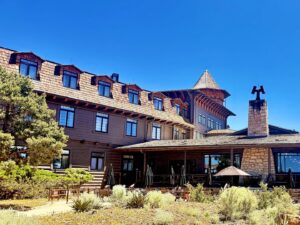
Then comes El Tovar, grand yet perfectly at home on the rim. Opened in 1905, it brought an unexpected elegance to this remote setting, welcoming early travelers arriving by train with warmth and comfort. Its lodge-style design, with deep timbers and wide windows, feels both substantial and inviting — a place where generations have paused to take in their first view of the canyon.
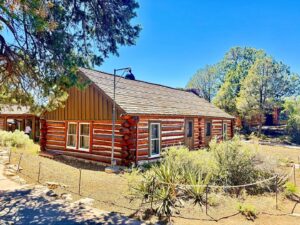
Just nearby sits the much more modest Bucky O’Neill Cabin, the oldest structure on the South Rim. Dating back to the 1890s, it offers a glimpse into the canyon’s earliest days of tourism, when the journey itself was part of the adventure. Built by a true frontier character, the cabin stands as a simple reminder of a rugged and fascinating past.
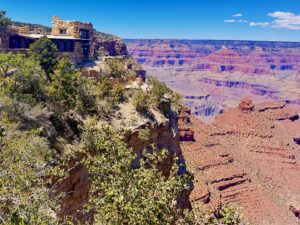
And finally, perched right on the edge, is Lookout Studio — perhaps the most dramatic of all. Designed by Mary Colter in 1914, it appears to emerge directly from the canyon walls. Its rough stone, uneven lines, and intimate terraces draw you outward, encouraging you to linger and look just a little longer.
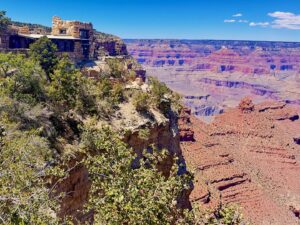
What ties all of these places together is a quiet brilliance: none of them try to compete with the canyon. Instead, they complement it — blending into the landscape with natural materials and thoughtful design. Incredible day—but a long one—traveling from Sedona through Flagstaff and on to the South Rim of the Grand Canyon. Seeing it again, under perfect skies, was a beautiful way to close out our spring vacation. We’ll let the photos tell the story.
Visiting by Helicopter to the West Rim
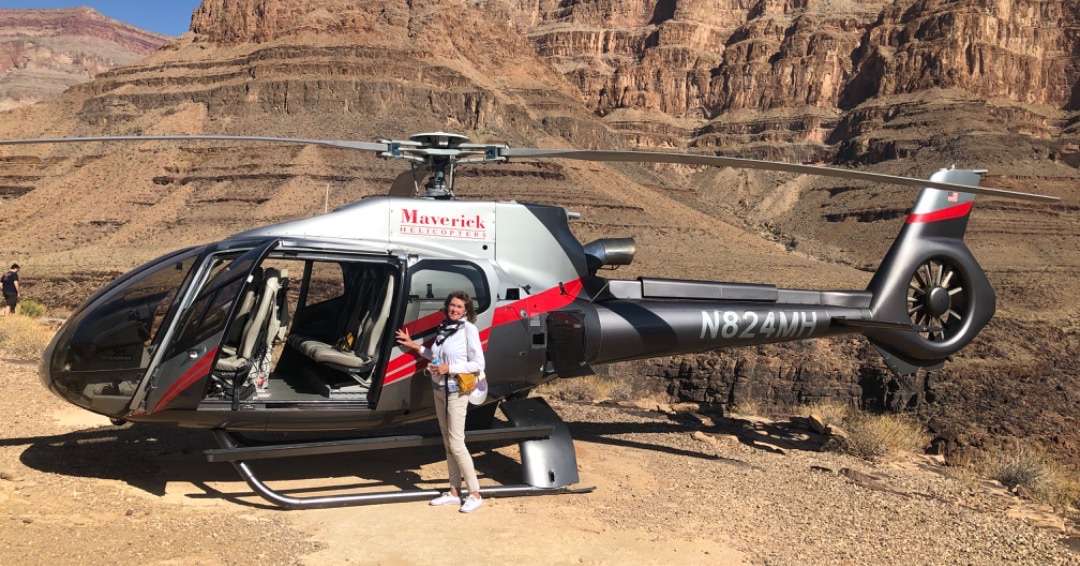
In a previous visit, Cos and Robin flew in from Las Vegas by helicopter, passed the Hoover Dam and landed on the West Rim. It is not as dramatic as the South or North Rims but is still a very scenic experience. Check out our Small Group Tours Post for more information about group tours, and visit our Things to Do in Las Vegas Post to learn more about visiting by helicopter from Las Vegas.
Horseshoe Bend in Northeast Arizona
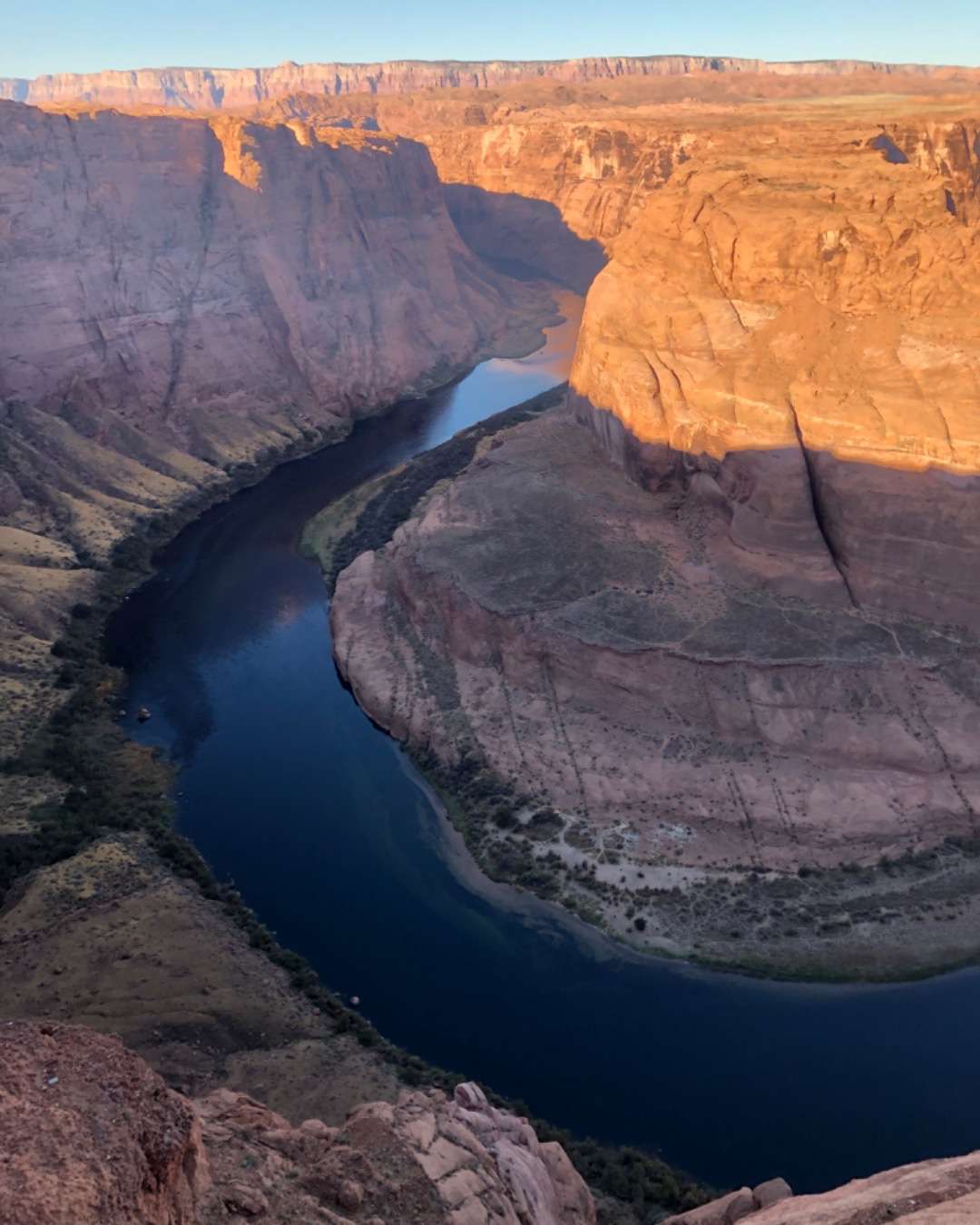
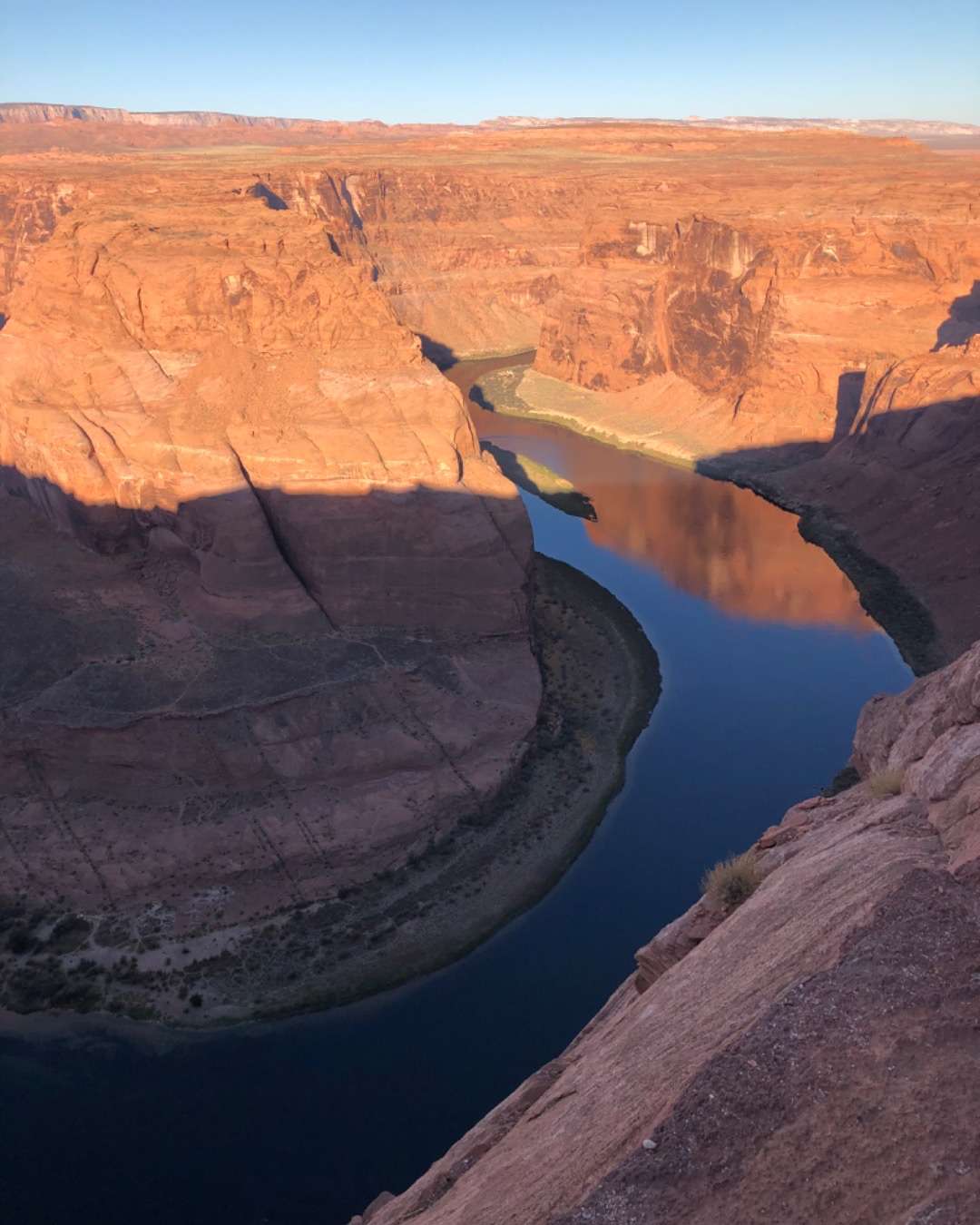
However, for some real beauty, head up the Colorado River for a road trip. On your day trip. before you get to Page, Arizona, you will find Horseshoe Bend. It is one of the most beautiful places on the River. There is a very short, easy hike (fifteen minutes on a paved walk) from the parking area to the Bend in the river, and it is well worth the walk.
Arizona Beyond Phoenix and the Grand Canyon
Arizona has some of the best scenery you will find in the USA. You will love to visit all over the state, not just along the Colorado River. The Colorado River forms the famous Grand Canyon. But you will also find beauty in Sedona and the numerous National Parks that exist within the state. We strongly recommend you visit Sedona, Flagstaff and its local National Parks, and the Montezuma Castle.
Montezuma Castle
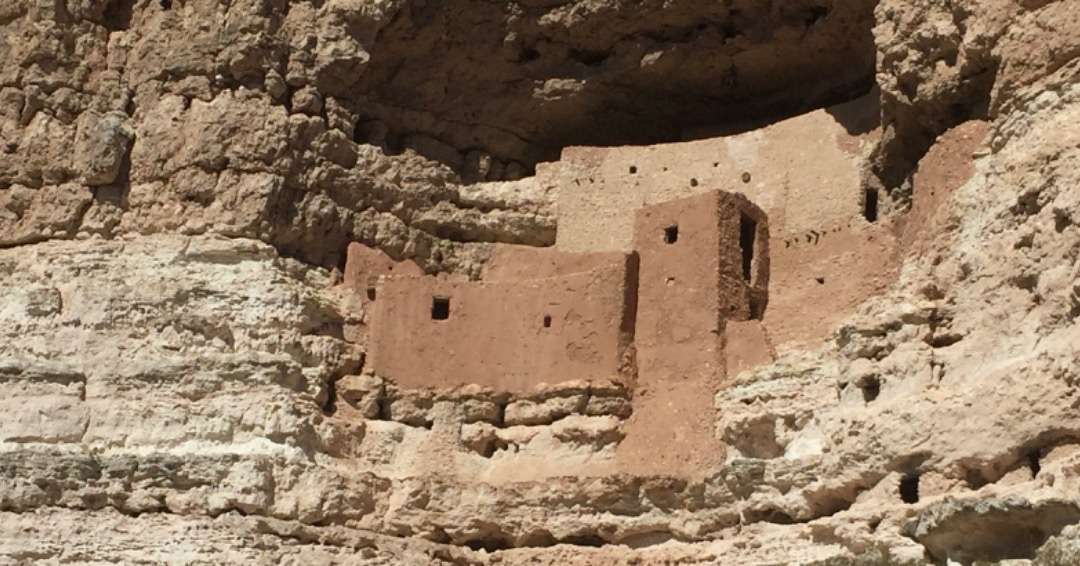
South of Flagstaff, near Sedona and Prescott is Montezuma Castle National Monument. The misnamed castle (Montezuma, the Aztec Chief, had nothing to do with the Castle’s construction) is a classic example of ancient cliff dwellings built by native Sinagua Americans living in the area in the 12th to 15th century. It was built high on the cliff to avoid floods from the Beaver Creek. Remarkable to think of life on these cliffs!
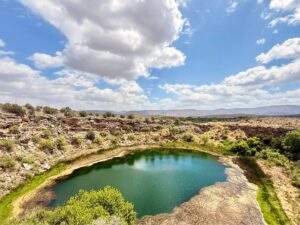
In addition to visiting the mis-named Montezuma Castle, when Cos and Robin visited in 2026, they also visited the mis-named, near-by Montezuma Well. It is a large natural limestone sinkhole with cliff dwellings much smaller than those at the castle. The well is feed by an underground spring. the ancient Sinagua people used it for irrigation over 1,000 years ago.
Best Time to Visit Sedona, Arizona
About an hour South of Flagstaff is Sedona, one of the most scenic places we have visited. Sedona is filled with large red sandstone formations that actually glow when the sun catches them usually early in the morning.


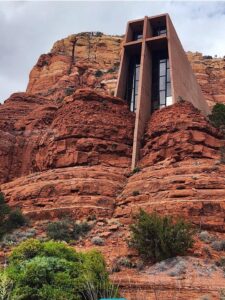
There is an amazing Chapel, The Chapel of the Holy Cross not far from downtown. It is seventy feet high and sits atop a red rock cliff.

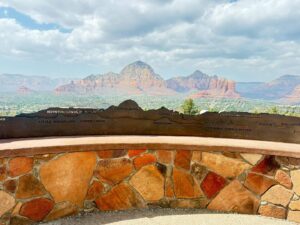
An interesting place to visit in Sedona is the Airport Mesa where you can find the Airport Vortex and a magnificent panoramic view of the mountains, In the forefront of the picture below is a metal depiction of the mountains in the background.
A visit to Sedona is not complete until you take a short ride west of the city to see the Red Rock State Park. While there we spent the morning at Red Rock State Park, where we were treated to an engaging and insightful geology overview by Sherri O’Neil, an expert on the geology of the rock formations, and of the Grand Canyon.
From Sedona Visit Jerome and the Verde Valley
Day two of Cos and Robin's 2026 visit to Sedona brought them to historic Jerome, once a bustling center of copper mining (with a bit of gold and silver as well).
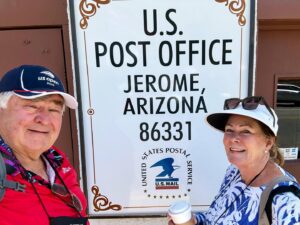
After a fascinating lecture at the state park, they had time to explore this former “ghost town,” now full of character and charm. Here is a picture that impressed Robin in one of the local galleries,

The highlight of the day, however, was the spectacular train ride through the Verde Canyon—an experience as scenic as it was memorable.
When is the Best Time to Visit Arizona: Flagstaff
Flagstaff is at a much higher altitude than the southern part of the state. Therefore, unless you are planning on going skiing, April through September is probably your best choice.
There are three very scenic National Parks/Monuments in the Flagstaff area that are worth a visit: Sunset Crater Volcano, Wupatki National Monument, and Walnut Canyon National Monument where you gain great insight into what life and the community had been in this region. All three parks are within an hour drive.


Visit Arizona to Learn About the Native People
Perhaps the best reason to visit Arizona is to learn about the native people.
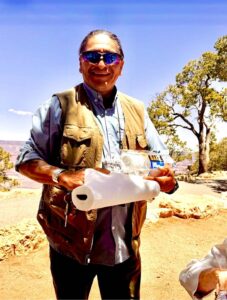
Arizona’s Native peoples form one of the most culturally rich, historically deep, and geographically diverse Indigenous landscapes in the United States. At the highest level: 22 federally recognized tribes live in Arizona today, and their reservations cover over 27% of the state’s land area. The Navajo Nation and the Hopi Tribe were the two groups that we learned the most about from our Tour guide, Fil, a native Hopi, when we visited Sedona and the Grand Canyon in 2026.
Deep Historical Roots (12,000+ years)
Archaeological evidence shows humans living in Arizona at least 12,000–13,000 years ago, beginning with Paleo‑Indian hunters who tracked mammoths and other megafauna.
Over millennia, several major civilizations emerged:
• Hohokam — master canal builders who engineered 1,000+ miles of irrigation canals in the Salt and Gila River valleys (450–1450 CE). Their descendants include the Tohono O’odham and Akimel O’odham.
• Ancestral Puebloans — builders of cliff dwellings and multi‑story stone villages across northern Arizona.
• Mogollon — mountain‑forest agriculturalists with distinctive pottery traditions.
• Sinagua — known for their pueblos and trade networks across central Arizona.
These cultures developed agriculture, astronomy, architecture, and long‑distance trade networks long before European arrival.
Native Nations Today
Arizona’s tribes remain central to the state’s identity and economy. They maintain:
• sovereign governments
• thriving cultural traditions
• tourism enterprises
• environmental stewardship roles
• revitalization of language and ceremony
Yet many communities still face systemic challenges, including water infrastructure shortages and disproportionate health impacts.
To learn more about Indigenous First Peoples, please see our post on Indigenous People.
0 Comments