
If you are traveling to Europe, especially Paris, two often-overlooked cities are Brussels and Luxembourg. If you want to learn more about these two beautiful capital cities and how easy it is to get to and between them, keep reading. Otherwise, if you’re more interested in the more popular tourist destinations in Paris, France, please see our series of posts starting with our hub post “Best French Travel Guide: Discover Paris & More.”
Contents
- 1 Brussels vs Luxembourg
- 2 Why Visit Both Cities?
- 3 Traveling from Brussels to Luxembourg Train
- 4 Getting to the Train from Brussels Airport or from Paris, France
- 5 Family Travel Considerations
- 6 Traveling with Bicycles and Pets
- 7 Exploring Brussels
- 8 Day Trips from Brussels
- 9 Discovering Luxembourg City
- 10 Day Trip or Overnight Stay?
- 11 Beyond Luxembourg City
- 12 World War II History Near Luxembourg
- 13 Train Travel vs Flying
- 14 When Is the Best Time to Visit?
- 15 Final Thoughts – Brussels vs Luxembourg
Brussels vs Luxembourg
Few European journeys are as rewarding as combining Brussels and Luxembourg City in a single itinerary. These two capitals sit less than three hours apart by rail, making it easy to explore two of Europe’s most fascinating destinations without renting a car. Whether you’re planning a weekend getaway, a longer Benelux adventure, or a quick day trip, traveling between Brussels and Luxembourg City by train offers convenience, comfort, and excellent value.
While both are relatively small compared to major European capitals, each city delivers a unique blend of culture, architecture, cuisine, and history. Brussels impresses visitors with its grand squares, museums, and status as Europe’s capital. Luxembourg City combines dramatic fortifications, stunning valleys, and a rich heritage that has earned parts of the city UNESCO recognition.
The Contrast
Brussels is a working, slightly messy capital that carries genuine diversity and grit alongside its grandeur. Luxembourg City is a polished, almost storybook small capital, orderly enough that its free transit and near-flawless safety record feel like natural extensions of the country’s wealth rather than deliberate civic achievements.
Robin and Cos’s Travels to Luxembourg and Brussels
We traveled by train between the two cities in 2026. We spent two nights in Luxembourg and five nights in Brussels, using Brussels as a base for day trips to other cities in Belgium. While you may not have a full week to spend between these two cities, we recommend spending at least a few days in each, as there is plenty to see and it’s easy to reach nearby smaller cities by train.
Why Visit Both Cities?
Many travelers choose either Brussels or Luxembourg City, but visiting both provides a richer understanding of Western Europe’s diversity. These are two of the best cities for travelers who appreciate walkable centers, efficient public transport, excellent food, and fascinating history.
Brussels serves as Belgium’s political and cultural hub, while Luxembourg City is the capital of the Grand Duchy of Luxembourg. Despite their proximity, each city feels remarkably different.
A direct rail connection lets you travel effortlessly between the two capitals, with scenic countryside views along the way.
Traveling from Brussels to Luxembourg Train
The most convenient option is the direct train service operating between Brussels Central Station and Luxembourg City. Trains run throughout the day, making it easy to plan either a quick visit or a multi-day stay.
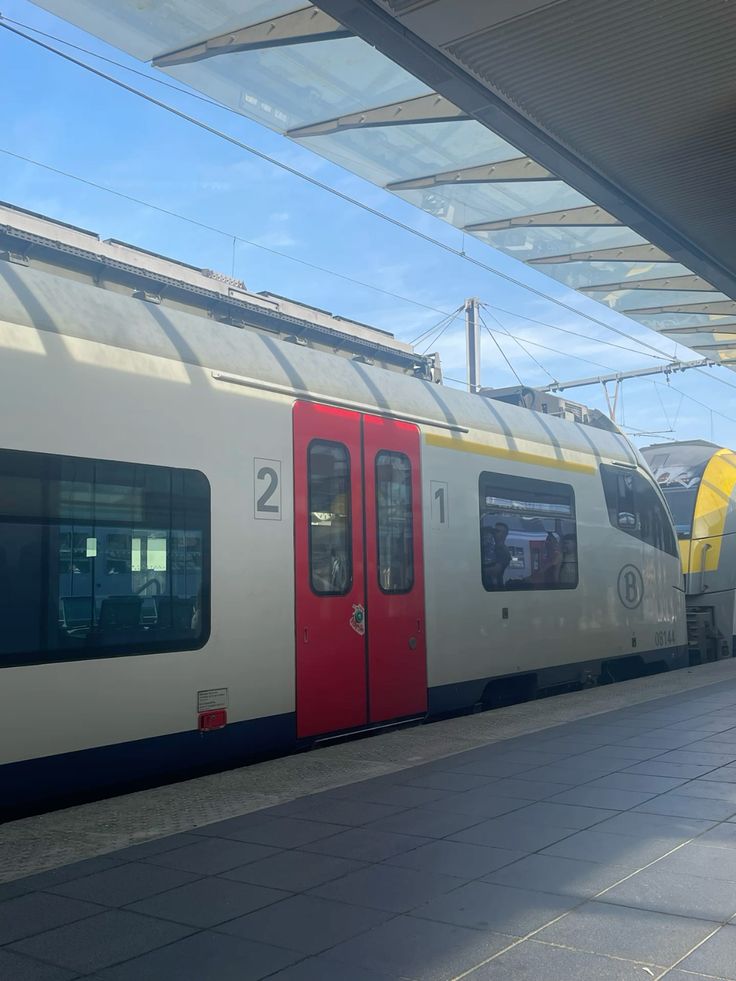
The journey takes about three hours, depending on the service you choose. Most travelers find rail much more relaxing than driving, especially compared with planning a road trip, navigating unfamiliar roads, or paying for parking in city centers.
Booking in advance often gets you cheaper tickets, though even standard fares are relatively reasonable compared with many other European rail routes. If you’re flexible, you’ll often find the lowest pricesoutside peak times.
When you buy train tickets, always make sure you have a valid ticket before boarding. Conductors routinely inspect tickets during the trip, and they may request proof of discounted fares.
Getting to the Train from Brussels Airport or from Paris, France
International visitors arriving at Brussels Airport can easily reach the city’s rail network. Frequent rail services connect the airport with central Brussels, allowing travelers to transfer easily to trains bound for Luxembourg.
This simplicity makes the route particularly attractive for visitors who have a short stay in Europe. You can land at Brussels Airport in the morning and reach Luxembourg City by lunchtime without a rental car.
If you are coming from Paris, France, direct trains take only an hour from either Paris Gare du Nord or Charles de Gaulle Airport.
Family Travel Considerations
Families often find train travel between these capitals especially attractive. Various discounts may apply to children depending on the operator and booking conditions.
Many rail operators offer half-price kids’ tickets or discounted youth fares. Some tickets also allow additional children to travel at significantly reduced rates when accompanied by adults.
Because boarding is simple and stations are close to major attractions, rail travel removes many of the stresses of family driving holidays.
Traveling with Bicycles and Pets
Cycling enthusiasts can combine rail travel with local exploration.
Many train services permit bicycles, although a bike supplement may be required. Travelers should check whether designated bicycle spaces are available before departure, especially during busy seasons. Those carrying a folding bike often have more flexibility, since some services allow compact folded bicycles without additional reservations.
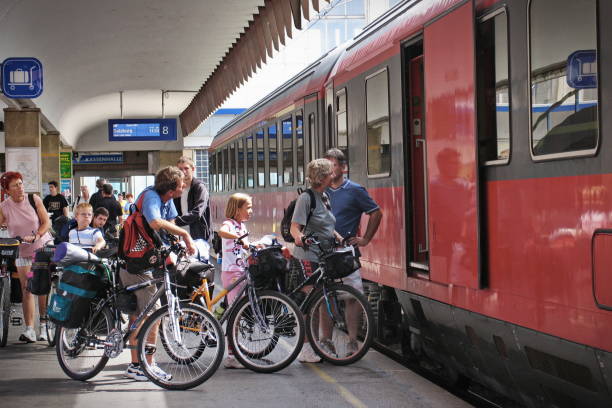
Family on holiday loading bicycles on the train. Vienna, Austria
Pet owners can also benefit from rail-friendly policies. Depending on the animal’s size and the rail company, a pet supplement may be required. However, assistance dogs are generally accommodated under special provisions.
Exploring Brussels
Brussels remains one of Europe’s most underrated capitals. Its compact city center lets visitors see many highlights in a single day.
Brussels Grand Place
The spectacular Grand Place is Brussels’ undisputed heart. Surrounded by ornate guildhalls and historic buildings, it is considered one of Europe’s most beautiful squares. We loved having lunch here and doing some serious people-watching.
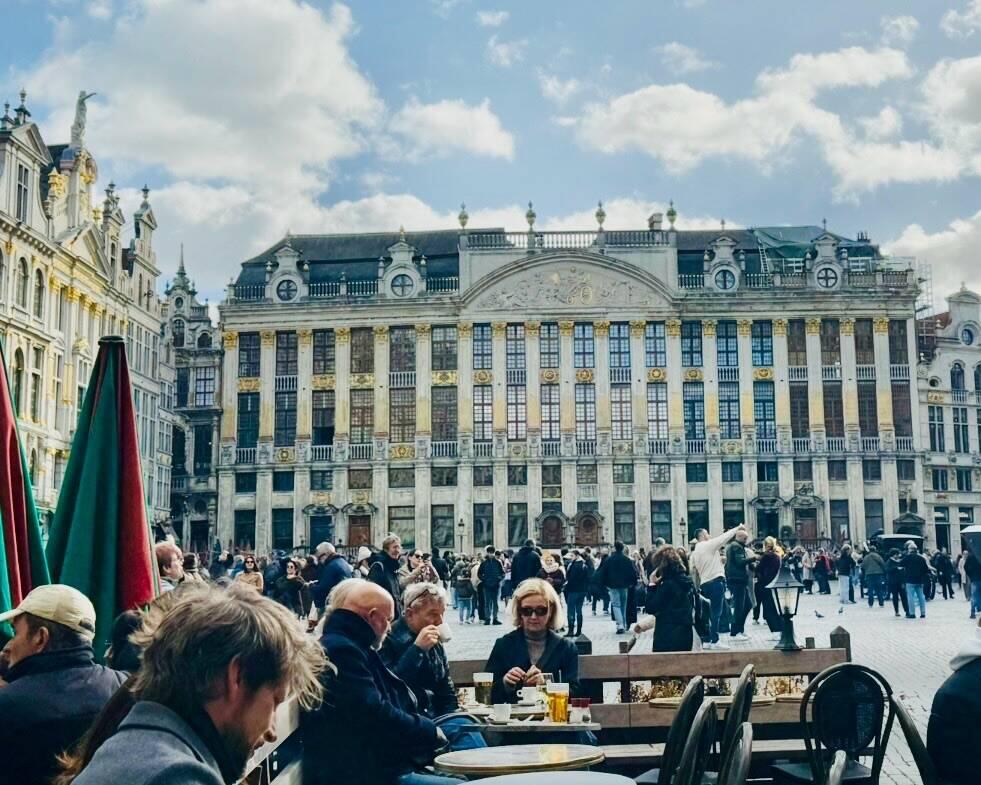
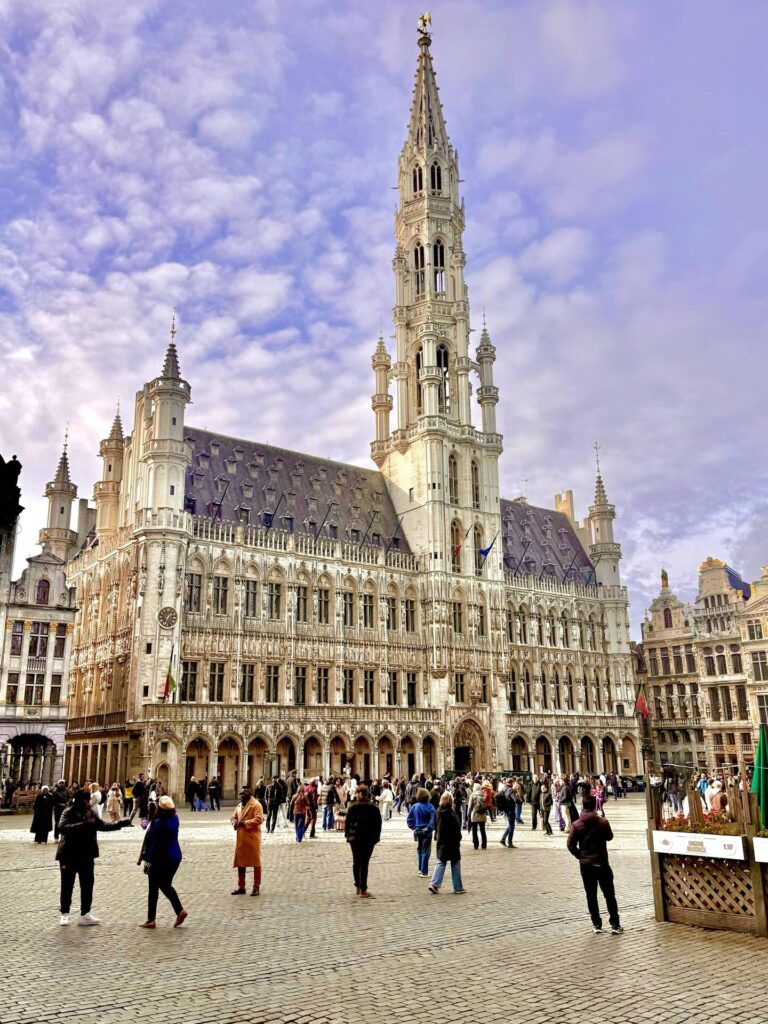
Many travelers start here, and it’s easy to see why. The architecture represents centuries of commercial prosperity and artistic achievement.
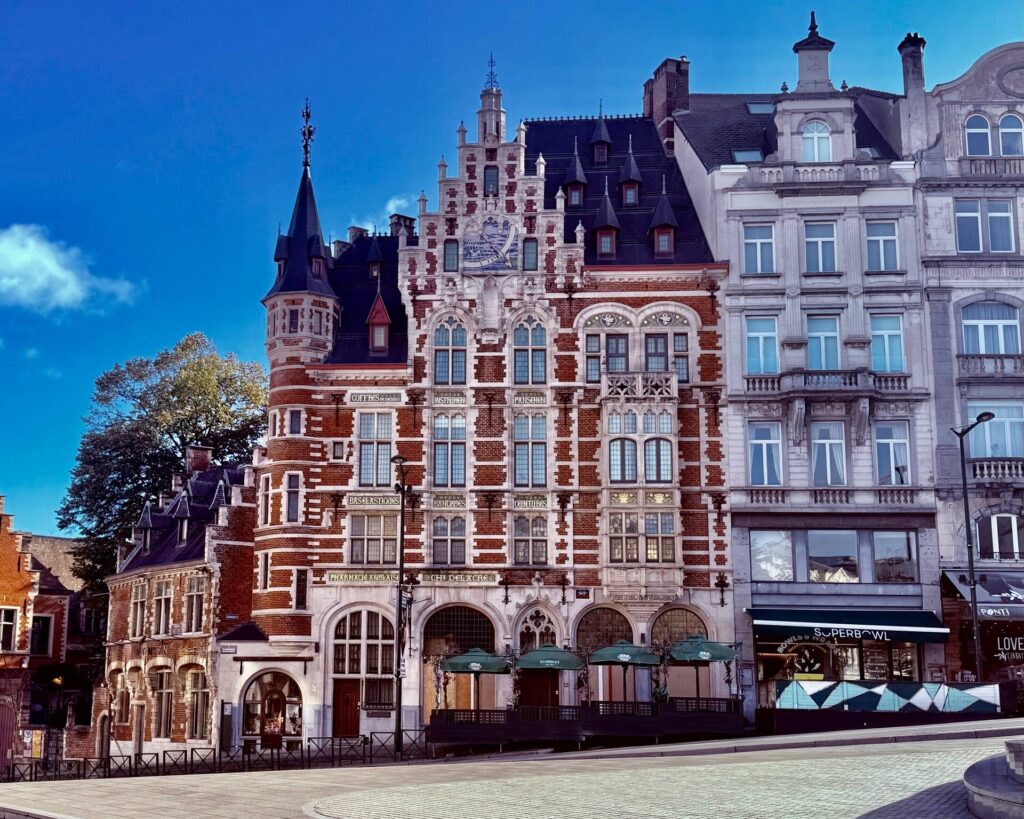
A Seat at the European Parliament
Brussels serves as the Capital of the European Union. The EU headquarters takes up a fair amount of space in central Brussels.
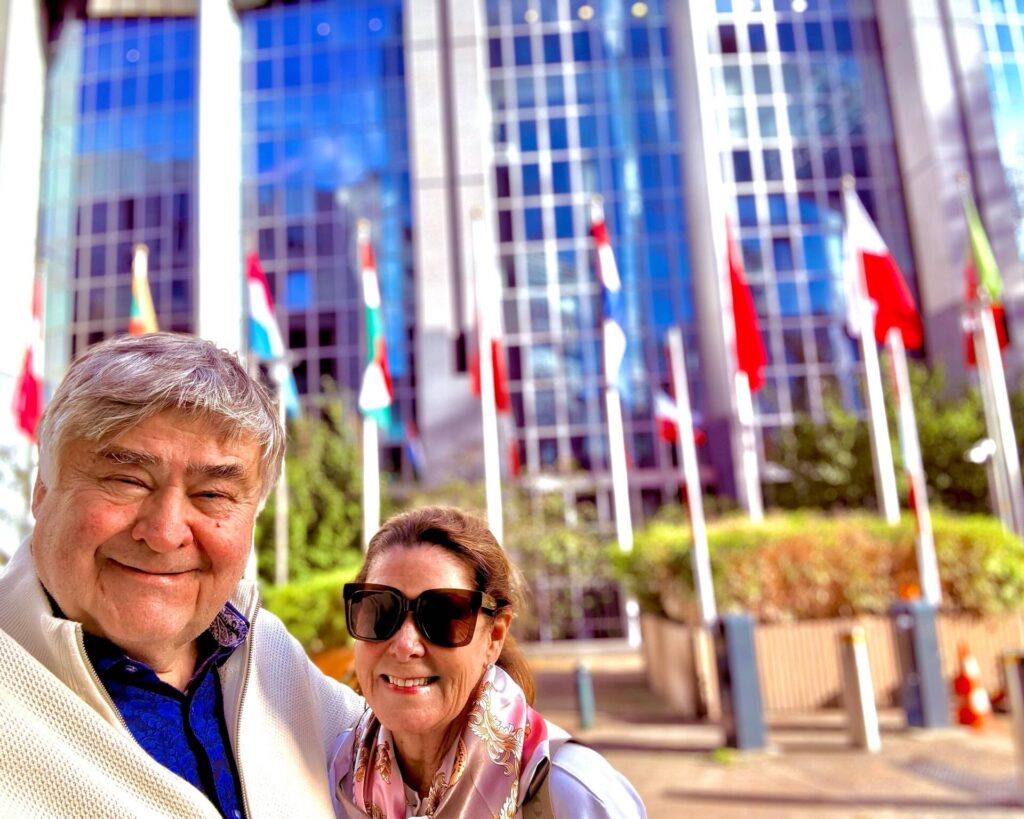
The EU is the governing body that oversees European laws for the 27 member countries.
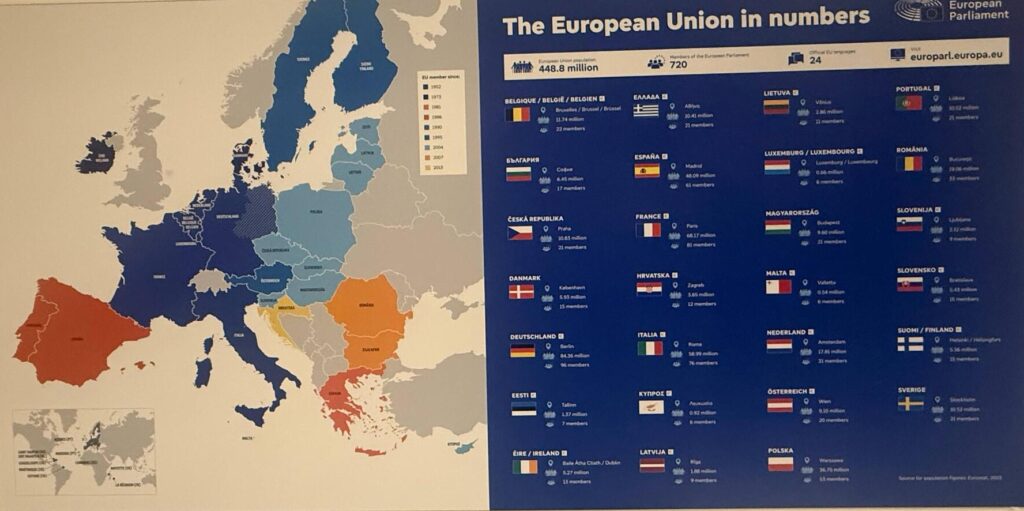
The EU has jurisdiction over the individual countries on these types of topics:
- Customs union (common tariffs on imports from outside the EU)
- Competition rules for the single market
- Trade policy with non-EU countries
- Monetary policy for countries using the euro
- Conservation of marine fish stocks
The EU coordinates with the countries on the following topics, and has the lead where the countries have granted control:
- Single market regulations
- Agriculture
- Environment
- Energy
- Consumer protection
- Transport
- Immigration and asylum
- Justice and security cooperation
- Public health (certain aspects)
- Scientific research and space programs
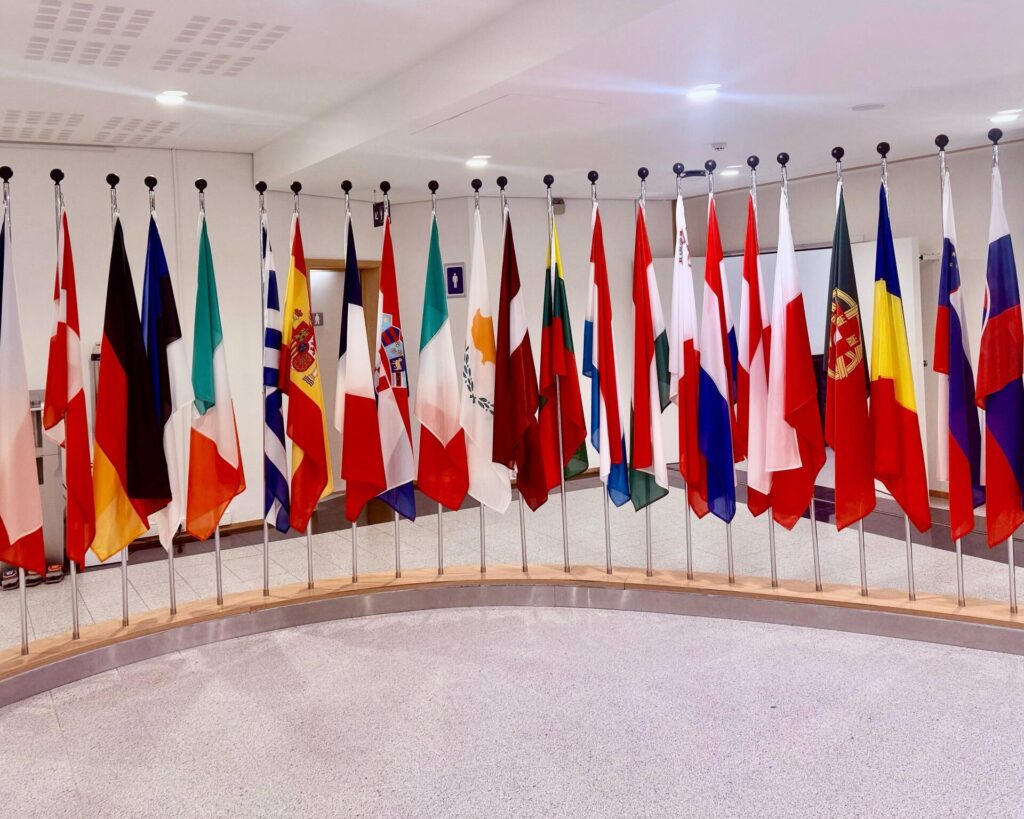
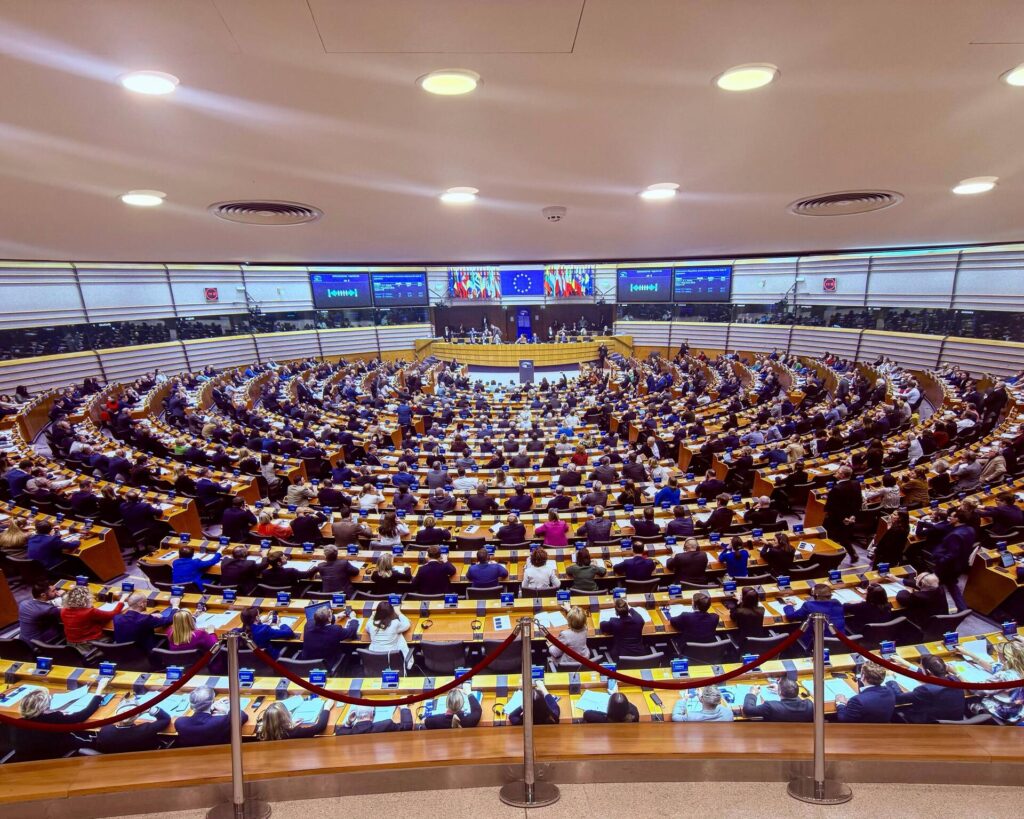
On the last day of Cos and Robin’s five-day Brussels visit, they were luckily able to enter the EU Parliament Hemicycle, the enormous semicircular chamber where the 720 elected members debate and vote on legislation affecting the EU’s 27 member countries.
Local Foods
Brussels is equally famous for its culinary traditions. Visitors should make time to sample Belgian waffles, frites, chocolates, and local beers.
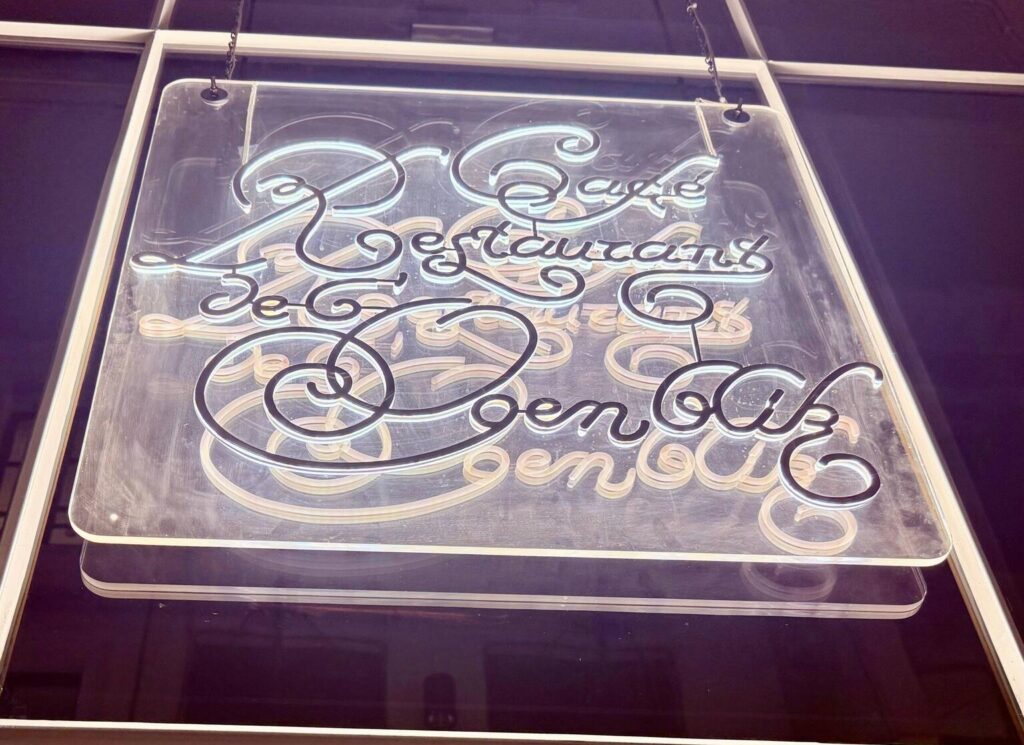
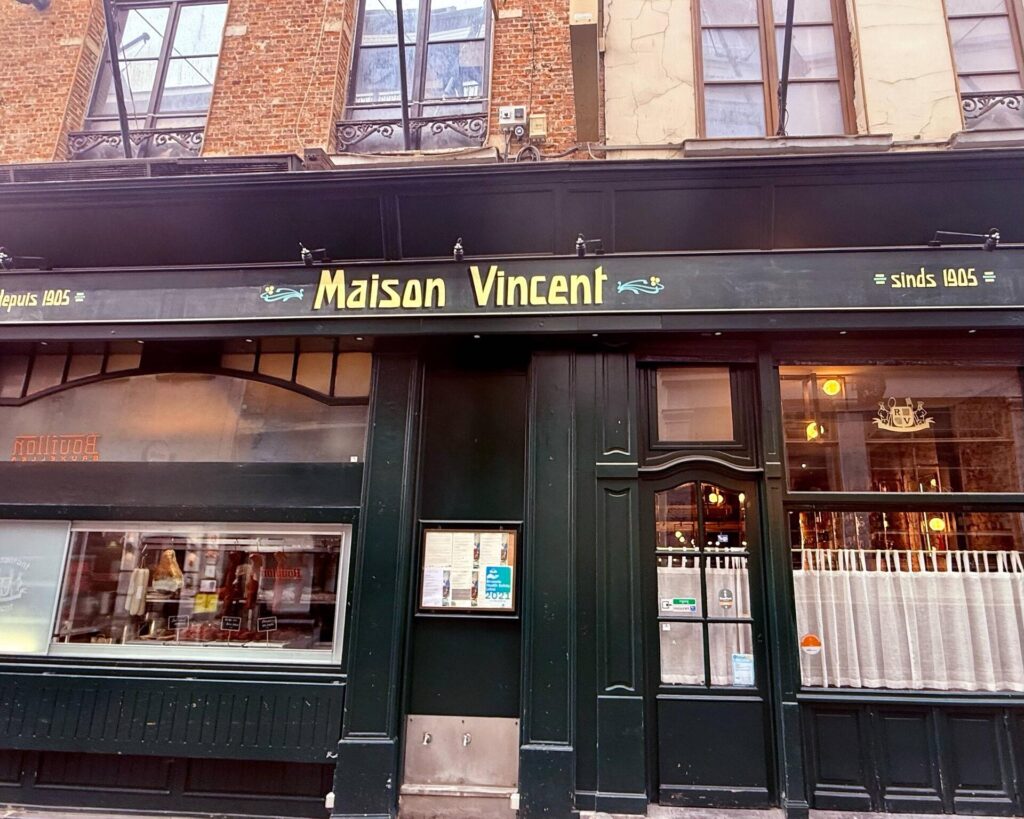
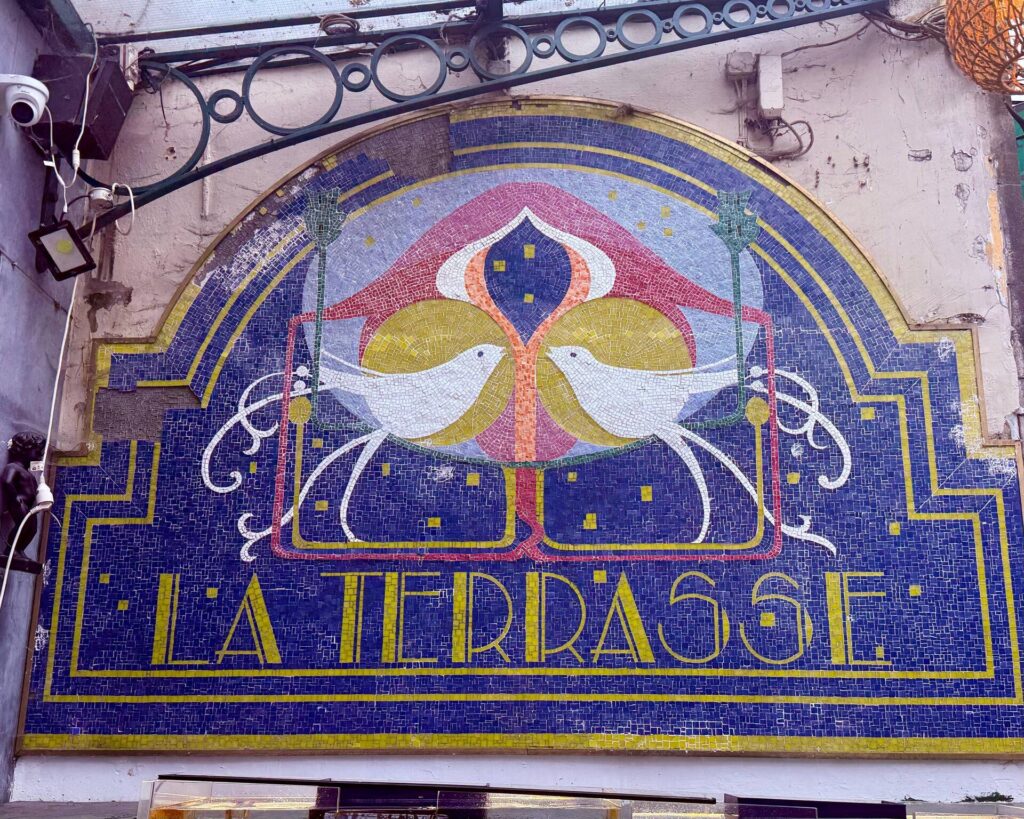
Exploring neighborhood cafés provides a genuine local experience, offering insights beyond what most tour guides include in standard itineraries. Here are photos of some of the restaurants where we enjoyed the local food:
Museums and Culture
Brussels rewards travelers who take time to delve deeper. Art museums, comic book culture, royal landmarks, and impressive churches all contribute to the city’s rich personality.
Manneken Pis
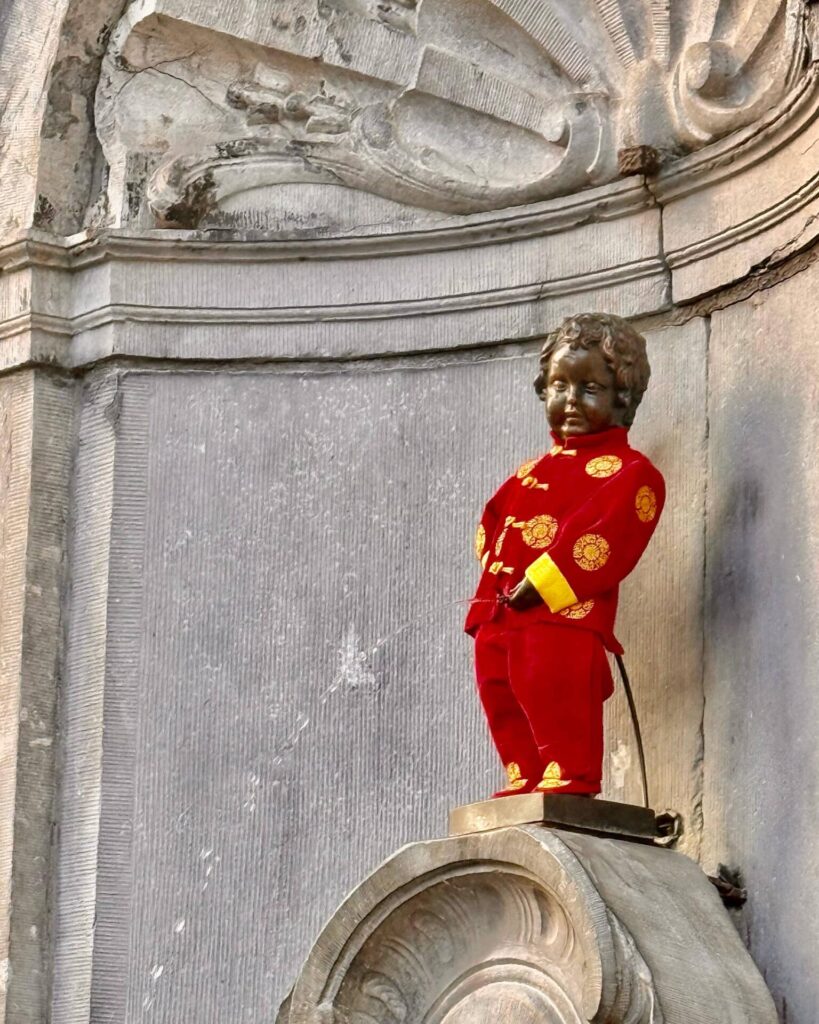
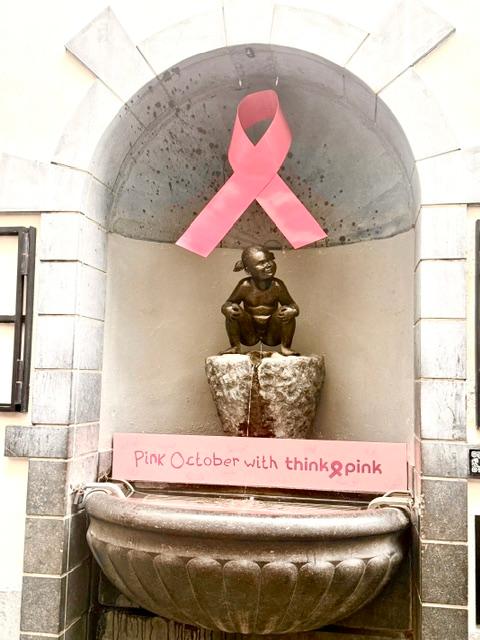
Ever since Cos first visited Brussels in1973, he has been puzzled by the statue of the little boy pissing. The statue is called Manneken Pis, which translates from Dutch as “Little Peeing Man.” Though only about 55 cm (22 inches) tall, it has become one of Brussels’ and Belgium’s most famous symbols.
Notre Dame Cathedral
Brussels wouldn’t be a European Capital City without a Notre Dame Cathedral. A beautiful church, with a beautiful garden directly across the street.
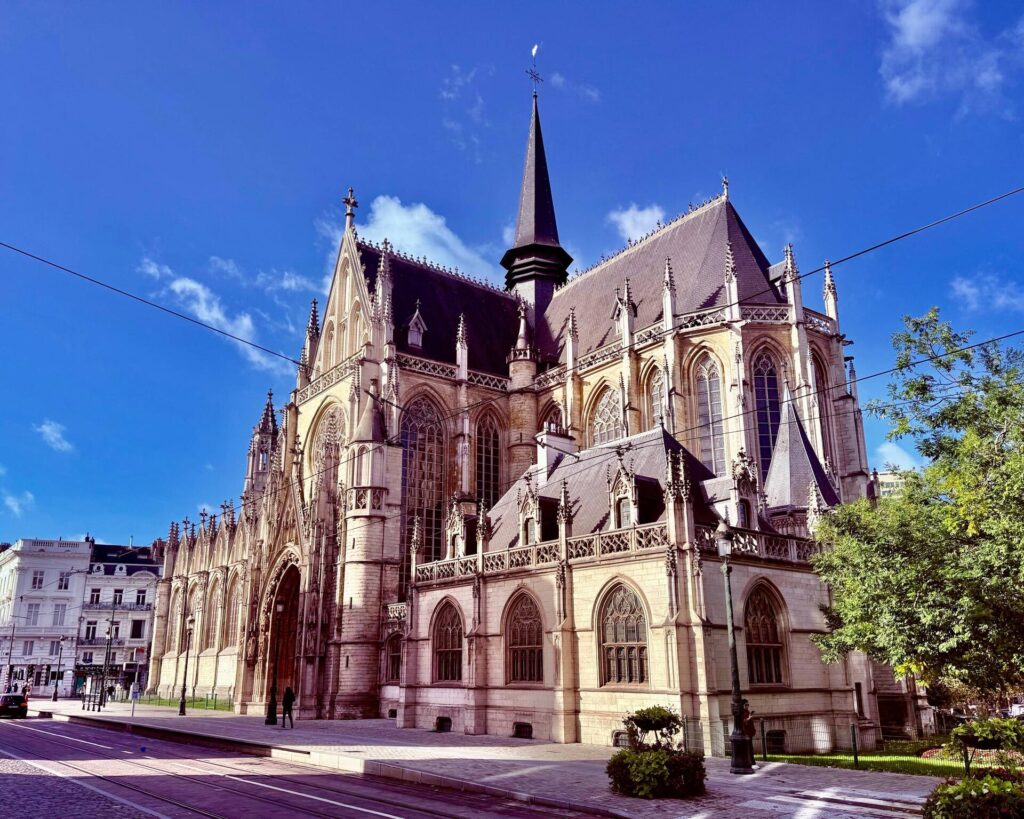
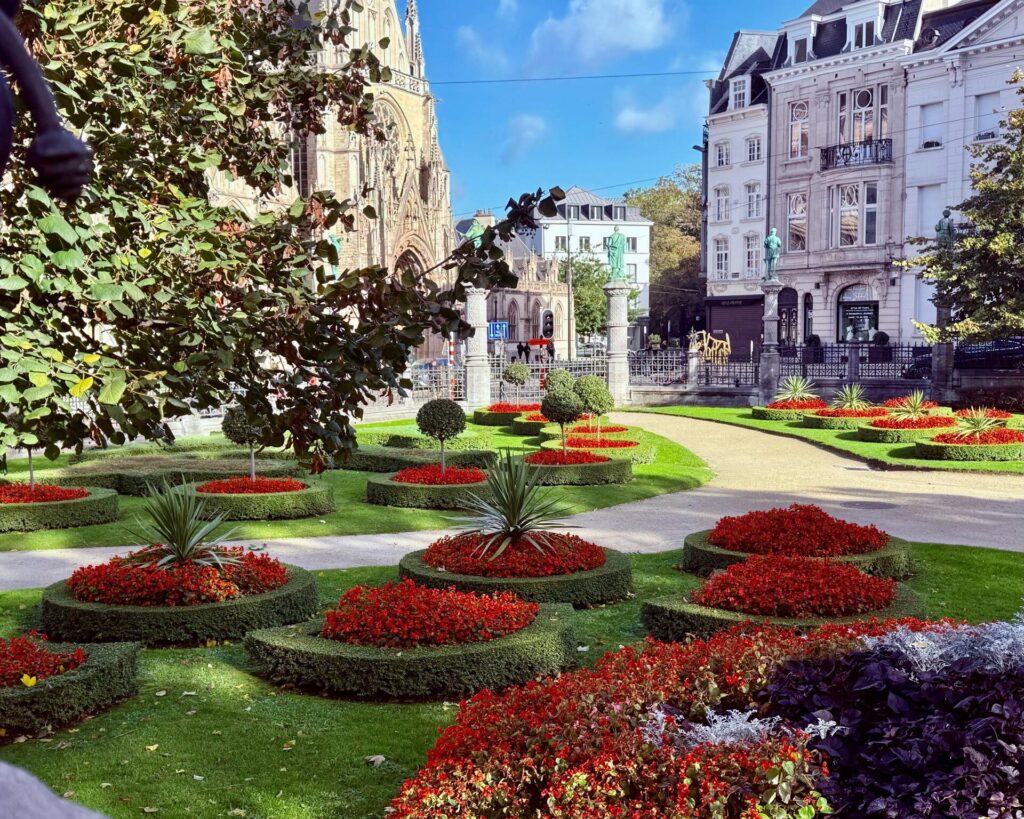
The Cathedral is well known for its beautiful stained-glass windows.
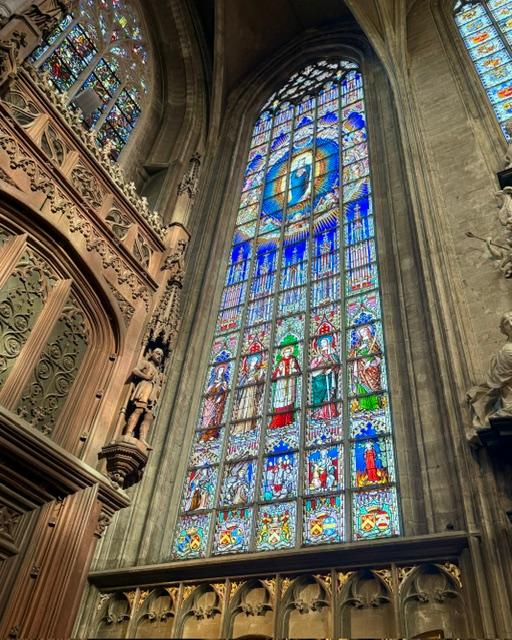
Even travelers on a tight schedule can enjoy a fulfilling visit thanks to the city’s compact layout and efficient transportation system.
Day Trips from Brussels
Day trips from Brussels by train are easy to plan. We recommend three destinations: Ghent, Bruges, and Cologne, Germany.
Ghent
Ghent is one of the easiest and most rewarding day trips from Brussels. Many travelers actually prefer it to Bruges because it is just as historic but feels less crowded and more lived-in.
Getting to Ghent from Brussels
The train is the best option.
- Direct trains run frequently from Brussels-Midi, Brussels-Central, and Brussels-North.
- Travel time is typically 30-40 minutes to Gent-Sint-Pieters Station.
- From the station, take tram 1 or enjoy a 25-30 minute walk into the medieval center.
Because the journey is short, Ghent makes an excellent half-day or full-day excursion from Brussels.
What Makes Ghent Famous?
Ghent was one of medieval Europe’s richest and most powerful cities, largely thanks to its textile trade.
Today it is famous for the Ghent Altarpiece (Adoration of the Mystic Lamb), one of the greatest masterpieces of Northern Renaissance art, painted by Hubert and Jan van Eyck in 1432.
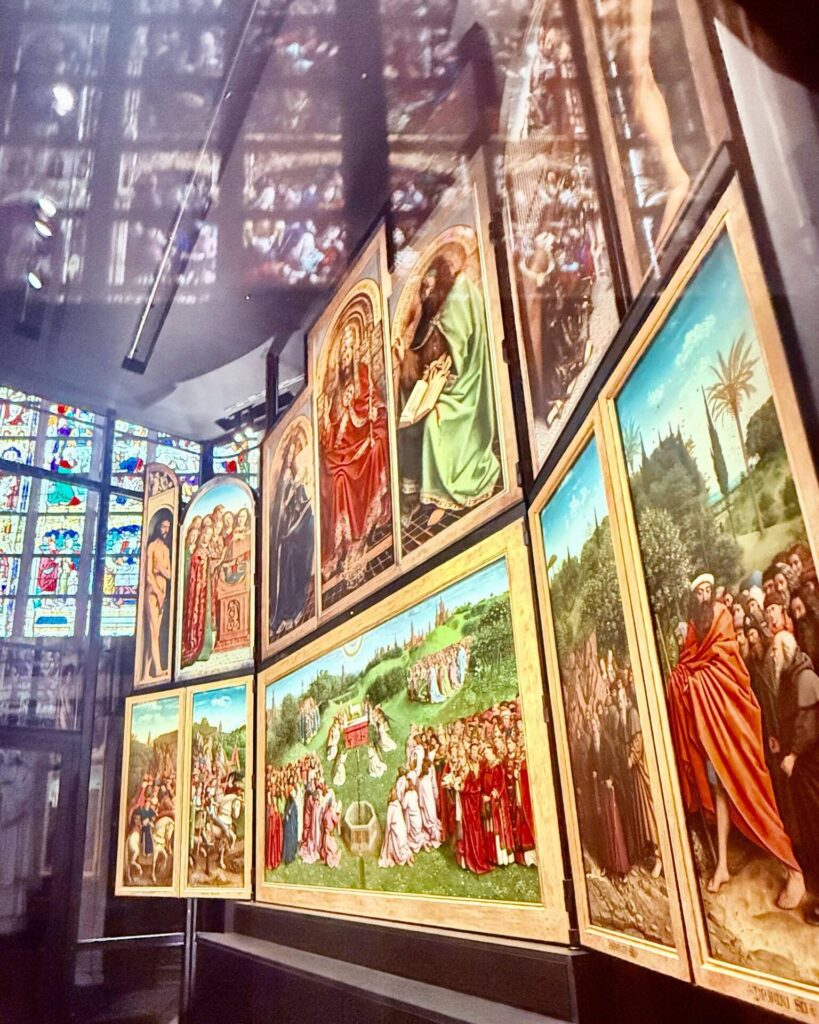
The Adoration of the Mystic Lamb is the most famous of the pictures:
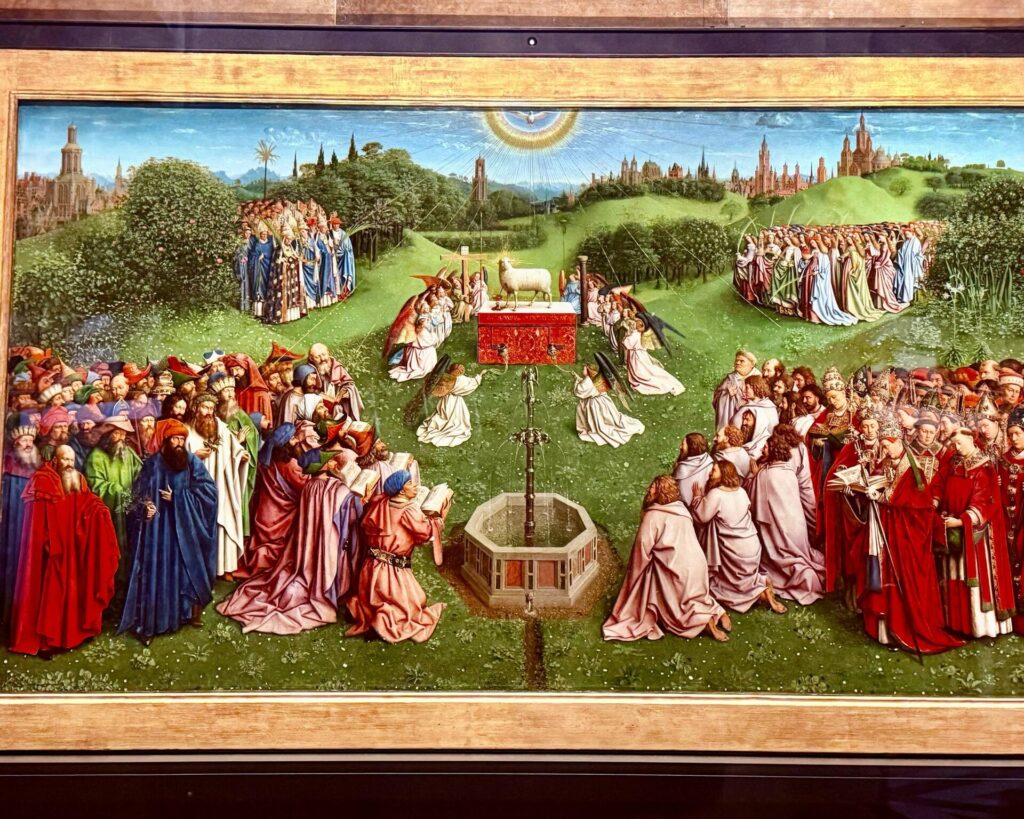
It is housed in Saint Bavo’s Cathedral.
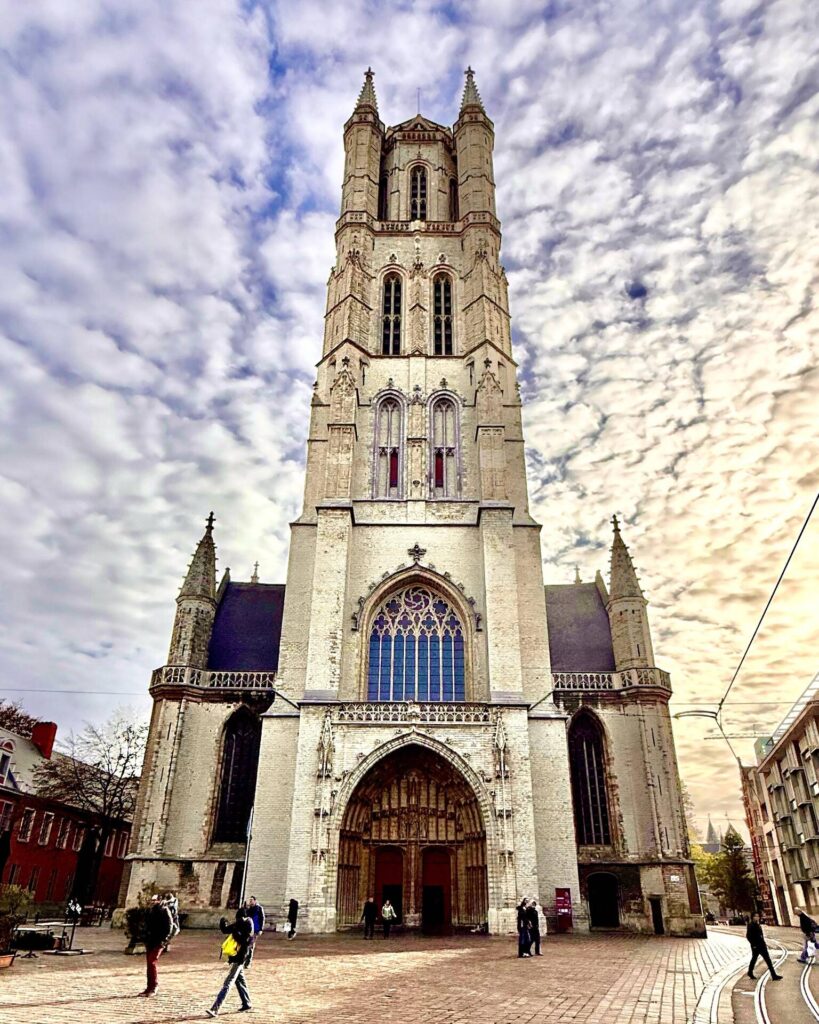
Ghent has a beautiful network of canals, guild houses, and medieval architecture, including Gravensteen Castle, a remarkably intact medieval castle in the city center. As a lively university city, it has a youthful atmosphere that differs from Bruges. Many Belgians say Ghent offers the best balance of historic beauty and authentic local life.
In addition to Saint Bavo’s Cathedral, we also recommend visiting Ghent’s Belfry. The medieval belfry is a UNESCO World Heritage Site and offers panoramic views over the city’s towers and rooftops.
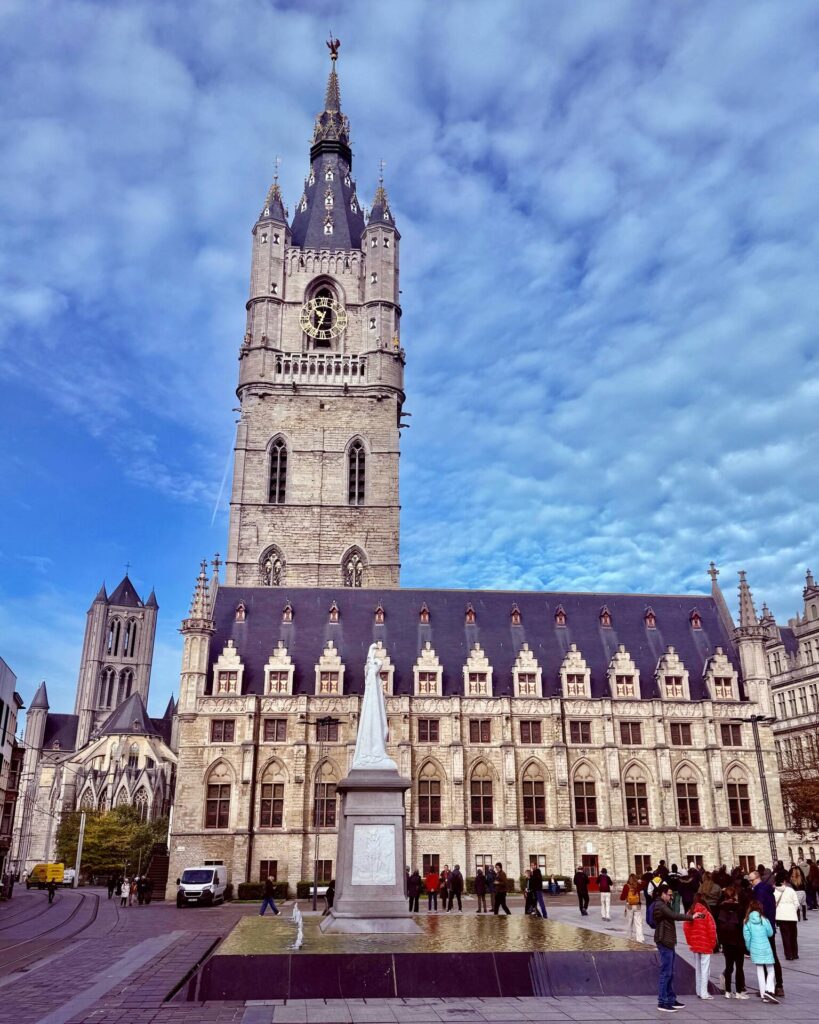
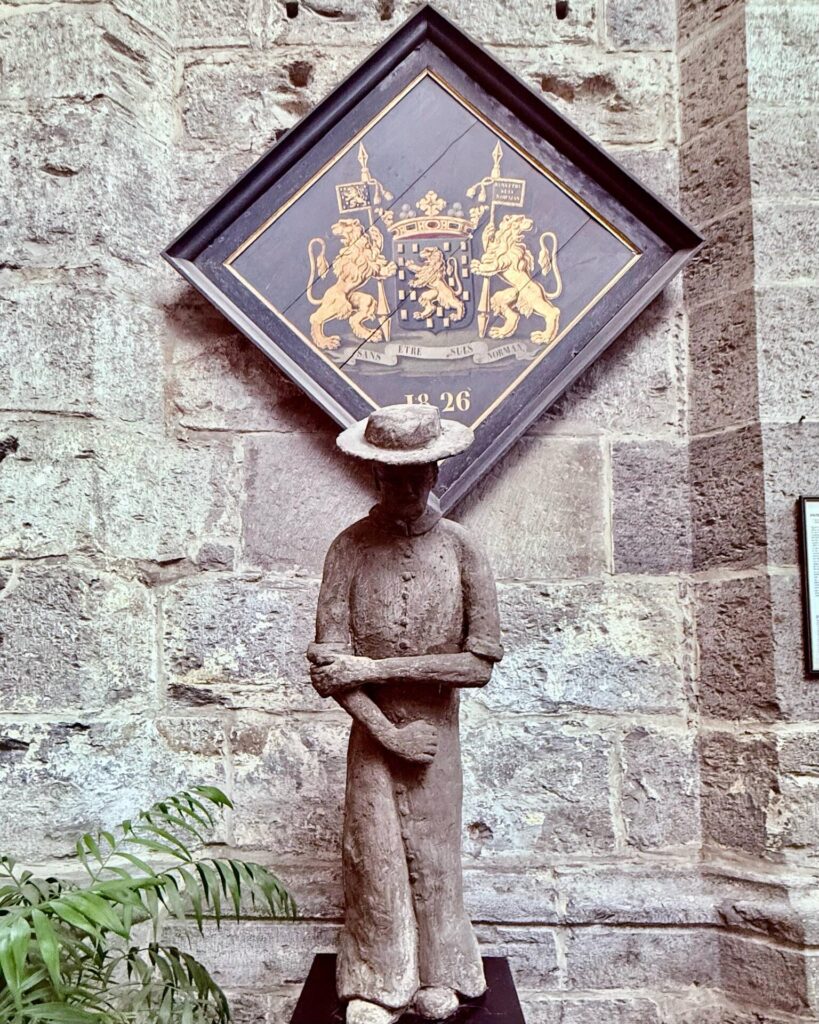
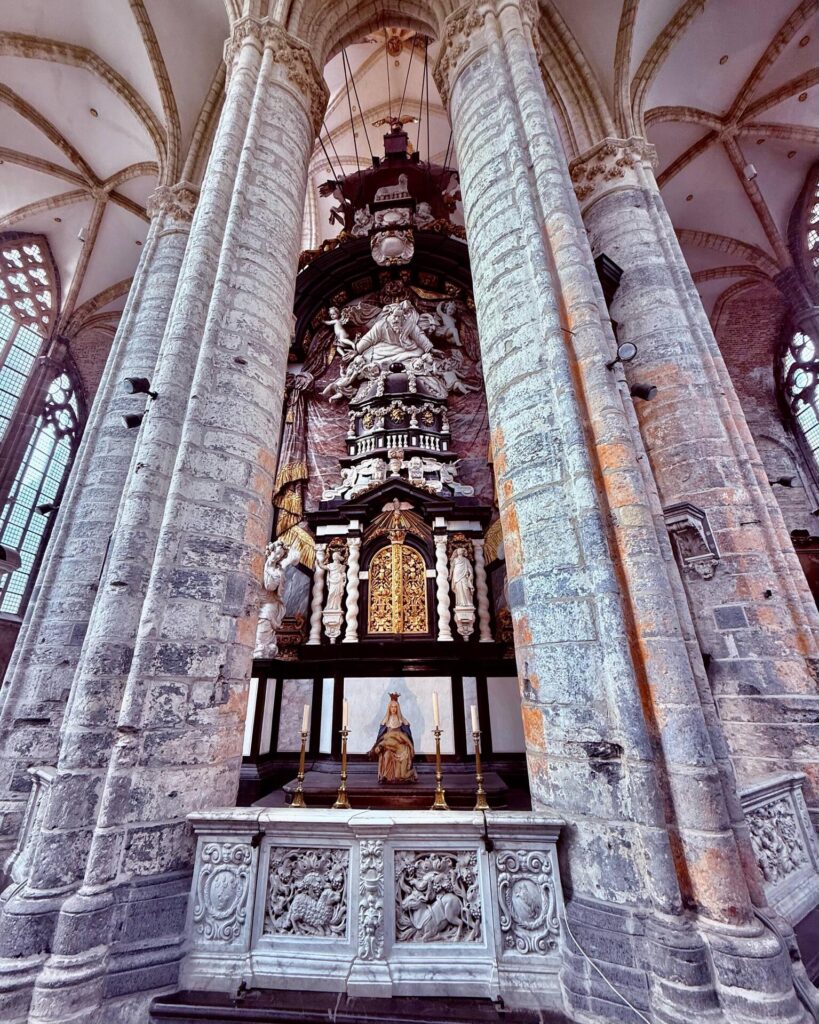
Finally, visit St. Nicholas’ Church. It is one of Belgium’s finest examples of Scheldt Gothic architecture and part of Ghent’s famous “three towers” skyline. We found the welcoming statue to be particularly humbling, quite the opposite of the main altar.
Bruges
Bruges is easily reached from Brussels, a one-hour direct train ride away. It is a great place to purchase Belgian delicacies.
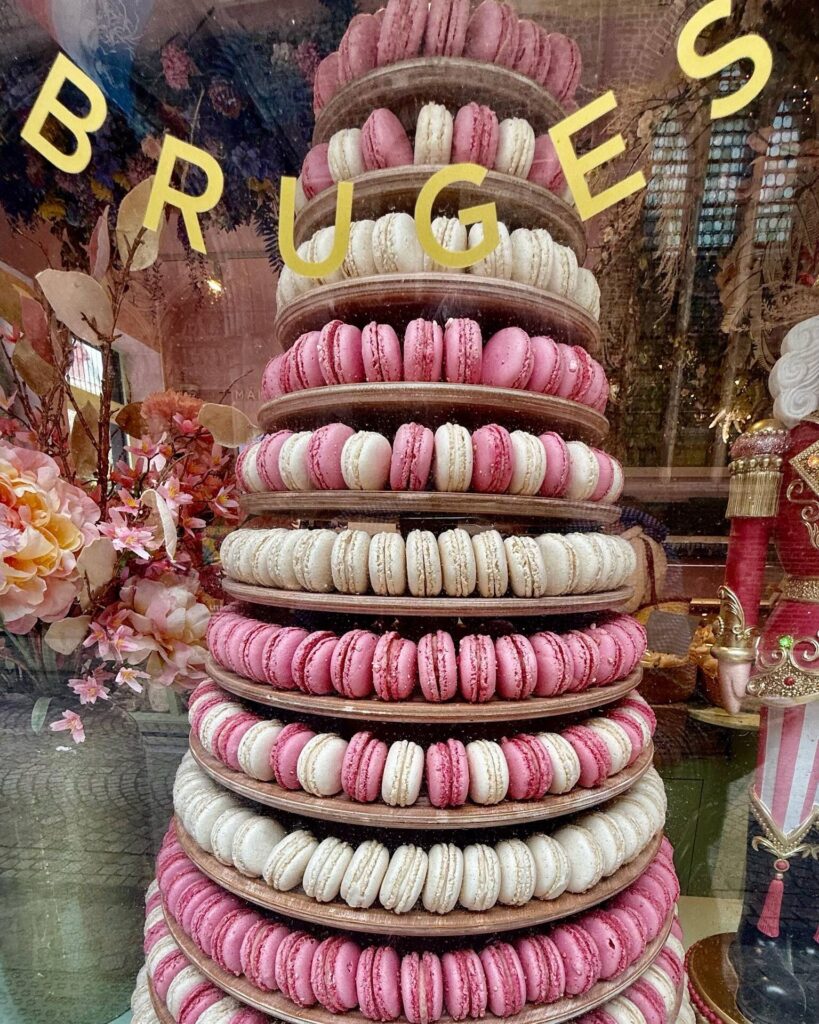
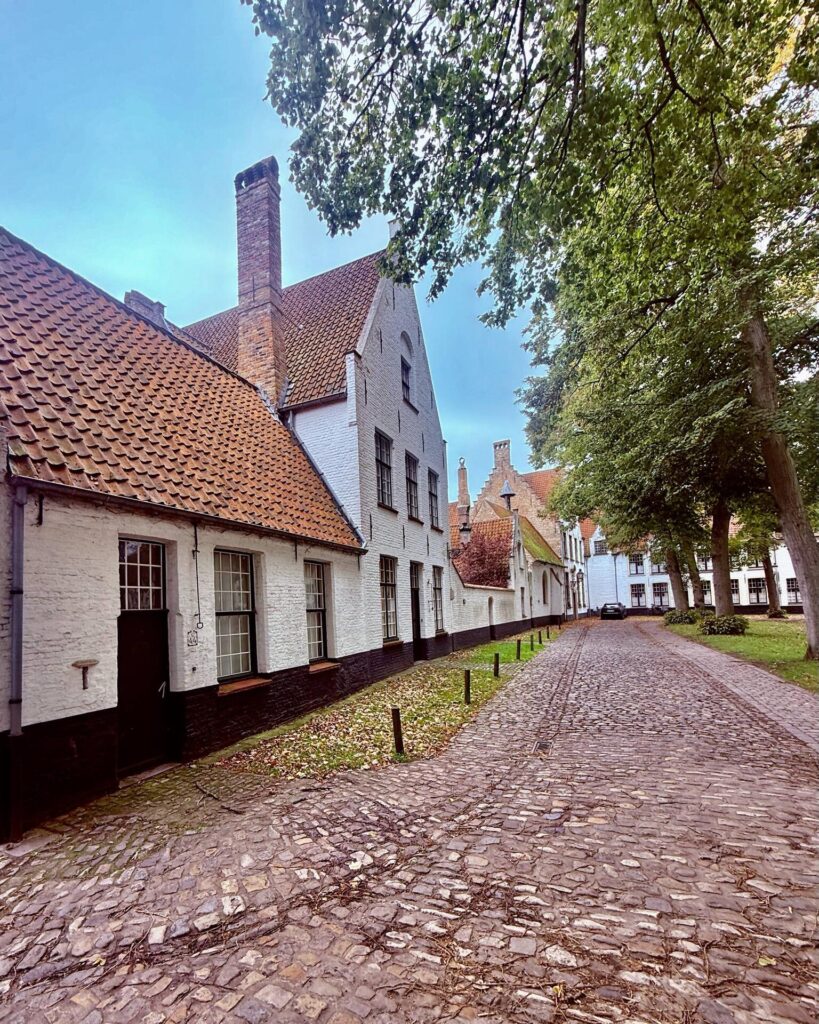
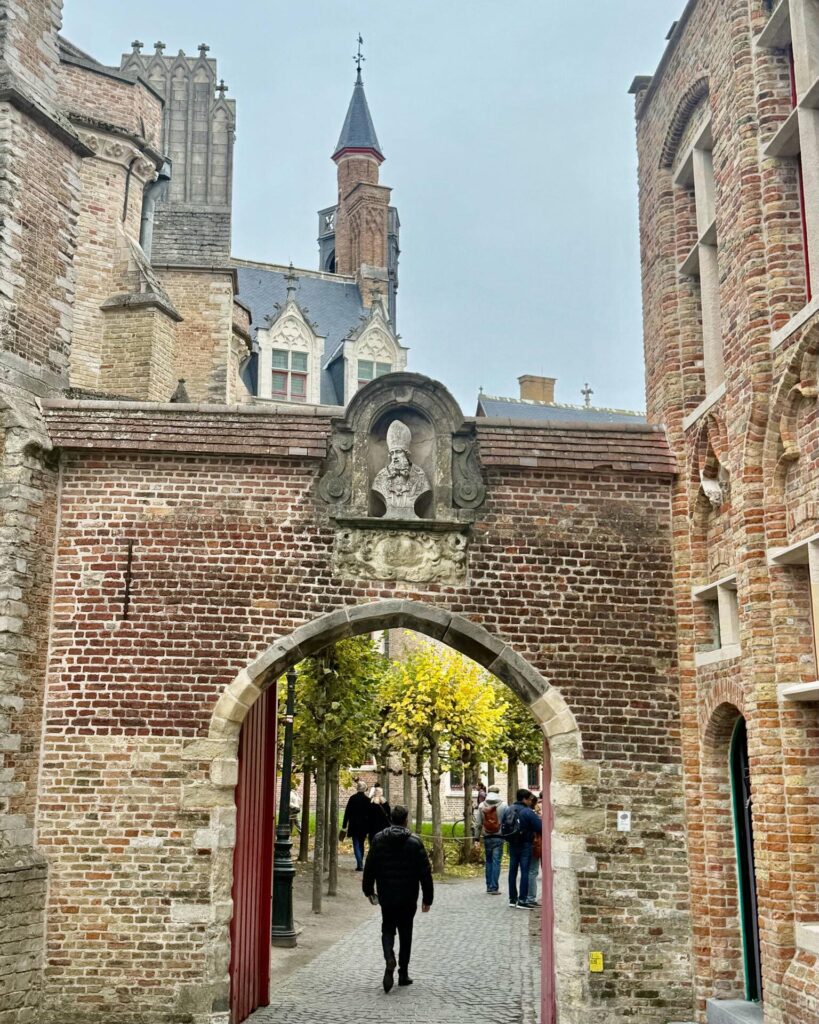
Bruges is a beautiful medieval city. Despite the overcast skies, we found this medieval town absolutely charming. In just a few hours, we explored the peaceful Beguinage, a 13th-century community originally established for independent religious women, admired the horse-drawn carriages, and watched tourist boats glide along the picturesque canals.
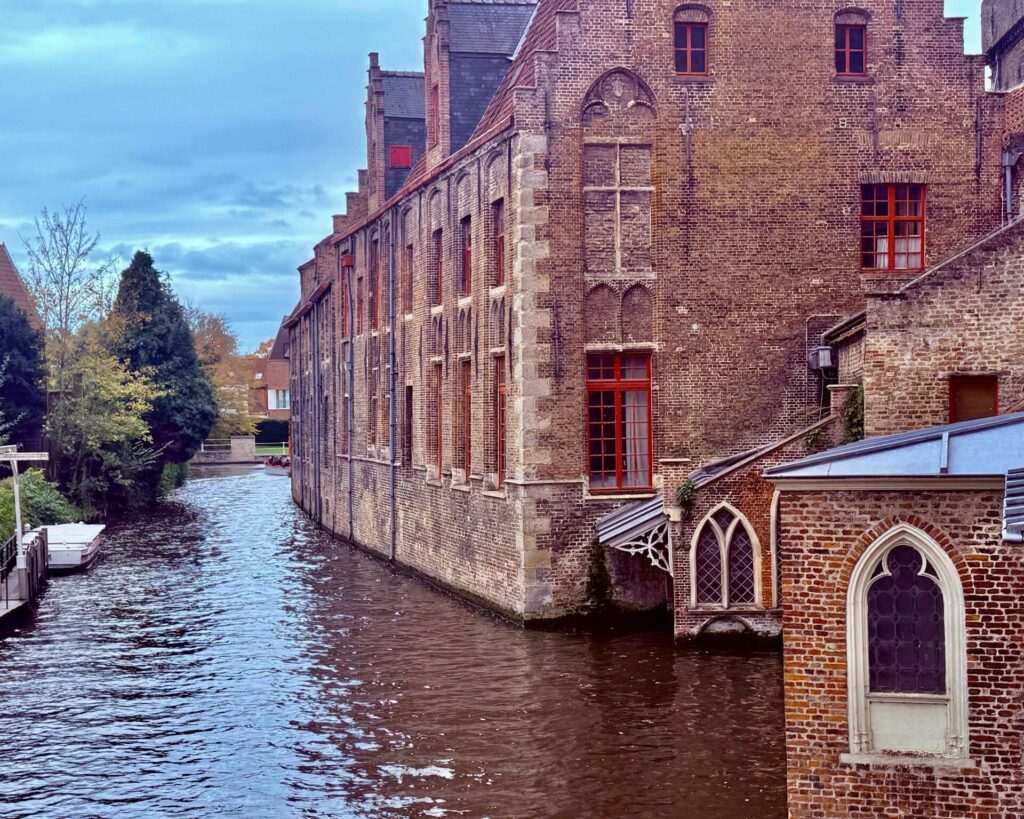
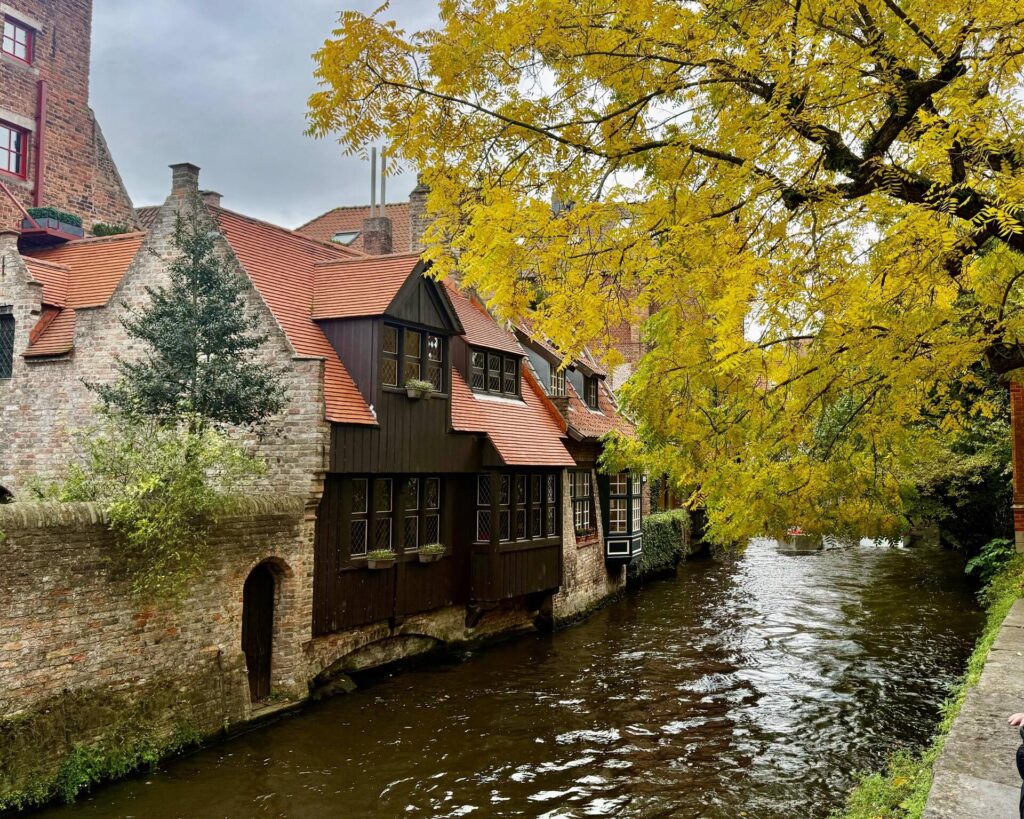
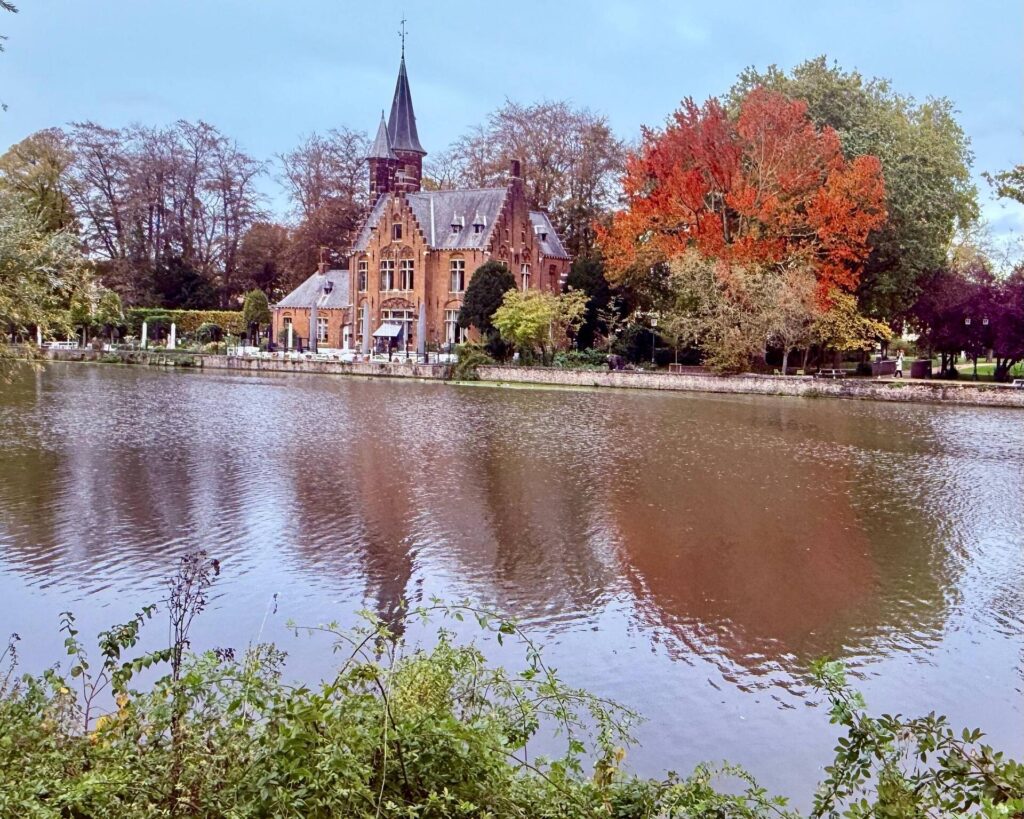
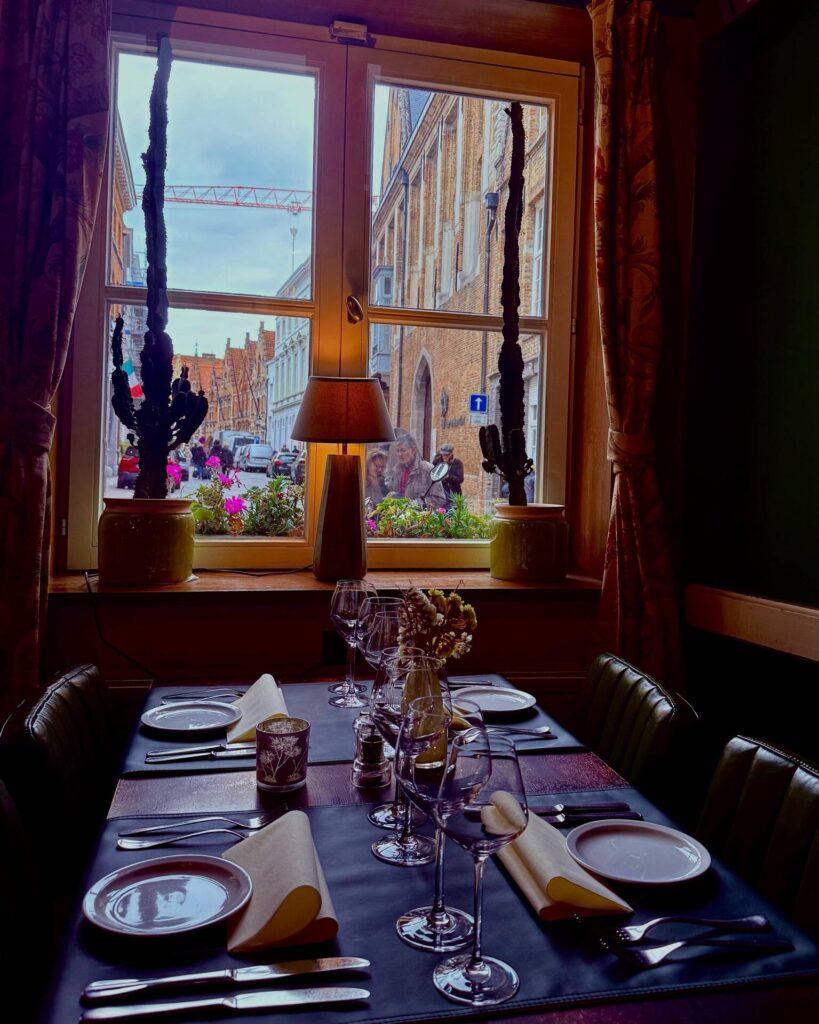
We topped it all off with a wonderful, leisurely Flemish lunch at a wonderful romantic restaurant.
Church of Our Lady
The Church of Our Lady is a real treat. It’s one of the city’s most important Gothic landmarks and is easily recognized by its 115.5-meter brick tower, one of the world’s tallest brick towers.
The church is best known for housing Michelangelo’s Madonna and Child, a marble sculpture carved around 1501-1504.
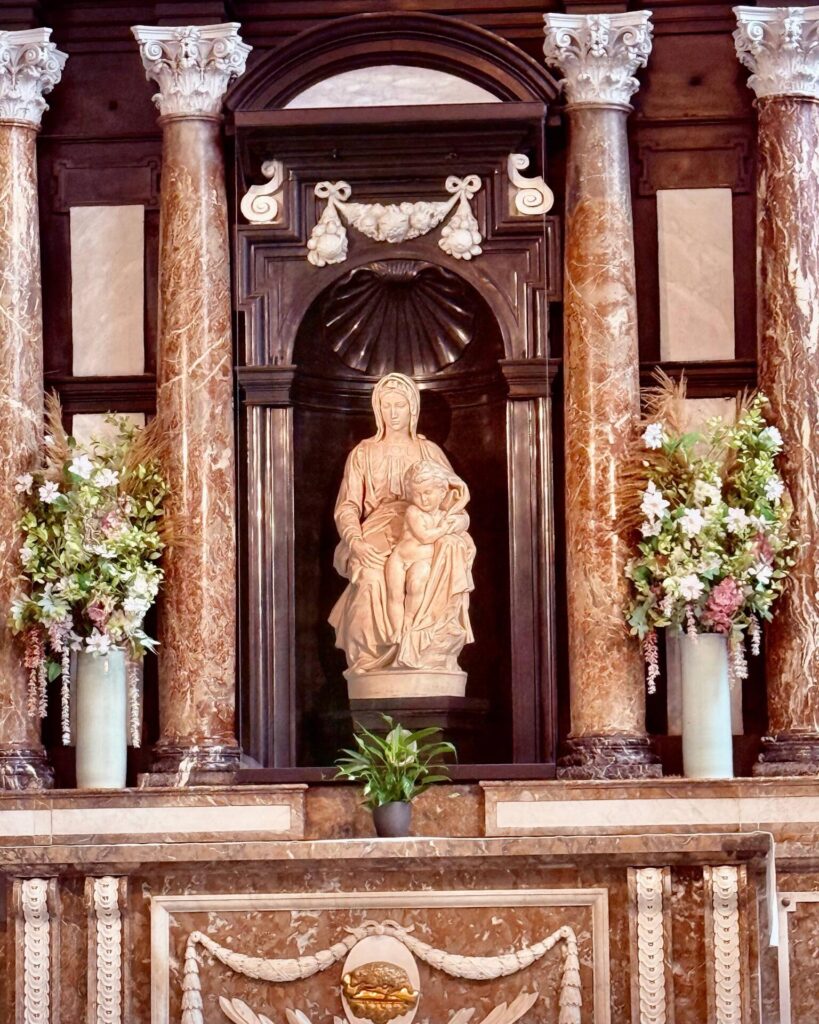
The statue is particularly famous because:
- It is the only Michelangelo sculpture that left Italy during his lifetime
- The wealthy Bruges merchant family Mouscron (Moucron) purchased it and brought it to Bruges shortly after it was created.
- The sculpture was looted twice, once by Napoleon’s forces and again by the Nazis during World War II, but was eventually returned to Bruges both times.
- The church also contains the impressive tombs of Charles the Bold, Duke of Burgundy, and his daughter Mary of Burgundy, making it an important historical and artistic site.
We recommend booking a Get Your Guide Tour for a full-day trip from Brussels to Bruges.
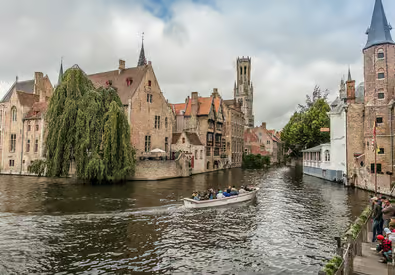
Explore the Venice of the North on a 9-hour guided day trip to Bruges, with return train transport from Brussels. Marvel at the sights of one of the most fascinating medieval cities in Europe with an English-speaking guide
Cologne, Germany
Cos made a day trip from Brussels to Cologne when he first visited Belgium in (believe it or not) 1973. It was part of his first visit to Europe, as part of a business tirp that included Brussels, Rome and Paris. Not bad for your first year in business. The highlight of visiting Cologne is the famous Cologne Cathedral
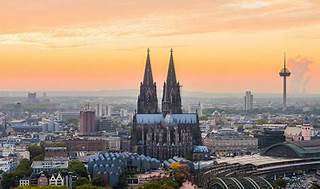 .
Discovering Luxembourg City
For many visitors, Luxembourg City is a pleasant surprise. Despite being the capital of an entire country, it feels intimate, manageable, and remarkably scenic.
Luxembourg’s Size
Luxembourg is very small by country standards. However, surprisingly, it is only the 28th-smallest country in the world. It is four times as big as Singapore.
- Area: about 2,586 km² (999 sq mi).
- It is approximately 82 km (51 miles) north-to-south and 57 km (35 miles) east-to-west.
- For comparison, it is roughly the size of Rhode Island in the United States.
Luxembourg City
The city center combines modern institutions with centuries-old architecture and spectacular viewpoints. One of the more interesting buildings is Spuerkeess (Banque et Caisse d’Épargne de l’État), Luxembourg’s state savings bank.
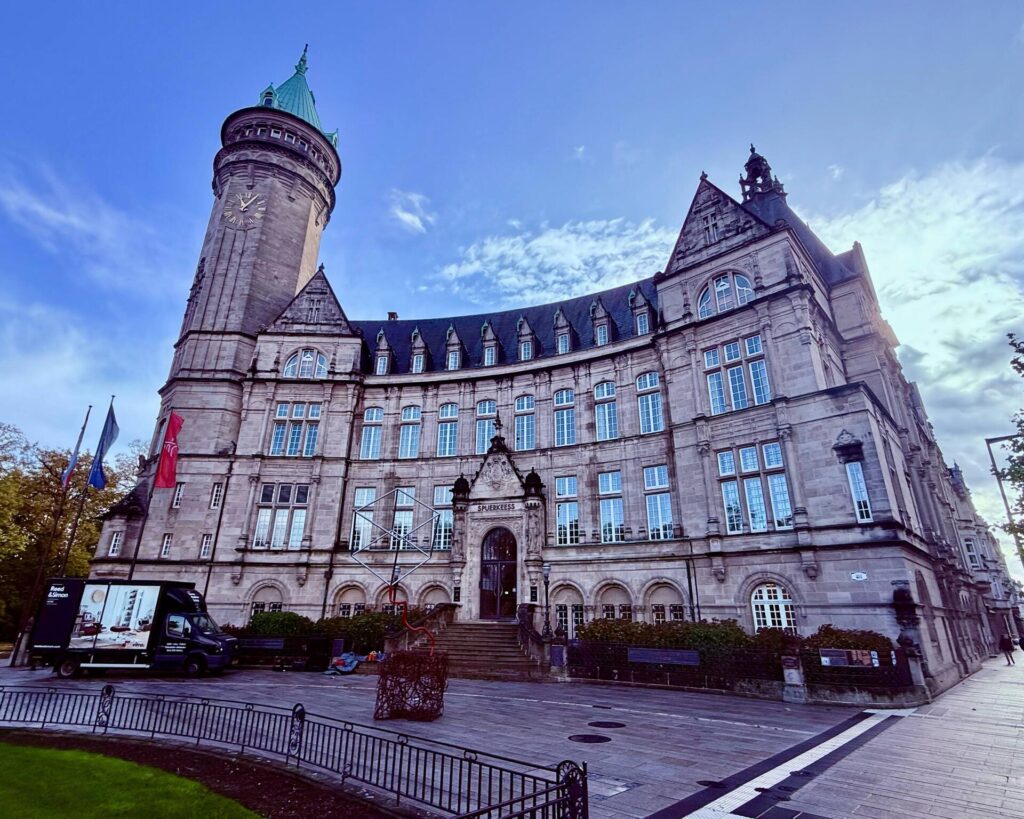
Luxembourg Old Town
The historic old town is designated as a UNESCO World Heritage Site. Its dramatic setting above deep river valleys creates one of Europe’s most distinctive urban landscapes.
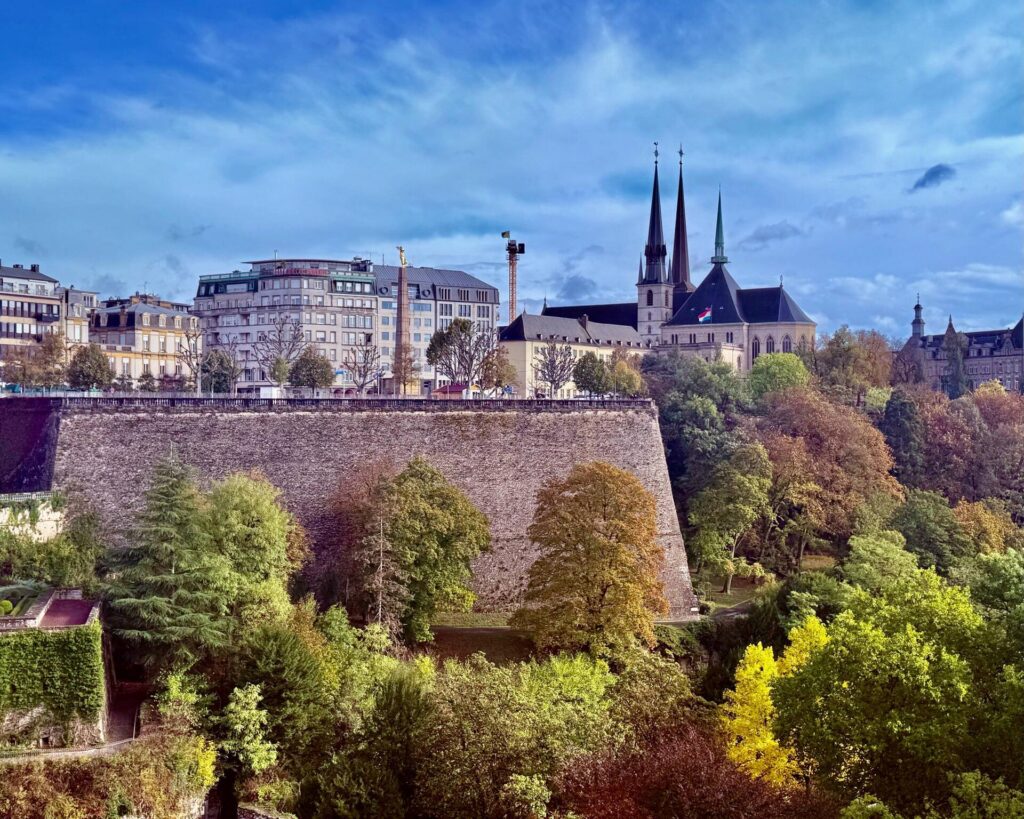
Wandering through winding streets and historic fortifications gives a strong sense of the city’s military and political significance over the centuries.
Grand Ducal Palace
One of the city’s most important landmarks is the Grand Ducal Palace, the official residence of Luxembourg’s Grand Duke.
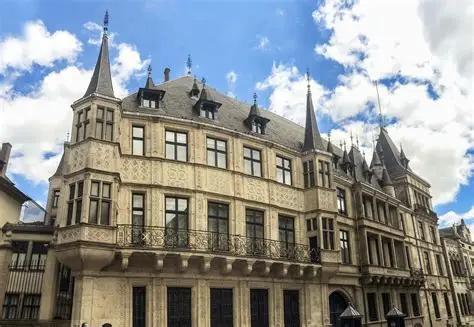
Visitors can admire its elegant façade and explore nearby streets filled with shops, restaurants, and historic buildings.
Place d’Armes
Another essential stop is Place d’Armes, a lively square popular with locals and visitors alike. Outdoor cafés, performances, and seasonal events make it a vibrant gathering spot in the city center.
For travelers who enjoy observing everyday life, this is a great place to relax during free time between sightseeing.
Museums
During our visit to Luxembourg, we visited two very interesting museums:
National Museum of History and Art (MNHA / Nationalmusée um Fëschmaart)
Located in the historic center near the Fish Market, this is the country’s premier museum of archaeology, history, and fine art. Its collections range from prehistoric artifacts and Roman remains to medieval treasures and European paintings. Many visitors leave with a deeper understanding of how Luxembourg evolved from a fortified medieval state into a modern European nation.
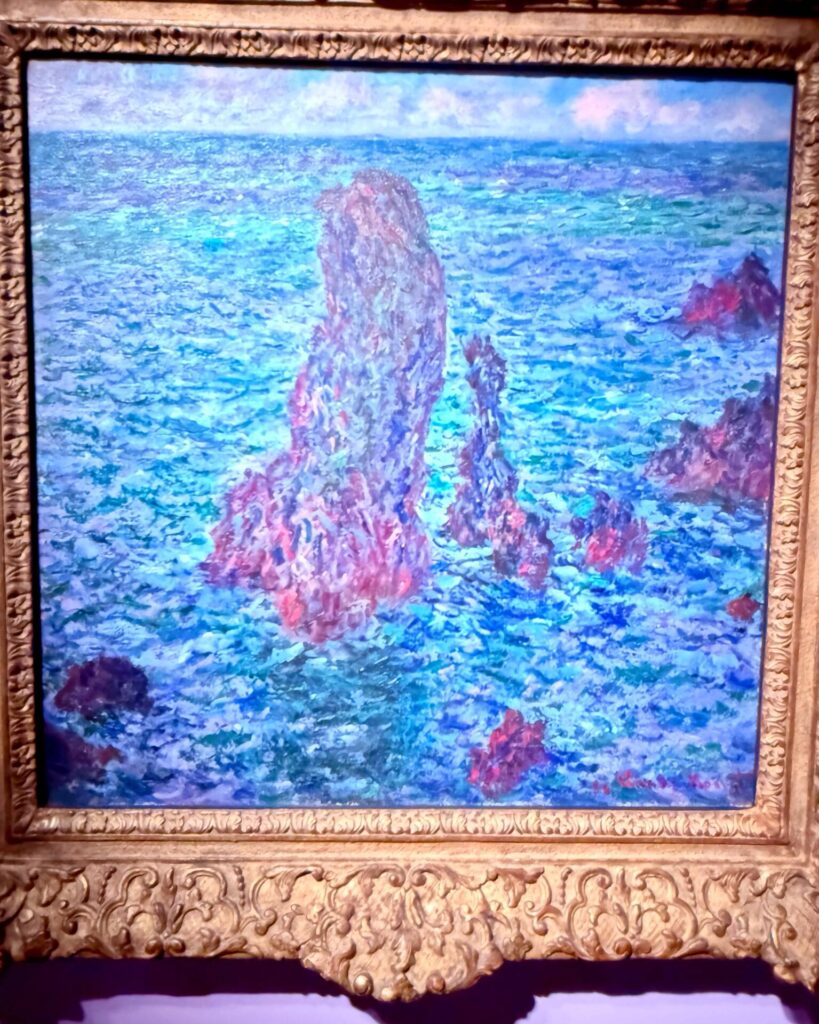
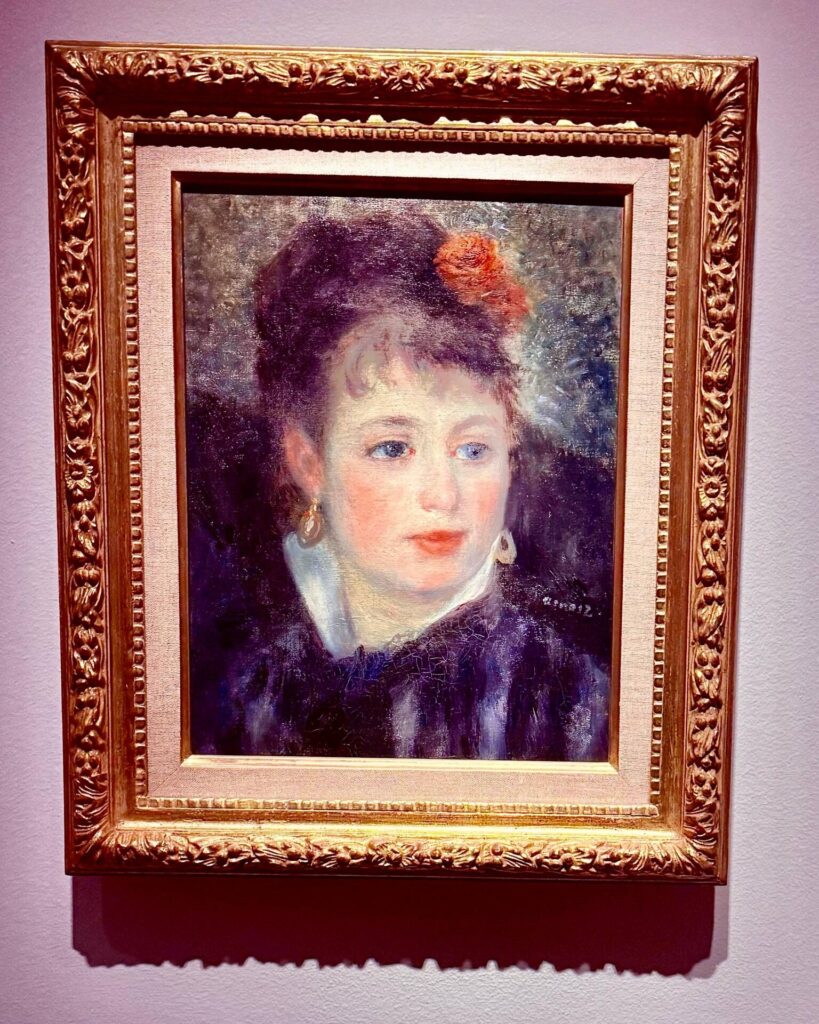
This is Luxembourg’s best overall museum. When we visited, they had a great exhibit called “From Renoir to Monet.”
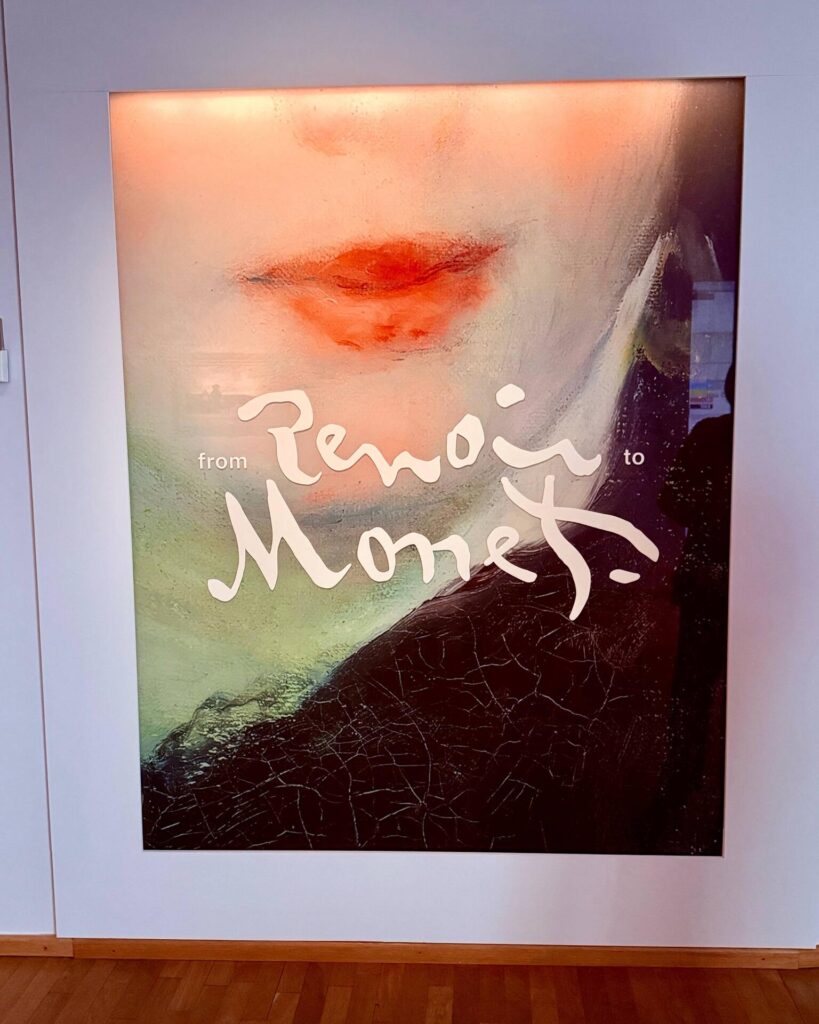
Here are the lead paintings from each of the famous artists:
MUDAM Luxembourg (Musée d’Art Moderne Grand-Duc Jean)
This is Luxembourg’s best museum for contemporary art and architecture. Even travelers who aren’t modern-art enthusiasts often enjoy MUDAM because of its spectacular building by I. M. Pei, the architect of the Louver Pyramid. The museum combines contemporary art with dramatic architecture and sits atop historic fortifications, creating a striking contrast between old and new Luxembourg. We loved the interactive exhibit when you first enter the museum.
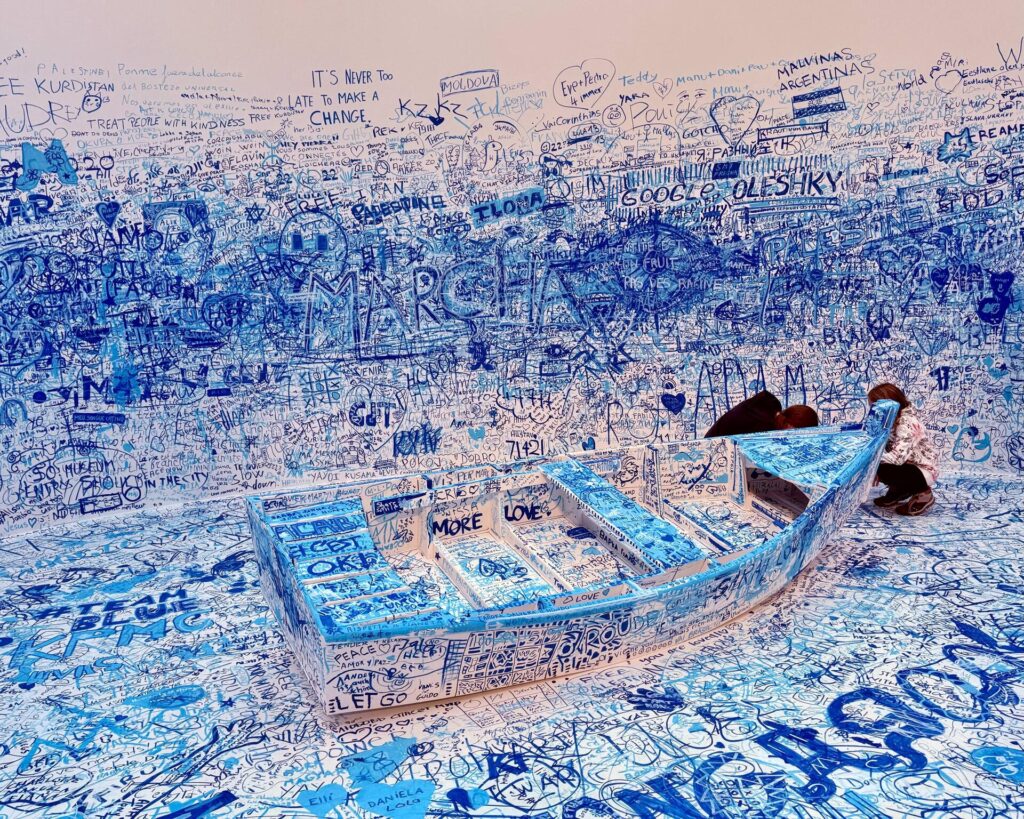
Here is Robin adding her contribution to the art piece:

Bock Casemates
The famous Bock Casemates offer one of Luxembourg City’s most memorable experiences.
These underground defensive tunnels played an important role in the city’s military history and provide visitors with extraordinary views across the surrounding valleys. The site gives travelers real insight into why Luxembourg earned the nickname “Gibraltar of the North.”
Day Trip or Overnight Stay?
A common question is whether Luxembourg City deserves only a day trip or a longer stay.
For many travelers, a single day is enough time to see the major attractions, including the old town, the Grand Ducal Palace, Place d’Armes, and the Bock Casemates.
However, staying overnight offers significant advantages. With more free time, you can enjoy the city’s restaurants, viewpoints, and evening atmosphere after most day visitors have departed.
If your schedule allows, spending one or two nights gives you plenty of time to appreciate the city’s charm.
Beyond Luxembourg City
One benefit of spending extra time in Luxembourg is the chance to explore the entire country, which is surprisingly diverse despite its small size.
The countryside offers rolling hills, forests, vineyards, and charming villages that showcase Luxembourg’s natural beauty.
Renters can enjoy a scenic countryside drive that contrasts beautifully with urban sightseeing.
World War II History Near Luxembourg
History enthusiasts often extend their trip to include World War II sites.
Just east of Brussels, the Ardennes region witnessed intense fighting during the Battle of the Bulge. This area remains one of Europe’s most important historical destinations.
Bastogne War Museum
The renowned Bastogne War Museum presents an immersive account of the conflict. Through exhibits, personal stories, and multimedia displays, visitors can better understand one of the war’s most significant campaigns.
American Cemetery
Nearby memorial sites honor the sacrifice of thousands of American soldiers who fought during the conflict.
The American Cemetery serves as a powerful reminder of the human cost of war and remains an important place of remembrance for visitors from around the world.
Combining these sites with Luxembourg City creates an excellent historical day tour for those interested in military history.
Train Travel vs Flying
Some travelers consider booking a return flight between destinations. However, when comparing city-center-to-city-center travel times, trains almost always win.
Rail stations are located in the heart of both cities, eliminating airport transfers and lengthy security procedures.
A day train journey between Brussels and Luxembourg City allows travelers to maximize sightseeing time while reducing transportation stress.
When Is the Best Time to Visit?
The ideal time of year depends on your preferences.
Spring brings pleasant temperatures and blooming parks. Summer delivers outdoor festivals and lively squares. Autumn offers colorful landscapes and fewer crowds. Winter provides festive markets and seasonal charm.
Fortunately, both destinations are enjoyable year-round, making them excellent additions to virtually any European itinerary.
Final Thoughts – Brussels vs Luxembourg
When comparing Brussels and Luxembourg City, the answer isn’t choosing one over the other. The greatest reward comes from experiencing both. Thanks to frequent direct train connections, affordable train tickets, and convenient access from Brussels Airport, combining these destinations is remarkably easy.
Brussels captivates visitors with the grandeur of the Grand Place, outstanding cuisine, and vibrant urban energy. Luxembourg City impresses with its dramatic old town, picturesque views, Grand Ducal Palace, Place d’Armes, and fascinating Bock Casemates.
Whether you’re planning a quick day trip, a longer vacation, or a broader exploration of Europe’s most rewarding capitals, these two destinations offer exceptional overall value. Together, they show why they remain among Europe’s most appealing cities for modern travelers seeking history, culture, convenience, and unforgettable experiences.
Visit Our Other France and Paris Posts
Luxembourg and Brussels are both French-speaking cities, but it’s also worth learning more about France and Paris. So please visit the following French Posts:
- Best French Travel Guide: Discover Paris & More
- French Travel Guide: The Best Time to Visit Paris
- Ultimate France Travel Guide w/Overseas Territories
- Cultural Impact of France and the French Revolution
- Best Impressionist Museums in Paris
- Must-Visit Best Towns on Brittany France Coastline
- Best France Two-Week Itinerary: Paris, Provence, etc.
- Burgundy, Champagne & Rhône River Valley
- How Best to Experience Champagne Tasting Reims France
- Best Summer European Vacation: 91 Days Athens-Paris
- Journey to Visit Paris – Paris Olympics 2024
0 Comments