
In 2026, Robin and Cos spent two weeks traveling through France’s famous wine regions: the Rhône Valley, Burgundy, and Champagne. You have come to the right place to learn more about these famous wine regions and the cities that have grown up along the river and in the wine country. If you are more interested in learning about wine regions around the world, please see our post “Guide to the Top Wine Regions of the World.”
Contents
- 1 Avignon to Reims: A Wine Tour through the Rhône River Valley and Further North to Champagne
- 2 The Historical Heart of French Wine
- 3 Exploring France’s Rhône Valley
- 4 Traveling the Rhône Valley on a Rhône River Cruise
- 5 The Northern Rhône Valley Region
- 6 The Southern Rhône Valley
- 7 Burgundy: The Ultimate Expression of Terroir
- 8 Champagne: Sparkling Excellence
- 9 Comparing France’s Major Wine Regions
- 10 Why Wine Lovers Keep Returning
- 11 Planning Your Wine Journey
- 12 Conclusion
Avignon to Reims: A Wine Tour through the Rhône River Valley and Further North to Champagne
France is home to some of the world’s most celebrated wine destinations, but few journeys rival a route through the Rhône Valley, Burgundy, and Champagne. These three iconic French wine regions offer an extraordinary introduction to the diversity of French viticulture, from elegant white wines and sparkling classics to powerful reds and age-worthy blends. For wine lovers, few travel experiences compare to exploring the vineyards, villages, and historic cellars scattered between the Mediterranean and northern France.
Whether you’re a collector seeking grand cru wines, a casual enthusiast looking for wine tastings, or a traveler fascinated by history, the landscapes stretching from the Rhône River to Reims offer an unforgettable experience. One that we will never forget,
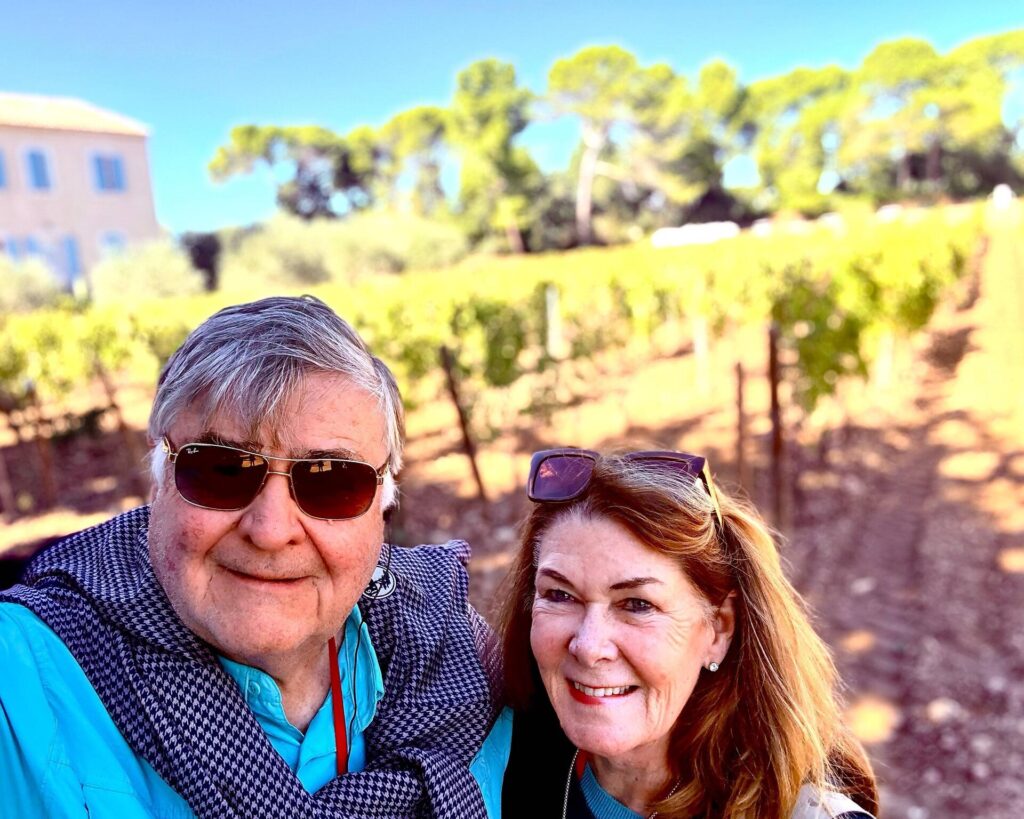
The Historical Heart of French Wine
France’s wine culture dates back to Roman times. Following the collapse of the Roman Empire, monastic communities throughout the Middle Ages preserved vineyard traditions and developed many of the vineyard boundaries still recognized today. Over centuries, local growers refined the concept of terroir, the belief that climate, topography, and soil types combine to produce unique wines.
The Rhône, Burgundy, and Champagne regions each demonstrate this philosophy differently. A wine made from the same grape name can taste dramatically different depending on where it is grown.
Today, these regions produce some of the world’s most prestigious wines and continue to influence winemaking globally.
Exploring France’s Rhône Valley
The Rhône wine region stretches through southeastern France along the Rhône River, beginning near Lyon and extending to the Mediterranean. The Rhône Valley wine region is traditionally divided into two distinct sections: the Northern Rhône and the Southern Rhône Valley.
This geographic divide creates remarkably different styles. Northern vineyards are concentrated on rugged hillsides and steep slopes, while southern vineyards spread across broader plains and rolling terrain shaped by a warm Mediterranean climate.
For many enthusiasts, France’s Rhône Valley offers some of Europe’s best quality-to-price ratios, making it a favorite destination for those seeking good value and authentic experiences.
Traveling the Rhône Valley on a Rhône River Cruise
The best way to discover the Rhône Valley is on a Rhône River Cruise. We traveled on a Viking cruise in 2026 from Avignon to Lyon, but other cruise lines offer comparable options. While enjoying the wines in both the Northern and Southern Rhône Valley, we also visited Arles, Avignon, Viviers, Tournon, Tain-l’Hermitage, Vienne, Lyon, and Pérouges, all of which are wonderful places to visit.
Things to Do in Lyon, France
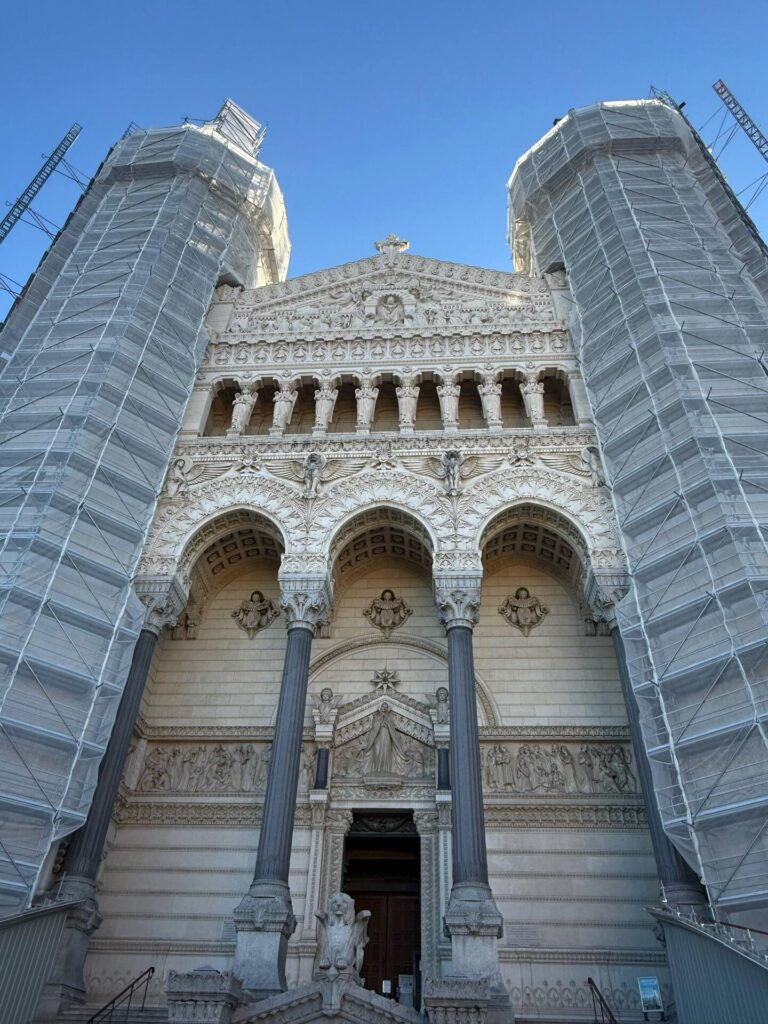
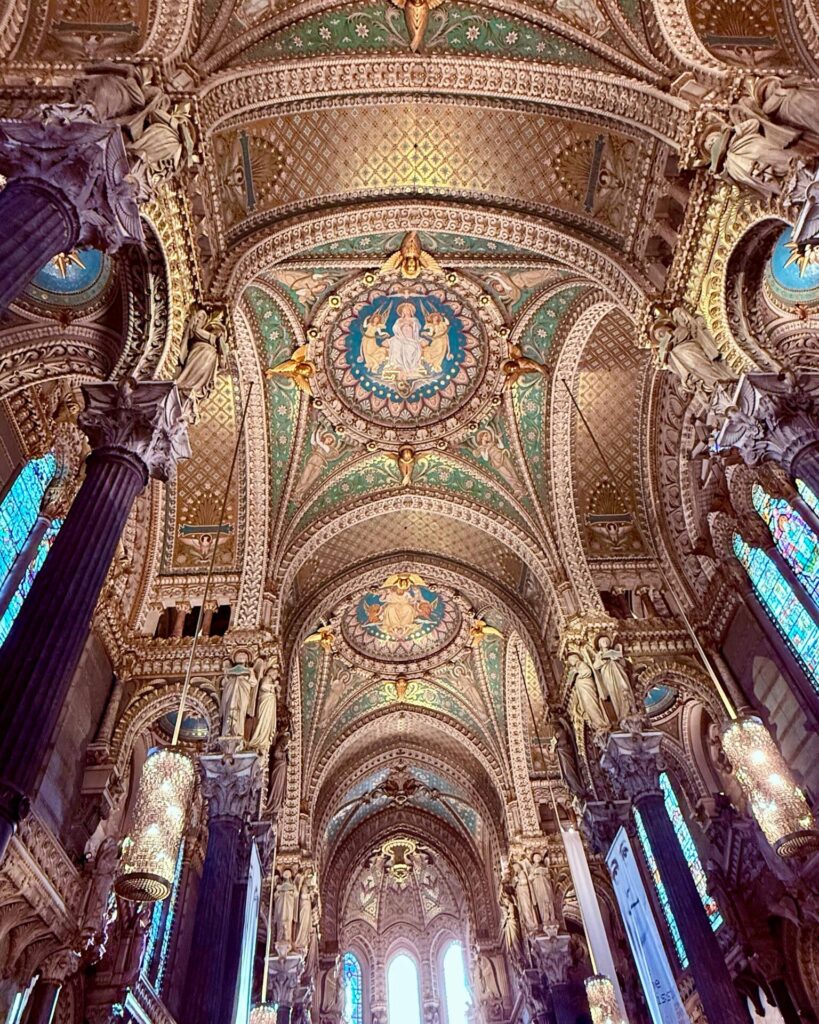
As the largest city we visited, Lyon offered plenty to do, including a day trip to Pérouges, an old Medieval town preserved as it was. In the city, we particularly liked our visit to the Basilica of Notre-Dame de Fourvière, perched on a hill overlooking the city. Completed in the late 19th century, it is one of the most opulent churches we have ever visited. Elaborate mosaics, marble, gold, angels, and symbolic lions fill the interior, while six enormous mosaics depict Mary’s relationship with the Church and the history of France. Lyon has also preserved its silk-manufacturing heritage, so there are plenty of places to shop.
The Northern Rhône Valley Region
The Northern Rhône region is relatively small yet produces some of France’s most exciting wines. Here, Syrah reigns supreme and is the only red grape permitted in many appellations.
The region’s vineyards cling to dramatic granite hillsides between Vienne and Valence. These steep slopes get ideal sun exposure and benefit from a continental climate tempered by the Rhône corridor.
Some of the most famous wine appellations include:
- Côte-Rôtie
- Condrieu
- Hermitage
- Crozes-Hermitage
- Cornas
- Saint Joseph
- Saint-Péray
Many visitors base themselves near Tain l’Hermitage, a wine town synonymous with some of the region’s finest bottles.
Northern Rhône reds are known for producing full-bodied red wines with notes of black pepper, dark berries, smoked meat, and violets. These are often considered among the world’s great expressions of Syrah.
The whites are equally impressive. Viognier, Marsanne, and Roussanne produce textured, aromatic white wines that continue to attract attention from critics and collectors.
The Southern Rhône Valley
Moving further south, the Rhône broadens dramatically as it approaches the Mediterranean Sea. Here, growers cultivate numerous different grape varieties, creating complex blends rather than focusing on a single grape.
Avignon is the Important City of the Region
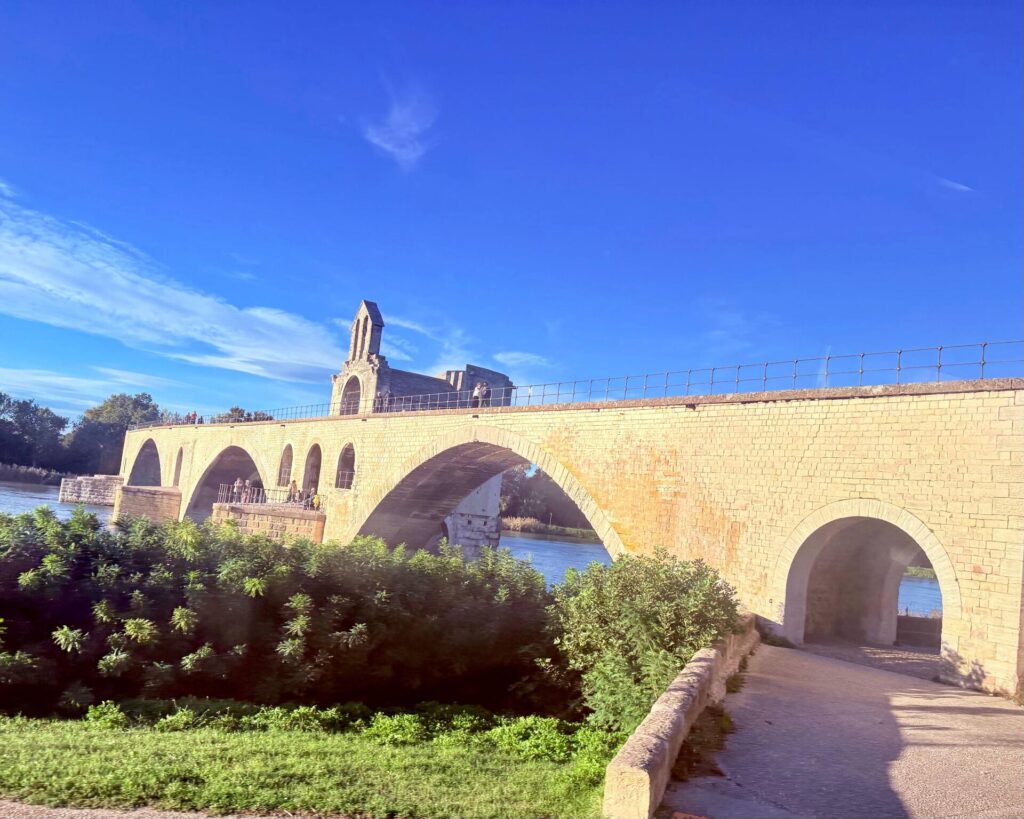
Once the French home of the Popes for 100 years during Medieval times and the Italian Civil Wars, Avignon has preserved the famous Pope’s Palace and much of the culture of the time.
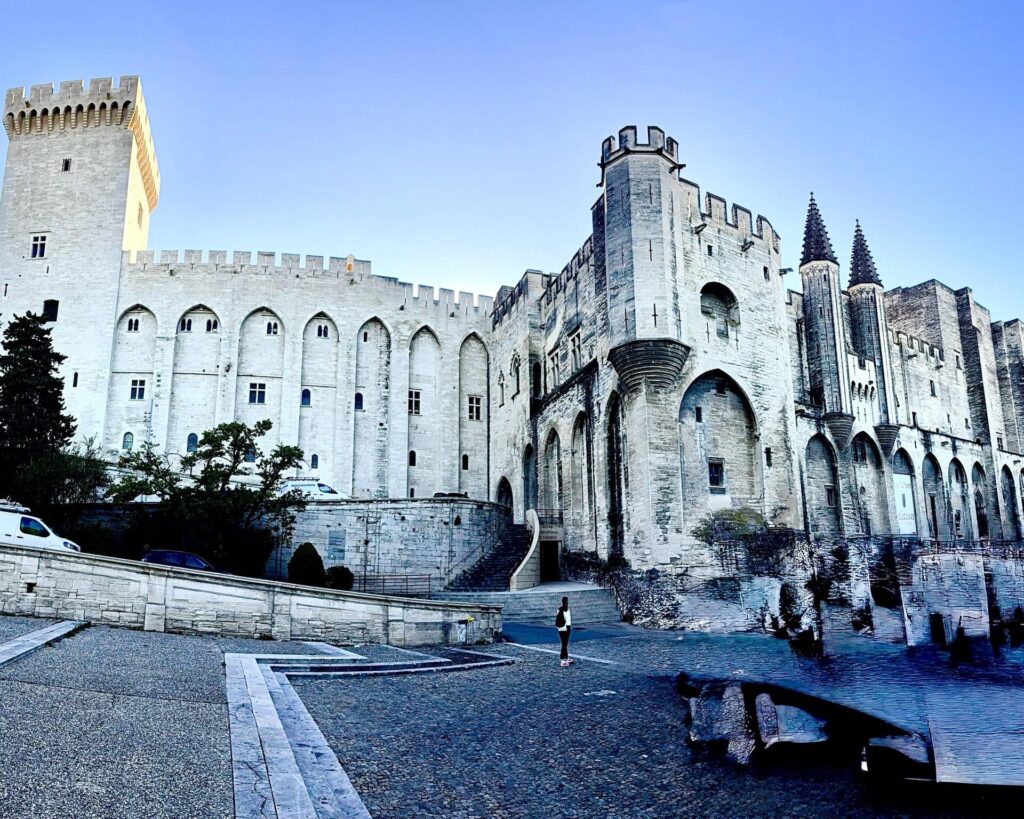
Avignon also preserved a famous bridge that inspired a well-known French children’s song.
Important Appellations of the Rhône Valley Region
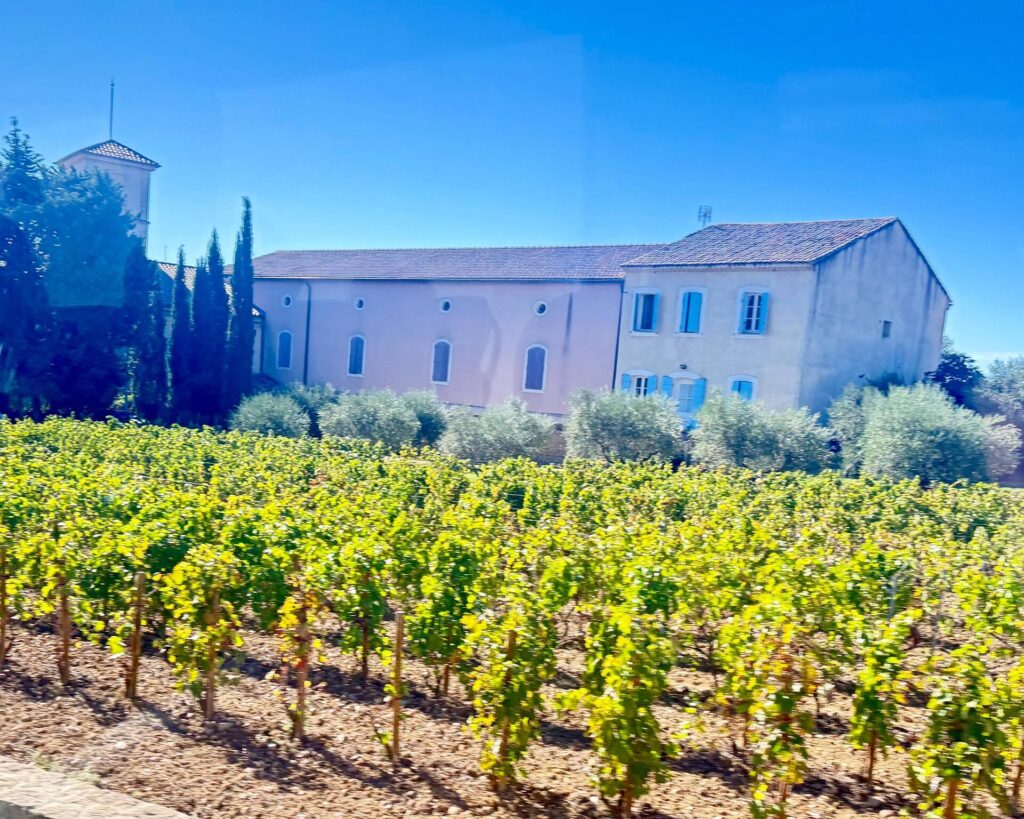
The Southern Rhône is home to many of the region’s most famous iconic appellations, including:
- Châteauneuf-du-Pape
- Gigondas
- Vacqueyras
- Rasteau
- Tavel
- Lirac
- Cairanne
- Côtes du Rhône Villages
The warmer climate encourages ripe fruit flavors and richer textures. Many wines feature Grenache as the dominant grape, accompanied by Mourvèdre, Syrah, and white varieties such as Grenache Blanc.
Many southern Rhône wines combine power with accessibility. They appeal to both newcomers and experienced collectors. Châteauneuf-du-Pape, the wine of the Popes, is particularly well-regarded;
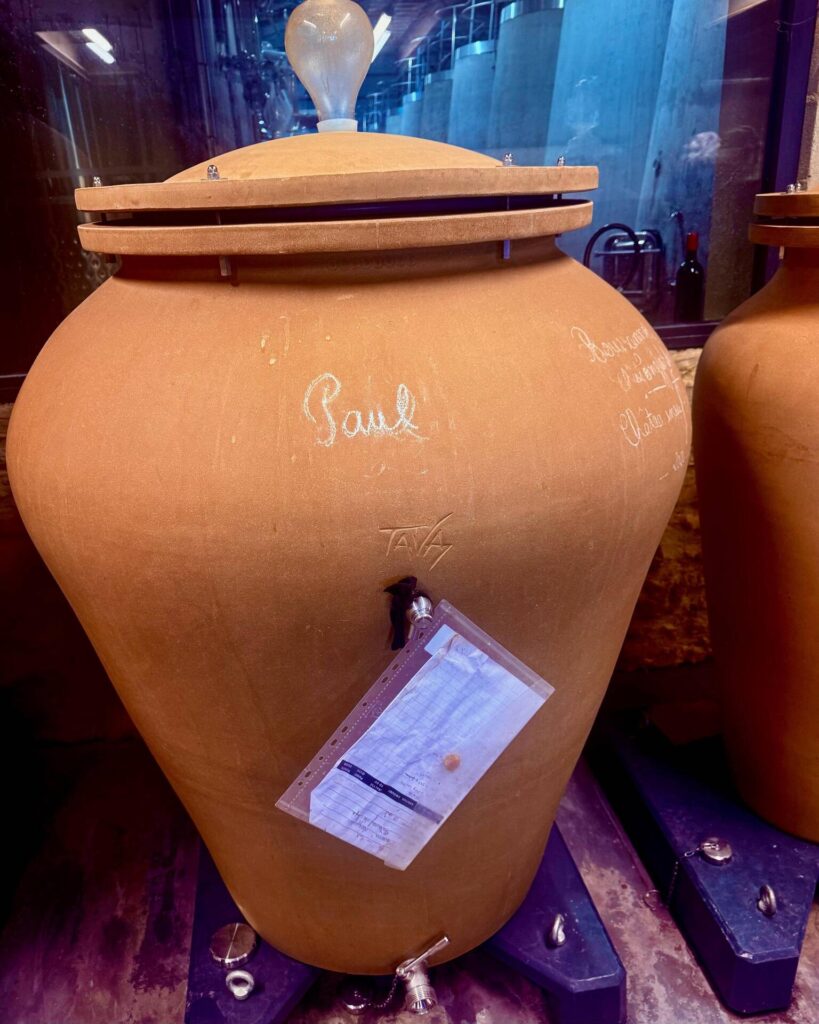
They even named a wine for me:
Food and Culture Along the Rhône
Life in the Rhône Valley extends far beyond wine. Travelers encounter bustling outdoor markets, charming medieval villages, olive groves, and exceptional regional cuisine.
Many dishes feature local ingredients such as olive oil, herbs, lamb, and fresh produce from southern France. The region’s culinary traditions pair naturally with the area’s famous Rhône wines.
The landscape is equally compelling. To the west rises the Massif Central, while vineyard-covered hills and river valleys create picturesque scenery throughout the region.
Burgundy: The Ultimate Expression of Terroir
North of Lyon lies Burgundy, one of the world’s most influential wine regions. While the Rhône emphasizes blends and regional identity, Burgundy focuses intensely on place.
Choose Dijon as Your Base to Explore Burgundy
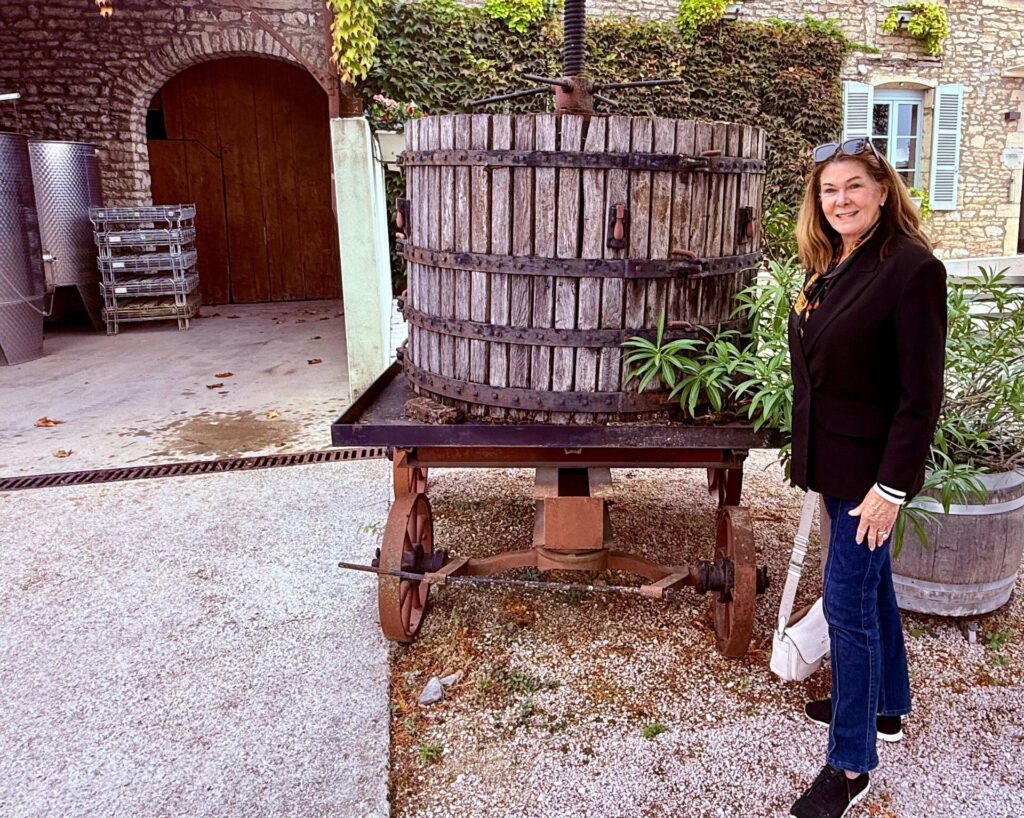
We stayed in Dijon as our base for exploring Burgundy. It was Robin’s big birthday celebration, so here she is in front of an old wine pressing barrel. Dijon is also a great base for venturing out to Chablis; however, we had our sights set on Champagne and Reims,
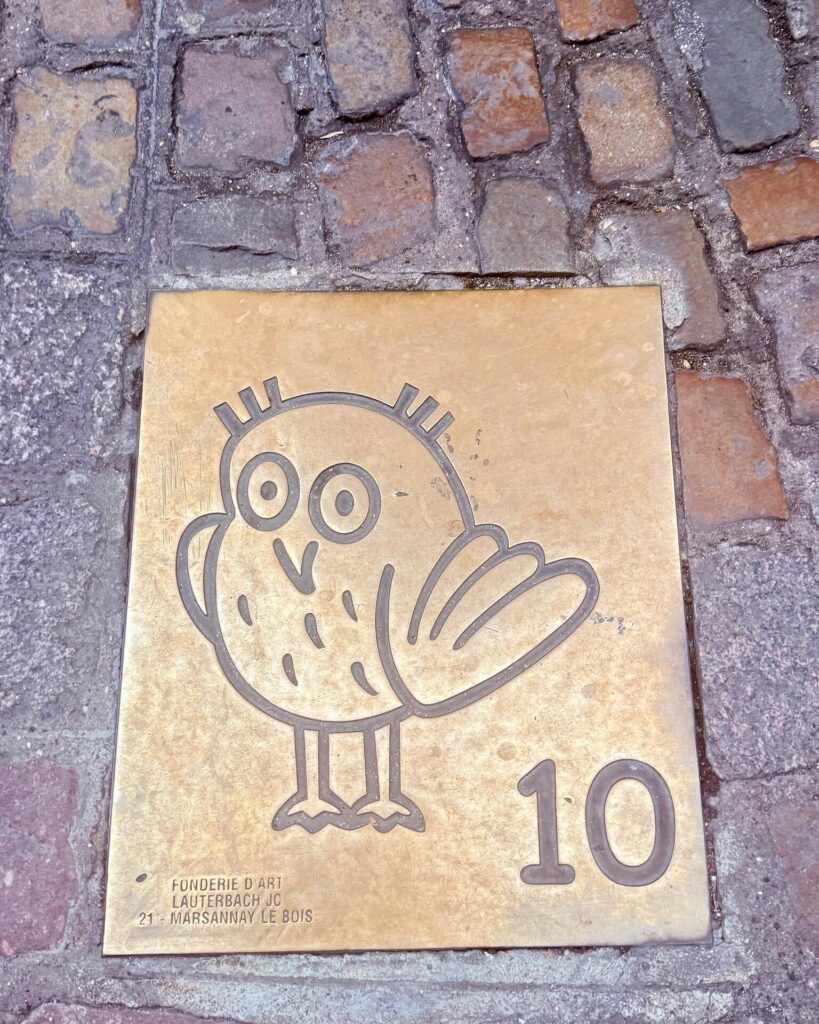
The Cathedral of Notre Dame features an owl carved on its side. The owl associated with Notre-Dame de Dijon is a small stone carving, known as La Chouette (“the Owl”), on the church’s north exterior wall. Over time, it became Dijon’s unofficial symbol.
Burgundy’s Focus on Pinot Noir and No Blending
Burgundy’s reputation is built largely upon two grape varieties:
- Pinot Noir for reds
- Chardonnay for whites
The result is a collection of highly specific vineyards that produce wines reflecting subtle differences in soil, elevation, and exposure.
For many wine writers, Burgundy represents the purest expression of terroir.
Côte de Nuits
The Côte de Nuits is Burgundy’s most famous red wine district and home to many of the world’s most revered Pinot Noir vineyards.
Villages such as Gevrey-Chambertin, Chambolle-Musigny, and Vosne-Romanée produce some of the most prestigious wines ever made. Here is a Grand Cru wine we purchased from a family-owned winery in Chambolle-Musigny.
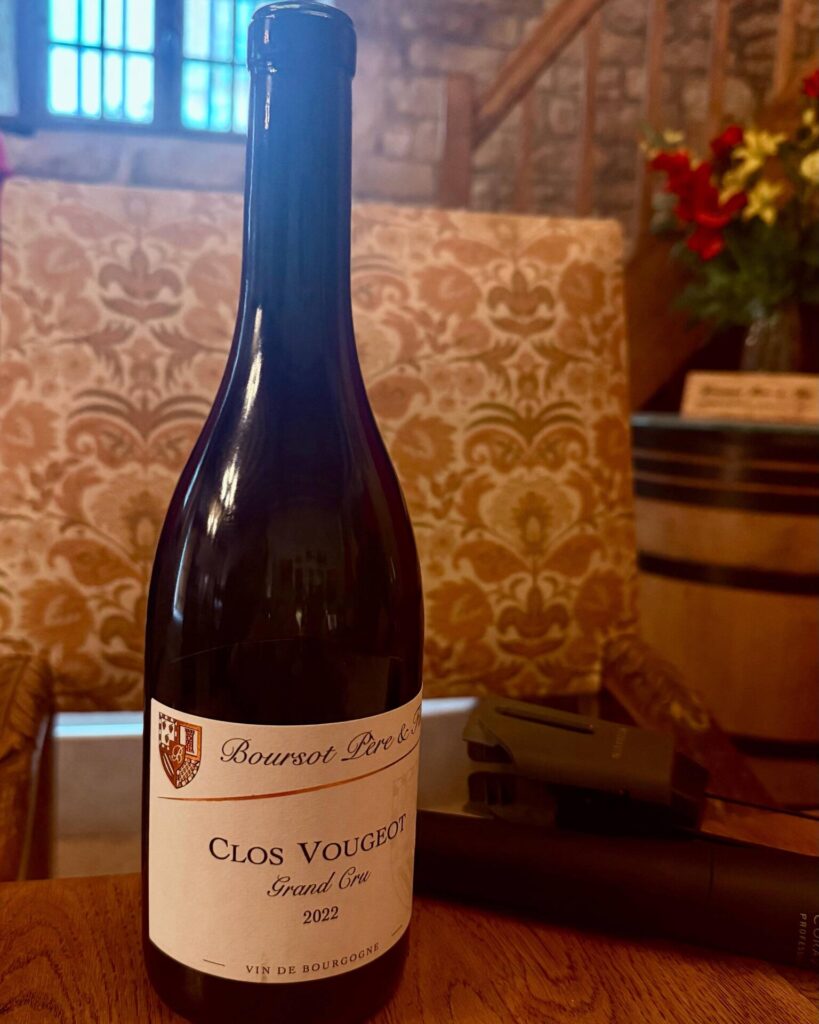
Many vineyards carry Grand Cru status, resulting in highly sought-after grand cru wines capable of aging for decades.
The elegance of Pinot Noir from the Côte de Nuits contrasts sharply with the more muscular Syrah of the Rhône. Yet both styles demonstrate the ability of French vineyards to create remarkable complexity.
Côte de Beaune
South of the Côte de Nuits lies the Côte de Beaune, celebrated for both red and white wines.
This area includes famous villages such as:
- Meursault
- Puligny-Montrachet
- Chassagne-Montrachet
- Pommard
- Volnay
The region produces exceptional Chardonnay as well as refined Pinot Noir. Many of Burgundy’s greatest white wines originate here and showcase impressive depth, minerality, and longevity.
Bourgogne Rouge and Regional Wines
Not every Burgundy requires a collector’s budget. Basic Bourgogne Rouge can provide an affordable introduction to Pinot Noir and often represents excellent value.
Many visitors discover that smaller producers offer some of the region’s hidden treasures, creating wines that capture Burgundy’s character without commanding astronomical prices.
Chablis and Petit Chablis
Further north, Chablis provides a completely different expression of Chardonnay.
The cooler climate produces leaner, more mineral wines than those found in the Côte de Beaune.
Entry-level Petit Chablis offers freshness and accessibility, while Premier Cru and Grand Cru vineyards provide increasing complexity and aging potential.
The region demonstrates how dramatically cooler climates can shape wine style, even within the same grape variety.
Champagne: Sparkling Excellence
Heading north, travelers reach Champagne, a region synonymous with celebration and luxury.
Make Your Champagne Base in Reims
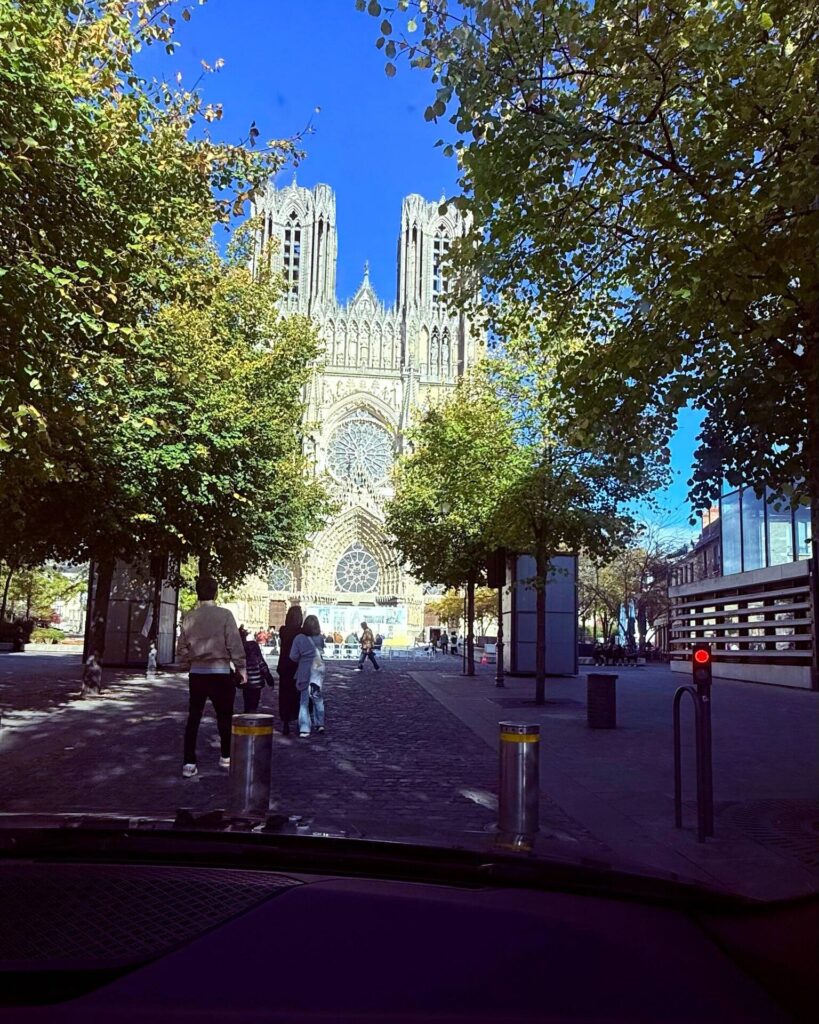
In the Champagne Region, we stayed in Reims, a beautiful city with what many consider one of the best, if not the finest, examples of High Gothic architecture, and the traditional coronation church of the French kings. Built in 1211 and completed in the 14th century, it was finished slightly after Notre-Dame Cathedral in Paris.
The Campagne Region
Centered around Reims and Épernay, Champagne occupies a unique position in northern France. Its climate is significantly cooler than Burgundy or the Rhône, making it ideal for producing fresh, precise sparkling wines.
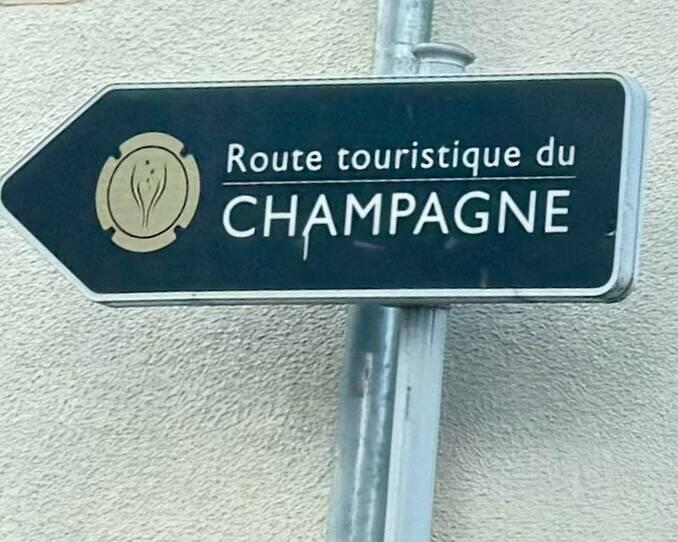
The Traditional Method
Champagne’s worldwide reputation rests on the traditional method, a painstaking production process that includes secondary fermentation in the bottle.
This technique creates the fine bubbles and complexity that distinguish Champagne from ordinary sparkling wines.
The primary grapes include:
- Chardonnay
- Pinot Noir
- Meunier
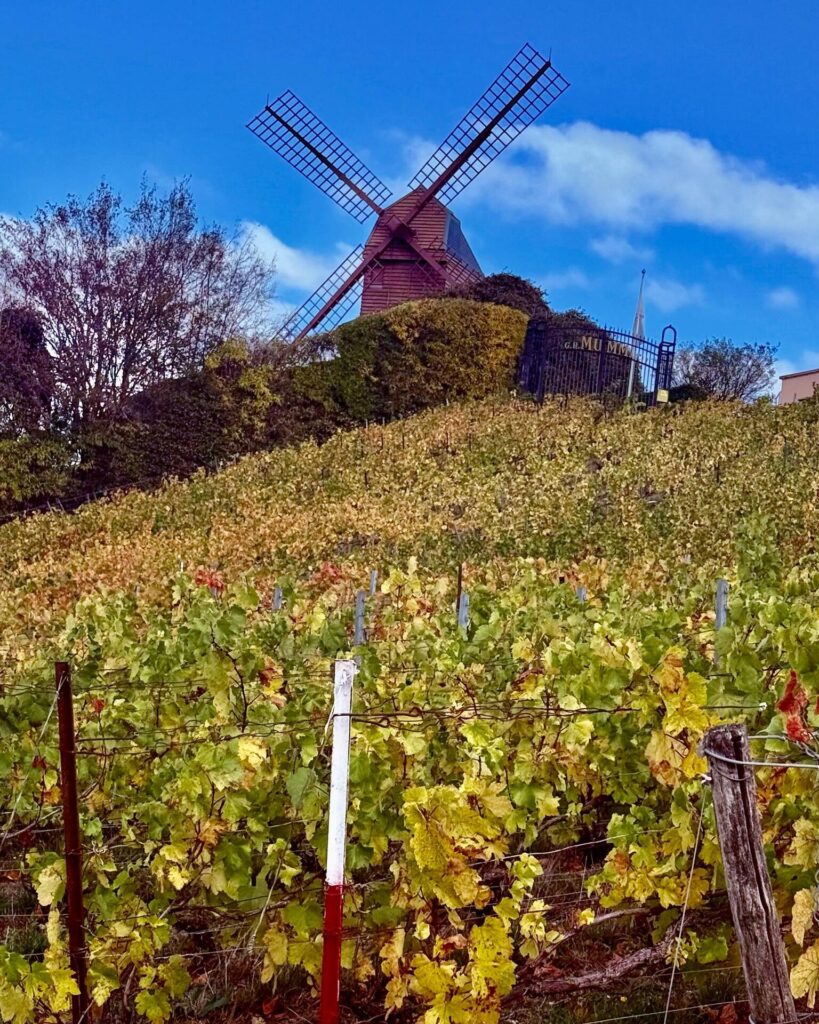
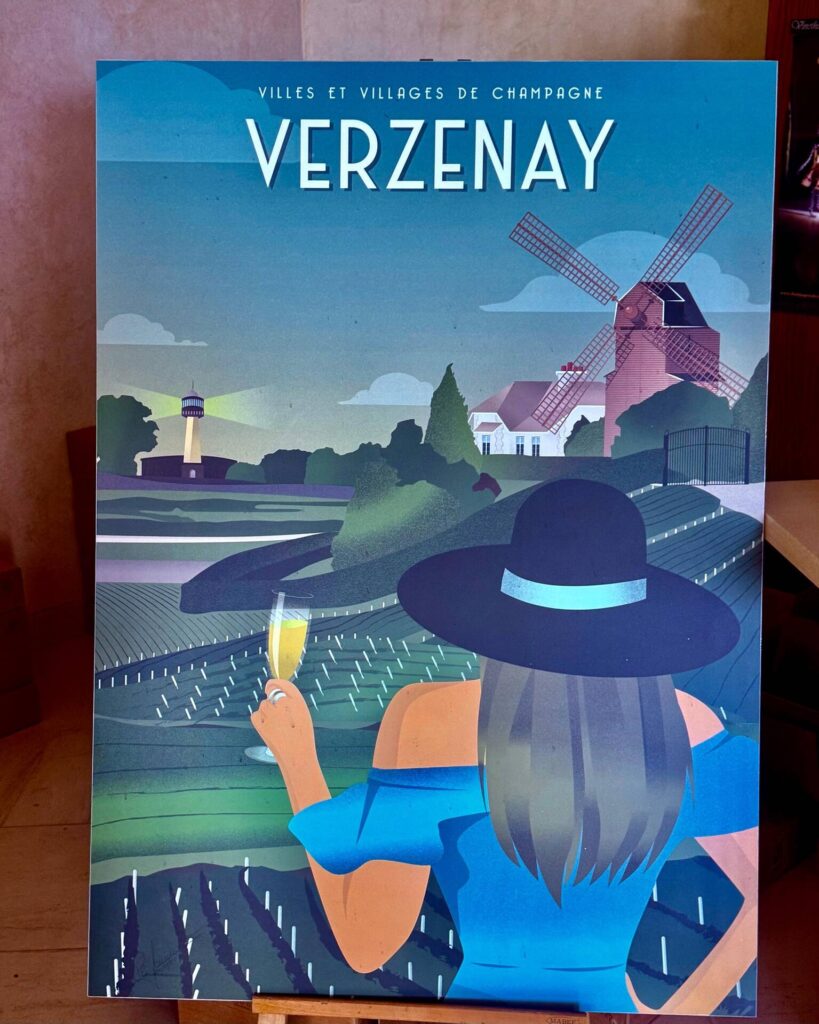
Together they produce an extraordinary range of styles, from crisp aperitif wines to rich vintage bottlings. Like Burgundy the Grand Cru wines are identified with a particular village. We visited Verzenay, known for some of the best Grand Cru Champagnes.
Veuve Clicquot and Champagne Heritage
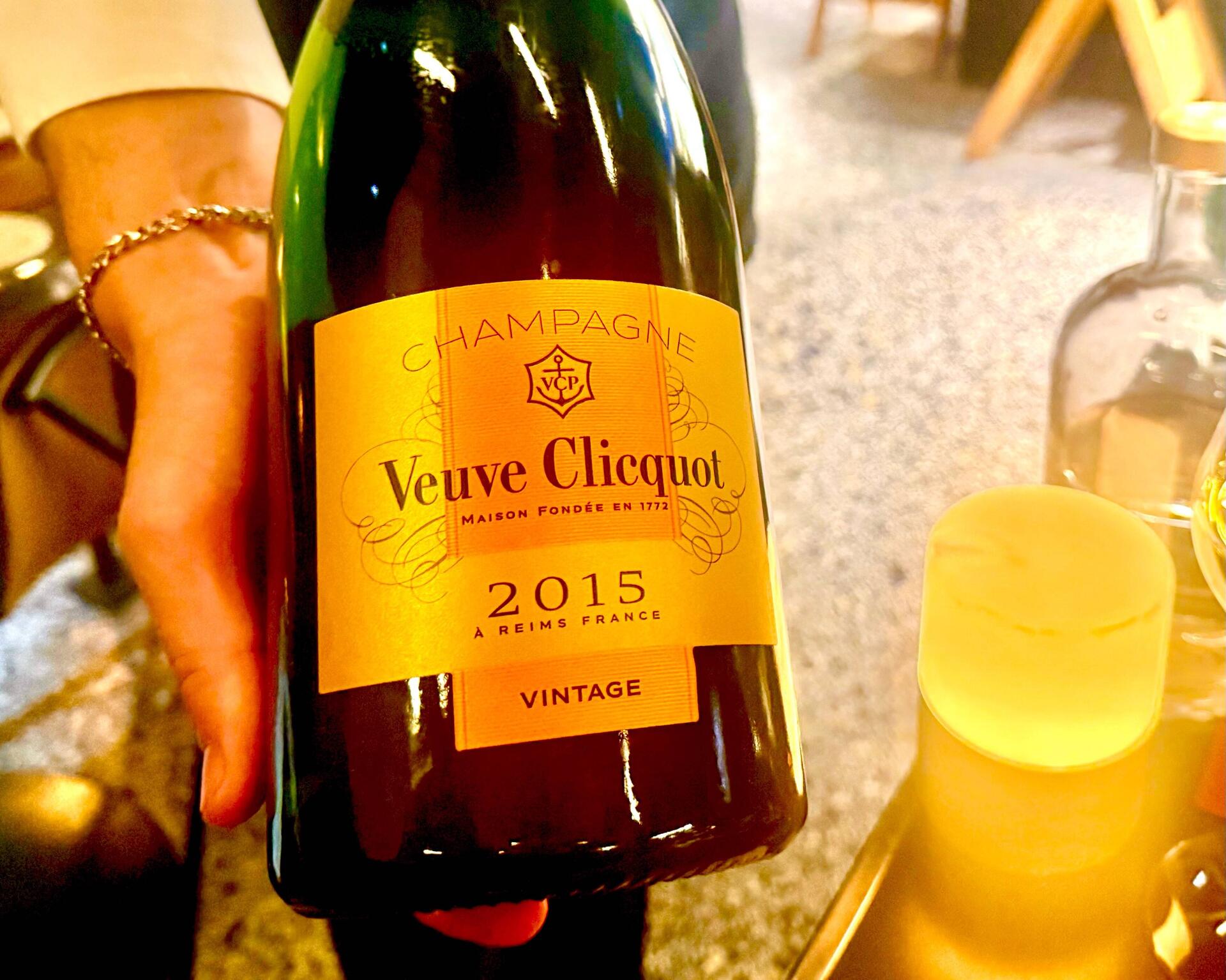
No discussion of Champagne would be complete without mentioning Veuve Clicquot, one of the region’s most famous houses, and Robin’s favorite,
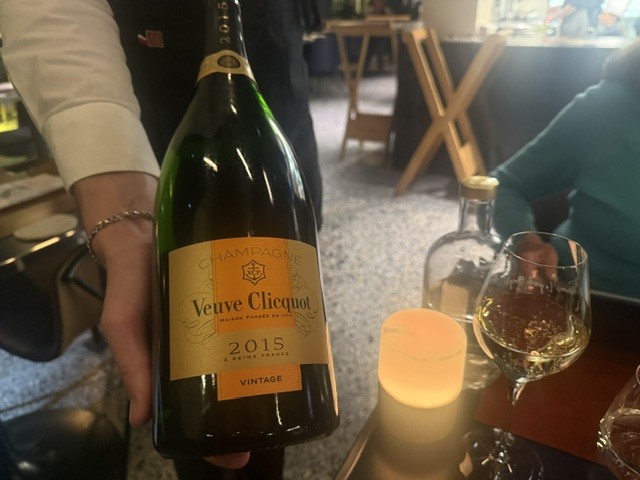
Champagne producers helped turn sparkling wine into an international symbol of celebration, and many historic estates maintain cellars that stretch beneath the city of Reims.
The region’s importance survived political upheaval, economic challenges, and even the devastation of the World Wars.
Today, visitors can tour historic underground chalk caves and sample wines that remain among the world’s most recognized luxury products. Take atour that includes a visit to Veuve by booking on GetYour Guide:
Discover Reims with a visit to the famous champagne house Veuve Clicquot. Savor wine tastings and visit a family-run winery in Épernay for a traditional lunch.
Comparing France’s Major Wine Regions
One of the joys of exploring these regions is understanding how distinct they are.
The Rhône emphasizes blends and power. Burgundy focuses on terroir and subtlety. Champagne prioritizes freshness and precision.
Meanwhile, other famous regions offer additional points of comparison.
Bordeaux and the Atlantic Influence
Many travelers naturally compare Burgundy and the Rhône with Bordeaux.
Unlike the Rhône’s Syrah-based wines or Burgundy’s Pinot Noir, Bordeaux wines often rely on blends featuring:
- Cabernet Sauvignon
- Merlot
- Cabernet Franc
- Petit Verdot
The Gironde Estuary shapes the region’s geography, dividing the Left Bank from the Right Bank.
The Left Bank is typically known for Cabernet Sauvignon-dominant wines, while the Right Bank favors Merlot and Cabernet Franc.
This distinction contrasts with Burgundy, where vineyard location often matters more than blending. For more on Bordeaux, see our post “91 Days: Olympic Journey Athens to Paris 2024.”
Loire Valley Diversity
The Loire Valley presents yet another perspective on French wine.
Located in the heart of France, the Loire produces a remarkable diversity of styles, including:
- Sauvignon Blanc
- Chenin Blanc
- Cabernet Franc reds
- Sparkling wines
Like Burgundy and Champagne, the Loire benefits from a relatively cool climate, producing fresh, vibrant wines.
Why Wine Lovers Keep Returning
These regions captivate because they offer something for every wine enthusiast.
The Rhône delivers approachable, flavorful reds and excellent value.
Burgundy offers intellectual depth and some of the world’s most coveted bottlings.
Champagne provides unmatched elegance and celebration.
Together, these regions form a remarkable wine route extending from the Mediterranean influences of the south to the cooler conditions of northern Europe.
Visitors encounter everything from a tiny appellation hidden among hillside vineyards to internationally renowned estates producing legendary wines.
They can wander through a centuries-old medieval village, explore bustling marketplace squares, and visit world-famous cellars.
Planning Your Wine Journey
For travelers who want to experience these regions firsthand, the ideal route starts in the Rhône Valley near Avignon and ends in Champagne.
Along the way, visitors can enjoy:
- Rhône wine tastings
- Tours of historic vineyard estates
- Burgundy Grand Cru sites
- Champagne houses in Reims and Épernay
- Traditional French cuisine
- Scenic river valleys and countryside
Many enthusiasts purchase bottles directly from producers, while others prefer browsing a local wine shop to compare offerings from multiple regions.
Whether you want to discover complex wines, understand vineyard classifications, or simply enjoy great food and drink, this route puts you in the right place.
Conclusion
The combined journey through Burgundy, Champagne, and the Rhône offers one of the world’s finest wine experiences. From the dramatic slopes of the Rhône River to the celebrated vineyards of the Côte de Beaune, the prestigious terroirs of the Côte de Nuits, and the sparkling cellars of Champagne, every stop tells part of the story of French wine.
For wine drinkers seeking both history and flavor, few destinations offer such variety. Rich red blends, elegant white wines, refreshing rosé wines, and world-famous sparkling wines all share a common foundation in terroir, tradition, and craftsmanship.
Generations of travelers, collectors, critics, and wine lovers continue to regard Burgundy, Champagne, and the Rhône Valley as the ultimate expression of France’s enduring wine heritage.
Whether you’ve been to France before or this is your first trip, our French Two Week Wine Journey might help you plan your next trip. If you want more information about how a two-week tour in France might tie in to other trips you might be planning on taking in Europe, please check out these other posts:
- Best French Travel Guide: Discover Paris & More
- Best France Two Week Itinerary: Paris, Provence, etc.
- How Best to Experience Champagne Tasting Reims France
- 91 Days: Olympic Journey Athens to Paris 2024
- Cultural Impact of France
- Best Impressionist Museums in Paris
- Ultimate France Travel Guide w/Overseas Territories
- Travel to France: The Best Time to Visit Paris
- Best Summer European Vacation: 91 Days Athens-Paris
0 Comments