
Iceland can feel like two different trips: one built for speed and convenience, the other for raw, unforgettable scale. If you’re deciding between a quick loop and a full-country drive, the real question is simple: do you want to see Iceland, or do you want to feel it? If you are still just deciding if you want to go to Iceland, and the Golden Circle versus Ring Road is a secondary question, than please check out our post “15+ Reasons Why Iceland Should Be Your Next Trip.”
If you are wondering how you can visit Iceland on a tight budget, please see our post: Iceland Budget Travel: Is Iceland Expensive?
Contents
- 1 The Golden Circle Is Easier—But Driving the Iceland Ring Road Is Where Iceland Gets Unreal
- 2 Higlights of the Iceland Golden Circle
- 3 Adding a Thermal Bath to the Agenda
- 4 Why the Golden Circle Works So Well for a 3-Days Itinerary
- 5 Ring Road Iceland
- 5.1 Iceland Ring Road Itinerary
- 5.2 Day-by-Day Itinerary:
- 5.2.1 First Day – Keflavik Airport to Hotel Ranga
- 5.2.2 Second Day – Hotel Ranga to Vik
- 5.2.3 Day 3 – Hotel Vik to Hofn
- 5.2.4 Day 4 Hofn to Gisthusio Lake Egilsstaðir
- 5.2.5 Day 5 – Egilsstaðir to Akureyri with a Diversion to Húsavík
- 5.2.6 Day 6 – Akureyri to Borgarnes
- 5.2.7 Day 7 – Diversion #2 to Snaefellsnes Peninsula
- 5.3 Ring Road Driving Tips
- 5.4 What Driving Iceland’s Famous Ring Road Unlocks in 7 Days
- 5.5 Waterfalls, Geysers, and Glaciers: How the Landscapes Actually Compare
- 5.6 Best Time of Year for Driving Iceland’s Famous Ring Road
- 5.7 Beyond the Stops Everyone Knows: Hidden Towns, Quiet Roads, and Real Iceland History
- 6 Cost Per Day, Road Fatigue, and Trip Planning: Choosing the Route That Fits You
- 7 When the Aurora, Weather, and Timing Change Everything
- 8 Conclusion:
The Golden Circle Is Easier—But Driving the Iceland Ring Road Is Where Iceland Gets Unreal
Iceland offers two completely different road-trip experiences: one is fast, famous, and easy to pull off in a long weekend; the other takes about 828 miles of driving and rewards you with the version of the country that feels biggest, wildest, and hardest to forget. If you’re choosing between the Golden Circle and the Ring Road, the real decision isn’t just about mileage—it’s about whether you want a highlights reel or a deeper, fuller encounter with Iceland.
The Golden Circle packs a lot into a short route: erupting geysers, geothermic heated lagoons, thundering waterfalls, and Þingvellir’s dramatic rift valley, all within easy reach of Reykjavík. The Ring Road, by contrast, opens up glacier lagoons, black-sand coastlines, fishing villages, lava fields, and long stretches where the landscape feels almost unreal. In this guide, you’ll see why the Golden Circle works so well for a 3-day itinerary, what a 7-day Ring Road trip gives you that the shorter loop can’t, how the scenery truly compares, and how to choose based on budget, energy, weather, and what kind of Iceland you actually came to experience’
Higlights of the Iceland Golden Circle
The Golden Circle is a 150 mile circuit starting from Reykjavik. There are three main highlights of the Golden Circle tour, described below.
- Pingvellir National Park – This gorge, dear to all Icelanders, is both dramatic and historic. It is dramatic because you can see the separation of the European and North American tectonic plates. It is historic because a thousand years ago, it was where the national assembly was held during the middle ages.
- Geysir Geothermal Field – This lively geothermic field contains a geyser that shoots 50 feet into the air,
- Gullfoss – This thundering waterfall is most Iceland’s most famous, however it might not be the most powerful.
Most people if staying in Reykjavik, will choose to take a day tour around the Golden Cirlce which is within easy drinving distance of the capital. However, self driving options are also available. Get your guide is perfect to find the best tours, especially if you have a group looking for a private tour. Check out their tours by clicking below:
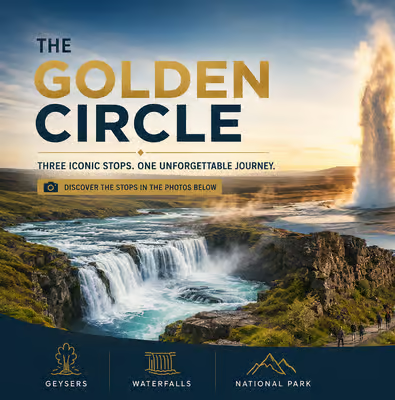
This is one of the private tours that are available for the Golden Cirlce. Get Your Guide offers this tour and many more, Check them out,
Adding a Thermal Bath to the Agenda
Many of the Golden Circle tours will add additional stops to include a thermal bath. Here are three options:
# 1 The Secret Lagoon
Tkhe Secret Lagoon is the stop that is most often added to the tour. Consequently, it is not too secret. It is a big rustic outdoor pool packed with young tourists. Not our first choice.
#2 The Blue Lagoon
The Blue Lagoon is not only the most popular thermal bath in Iceland, but it is also the most popular and the most expensive tourist attraction. Here is Cos, enjoying his bath, with the young tourists behind him with their face salts. The Blue Lagoon is very close to the International Keflavik Airport. So, with an early arrival into Reykjavik, many tourists will visit the Blue Lagoon when they arrive before they venture downtown to find their hotel.
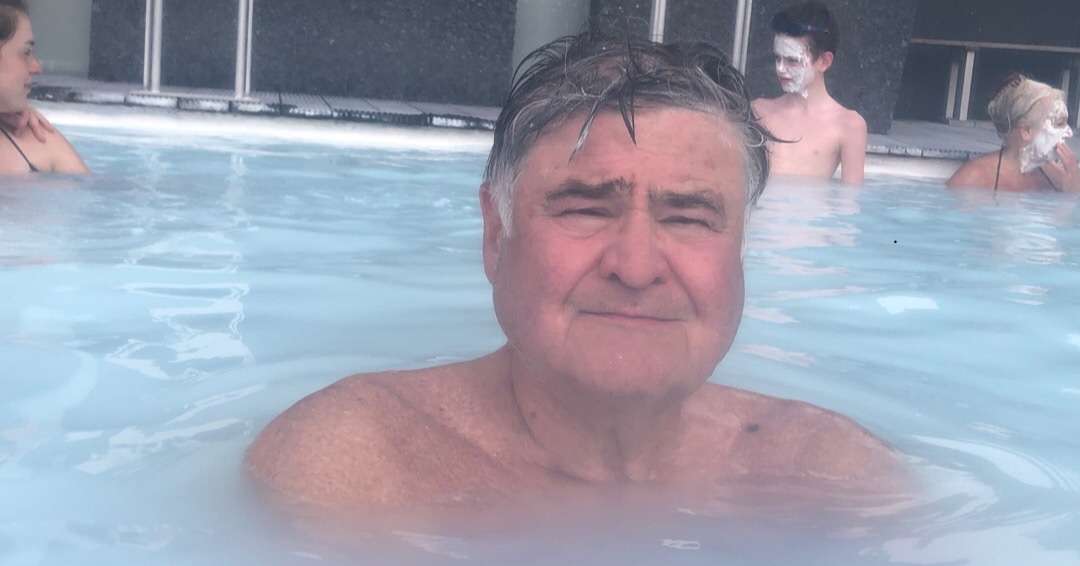

Premium admission brings full access to all lagoon spaces, bathrobe, towel, drink, 3 face masks and complimentary skincare. Bathe in geothermal seawater amid volcanic lava in a UNESCO Global Geopark.
#3 The Sky Lagoon
Our favorite, although not everyones, is the Sky Lagoon.

The Sky Lagoon is a real Icelandic Spa Day with a geothermic soaking (similar but better than the Blue Lagoon) because of the ocean views. It is one of the largest infinity pools in the world looking out towards the ocean, a cold water plunge, and a 7-step cleansing ritual. The seven-part ritual at Sky Lagoon begins innocently enough—with a spectacular setting in the wonderfully warm water. Then comes the cold plunge, followed by a hot sauna, a cold mist, exfoliation, and finally a little shot of something very healthy-for-you. The total cost is slightly less than the Blue Lagoon, and in our opinion clearly is a better option.
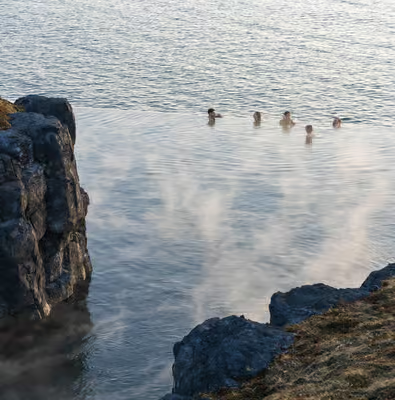
Get entry tickets to Sky Lagoon, an oceanside geothermal spa, located only minutes from the city centre of Reykjavík. Immerse yourself in a spa ritual as the North Atlantic Ocean stretches out before you. The 7-step spa Ritual is much more than simpliy sitting in the hot water. The cold plunch will get your heartbeat going.
Blue Lagoon vs The Sky Lagoon
If you are doing a tour around the Golden Cirlce, chances are you will be visiting the Blue Lagoon. It is fun, famoius and expensive. If you tell all your friends back home that you went to the Blue Lagoon they will be impressed, since you went on a trip to the Golden Circle in Iceland and also visited the Blue Lagoon. You will be the hit of your neighbors cocktail party.
However, if you tell them you went to the Sky Lagoon, they will either say nothing, walk away, or think you couldn’t afford the Blue Lagoon. They will be wrong, because what you will expereince is a real Icelandic Spa Day with a geothermic soaking (similar but better, because of the ocean views, in one of the largest infinity pools in the world).
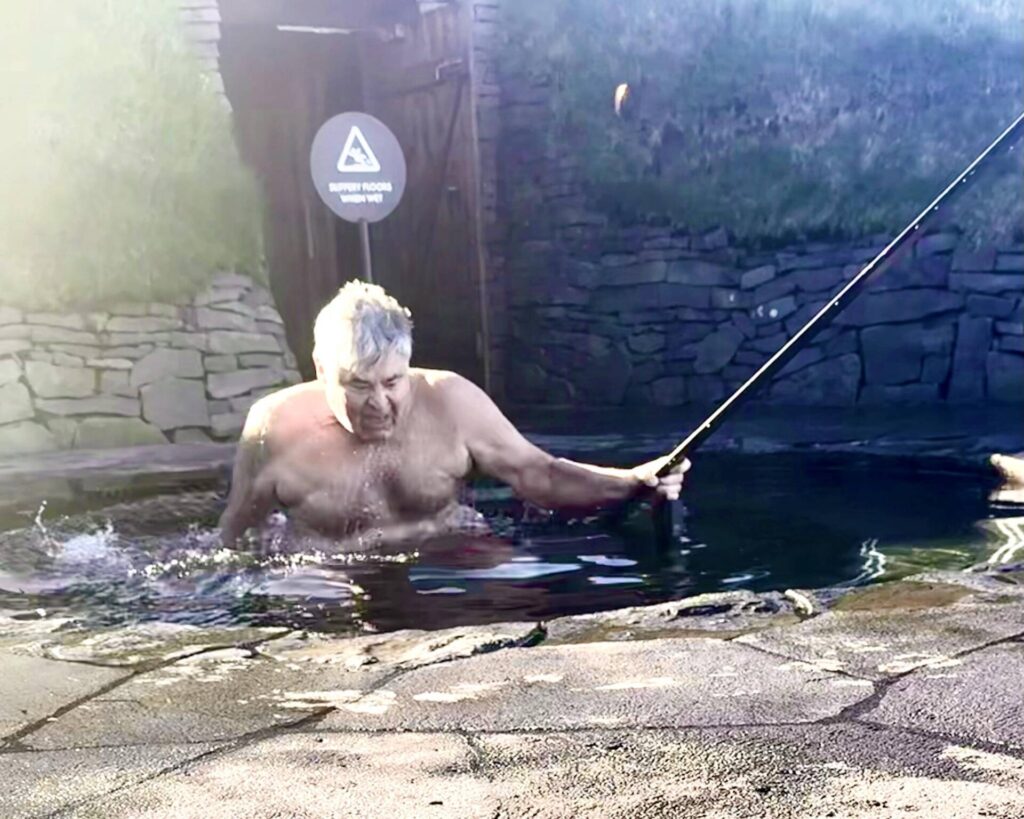
Compare Cos in the Sky Lagoon, with far fewer young people and a fantastic view of the ocean, versus his picture, five years earlier, above in the Blue Laggon with the crowd behind him all doing face salts. Although a little grayer, he has aged well.
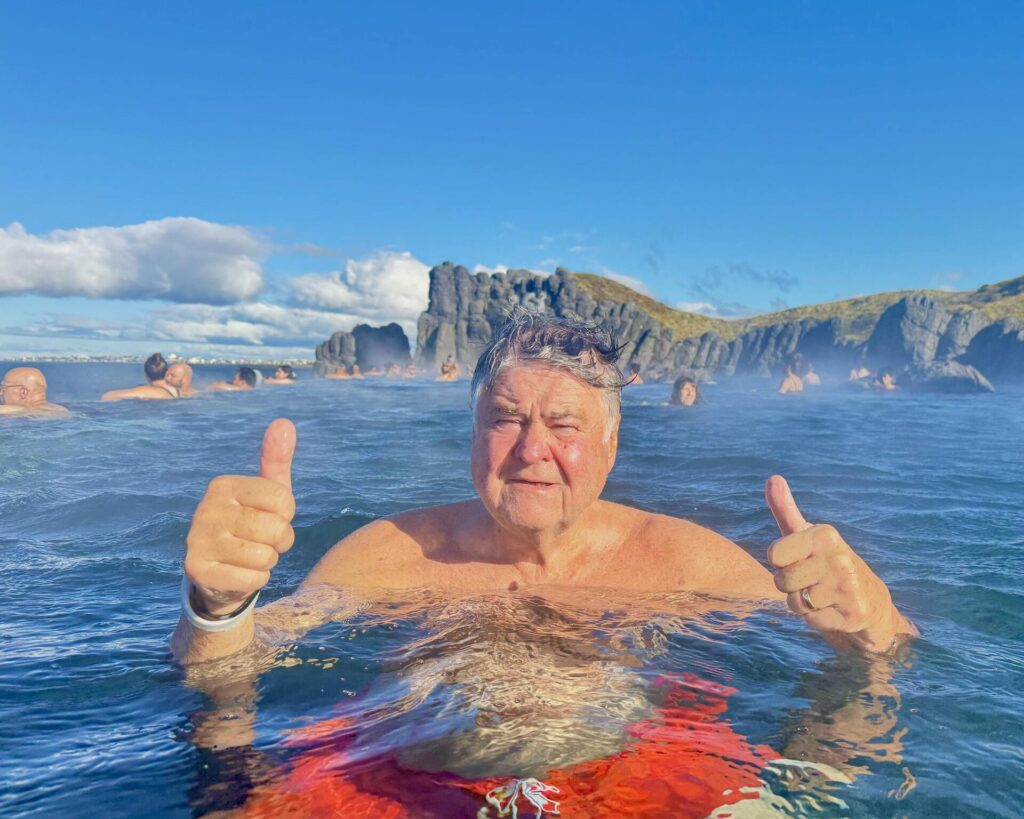
He even seemed to enjoy the cold plunge. Well, maybe not.
Why the Golden Circle Works So Well for a 3-Days Itinerary
For a three-day trip, the Golden Circle hits a rare sweet spot: it gives you the feeling of seeing Iceland without turning the whole vacation into a logistics exercise. You can land in Reykjavík, get on the road quickly, and reach places that look and feel unmistakably Icelandic within a relatively short drive. That matters more than people think. On a brief itinerary, ease is not a compromise; it’s what makes the experience feel spacious instead of rushed.
It also helps that the route delivers variety with almost no wasted motion. In a single stretch, you get geothermal drama, powerful waterfalls, and one of the country’s most historically and geologically significant landscapes. The appeal isn’t only that these stops are famous. It’s that they are genuinely impressive, close enough together to stack into a satisfying day, and accessible enough that you still have time to linger, detour, eat well, or recover if the weather shifts. A shorter route leaves room for the kind of travel that feels good while you’re doing it, not just after you’ve checked the photos.
That’s why the Golden Circle works so well for travelers on a long weekend, first-timers, or anyone who wants a strong return on limited time. You get a concentrated version of Iceland’s greatest hits without needing marathon driving days, constant hotel changes, or the kind of pacing that turns awe into exhaustion. It’s efficient in the best sense of the word: not bare-bones, not watered down, but focused. And once you understand how much the shorter loop does with so little road, it becomes easier to see what a full week on the Ring Road opens up that this compact circuit simply can’t.,
Ring Road Iceland
Driving Iceland’s Ring Road can be a challenging long drive, however it is truly one of the world’s great road trips. For more information about the world’s best road trips, please see our post “15 Most Romantic Road Trips For Couples.”
The entire Ring Road is an 800-mile highway, and a minimum of 20 hours driving time. Unless you don’t intend to stop anywhere and check ouit the sights, it will take a minimum of seven days to enjoiy the trip, including a four hour drive on most days. We just completed a 7-day trip. When we do it again we will expand it to 10 days and include additions such as the Silver Cirlce in the Northeast, the Diamond Cirlce in the North, and spend more time in places like the Snaefellenes Peninsula and the National Parks.
It is best to think of the Ring Road in five major areas:
- Borgarnes & Reyholt (Just North of Reykjavik)
- North Iceland
- South Coast
- Southeast Iceland
- East Fjords
Depending on the number of days you want to take to travel the entire Ring Road (we suggest 7-10), decide how many days you want to spend in each sector. We definitely recommend spending at least one extra day in the South sector, and also spending sometime in Reykjavik. Some specifric itinerary suggesitons follow.
Iceland Ring Road Itinerary
On our 2026 recent early September journey we spent 7 days and 6 nights on the Ring Road and a final night in Rykjavik. The map below shows the journey that we took:
Day-by-Day Itinerary:
First Day – Keflavik Airport to Hotel Ranga
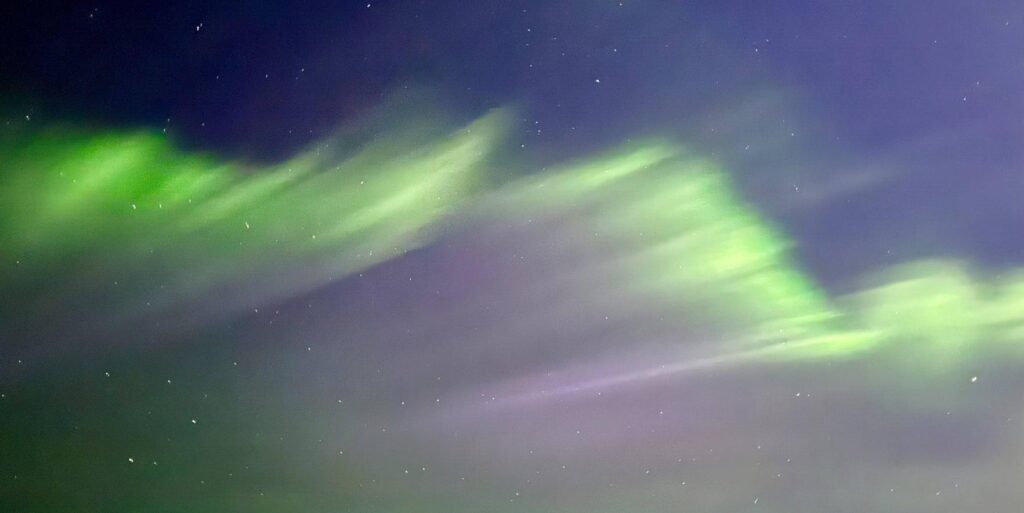
We arrived in Keflavik Airport and after getting our four-wheel drive SUV we headed to the Sky Lagoon for a morning wake-up bath and spa treatment. Next we had a late lunch in the small towm of Hveragerði, known nationally as “the greenhouse town” because it has one of Iceland’s largest clusters of geothermal-powered greenhouses. Finally, we stayed for the night in Hotel Ranga (point C in the Southern section of the map), where we got a great view of the aurora borealis.
Second Day – Hotel Ranga to Vik
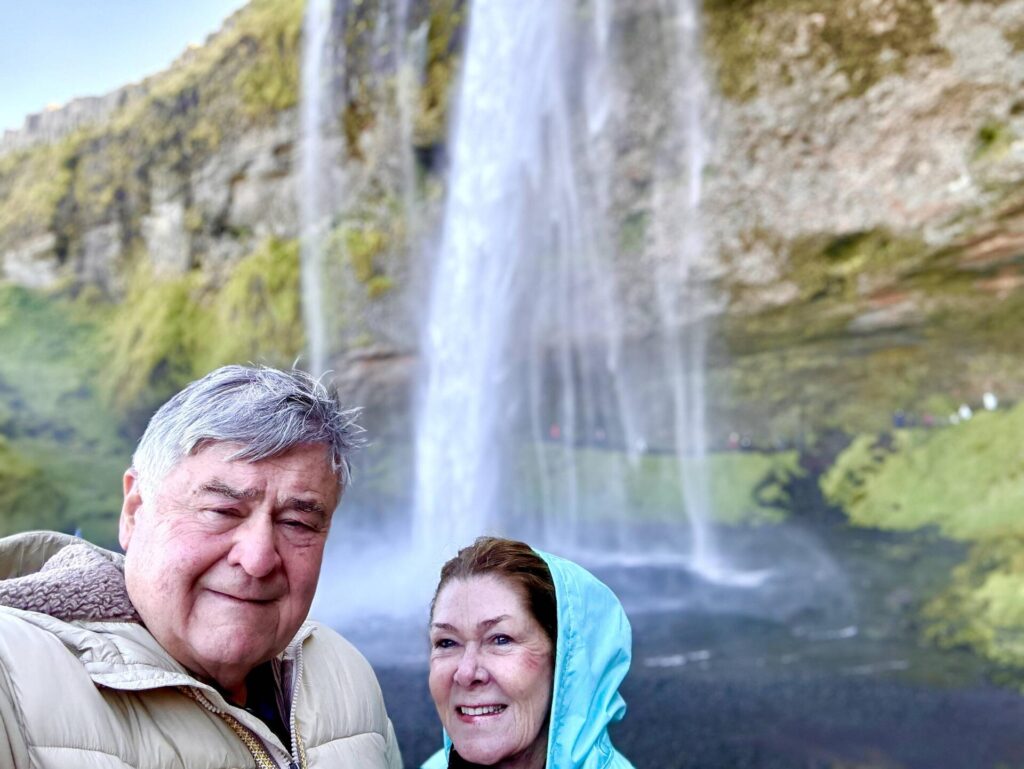
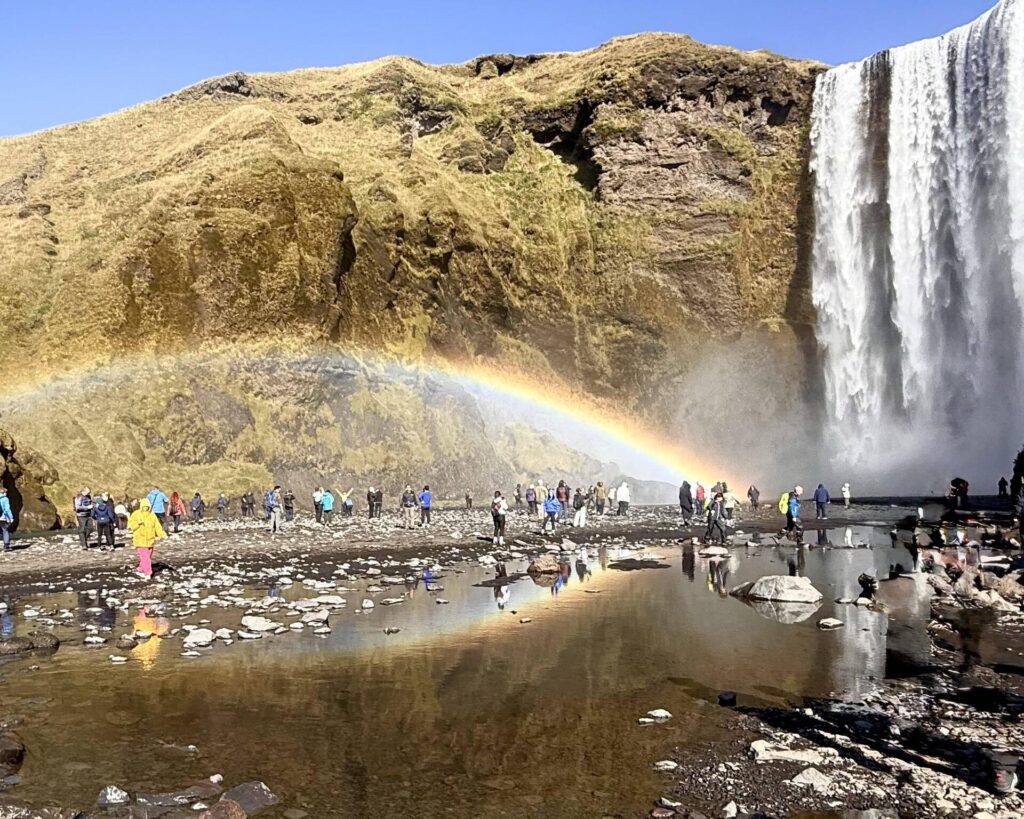
This was waterfall day. First, the Seljalandsfoss Waterfall, where you walk behind the waterfall, and then the Skogafoss Waterfall. We visited the Dyrhoaey Lighthouse and we stayed the evening in Vik. One can reach Vik from the Keflavik airport in one day if you pass on going to the lagoon. However, Hotel Ranga for us was a must stop, as this was where we were able to see the Aurura Borealis in so much detail because of the remote dark location of the hotel.
Day 3 – Hotel Vik to Hofn
Glacier Day with an early visit to the Fjaðrárgljúfur Canyon followed by lunch at the Skaftafell Glacier Visitors Center, and concluding at the Jokulsarlon Glacier Lagoon and Diamond Beach where the Glaciers are like diamonds on the black sand. We stayed near Hofn where there are only guest house options near the town. Our was a nice place, somewhat unique with small guest houses and a nice view of the bay, but it was twenty minutes outside of tiown.
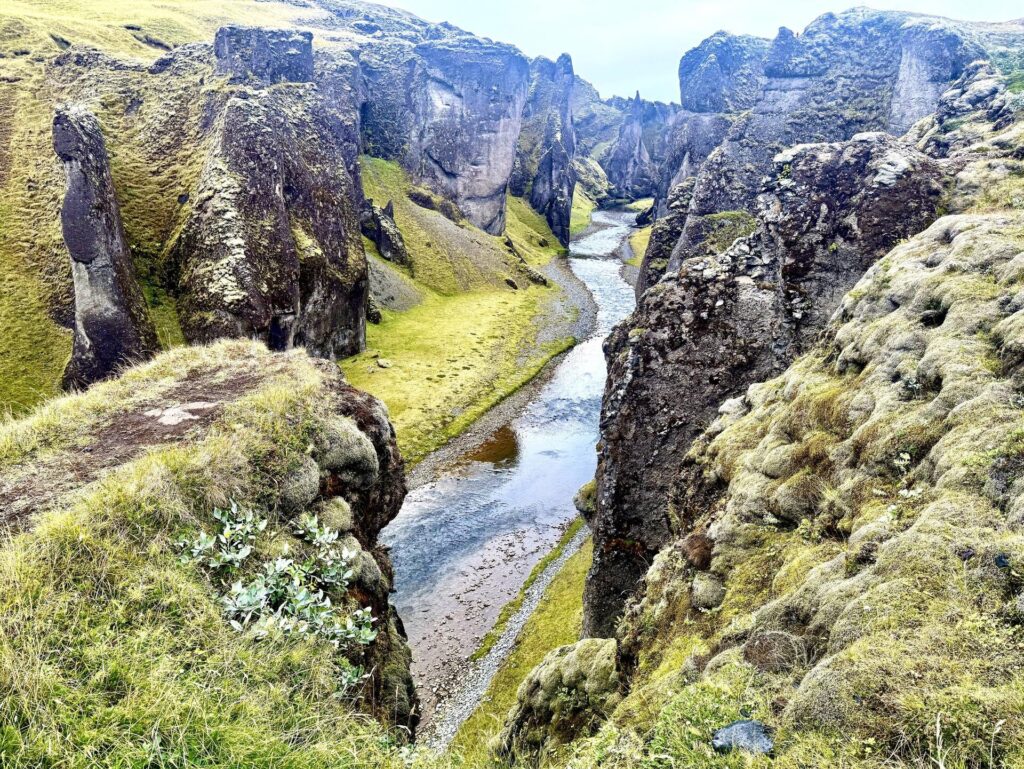
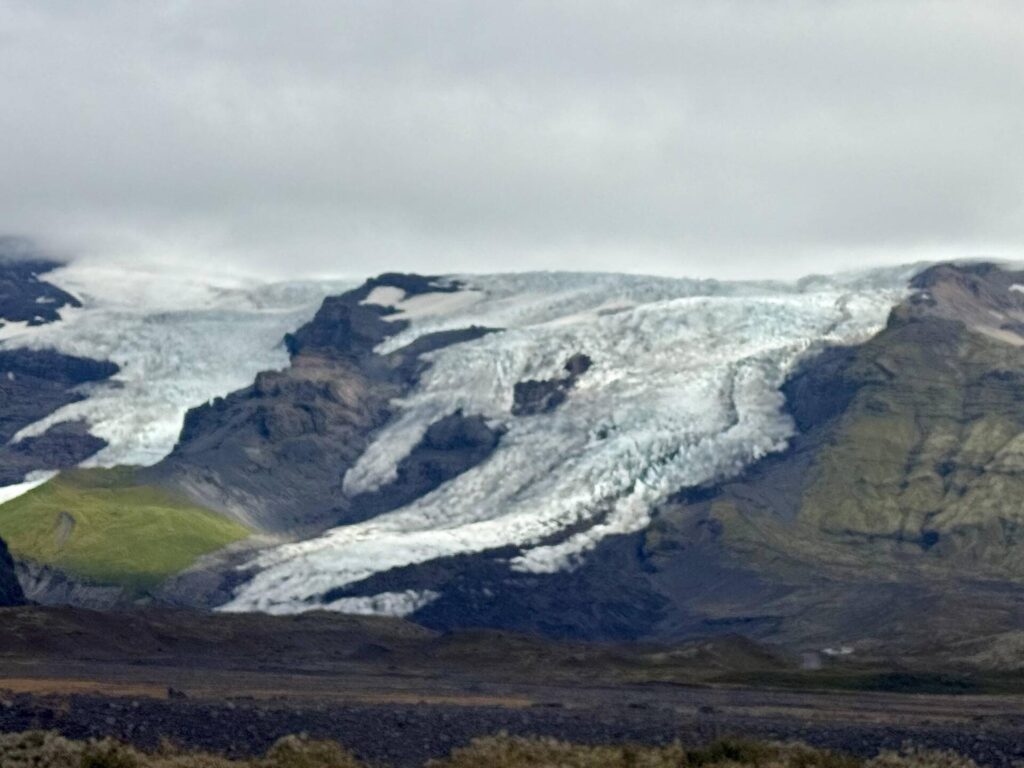
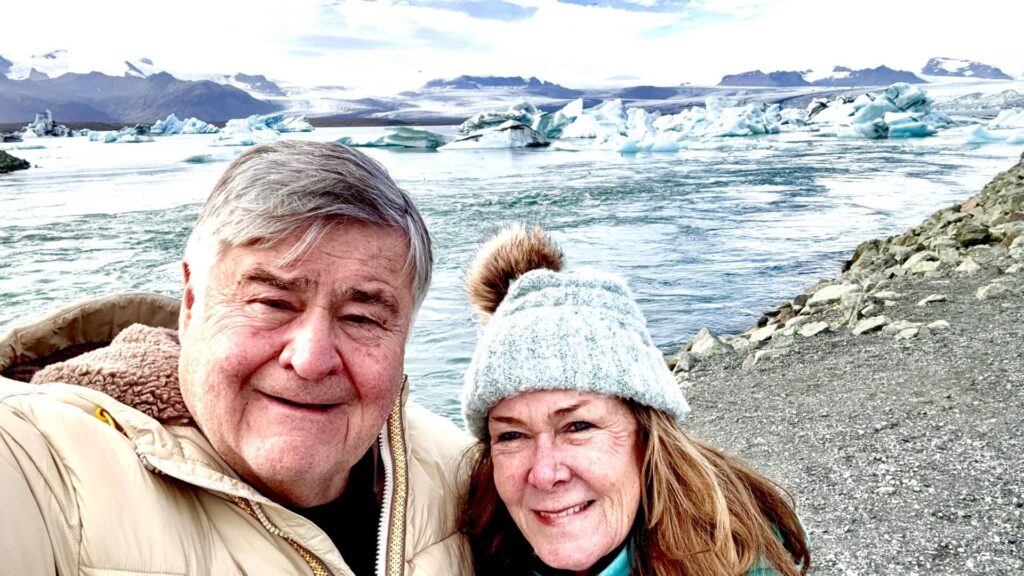
Day 4 Hofn to Gisthusio Lake Egilsstaðir
After three days of nice weather, the rains had set in making the drive through the Eastfjords less than pleasant. Nevertheless, when we got to Egilsstaðir we had a nice lunch, and then we headed over a foggy mountain pass to Seyðisfjörður, which is a cute small artsy town.
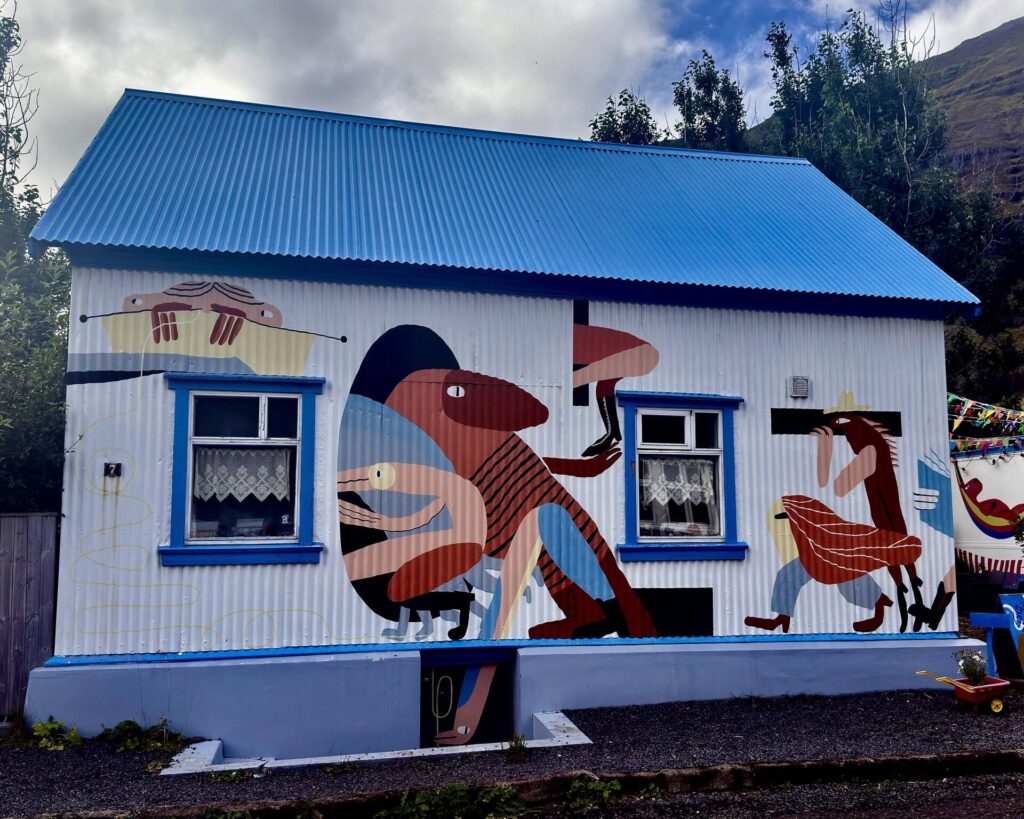
Day 5 – Egilsstaðir to Akureyri with a Diversion to Húsavík
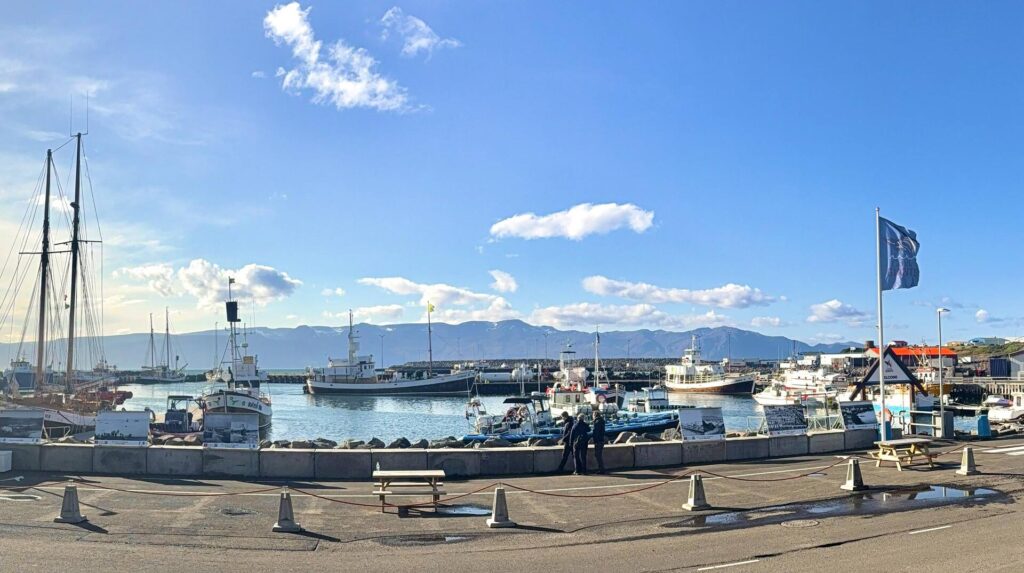
This was a day of diversions after making a forty-five minute directional mistake. Having seen Will Ferrell’s funny movie about Iceland in 2020, Eurovision: Fire Saga, we decided to skip lunch on Lake Myvatn and visit the town of Húsavík where the movie was filmed. It was a pleasant stop as our first diversion off of the Ring Road. Next time back we will add a day and do the entire Diamond Circle, of which Húsavík is a part of.
Day 6 – Akureyri to Borgarnes
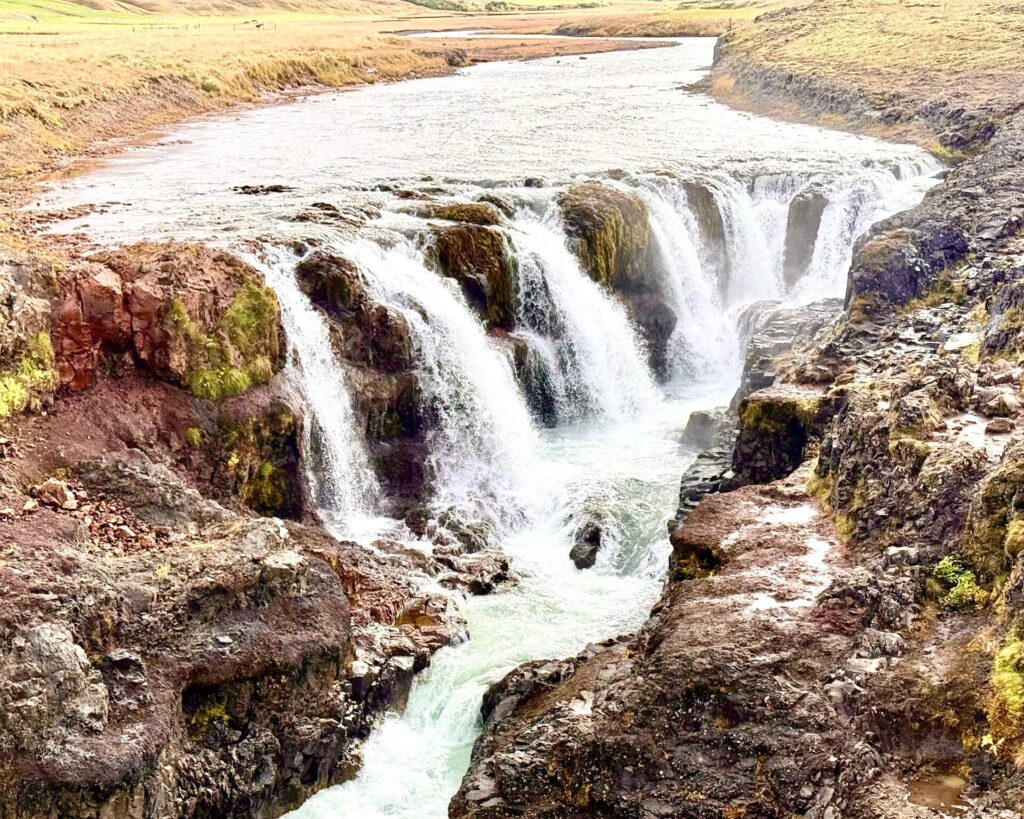
The weather had now turned winter stormy, and we needed to cross some mountain passes to reach Borgarnes. We managed to find a great waterfall location, Kolugljúfur Canyon. Oddly, it is not identified in many of the guidebooks. We highly recommend this stop. As to the Grabrok Crater, which is further south on the Ring Road, we had less than a fun experience climbing to the top of the crater.
Day 7 – Diversion #2 to Snaefellsnes Peninsula
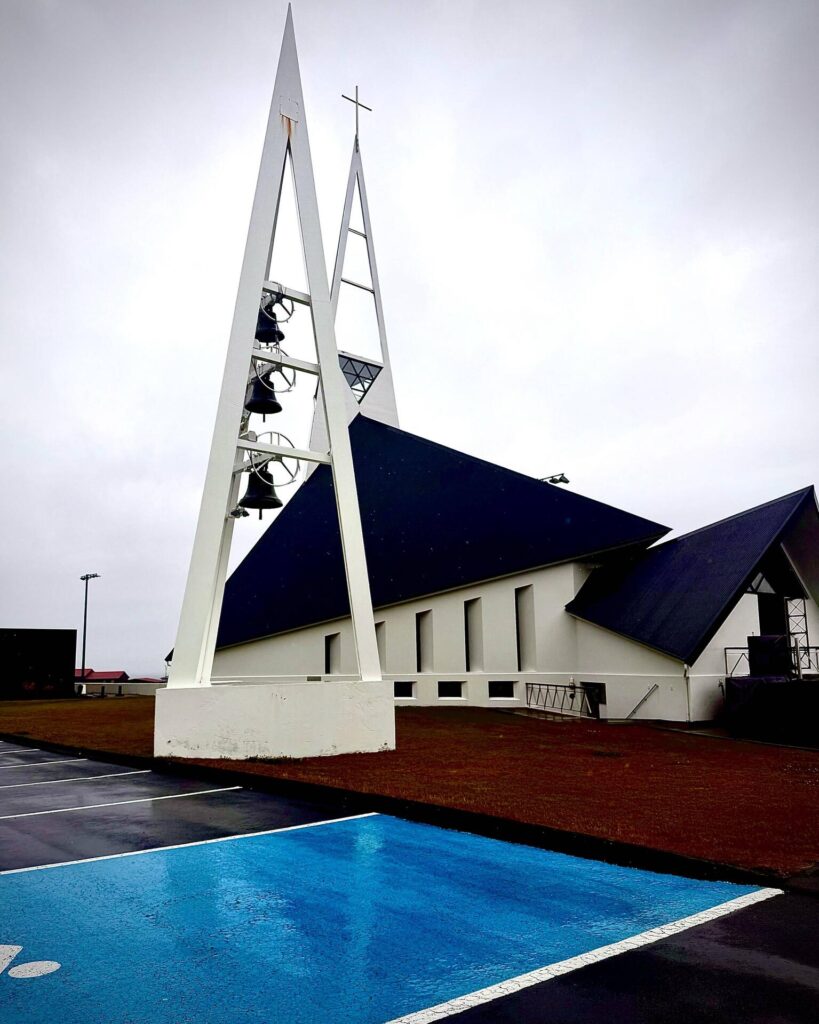
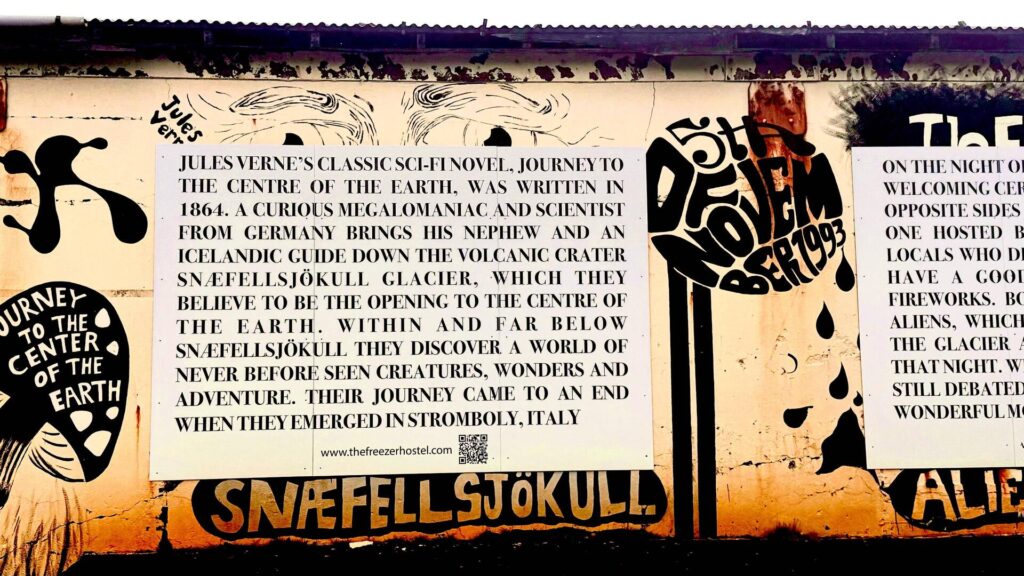
We hadn’t made any plans for our final day other than to arrive back to Reykjavík. So, takiing a diversion up to the Snaefellsnes Peninsula seemed like a nice way to spend our final traveling day on the Ring Road. Unfortunately, the weather didn’t cooperate, but we did get some fun pictures in the artsy town of Hellissaneur.
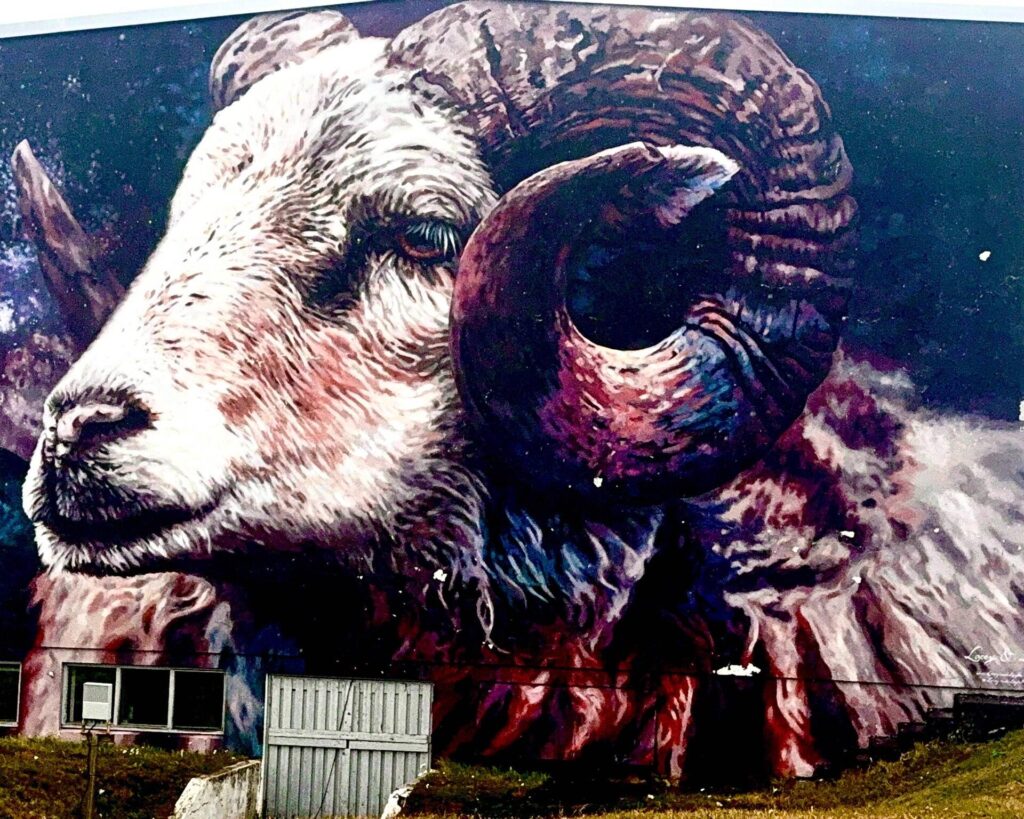
One wall painting was of famous Sagas from Iceland’s past.
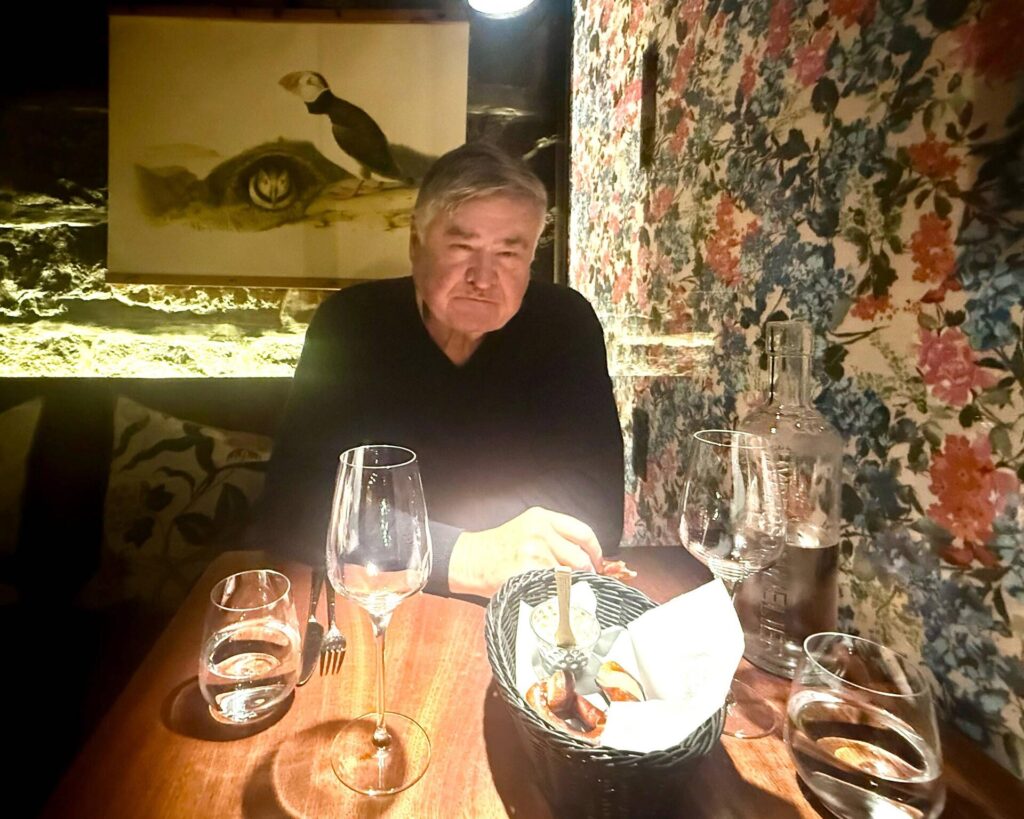
Back in Reykjavík, we had a great dinner at the “Food Cellar,” for the second time where we ate five years ago on our first visit to Iceland. Here is Cos, waiting for his Raindeer Steak.
Ring Road Driving Tips
The Ring Road is a two-lane highway essentially the whole way, so unless you are willing to just sit behind the slow trucks or cars, you better be a good driver and not affraid to pass in the left lane. The speed limit is 90 kmh (or roughliy 55 mph). It slows to 50 kmh when going through small towns or single lane bridges over the many river crossings.
There are limited petrol stations, particularly in the remote areas, making it important to visit the gas station before leaving the main towns along the way, Also, while a third of cars in Iceland are fully electric or hybrid vehicles, chargng stations may be even more challenging to find. In addtion, while the main road is always paved, there are many times when you will want to divert onto an unpaved road to vist the black sand beaches or other diversions. These gravel roads are often constructed of grounded lava rock .
Therefore, taking all these factors into consideratin, the decision about the vehicle tiype of rental car you hire becomes very important. We had a four-wheel drive plug-in hybrid on our recent trip, whcih was great for some of the gravel roads. However, we onliy found one locaton where we were able to charge it on the entire 800-mile journey, leaving the EV component less valuable. If you get an EV, make sure it has a Tesla equivalent charger, as that is what you will find in most places.
What Driving Iceland’s Famous Ring Road Unlocks in 7 Days
A week on the Ring Road changes the scale of the trip in a way a shorter loop simply can’t. Over seven days, the country has room to surprise you. The south gives you black sand, glacier tongues, and those cinematic roadside views that make you pull over even when you promised yourself you wouldn’t. Then the east quiets everything down. The north brings a raw, volcanic edge. The west eases you back with broader valleys, fishing towns, and a different kind of beauty—less dramatic at first glance, but the kind that settles in and stays.
What that driving time really buys you isn’t just mileage. It’s contrast. You begin to understand that Iceland is not delivering one big look over and over again; it keeps changing the terms. One day is spent tracing the edges of ice and sea. The next is all lava fields, steaming earth, or a stretch of coastline so open it feels almost lunar. Even the weather helps tell the story. A sunny hour can turn a valley into something inviting and pastoral, and then a wall of mist rolls in and gives the exact same landscape a harsher, more mythic face. On a seven-day circuit, those shifts become part of the experience rather than interruptions to it.
The Ring Road also unlocks a better rhythm. Instead of trying to pack every marquee stop into a compressed schedule, you can let the trip breathe a little. You can take the scenic detour because the light is good. You can spend longer at a place that catches you off guard. You can arrive in a small town tired, eat something warm, sleep well, and head back out the next morning without feeling like you are permanently behind. That matters more than people expect. Iceland lands best when there is enough space for wonder and enough restraint to actually absorb it.
And that’s the real difference: a week on the Ring Road doesn’t just add more sights; it gives Iceland time to unfold into distinct landscapes, which is exactly why the comparison between the waterfalls, geysers, and glaciers on each route matters so much.,
Waterfalls, Geysers, and Glaciers: How the Landscapes Actually Compare
The Golden Circle gives you Iceland in bold outline. The Ring Road fills in the shading. If your goal is to see the country’s headline scenery quickly, the shorter loop absolutely delivers: thundering water, geothermal drama, volcanic ground that seems to breathe under your feet. But once you leave that well-traveled circuit and keep going, the landscapes stop feeling like a greatest-hits reel and start behaving more like a full album—wilder, less repetitive, and far harder to reduce to a few famous names.
Take the waterfalls first. On the Golden Circle, they make an immediate impression because they are easy to reach and impossible to ignore. Gullfoss, especially, has the kind of force that feels designed to end an argument. It is powerful, theatrical, and close enough to Reykjavík to fit neatly into a single day. But the Ring Road turns waterfalls from a major sight into part of the country’s visual language. South Iceland alone offers one striking cascade after another, each with a different personality: one you can walk behind, one that drops in a clean silver line, one hidden in a narrow cleft like a secret. Head farther east or north and the scale changes again. The falls become broader, moodier, more isolated. They are not just stops on a route; they begin to define entire stretches of it. Detifoss, in the Vatnajökull National Park, in Northeast Iceland is actually the most powerful waterfall in the country.
The geysers tell a slightly different story. Here, the Golden Circle has a genuine advantage because it gives you the most accessible geothermal show in the country. Strokkur erupts reliably, the air smells faintly of minerals and heat, and the whole area has that wonderfully unstable quality that makes Iceland feel geologically unfinished. On a short visit, it is one of the best returns on your time. The Ring Road does not really try to beat it with a bigger, better version every few hours. Instead, it broadens your sense of geothermal Iceland. Hot ground, steam vents, sulfur-streaked earth, lava fields, and distant plumes become recurring features rather than a single scheduled attraction. The effect is less about one burst of boiling water and more about understanding that the island is alive almost everywhere you go.
And then there are the glaciers, which is where the balance shifts most decisively.
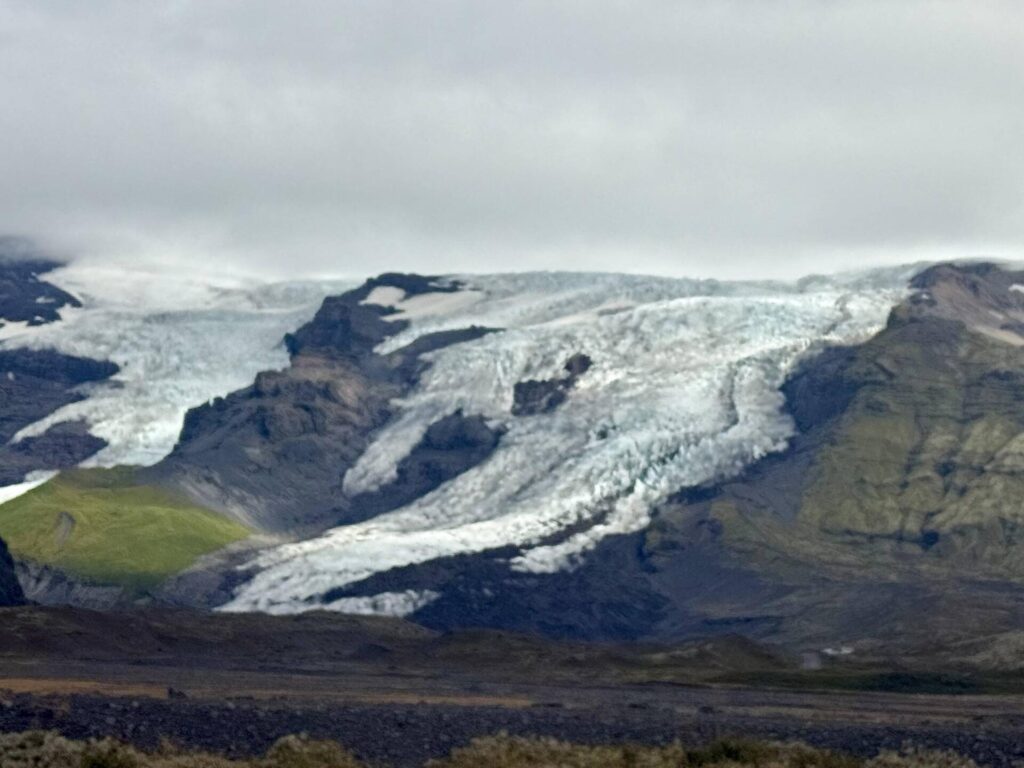
The Golden Circle can hint at Iceland’s icy scale from a distance, but the Ring Road brings you into much closer conversation with it. In the southeast, glaciers stop being background scenery and become the main event: blue tongues of ice reaching down between mountains, black sand plains shaped by old floods, lagoons crowded with floating chunks that look sculpted rather than broken. In the Southeast, the Jökulsárlón Glacier Lagoon with it’s floating icebergs, and the nearby Diamond Beach are a highlight of the entire Ring Road tour. It was our best experience of the trip. This is the version of Iceland many people picture before they arrive, and it is not fully available on the shorter circuit. The entire Ring Road gives you enough time and enough geographic range to see how ice changes the country—not just visually, but structurally, as if entire regions have been carved into their current form by something immense and patient.
And once you begin to notice those quieter shifts in terrain, it becomes much easier to appreciate the places in between the famous sights—the towns, backroads, and layered history that make the longer journey feel like the real Iceland rather than only the photogenic one.,
Best Time of Year for Driving Iceland’s Famous Ring Road
We definitely do not recommend making the entire Ring Road journey anytime between October and April, especially during the winter months. Many of the accomodations along the road will not even stay open during the winter season, and tlhe winter storms can be harsh.. Also, the weather conditions can change very quickly and the hours of daylight can be very short..
On our recent trip in early Septmeber, we had four loveliy sunny days, but on the fifth day we encounted rain and even snow and zero degree centigrade conditions when we drove over a mountain pass in the northern part of the country. May and September can normally be a great time to take the trip, as the hours of daylight are still relatively strong, and the crowds are much less than when travelling in the summer months. Just make sure you check the weather conditions before you travel over any of the mountain roads.
Beyond the Stops Everyone Knows: Hidden Towns, Quiet Roads, and Real Iceland History
The longer route also gives Iceland room to feel inhabited. Not crowded, not busy, but lived in. You pass through fishing towns that do not seem arranged for outsiders so much as adapted to wind, distance, and weather over generations. In places like Siglufjörður in the north or Djúpivogur in the east, the appeal is not a single blockbuster attraction. It is the harbor light at the end of the day, the old church with the colorful walkway that still looks useful, and the sense that daily life here has always required a certain toughness and a certain patience. Those places stay with you because they are specific. They do not perform Iceland. They simply are.
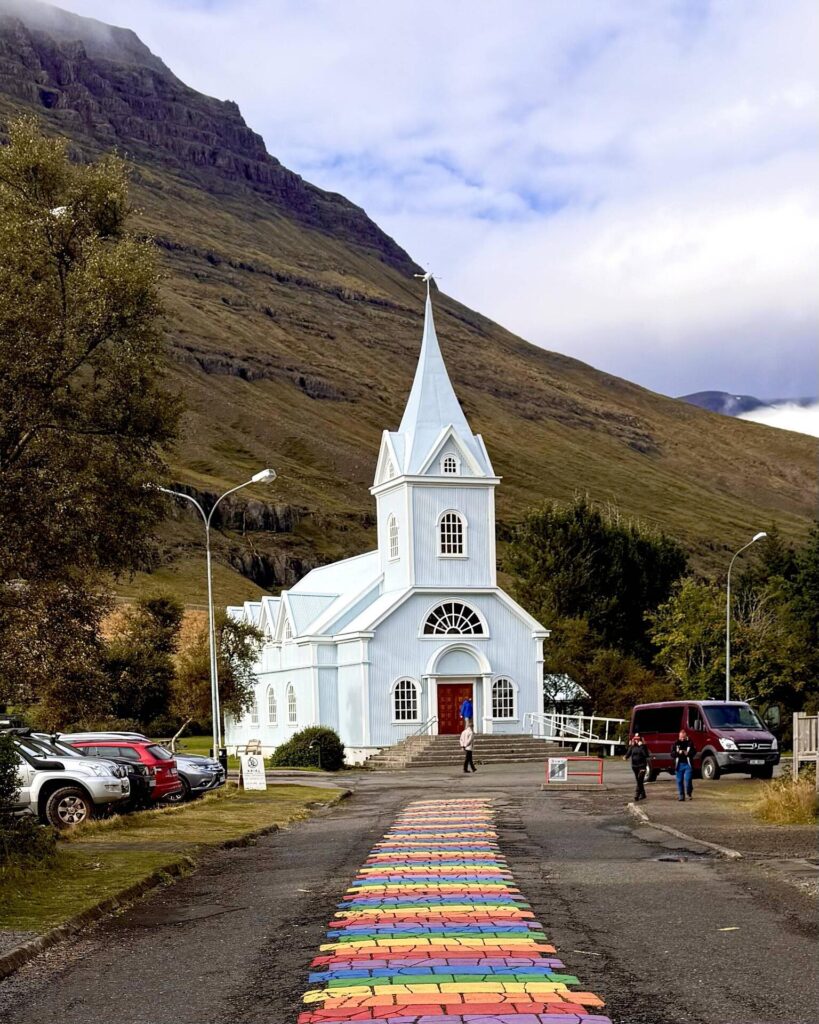
Then there are the roads that peel away from the main loop and ask for a little more time. A detour into a fjord, a slower coastal stretch, a valley with hardly any traffic at all—these are often the moments when the trip stops feeling like an itinerary and starts feeling like discovery. You notice sheep blocking the lane with complete authority.

History lands differently out there, too. Reykjavík can give you the broad outline, and the major attractions can tell a clean version of the story, but the Ring Road lets you see how settlement, trade, isolation, and survival shaped different regions in different ways. Turf houses, old churches, fishing museums, eruption markers, and weather-beaten ports do more than decorate the route. They show how Iceland was built not only by spectacle, but by endurance. The landscape is ancient, yes—but so is the habit of making a life inside it.
That is part of what makes the full circuit feel richer than a checklist of famous stops. You are not only driving toward the next waterfall or black-sand beach. You are moving through communities, through local memory, through small places that give scale to the big scenery. The glaciers and cliffs may dominate the photos, but the villages and side roads often define the experience.
Of course, all of that extra depth comes with practical trade-offs in time, energy, and budget, which is exactly where the decision between the two routes becomes less romantic and more personal.,
Cost Per Day, Road Fatigue, and Trip Planning: Choosing the Route That Fits You
If you are choosing between the Golden Circle and the Ring Road, the real question is not only what you want to see. It is how you want to spend your days. The Golden Circle is usually the easier sell on paper: fewer driving hours, lower fuel costs, fewer hotel changes, and less pressure to keep moving. It works well for travelers who want a strong Iceland experience without turning the trip into a daily logistics exercise. You can settle into one base near Reykjavík, take your time at each stop, and still leave room for a long lunch, a detour to a hot spring, or a weather pivot that does not wreck the whole plan.
The Ring Road asks for more from you, and not just from your wallet. Even when the distances look manageable, the steady rhythm of packing, driving, stopping, checking in, eating, and doing it again can wear you down faster than expected. Iceland’s scenery has a way of making every hour feel cinematic, but road fatigue is still road fatigue. A ten-day loop can be exhilarating for travelers who love momentum and variety. For others, it can start to feel like they are working their vacation into submission, trying to stay on schedule while the landscape keeps begging them to slow down.
Budget matters here too, as Iceland is expensive, but not always in the obvious way. The longer route often raises the total trip cost through extra nights, more gas, and more meals on the move. At the same time, the cost per day can sometimes feel more justified if you are the kind of traveler who wants full immersion and does not mind trading convenience for range. The shorter route may be less expensive overall, but it can also feel concentrated, especially in peak season when the best-known stops are busy and nearby accommodations are priced accordingly. In other words, cheaper is not always simpler, and longer is not always wasteful. The better choice is the one that matches your energy, your pace, and your tolerance for uncertainty.
A useful way to decide is to picture day four, not day one. Are you still excited by another stretch of open road, another guesthouse check-in, another hour added for a side trip you found that morning? Or would you rather have more breathing room, shorter drives, and the freedom to linger when a place surprises you? Once you answer that honestly, the route tends to choose itself—and then the bigger variables arrive, because in Iceland, light, forecast, and season can completely rewrite the trip.
When the Aurora, Weather, and Timing Change Everything
This is where Iceland stops behaving like an itinerary and starts acting like a living thing. In winter, the northern lights can turn an ordinary evening into the moment you talk about for years, but they do not care what you booked, where you planned to sleep, or how badly you want a clear sky. A Ring Road trip gives you more chances to be in the right place at the right time simply because you cover more ground and spend more nights away from city glow. The Golden Circle can still deliver an unforgettable aurora sighting, especially on a dark, crisp night, but it offers fewer rolls of the dice. Seeing the lights is never guaranteed. What changes is your margin for opportunity.
Weather has the same kind of power, only less romantic and more immediate. A sunny afternoon can make even a short route feel cinematic. Wind, sleet, or fog can make a beautiful drive feel long, tense, and smaller than expected. On the Ring Road, conditions are not just background scenery; they can reshape the day, close a stretch of road, delay an arrival, or turn a planned highlight into a quick stop between forecasts. The Golden Circle is easier to adjust on the fly because you are closer to Reykjavík, closer to services, and usually working with shorter distances. The longer loop asks for more flexibility, more attention, and a little more humility, because Iceland has a habit of reminding travelers that nature sets the pace.
Then there is timing, which influences almost everything more than first-time visitors expect. In summer, long daylight makes ambitious driving days feel possible and sometimes deceptively easy. In shoulder season, a route that looked balanced on paper can suddenly feel tighter once rain, darkness, or icy roads enter the picture. In winter, even a modest plan can become the right one if it gives you room to respond instead of rush. The smartest choice is often less about what you can technically fit in and more about what the season will let you enjoy without turning the trip into a negotiation with the clock, which is exactly why the final decision comes down to the kind of Iceland experience you want to remember.,
If you only have a few days, the Golden Circle is the right kind of easy: high-impact stops, short driving days, and a fast introduction to Iceland’s most famous landscapes. But if you have a full week, the Ring Road gives you something the shorter loop can’t—space. Space to watch the scenery change from waterfalls to black sand to glacier lagoons, to slow down in small fishing towns, to feel the weather shift, and to experience the country beyond its greatest hits. One route helps you check off Iceland’s icons; the other helps you understand why Iceland stays with people long after they leave.
That’s the real choice: not convenience versus difficulty, but snapshot versus immersion. Iceland’s Ring Road stretches roughly 1,300 kilometers around the island, and every mile adds another layer of the country’s drama, history, and scale. So choose the route that fits your time, budget, and energy—then commit to it fully. Map the stops that matter most, leave room for weather and surprises, and build the trip around the version of Iceland you actually want to remember. The Golden Circle shows you Iceland. The Ring Road lets Iceland happen to you.
Conclusion:
The Golden Circle is the smart choice when time is tight and you want a high-reward introduction to Iceland’s most famous geysers, waterfalls, and dramatic scenery. But if you have 7 days, the Ring Road offers the deeper payoff: more glaciers, more cinematic driving, more connection to small towns and Iceland history, and more of the wild atmosphere travelers hope to find. Choose the route that matches your time, budget, and energy level—then map your must-see stops and start building an itinerary that fits the Iceland you came to experience.
0 Comments