
Macau, the fabulously wealthy UNESCO city, is known for its casinos, which make it the “Las Vegas of the East,” and, to a lesser degree, for the influence of its Portuguese and Chinese settlers. Immerse yourself in “1 Day Macau” and in Macau’s enchanting fusion of cultures, where Portuguese explorers once roamed and Chinese traditions thrive.
Contents
- 1 What to Do in Macau? More than Casinos
- 2 HK and Macau – 1 Day Macau
- 3 HK and Macau Political Interactions with Beijing
- 4 What to See in Macau? Much to Do and Not Just Casinos
- 5 Getting to Macau
- 6 What to See in Macau
- 6.1 What to See in Macau: #1 Portuguese History and Portuguese Architecture
- 6.2 What to See in Macau: #2 Chinese Influence
- 6.3 What to See in Macau: #3 Mandarin’s House
- 6.4 What to See in Macau: #4 Macau Tower
- 6.5 What to See in Macau: #5 Lotus Square and the Lotus Tower
- 6.6 What to See in Macau: #6 Religion in Macau
- 7 What to Do In Macau
- 7.1 What to Do In Macau: #1 Unveil the Cultural Treasures of Macau
- 7.2 What to Do in Macau: #2 Try Macanese Cuisine
- 7.3 What to Do in Macau: #3 The Glamour of Macau’s Casinos
- 7.4 What to Do in Macau: #4 Stroll Through Taipa Village
- 7.5 What to Do in Macau: #5 Visit A-Ma Temple
- 7.6 What to Do in Macau: #6 St. Paul’s Cathedral
- 8 History of Macau: Diving into Macau’s Colonial Influence
- 9 History of Macau: Today’s Governance. Transfer to China
- 10 Conclusion
What to Do in Macau? More than Casinos
In this article, we will delve into the glamour of Macau’s famous casinos, the deep-rooted Chinese influence, and the intriguing colonial History of Macau that shapes this vibrant city. We will help you figure out “What to do in Macau.” From the towering Sky Tower to the ancient A-Ma Temple, uncover the treasures that make Macau a captivating blend of East and West. Come along on this journey and experience the magic of Macau for yourself.

If you are looking for ways to visit Macau, especially if traveling between HK and Macau, then check out Tripadvisor for all there is to do in Macau.
HK and Macau – 1 Day Macau
Hong Kong (HK) and Macau are located close to each other, just south of China. HK and Macau are still considered separate entities from China, although China controls the governments in each entity. Aside from immigration inspections, it is relatively easy to travel back and forth between the two countries. HK and Macau are connected by a long bridge/tunnel or ferry boats (see more information on the HK and Macau connection below). Check out the Map of HK and Macau to see the proximity to each other and to China. While HK is somewhat separated from China, Macau is much more surrounded, resulting in somewhat different political relationship with the mainland.
Map of HK and Macau
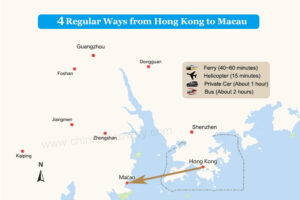
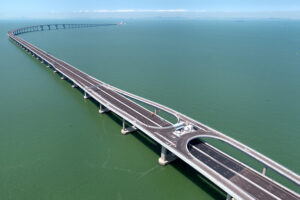
If you are coming from Hong Kong, take the turbo-jet ferry. You will arrive in an hour and immediately pass the first of over 30 casinos that are based in Macau. You can also use the newly created bridge-and-tunnel connection between the two countries. At 55km in length, the Hong Kong-Zhuhai-Macau Bridge is the world’s longest sea crossing.
HK and Macau Political Interactions with Beijing
HK and Macau both operate under the “One Country, Two Systems” framework, but their interactions with Beijing differ in several key ways:
Hong Kong’s Relationship with Beijing
- Political Tensions: Hong Kong has seen protests and political unrest, particularly after Beijing imposed the National Security Law in 2020. This law significantly expanded Beijing’s influence over Hong Kong’s governance.
- Economic Role: Hong Kong remains a global financial hub, serving as China’s gateway to international markets. Beijing has recently taken a more assertive approach in shaping Hong Kong’s financial sector.
- Legal System: Hong Kong’s legal system is based on British common law, but Beijing has increasingly tightened control, especially in areas related to national security.
Macau’s Relationship with Beijing
- Political Stability: Unlike Hong Kong, Macau has experienced less political unrest and has largely aligned with Beijing’s policies.
- Economic Dependence: Macau’s economy is heavily reliant on casino tourism, which Beijing regulates closely.
- Security Oversight: Beijing has increased its direct involvement in Macau’s security affairs, appointing officials to oversee national security matters.
While both regions maintain a unique status within China, Hong Kong has faced greater political challenges, whereas Macau has remained more stable and cooperative with Beijing.
What to See in Macau? Much to Do and Not Just Casinos
When in Macau, Cos and Robin spent the day visiting the shrine of the goddess A Ma, the fort, the St. Paul Cathedral, the Museum of Macau, and walking past preserved government buildings inherited from Portuguese colonial times.

Lunch was held at the Macau Sky Tower and, of course, a visit to the MGM casino was necessary, before jumping back on the ferry to complete a one-day visit between HK and Macau.


Getting to Macau
If you are interested in a journey to Macau you will discover the ease of accessibility to this vibrant city and why it deserves a spot on your travel bucket list. Uncover the simple and convenient ways to reach Macau, whether by ferry, air, or land. Find out why getting to this vibrant city is a breeze, allowing you to start your adventure in Macau with minimal hassle.
You have several options to reach Macau, depending on your starting point and preferences:
By Ferry
- From Hong Kong: Frequent ferry services operate between Hong Kong and Macau, with routes to the Outer Harbour Ferry Terminal or Taipa Ferry Terminal. Companies like TurboJET and Cotai Water Jet offer fast and comfortable rides.
- From Zhuhai: Short ferry rides connect Zhuhai and Macau, often departing from the Inner Harbour Ferry Terminal.
By Air
- Macau International Airport: Located in Taipa, the airport connects Macau to major cities in Asia, including Beijing, Shanghai, Tokyo, and Bangkok. It’s a convenient option for international travelers.
By Land
- Hong Kong-Zhuhai-Macau Bridge (HZMB): This impressive bridge-tunnel system allows for direct bus or car travel between Hong Kong and Macau. It will take about half the time of the ferry ride and also allows you to exit at the Hong Kong Airport.
- From Mainland China: You can cross into Macau via border checkpoints like the Gongbei Port in Zhuhai or the Hengqin Port.
What to See in Macau
Macau offers a mix of historical and modern attractions:
- Portuguese History — Buildings and Statues
- Chinese Influence — Chinese Influence is ingrained in the city’s culture.
- Mandarin’s House – A beautifully preserved traditional Chinese mansion.
- Macau Tower – Offers breathtaking views and adventure activities like bungee jumping.
- Lotus Square – A symbolic landmark representing Macau’s prosperity.
- Impact of Religion in Creating a cultural fusion.
What to See in Macau: #1 Portuguese History and Portuguese Architecture
Driven by a thirst for adventure and the promise of riches, Portuguese explorers set sail to distant lands in search of new opportunities. In the early 16th century, these intrepid explorers arrived in Macau, drawn by the lure of trade and the chance to establish a foothold in the Far East. Their presence left an indelible mark on the region, shaping its culture, architecture, and way of life. The first of these explorers was Jorge Alvares, who arrived in Macau in the early 1500s, establishing a strategic foothold in the region.

This era of colonization left a lasting impact on Macau, shaping its culture, language, and urban landscape. To fully appreciate the tapestry of influences that make up modern-day Macau, one must first uncover the layers of history left behind by these intrepid Portuguese pioneers.
As we unravel the layers of history of Macau left behind by these brave pioneers, we begin to understand the intricate tapestry that is modern-day Macau. This colonial legacy paved the way for the next chapter in the history of Macau, as the region underwent a significant shift in governance with its transfer to China.
What to See in Macau: #2 Chinese Influence
The Chinese influence in Macau is deeply ingrained in every aspect of the city’s culture, from its traditional cuisine to its architectural marvels, including Chinese words describing the Macau landscape carved into stone that can be found throughout the city.

As you explore the streets of Macau, you can’t help but notice the vibrant reds and golds adorning the buildings, a nod to Chinese symbolism and heritage. The blend of Portuguese and Chinese cultures is evident in the fusion of flavors found in local dishes, such as the iconic Portuguese egg tarts and dim sum delicacies.
The intricate temples and shrines scattered throughout the city serve as a reminder of Macau’s rich history and spiritual roots. Chinese festivals and traditions are celebrated with fervor, adding to the tapestry of cultural experiences that make Macau a truly unique destination. This fusion of East and West creates a dynamic atmosphere that sets the stage for a deeper exploration into Macau’s colonial history, shedding light on the city’s complex and fascinating past.
What to See in Macau: #3 Mandarin’s House
The Mandarin’s House is a historic residential complex in Macau. It was the residence and family home of the late Qing theoretician and reformist Zheng Guanying (1842–1921). He completed his masterpiece Shengshi Weiyan (Words of Warning in Times of Prosperity) in the house. The Mandarin’s House occupies an area of 43,000 sq ft and the largest family house in Macau. Very unusual to be so large.
What to See in Macau: #4 Macau Tower
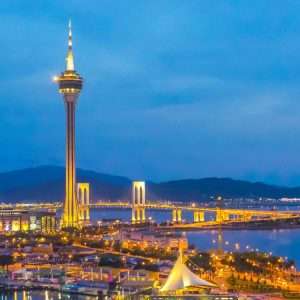
Soaring above the city at 338 meters, Macau Tower’s elegant spire offers you unparalleled panoramic views of the city, the coast and the Pearl River Delta. If you are feeling adventurous, take the Skywalk X – a stroll outside along the tower’s outer rim. For more down-to-earth entertainment, explore the tower’s four floors of shops, movie theaters and restaurants, including a revolving restaurant 223 meters above the city.
What to See in Macau: #5 Lotus Square and the Lotus Tower
Exploring the The Grand Lisboa Macau Hotel and Casino and Portuguese Architecture unveils another layer of Macau’s rich history and cultural heritage, showcasing the unique fusion of Eastern and Western influences that define the region’s architectural landscape.

The Grand Lisboa Macau Hotel and Casino stands as a testimony to Macau’s architectural diversity, offering visitors a panoramic view of the city’s skyline against the backdrop of the Pearl River Delta.

Nestled among the modern skyscrapers are remnants of Portuguese colonial architecture, with charming pastel-colored buildings and intricate tile work that harken back to Macau’s colonial past. Walking through the streets of Macau, one can’t help but marvel at the seamless integration of Eastern and Western design elements that coexist in harmony, reflecting the region’s rich cultural tapestry.
As you wander through the winding alleys and cobblestone streets, the whispers of the Orient and echoes of Portugal guide you towards a deeper understanding of Macau’s complex history and heritage.
Each architectural detail tells a story of the past, drawing you in with its colorful facades and ornate decorations. The Grand Lisboa Macau Hotel and Casino and Portuguese architecture serve as a gateway to Macau’s cultural treasures, inviting you to delve deeper into the layers of history that have shaped this enchanting destination.
Unveiling the Cultural Treasures of Macau reveals a tapestry of traditions and influences that continue to weave together, creating a vibrant and diverse cultural landscape that is uniquely Macau.
What to See in Macau: #6 Religion in Macau
Religion holds a prominent place in the cultural landscape of Macau, with beliefs and traditions that have stood the test of time. The city is home to a diverse array of religious practices, including Buddhism, Taoism, and Christianity, each contributing to the unique tapestry of spirituality that is woven throughout Macau. These different faiths coexist harmoniously, creating a sense of unity and reverence that can be felt as you wander through the streets of this historic destination. In the next “What to do in Macau” section, we will explore one of Macau’s most revered religious sites: the A-Ma Temple, a great example of a Taoist temple, and an example of the role religion is playing in blending culture in Macau.
What to Do In Macau
Macau is famous for its blend of Portuguese and Chinese heritage, stunning architecture, and vibrant entertainment scene. Here are some top activities:
- Explore the Cultural Treasures – Visit landmarks like the Ruins of St. Paul’s and Senado Square.
- Try Macanese Cuisine – A fusion of Portuguese and Chinese flavors, including dishes like minchi and Portuguese egg tarts.
- Visit Casinos – Macau is known as the “Las Vegas of the East”, with world-class casinos like The Venetian Macao.
- Stroll Through Taipa Village – A charming area with colonial-style buildings, local eateries, and cultural sites.
- Visit A-Ma Temple — a sanctuary of peace and spirituality that dates back to the 15th century.
- Explore St. Paul’s Cathedral:
What to Do In Macau: #1 Unveil the Cultural Treasures of Macau
As you explore the streets of Macau, you will encounter a rich tapestry of cultural treasures that reflect the fusion of Eastern and Western influences. From the intricate designs of the A-Ma Temple to the remaining exterior of the St. Patrick’s Cathedral, each cultural landmark offers a glimpse into the diverse heritage that defines this enchanting destination. Next, we delve into the wonderful cuisine that is influenced by Portugal and China, that have played a significant role in shaping the identity of Macau. For more information please see #’s 4, 5 and 6 below.
What to Do in Macau: #2 Try Macanese Cuisine
Macanese cuisine is a fascinating blend of Portuguese and Chinese flavors, with influences from Southeast Asia and beyond. It’s considered one of the world’s earliest fusion cuisines, dating back to the 16th century.
Popular Macanese Dishes:
- Minchi – A comforting dish made with minced beef or pork, diced potatoes, onions, and Worcestershire sauce, often topped with a fried egg.
- Portuguese-style Chicken – A creamy coconut-based curry dish that’s uniquely Macanese.
- African Chicken – A flavorful, spicy chicken dish with a rich sauce made from peanuts, coconut, and chili.
- Pork Chop Bun – Sometimes called the “Macanese hamburger,” this snack features a marinated pork chop in a crispy bun.
- Tacho – A hearty stew combining Chinese and Portuguese ingredients like cabbage, ham, and cured meats.
- Serradura (Sawdust Pudding) – A layered dessert made with sweetened whipped cream and crushed biscuits.
Macanese cuisine is deeply rooted in history, shaped by Portuguese sailors and their families who adapted European recipes using local Chinese ingredients. Here are some great restaurants in Macau that serve authentic Macanese cuisine:
- Restaurante Litoral – Famous for its African Chicken and other traditional Macanese dishes.
- Cozinha Aida – A great spot to try Minchi, a classic Macanese comfort food.
- Riquexo – Known for its Bacalhau à Brás, a Portuguese-style salted cod dish.
- IFTM Educational Restaurant – Offers a variety of Macanese specialties, including Sopa Lacassá.
- A Lorcha – A well-known restaurant near A-Ma Temple, serving Portuguese-Macanese fusion cuisine.
- O Castiço – A cozy spot in Taipa, famous for its Pastéis de Bacalhau (salted cod fritters).
- APOMAC – A local favorite, serving Tacho and Minchi at affordable prices
What to Do in Macau: #3 The Glamour of Macau’s Casinos
As you wander through the bustling streets of Macau, surrounded by the bright lights and sounds of the casinos, it’s impossible not to be drawn in by the allure of the city’s gambling scene. The glamour of Macau’s casinos is unmatched, with lavish decor, world-class entertainment, and a pulsating energy that captivates visitors from around the globe. From the iconic Grand Lisboa to the opulent Venetian Macau, each casino offers a unique experience that showcases the city’s reputation as the “Las Vegas of the East”.
Macau is home to some of the largest and most luxurious casinos in the world. Here are some of the biggest:
- The Venetian Macao – The largest casino in Macau, featuring a 375,000-square-foot gaming floor with over 640 gaming tables and thousands of slot machines.
- Wynn Palace – A high-end casino with 350 gaming tables, known for its lavish design and VIP gaming areas.
- Grand Lisboa Casino – One of Macau’s most iconic casinos, offering a wide variety of games and a stunning architectural design.
- MGM Macau – A massive casino with a stylish interior and a mix of gaming options.
- Lisboa Casino – A historic casino with Michelin-starred restaurants and a wide range of gaming experiences.
As we delve deeper into Macau’s cultural tapestry, it becomes evident that the casinos play a significant role in shaping the city’s identity and economic landscape. The excitement of the casinos and the cultural history of the city, make Macau a wonderful place to visit even if you aren’t a gambler.
What to Do in Macau: #4 Stroll Through Taipa Village
Taipa Village is one of Macau’s best-preserved cultural areas, offering a mix of Portuguese and Chinese heritage, charming streets, and delicious food. Located near the Cotai Strip, it provides a refreshing contrast to Macau’s bustling casinos.
Things to Do in Taipa Village:
- Explore Historic Streets – Wander through narrow alleys lined with colonial-style buildings.
- Visit the Taipa Houses Museum – Showcasing Portuguese architecture and Macau’s colonial history.
- Try Local Food – Rua do Cunha is famous for Macanese snacks like egg tarts, almond cookies, and pork chop buns.
- See Pak Tai Temple – A Taoist temple dedicated to the sea god Pak Tai.
- Enjoy Rooftop Dining – Many restaurants offer scenic views and a relaxed atmosphere.
You can find more details on the official Taipa Village website.
What to Do in Macau: #5 Visit A-Ma Temple
Nestled in the heart of Macau lies the ancient A-Ma Temple, a sanctuary of peace and spirituality that dates back to the 15th century.

Dedicated to the goddess of seafarers and fishermen, this sacred site is a testament to the deep-rooted beliefs and traditions that have shaped the cultural identity of Macau for centuries. As you explore the intricately designed pavilions and prayer halls, you can’t help but feel a sense of tranquility and reverence wash over you, connecting you to the spiritual essence of this historic destination. In the next section, we will continue our journey through Macau’s religious landmarks with a visit to the iconic St. Paul’s Cathedral.
What to Do in Macau: #6 St. Paul’s Cathedral
As you leave the serene atmosphere of the A-Ma Temple behind, your next stop in Macau’s religious journey is the magnificent St. Paul’s Cathedral. This iconic landmark stands as a reminder of Macau’s rich history and cultural diversity.

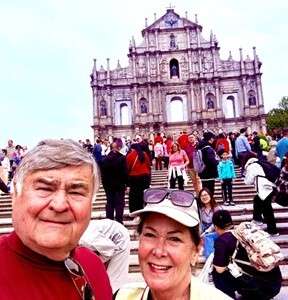
The striking ruins of the cathedral, with its grand façade and intricate stone carvings, are a testament to the Portuguese influence that once shaped this vibrant city. Stepping through the remnants of this historic cathedral, you can’t help but feel the weight of centuries of stories and traditions that have unfolded within its walls.
Each step you take through this architectural marvel is a step back in time, as you immerse yourself in the fascinating blend of Eastern and Western influences that have left their mark on Macau. Here is another photo taken as a selfie:
History of Macau: Diving into Macau’s Colonial Influence
One cannot truly understand Macau without delving into its colonial past. The cobblestone streets and charming architecture tell a story of Portuguese exploration and colonization that dates back to the 16th century.

History of Macau: Today’s Governance. Transfer to China
Following Hong Kong’s transfer to China in 1997, Macau’s transfer to China was only a matter of time. The handover in 1999 marked the end of over four centuries of Portuguese rule, signaling a significant change in Macau’s political landscape. As China assumed control of both provinces, a new era of governance began to take shape in the region.
However, Macau’s unique blend of Portuguese and Chinese influences continued to thrive, creating a dynamic and multifaceted society. This harmonious coexistence of cultures has played a vital role in shaping Macau’s identity and establishing it as a vibrant melting pot of traditions and heritage.
China’s governance of Hong Kong and Macau under the “one country, two systems” framework has had distinct impacts on the lifestyle and culture of each region:
- Stability: Macau has experienced a more harmonious relationship with Beijing, with fewer political tensions compared to Hong Kong.
- Cultural Heritage: The city has focused on preserving its Portuguese colonial heritage while embracing its Chinese roots. This balance has helped maintain its appeal as a tourist destination.
- Economic Integration: Macau’s economy is closely tied to mainland China, particularly through tourism and gaming. This reliance has shaped its development and cultural offerings.
Both regions continue to navigate their unique paths under Chinese sovereignty, balancing their historical identities with the realities of integration. Perhaps the unique combination of colonial and modern architecture best defines however Macau is moving forward into the future.
Conclusion
Hopefully, you now know based on our “1 Day Macau Itinerary,” “What to see in Macao“, and “What to do in Macau“. Intrigued by the fusion of history and culture, Macau invites you to unravel its enchanting tapestry. From the vibrant allure of its casinos to the echoes of Portuguese explorers and the pulse of Chinese influence, this city exudes a unique charm that captivates all who wander its streets.
As you prepare to embark on your own journey to Macau, remember that the magic of this destination lies in its seamless blend of past and present. Embrace the opportunity to explore its cultural treasures, from the towering Sky Tower to the ancient a-ma temple and the iconic St. Paul’s Cathedral.
Let Macau’s whispers of the Orient draw you in, beckoning you to discover the beauty that lies within. Start planning your visit now on TripAdvisor and prepare to be mesmerized by the captivating allure of Macau.
If you are looking for ways to visit Macau, especially if traveling between HK and Macau, then check out Tripadvisor for all there is to do in Macau.
Travel smarter, dine better and explore deeper: we’d love to share with you our handpicked insights and exclusive guides in our monthly newsletter below.
0 Comments