
According to various sources, Europe is home to some of the safest places to visit in the world. This post will support that conclusion and provide more information about the safest places to travel.

Contents
- 1 Safest Places to Visit in Europe - Methodology
- 2 General Trends of Safety Around the World - Observations of the Global Peace Index
- 3 Safest Places to Visit in Western Europe
- 4 Safest Places to Visit in Eastern Europe
- 4.1 1. One of the Safest Places to Visit in Eastern Europe: Bulgaria
- 4.2 2. One of the Safest Places to Visit in Eastern Europe: Croatia
- 4.3 3. One of the Safest Places to Visit in Eastern Europe: Czech Republic
- 4.4 4. One of the Safest Places to Visit in Eastern Europe: Estonia
- 4.5 5. One of the Safest Places to Visit in Eastern Europe: Georgia
- 4.6 6. One of the Safest Places to Visit in Eastern Europe: Hungary
- 4.7 7. One of the Safest Places to Visit in Eastern Europe: Latvia
- 4.8 8. One of the Safest Places to Visit in Eastern Europe: Lithuania
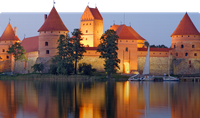
- 4.9 9. One of the Safest Places to Visit in Eastern Europe: Montenegro
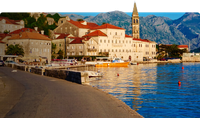
- 4.10 10. One of the Safest Places to Visit in Eastern Europe: North Macedonia
- 4.11 11. One of the Safest Places to Visit in Eastern Europe: Poland
- 4.12 12. One of the Safest Places to Visit in Eastern Europe: Romania
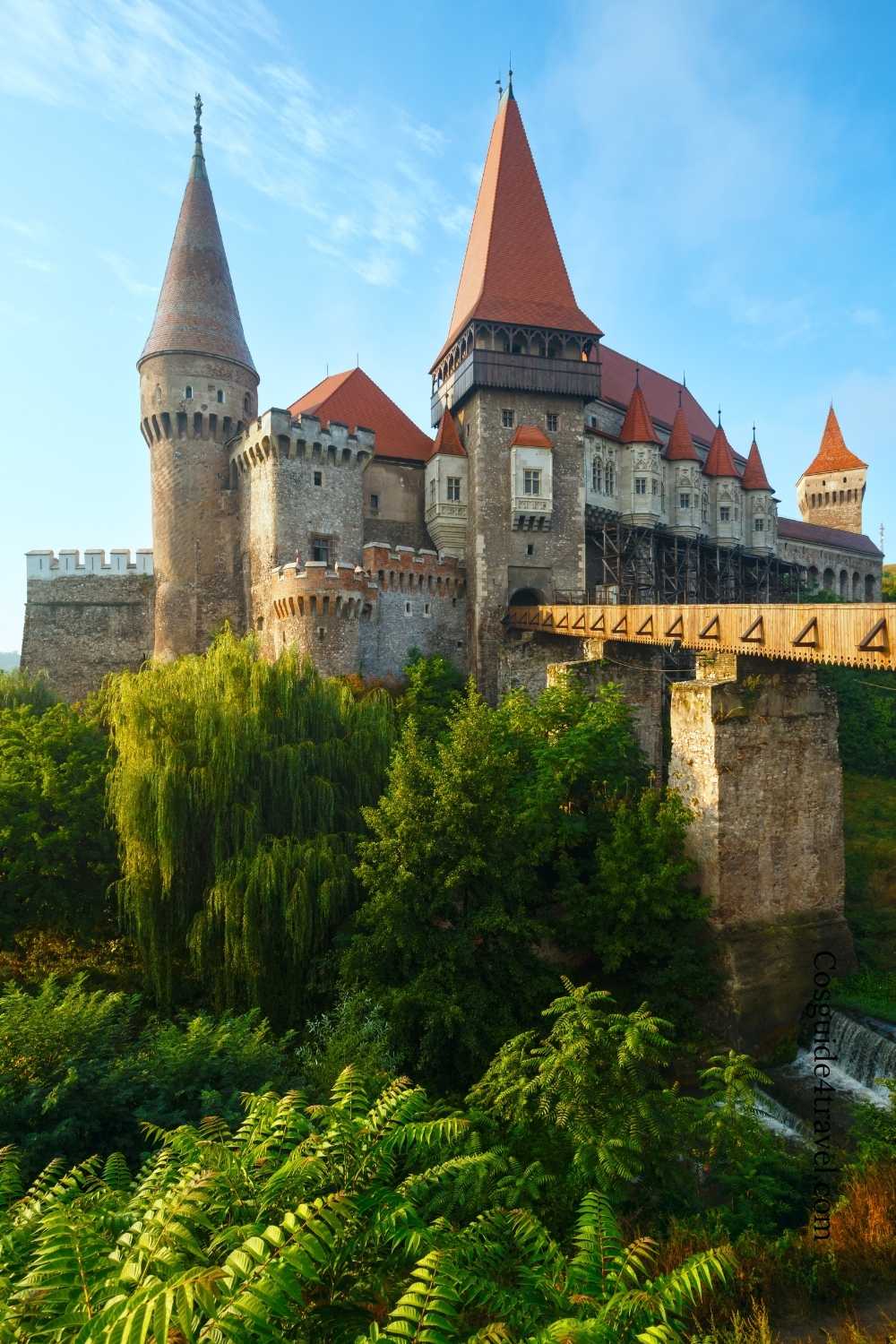
- 4.13 13. One of the Safest Places to Visit in Eastern Europe: Slovakia
- 4.14 14. The Safest Place to Visit in Eastern Europe: Slovenia
- 4.15 Summary: Safest Places to Visit in Eastern Europe
- 5 Safest Places to Visit in Europe – A Comparison of the Rankings
- 6 Is Europe Safer Than the United States?
- 7 Conclusion: KEY TAKEAWAYS
Safest Places to Visit in Europe - Methodology
There are several ways to measure how safe a country or city is. In this post, we will use three methods to support our conclusions. In our analysis, we will reference the Global Peace Index, the Homicide Rate, and the Numbeo.com Survey. We will then build a composite of the three indices to answer the question: "What are the safest places to visit in Europe?" We believe the answer will surprise you.
Global Peace Index
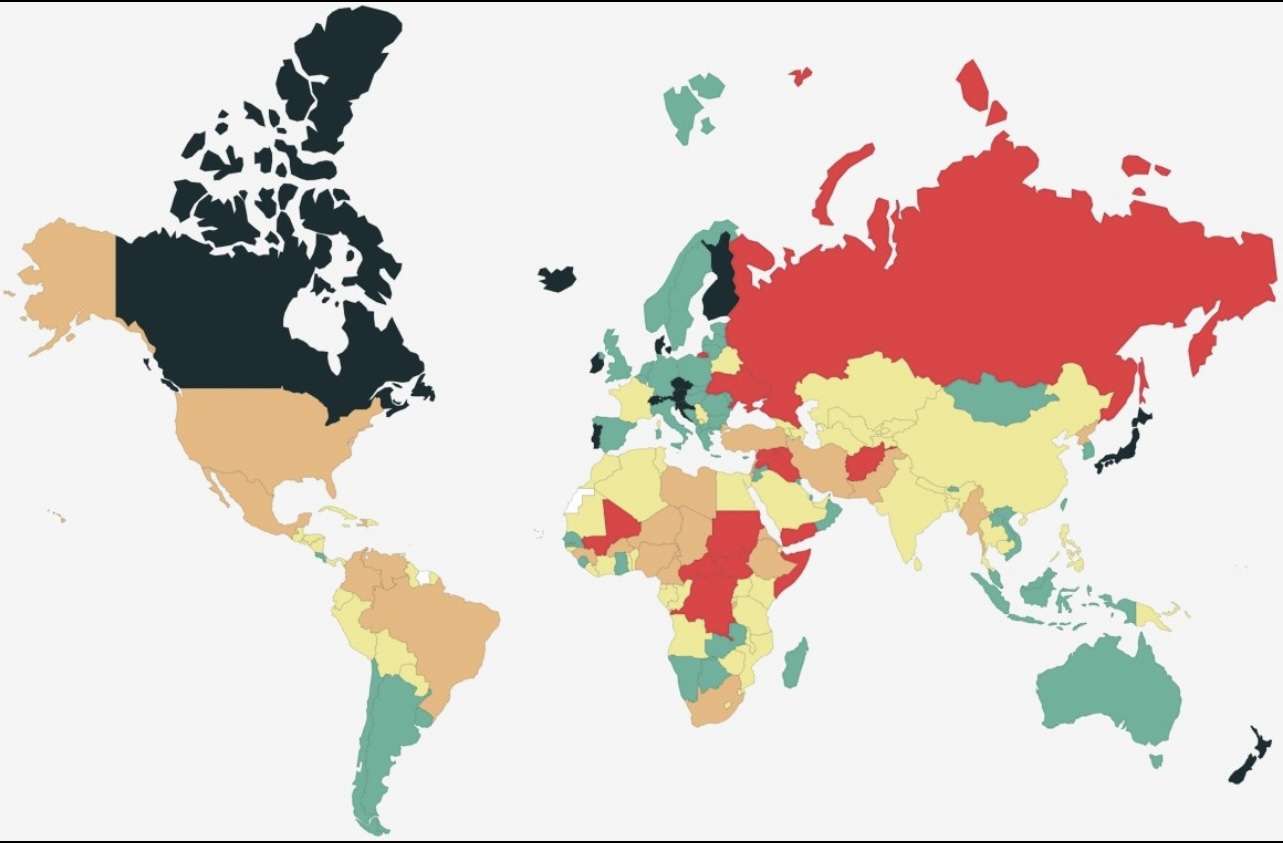
One of the measures that is used to determine the safest places to visit in Europe and elsewhere, is the Global Peace Index (GPI). The following map shows how 163 countries in the world are rated by the Global Peace Index. This is an index that is provided annually by the Institute for Economics and Peace. Countries are shown on the map by their rating in the GPI with black being the most peaceful, followed by green, yellow and brown with red the least peaceful.
Homicide Index
Another measure that is used to determine the safest places to visit in Europe and elsewhere is the Homicide Index. It is a statistical measure that tracks the number of homicides in a given area over a specific period of time. It is used to determine the level of safety in a particular region and to identify trends in violent crime. The homicide index is often used by law enforcement agencies, policymakers, and researchers to evaluate the effectiveness of crime prevention strategies and to allocate resources for law enforcement.
It is important to note that the homicide index is not the same as the crime index, which measures the overall level of crime in a given area. The homicide index only tracks homicides, which are a subset of violent crimes.
Numbeo.com Survey
The final index that is used to compute the safest places to visit in Europe and elsewhere is the Numbeo.com Safety Index. Numbeo.com is a website that provides information about the quality of life, cost of living, and crime rates in different cities and countries around the world. One of the indices provided by Numbeo.com is the Safety Index, which measures the level of safety in a given city or country. The Safety Index is calculated from contributors who complete a survey answering questions about various crime-related aspects of life including:
-
- Level of crime
-
- Crime increasing in the past 3 years
-
- Worries about home broken into and things stolen
-
- Worries about being mugged or robbed
-
- Worries about having a car stolen
-
- Worries about things being stolen from a car
-
- Worries about being attacked
-
- Worries about being insulted
-
- Worries about being subject to a physical attack because of your skin color, ethnic origin, gender or religion
-
- Problems with people using or dealing drugs
-
- Problems with property crimes such as vandalism and theft
-
- Problems with violent crimes such as assault and armed robbery
-
- Problems with corruption and bribery
The Safety Index is Computed as follows:
Safety Index = 100 - Crime Index, where the Crime Index is a measure of the overall level of crime in a given area. A score of 80-100 means a very safe country, 60-80 means safe, 40-60 means moderate, 20-40 means unsafe and below 20 means very unsafe. The safest countries in the world currently have a score of 80-85 (the safest country is Qatar closely followed by the United Arab Emirates) while the least safe country has a score of 17.4 (the most dangerous country is Venezuela).
Since, Numbeo.com is a survey of the perceptions that people have it is subject to biases which the company attempts to adjust for. It’s important to note that while the Safety Index can provide some insight into the level of safety in a particular area, it should not be used as the sole source of information when making decisions about travel or relocation. Other factors such as local laws, customs, and cultural differences should also be taken into account.
General Trends of Safety Around the World - Observations of the Global Peace Index
Despite 126 countries improving their positive peace from 2009 to 2020 the 2023 Global Peace Index (GPI), reveals the average level of global peacefulness deteriorated for the ninth consecutive year, with 84 countries recording an improvement and 79 a deterioration. Positive Peace measured by the Positive Peace Index (PPI) represents attitudes, institutions and structures that create and sustain peaceful societies. This demonstrates that the deterioration was larger than the improvements, as the post-COVID rises of civil unrest and political instability remain high while regional and global conflicts accelerate.
-
- Deaths from global conflict increased by 96% to 238,000
-
- New data shows a higher number of conflict deaths in Ethiopia than in Ukraine, eclipsing the previous global peak during the Syrian war
-
- 79 countries witnessed increased levels of conflict including Ethiopia, Myanmar, Ukraine, Israel, and South Africa
-
- The global economic impact of violence increased by 17% or $1 trillion, to $17.5 trillion in 2022, equivalent to 13% of global GDP
-
- A Chinese blockade of Taiwan would cause a drop in global economic output of $2.7 trillion, almost double the loss that occurred due to the 2008 global financial crisis
-
- Despite the conflict in Ukraine, 92 countries improved on military expenditure and 110 decreased their military personnel
-
- Conflicts are becoming more internationalized with 91 countries now involved in some form of external conflict, up from 58 in 2008
Impact of the War in Ukraine on Peacefulness
-
- Ukraine recorded the largest deterioration, falling 14 places to 157th
-
- The economic impact of violence has increased by 479% or $449 billion, equivalent to 64% of Ukraine’s GDP
-
- Despite the conflict, Russia’s incarceration rate, violent demonstrations, terrorism impact and homicide rates have improved over the past year, with the homicide rate at its lowest since 2008
-
- 65% of men in Ukraine aged 20 to 24 years have fled the country, or died in the conflict
Safest Places to Visit in Western Europe

According to the US State Department, traveling to Europe is generally safe right now, despite the ongoing war in Ukraine and protests resulting from the recent (October, 2023) fighting in Israel. However, travelers should be aware of the potential disruption to travel and the uncertainty caused by the conflicts. Experts advise travelers to have an emergency plan and to monitor the situation closely. Some European tourism officials are concerned about the impact of the war on the travel industry. According to a recent 2023 report by the Global Peace Index (GPI), Europe is considered to be the most peaceful region in the world, with four of the top five and seven and 14 of the top 20 most peaceful countries located in Europe. According to the GPI, the safest Western European destinations are the following four countries:
-
- Iceland: Iceland is known for its stunning natural beauty, including glaciers, hot springs, and waterfalls. It is also one of the safest countries in the world, with a GPI of 1.124 (lowest is best)
-
- Denmark: Denmark is a very beautiful and peaceful country. It has GPI of 1.31
-
- Ireland: Ireland is a place that Robin and I love to visit. We haven't been there recently, so it is on the list for the next few years. It has a GPI of 1.312.
-
- Austria: Austria is famous for its stunning architecture, including Baroque palaces and Gothic cathedrals. It also has a rich cultural heritage and is one of the safest countries in Europe, with a GPI of 1.316
Additional Safest Places to Visit in Western Europe According to Storyteller Travel
In addition, according to a recent article in Storyteller Travel, they added the following three countries to their view of the safest countries to travel to in Western Europe.
-
- Switzerland: Switzerland is famous for its picturesque landscapes, including the Swiss Alps and Lake Geneva. It is also one of the safest countries in Europe, with a GPI of 1.339
-
- Norway: Norway is home to some of the most beautiful fjords in the world, as well as charming cities like Oslo and Bergen. You can see the Northern Lights. It has a GPI of 1.550
-
- Finland: Finland is known for its stunning natural beauty, including forests, lakes, and islands. It also has a vibrant cultural scene and is one of the safest countries in Europe, with a GPI of 1.339.
Storyteller Travel picked these three countries to add to the original list because they scored better on the numbeo.com safety index than other Western European countries. Please note that while these countries are considered safe for travel, it’s always important to take precautions when traveling abroad. Be sure to research local laws and customs before your trip and take steps to ensure your personal safety while traveling.
Safest Places to Visit in Eastern Europe
Surprisingly, while Western Europe has generally been considered one of the safest places to visit for some time, you may get a different sense of Eastern Europe after reading this. According to the U.S. Department of State, there are 23 countries in Eastern Europe, out of which 14 have been deemed completely safe to travel. These 14 countries are some of the safest European destinations. As a point of comparison the United States has a Global Peace Index (GPI) of 2.448 and a safety index of 50.8.
1. One of the Safest Places to Visit in Eastern Europe: Bulgaria

2. One of the Safest Places to Visit in Eastern Europe: Croatia
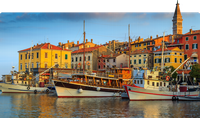
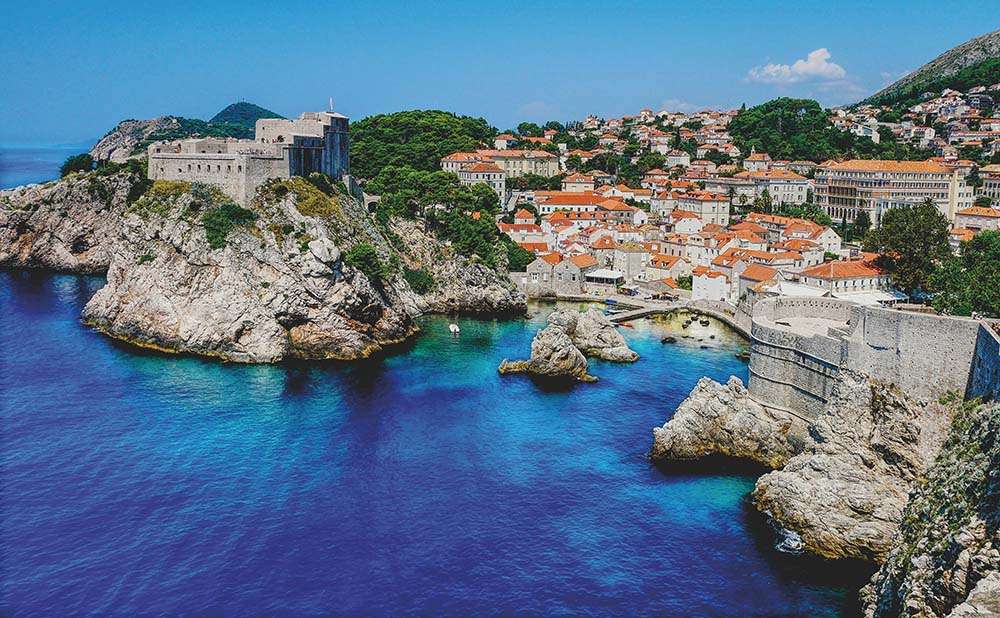
Croatia, as a country located between Central and Southeast Europe, is sometimes also considered an Eastern European nation. It ranks very highly in safety worldwide, not just in Europe. The population of Croatia is just 4 million people. Because of its spectacular beaches on the Adriatic Coast, Croatia is one of the most popular destinations for European tourists. More than 11 million people visit the country each year, almost triple the number of its inhabitants. Croatia is also known for its medieval cities, one of which is Dubrovnik. Croatia is a beautiful country and is one of the best places to travel if you are looking for safe places to visit in Europe. It has a GPI of 1.45 and a safety index of 73.9. Please visit our post on Travel to Croatia from the US for more information about Croatia.
3. One of the Safest Places to Visit in Eastern Europe: Czech Republic

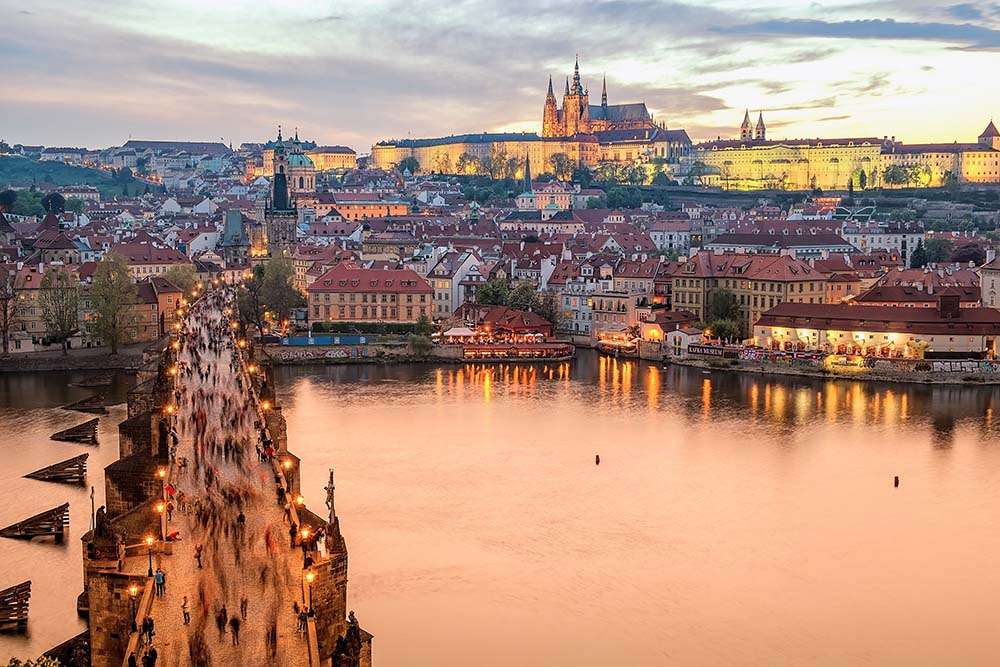
The Czech Republic, and Prague in particular, is the perfect place to visit. The best things about Prague are the beautiful buildings that were not destroyed in WWII and the outstanding public transportation system. The Czech Republic, also known as Czechia, is the second safest country in Eastern Europe, ranking only slightly worse than Slovenia. It’s one of the best countries in the world for tourists who value having a safe, worry-free trip. Similarly to Slovenia, Czechia is a Central European country often considered an Eastern European country.
The population of the country is a little over 10 million people, with about 20% of the population concentrated in the three biggest cities of Prague, Brno, and Ostrava. The capital, Prague, is one of the most popular tourists destinations in this part of the world. Prague Castle is the largest ancient castle in the world and one of the most notable attractions of the country. The Czech Republic's GPI is 1.379 and their safety index is 73.2. Please see our post on How Many Days to Spend in Prague.
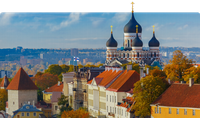
4. One of the Safest Places to Visit in Eastern Europe: Estonia
5. One of the Safest Places to Visit in Eastern Europe: Georgia

6. One of the Safest Places to Visit in Eastern Europe: Hungary

7. One of the Safest Places to Visit in Eastern Europe: Latvia

8. One of the Safest Places to Visit in Eastern Europe: Lithuania
9. One of the Safest Places to Visit in Eastern Europe: Montenegro
10. One of the Safest Places to Visit in Eastern Europe: North Macedonia

11. One of the Safest Places to Visit in Eastern Europe: Poland

12. One of the Safest Places to Visit in Eastern Europe: Romania
13. One of the Safest Places to Visit in Eastern Europe: Slovakia

14. The Safest Place to Visit in Eastern Europe: Slovenia

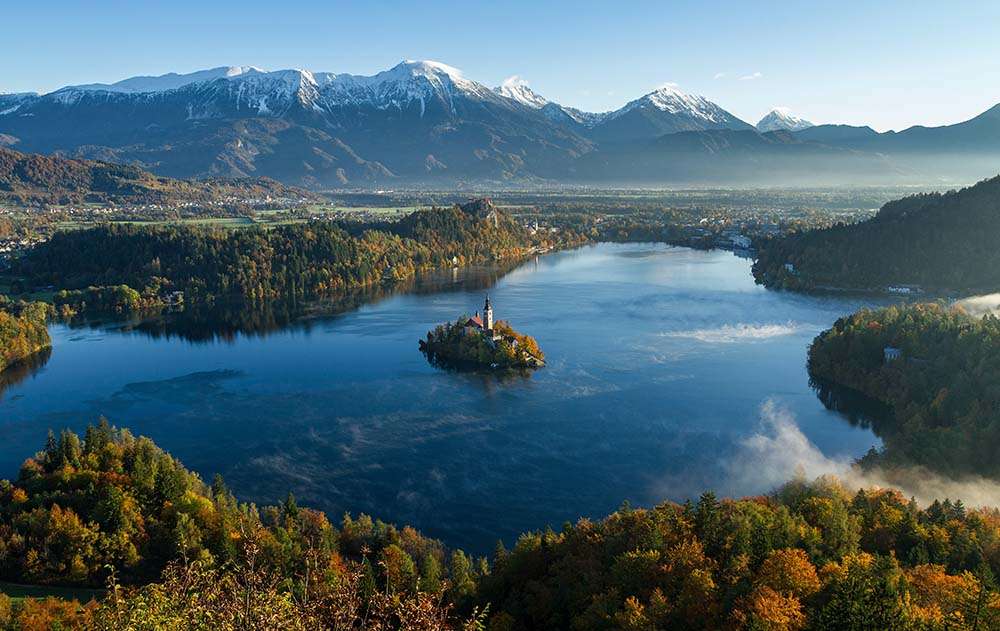
While listed last on this list by alphabetic order, Slovenia is by far the safest country in Eastern Europe, dominating in all three rankings. It’s also one of the safest countries in the whole world, ranking in the top 10 to top 20 in the various rankings we used to assess safety. Slovenia is a small, peaceful nation with just a little over 2 million people. The capital of Slovenia is Ljubljana. It has less than 300,000 residents. Despite its small area, it’s a diverse country spanning from the Alps to the Mediterranean Sea.
One of Slovenia’s most well-known tourist attractions is Lake Bled with an island housing a historic church. Nature lovers will appreciate the fact that about 60% of the country’s area is forested. I’ve been to Slovenia and I can confirm that it’s a very green country where I felt safe both in the countryside and its cities. Slovenia is rated 8th by the Global Peace Index with a score of 1.334 and 75.8 on the Numbeo.com Safety Index. Therefore, it is better than all other European Countries than the Isle of Man which is not considered an independent country by most sources. It also has the lowest homicide rate of all European Countries tied with the Czech Republic. Please visit our post on the Balkans for more information about Slovenia.
Summary: Safest Places to Visit in Eastern Europe
These countries are perceived as ‘low-risk’ destinations and are even much safer than the United States, enjoying significantly lower rates of petty crimes, armed robbery, and murder, and a high human development index. Other sources support the fact that Slovenia, Czech Republic, Croatia, Poland, and Hungary are some of the safest Eastern European countries to visit. We have visited four of the five (Poland is still on the bucket list). And, we can testify to the safe experience that we had while visiting.
Please note that while these countries have been deemed safe for travel, it is always advisable to take necessary precautions to protect your personal safety and stay informed about the latest developments in the region. For example, this same Numbero.com source identified Israel as a safe place to travel, but as of this writing (October 2023) there was a war going on in Israel that has not been identified in Israel's ranking. Being attentive to personal safety is particularly important when traveling in the city center in these and all countries.
Safest Places to Visit in Europe – A Comparison of the Rankings
The following tables show the global rankings of the European Countries based on the Global Peace Index, the Numero.com Survey and the Homicide Rate. We selected 19 representative countries in each European region (east and west). The lower the scores the better. We have also developed our own composite score which is a average of the other three rankings. We trust this helps to convince you that travel to Europe, and to Eastern Europe in particular is generally safe.
Rankings for Western European Countries
| Country | Global Peace Index | Safety Index | Homicide Rate | Composite Ranking (AVG) |
| Ireland | 3 | 72 | 20 | 31.7 |
| Iceland | 1 | 16 | 26 | 14.3 |
| Italy | 34 | 83 | 27 | 48.0 |
| Norway | 24 | 35 | 28 | 29.0 |
| Switzerland | 10 | 15 | 30 | 18.3 |
| Moldova/Gibraltar | 57 | 69 | 66 | 64.0 |
| Spain | 31 | 42 | 35 | 36.0 |
| Austria | 5 | 26 | 36 | 22.3 |
| Netherlands | 16 | 21 | 39 | 25.3 |
| Denmark | 2 | 23 | 42 | 22.3 |
| Germany | 15 | 47 | 43 | 35.0 |
| Portugal | 7 | 29 | 45 | 27.0 |
| Greece | 60 | 74 | 47 | 60.3 |
| United Kingdom | 37 | 79 | 56 | 57.3 |
| Belgium | 20 | 87 | 57 | 54.7 |
| France | 67 | 107 | 58 | 77.3 |
| Sweden | 28 | 85 | 64 | 59.0 |
| Finland | 13 | 22 | 74 | 36.3 |
| Cyprus | 64 | 37 | 46 | 48.7 |
| Averages | 26.0 | 51.0 | 44.1 | 40.4 |
Rankings for Eastern European Countries
| Country | Global Peace Index | Safety Index | Homicide Rate | Composite Rate (AVG) |
| Belarus | 95 | 69 | 94 | 86.0 |
| Bosnia & Herzegovina | 61 | 46 | 51 | 52.7 |
| Bulgaria | 30 | 44 | 67 | 47.0 |
| Croatia | 14 | 18 | 41 | 24.3 |
| Czech Republic | 12 | 23 | 18 | 17.7 |
| Estonia | 25 | 12 | 83 | 40.0 |
| Georgia | 94 | 20 | 84 | 66.0 |
| Hungary | 18 | 39 | 44 | 33.7 |
| Latvia | 27 | 43 | 107 | 59.0 |
| Lithuania | 36 | 38 | 102 | 58.7 |
| Montenegro | 45 | 42 | 98 | 61.7 |
| North Macedonia | 38 | 53 | 60 | 50.3 |
| Poland | 29 | 27 | 40 | 32.0 |
| Romania | 31 | 37 | 70 | 46.0 |
| Russia | 158 | 50 | 153 | 120.3 |
| Serbia | 65 | 96 | 63 | 74.7 |
| Slovakia | 26 | 30 | 54 | 36.7 |
| Slovenia | 8 | 10 | 23 | 13.7 |
| Ukraine | 157 | 59 | 122 | 112.7 |
| Averages | 51.0 | 39.8 | 72.3 | 54.4 |
| AVG without Belarus, Russia, Ukraine |
34.9 | 36.1 | 62.8 | 44.6 |
Comparison: Western European vs Eastern European Safety
So, what can we conclude when we compare these two tables. First, the Global Peace index is very favorable to the Western European countries. Even when we remove the war countries (Russia, Ukraine and Belarus) from the Eastern Averages, the Western Countries, on average, are better than the Eastern Countries on the GPI, the Homicide Rate and the Composite Average. Meanwhile, the Eastern Countries are better on the Safety Index even with the war countries included. This is because Slovenia, Estonia, Croatia, the Czech Republic and Slovakia are all so strong.
Is Europe Safer Than the United States?

Europe vs the US: Overall Countrywide Safety
In comparing European Safety vs the United States, we will start by comparing at a country level and later look at specific cities. We used the same three indicators to make the case. For the record, the United States is ranked 131th on the GPI, 87th on the Safety Index and 104th on the Homicide Rate. Clearly, from the tables above, the United States is not looking good. However, we will analyze this question further.
Europe vs the US: Global Peace Index Rankings
Global Peace Index (GPI) is the most common index mentioned in articles on the safest countries in the world. However, the problem we have in depending only on the GPI is that one of the factors in the Global Peace Index is military spending. Specifically, it is not a safety measure which unfairly burdens a country such as the United States that has a high rate of military spending per its GDP than all European States.
However, if we do make the GPI comparison of the United States to European countries, the US ranks behind every single European country except for Ukraine and Russia. In fact, the United States ranks #131 in the world out of 163 countries due to its military spending and involvement in various conflicts around the world. After Ukraine and Russia, the closest European country to the United States is Belarus at #116 and then Georgia at #95. The closest country in the European Union is Cyprus at #67. According to the Global Peace Index, of the top ten countries in the world, ten are European nations. Therefore, despite the war in the Ukraine, according to the Global Peace Index, Europe is clearly the safer region.
Numbeo.com Safety Index Rankings
As describer earlier, we prefer using the Numbeo.com Safety Index to make country to country comparisons since all the components are much more safety specific. It is a fairer ranking including all elements of crime, not just homicide. In other words, the Numbeo.com Safety Index is the most useful in quantifying both the risk of violence as well as petty crime.
Therefore, when we look at the Numbeo.com Safety Index by country, the United States ranks #87 in the world, with a safety score of 51. This makes the United States a rather average country in terms of safety. Just three European countries rank below the US:
-
- Belgium: 50.9, 89th safest country in the world
-
- France: 44.7, 107th safest country in the world
-
- Belarus: 43.6, 109th safest country in the world
Every other European country is safer than the US. The closest country in Europe to the United States after the three aforementioned countries is Sweden, with a score of 51.5 and ranking 85th. The next one is Moldova, with a score of 52.9 and ranking 80th. So, if we were to compare crime rates (or at least their perception according to Numbeo.com contributors), the United States is a much less safe country than every European country except for three (with two of them being in the European Union and one not). Therefore, we must conclude again, that the European Countries as a whole are in fact safer than the United States and comprise some of world's safest countries.
Europe vs the US: Violent Crime Rates

Finally, if we look at Violent Crime we can use the homicide index to compare intentional homicide rates. They are measured by the United Nations Office on Drugs and Crime. A very low crime rate here would be lower than 1 victim per 100,000 people. 41 countries have such a rate. These would be the safest countries in the world with a very low risk of becoming a victim of a violent crime. Unfortunately, the United States has a rate of 6.4 intentional homicide victims per 100,000 people. This makes it the 135th safest country in terms of violent crime rates and nowhere close to the safest countries in the world.
There’s only one European country that ranks below the US and it’s Russia with a rate of 6.8, ranking 141st in the world. The closest European country to the US is Ukraine with a rate of 6.2 (#134). The closest country in European Union is Lithuania at 3.7 (#114).
When comparing intentional homicide rates, some of the safest countries in the world are in Europe. Out of the top 10, 6 are in Europe.
Europe vs the US: Overall Country Summary
Therefore, hands down, according to all three rankings, the United States is much less safe than almost all countries in Europe and certainly in the European Union. The two exceptions are the Ukraine and Russia who are currently fighting a war based on the Russian invasion. This includes both the most developed countries as well as the ones that are still developing. To be fair, Belgium, France, Belarus and Lithuania are only slightly better than the United States. Nevertheless, most European countries are the safest in the world with the lowest crime rates and certainly worth visiting.
European Cities vs US Cities: Which Are Safer?

Based on the country ratings, you probably expect the city ratings to be similarly favoring the European Countries. If so, you will be correct in choosing the safest destinations.
If we look at the Numbeo.com Safety Index by City, out of the 346 cities in their database, 38 are in the US and 131 are in Europe. The safest city in the US is Salt Lake City. It has a score of 66.5 and ranks #94. The second safest city in the United States is Boise, Idaho. It has a score of 64.5 and ranks #105. The third safest city in the United States according to Numbeo is Boston, Massachusetts. It has a score of 60.1 and ranks #131. And, the fourth safest city in the US is Austin, Texas, with a score of 59.2 and a ranking of #138. This means that the United States isn’t a particularly safe country considering that its safest ranked city is the 94th safest city in the world and its fourth safest city is the 138th safest city in the world.
The 49 Safest European Cities
According to the Numbeo.com safety index, 49 European cities are safer than the safest city in the US. They’re located in 23 different countries:
-
- Austria (Graz #21, 73.9, Vienna #32, 71.5)
-
- Croatia (Zagreb #8, 78.0, Split 69.7)
-
- Czech Republic (Prague #14, 75.3, Brno #23, 73.8)
-
- Denmark (Copenhagen #24, 73.5)
-
- Estonia (Tallinn #12, 77.0)
-
- Finland (Helsinki #15, 75.1)
-
- Germany (Munich #3, 79.0, Dresden #45, 67.9)
-
- Iceland (Reykjavik #13, 75.9)
-
- Ireland (Galway #44, 68.7)
-
- Italy (Trieste #25, 73.2)
-
- Lithuania (Vilnius #28, 72.6)
-
- Luxembourg (Luxembourg #33, 71.4)
-
- Netherlands (The Hague #2, 79.8, Groningen #6, 78.4, Eindhoven #10, 77.7, Rotterdam #29 72.3, Amsterdam #30, 72.2)
-
- Norway (Trondheim #4, 78.8, Bergen #17, 74.7, Oslo #49, 66.7)
-
- Poland (Warsaw #19, 74.4, Krakow #20, 74.2, Wroclaw #26, 73.1, Poznan #36, 70.5, Gdansk #46, 67.5)
-
- Portugal (Lisbon #35, 70.7, Porto #47, 67.4)
-
- Romania (Cluj-Napoca #9, 78.0, Timisoara, #16, 74.9, Bucharest #31, 71.8)
-
- Russia (Nizhny Novgorod, #34, 71.1)
-
- Slovakia (Bratislava #41, 69.3)
-
- Slovenia (Ljubljana #5, 78.4)
-
- Spain (Madrid #27, 72.7, Valencia #37, 70.3, Malaga #38, 70.2, Alicante #43, 68.9, Seville #48, 67.2)
-
- Switzerland (Bern #1, 80.2, Zurich #7, 78.4, Basel #11, 77.0, Lausanne #22, 73.9, Geneva #40, 69.3)
-
- United Kingdom (Edinburgh #42, 69.1)
Safest Cities to Visit in Europe - Summary
Out of these 49 cities, if we were to take a look at just the top 25 safest cities in the world, 14 are located in Europe. The safest European city, Bern in Switzerland, is ranked #7th in the world.
To make it worse for the US, If we were to look at the most dangerous cities in the world, the United States is home to some of the worst ones. According to Numbeo.com, Memphis, Tennessee, is the most dangerous city in the US with a score of just 24.2 and ranking #333 out of 346 cities in the world. Baltimore ranks #332 with a score of 24.4. Meanwhile, the most dangerous city in Europe is Catania in Italy. It has a score of 35.5 and ranks #306. The second most dangerous European city is Marseille, France, with a score of 36.1 and ranking #305.
Conclusion: KEY TAKEAWAYS
1. It is safe to travel to most countries in Europe. However, please do not travel to Russia, Belarus or the Ukraine at the current time.
2. It may have surprised you to have learned that many places in Eastern Europe are some of the safest areas in the world. While many people believe that all Western European countries and their major cities are much safer, data doesn’t prove it.
3. For example, popular among American travelers is France. However, France has much more crime than Slovenia or Czech Republic. Nevertheless, I would say you should still consider traveling to France. We visited France in 2024 to see the Olympics, and it was amazingly safe. However, we do suggest avoiding the French protests. There are quite a few which have increased recently due to the war in Israel.
4. The safest Eastern European countries to visit are Slovenia, Czech Republic, Croatia, Poland, and Hungary. Eastern Europe is becoming a more and more popular travel destination for foreign visitors from all over the world. Since the fall of the Berlin Wall, numerous Eastern European nations have made great strides in their quest for peace, tilting Westward, at least when it comes to foreign policy, and joining intergovernmental military alliances like NATO and the European Union (EU).
5. Unfortunately, while widely used, we conclude that the Global Peace Index (GPI) is not a very accurate measure if a country is safe or not. While it uses the homicide rate and other crime data in their index, they also use data such as military spending. This is really not an accurate indicator of the safety of the country.
0 Comments