
This post will compare the Capitals of Sweden and Finland, Stockholm and Helsinki, respectively in detail,and discuss the best ways to travel on the Helsinki route between these two beautiful cities in Northern Europe.
Contents
Travel from Stockholm to Helsinki
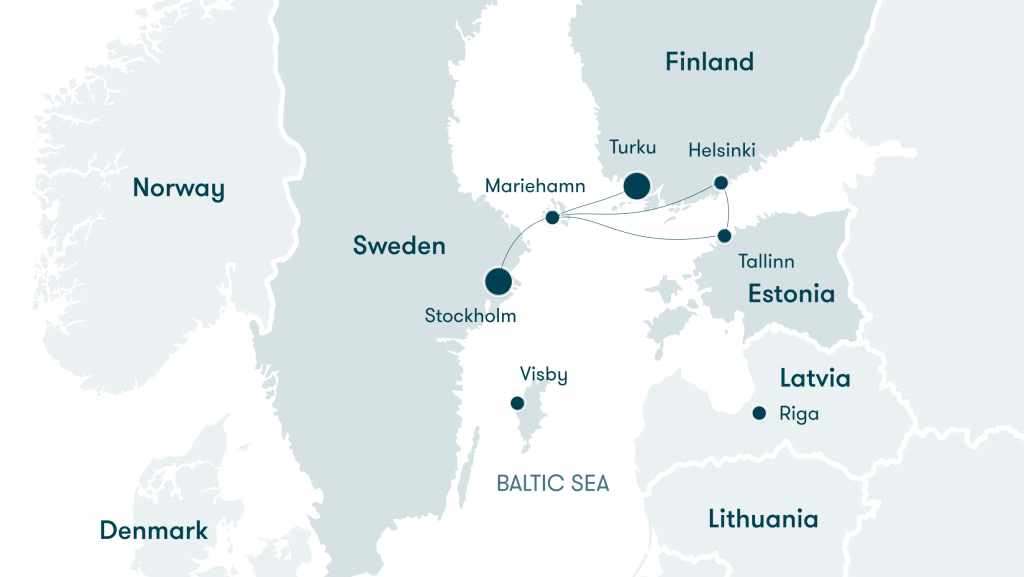
The Capitals of the two neighboring Scandanavian countries, Stockholim and Helsinki are approximateliy 414 nautical miles apart. Travel is quite frequent between the two cities both by Sea and by Air.
Travel Times
Travel by land will take 24 hours or longer as it is necessary to drive all around the Northern most arm of the Baltic sea, the Gulf of Bothina. Ferries that will carry cars will make the trip in roughly 16 hours, while flight times are just under 3 hours.
Ferry Companies
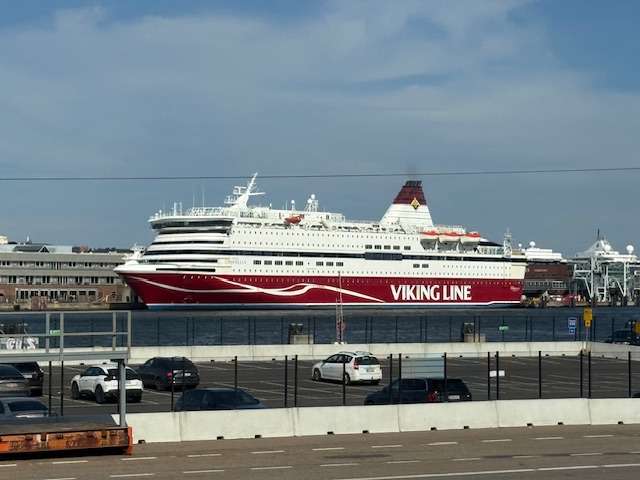
The two principal ferry operators traveling from Stockholm to Helsinki are the Viking line and the Tallink Silja Line Ferries. Both ferry lines are overnight ferries and make daily crossings with, according to the ferry schedules, a time of departure in the late afternoon. The Viking Cinderella and the Silja Symphony are the recommended ships with ferry schedules both leaving around 4 pm and arriving the next day in the morning. Both ships offer comfortable cabins to sleep for the overnight trip. The for an overnight Stockholm Port is on the old city, close to the Royal Palace, and is easily accessible. The ferry terminal in Helsinki is also easily accessible to the Helsinki center, and near the market square. Ferry crossings from Stockholm to Helsinki typically range with the ferry ticketts priced from €84 to €567 depending on the service requwested. Thee average price for a ferry trip is around €222.
Cruise Ships
Another way to travel between Stockfholm to Helsinki is to travel by Cruise Ship. In July, 2025 we boarded the Silversea Spirit in Stockholm and arrived the next day in Helsinki. Our cruise through the Stockholm Archipeligo and passing the island in Helsinki was spectacular, arriving in Helsinki the next morning.
Flights
Norwegian, SAS, and Finnair all have direct flights multiple times a day between the two cities. According to Google Flights. Norwegian has the cheapest round-trip fares with non-stop options, Leaving from Stockholm Arlanda Airport, here is the best available current prices and the airlines’s cheapest round-trip fares. The cheapest days to travel are normally mid-week. Weekend trips and traveling high season will be slightly more expensive. Typcial prices range less that 100 euros, so making your flight suggestions based on your favorite loyalty program as well as the best available price may be your best choice.
Cheapest Norwegian Round-Trip Flight
The Cheapest Norwegian Round-Trip Flight from Stockhom to Helsinki traveling mid-week from Stockholm Arlanda Airport is 63 Euros departing at 7:35 AM.
Cheapest SAS Round-Trip Flight
The Cheapest SAS Round-Trip Flight from Stockhom to Helsinki traveling mid-week from Stockholm Arlanda Airport is 86 Euros departing at 2:55 pm.
Cheapest Finnair Round-Trip Flight
The Cheapest Finnair Round-Trip Flight from Stockhom to Helsinki traveling mid-week from Stockholm Arlanda Airport is 90 Euros departing at 6:20 AM.
Highlights of the Two Cities: Stockholm
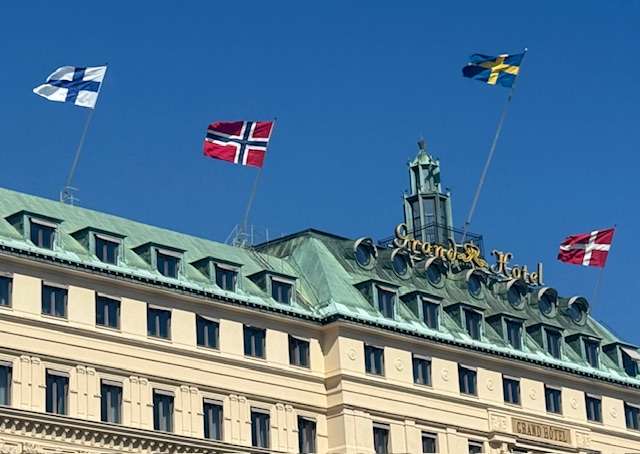
Our 2025 Baltic Cruise originated in Stockholm, and the first stop was Helsinki. We stayed at the Grand Hotel in Stockholm which is located at the center of town. The hotel proudly displaces the Swedish flag flying high, along with flags from felow Nordic Countries in order: Finland, Norway and Denmark.
This was Robin’s first visit there. Cos had worked for a Swedish Company, Skanska, in 1991 and had visited Stockholm thirty-four years earlier. He was determined to revisit the Vasa Museum which he had seen when it first opened in 1991. Robin, an avid ABBA fan, desperately wanted to visit the ABBA museum. In addition, they also visited the Viking Museum. There are eighty-eigth museums in the city of Stockholm, but here are their views of the three museums that they visited.
Vasa Museum Stockholm
The Vasa Museum Stockholm was the highlight of the visit. The Vasa was a sailing vessel and a real treasure from the 17th century. The Vasa Museum Stockholm offers a rich history, from the work at the Ship Yard to life on board a 17th century warship. It was the 10th of August 1628, when Vasa, the most powerful warship in the Baltic, foundered in Stockholm harbour before the eyes of a large audience, scant minutes after setting sail for the first time. As the ship passed the gap in the bluffs at Tegelviken, a strong gust pushed the ship so far over on its port side that water poured in through the open gunports on the lower gundeck. Vasa quickly sank and laid on the bottom of the Baltic Sea until 1961 when she was recovered, 333 years later having been preserved by the cold waters of the Baltic.



The designer, Henrik Hybertsson, was an experienced and well-respected master shipwright who had built a number of successful warships for the Swedish Crown, but Vasa was something new for him in its size and armament, and he had no way to calculate a proposed ship’s performance in advance. The mathematics we now use to predict stability and speed were more than a century in the future, so shipwrights had to base their designs on experience.
The ship is an incredible large, intact treasure and is shown with 98% of its orginal material having been fully restored. This was the second time Cos had visited and he will tell you that it is still one of the most spectacular things he has ever seen.
ABBA Museum
Having been to the ABBA Voyage in London (see our theaters post for more details), we were surprised when the first exhibit at the museum was all about the ABBA Voyage. Having seen the real show, which is a lengthly performance by virtual avatars (dubbed “ABBAtars”), the exhibit version was a little disappointing. ABBA Voyage depicts the group as they appeared in 1979 and uses the original vocals recorded by the group, accompanied by a 10 piece live instrumental band on stage.



Nevertheless, the Museum takes you through a timeline of the groups fame, starting before they were famous, and concluding after they broke up. We learned the most new information in the before and after exhibits. It is a fun museum, but if you only have time to go to one museum, both Trip Advisor and ourselves recommend the Vasa Museum.
Stockholm Viking Museum
If you have any interest at all in the history of the Vikings, then this museum is a must. The Stockholm Viking Museum was a pleasant surprise and the restaurant at the museum served a nice lunch. Clearly the vikings were very experienced at navigation and early ship building, as they traveled over a thousand years ago through Europe and claimed to be the first visitors to the new world. They were fierce warriors, and a Disney like ride at the museum, explains why they got into the business of plundering their conquests. All said, this was our number two favorite museum.
Dinner in the Old Town
On our last night in Stockholm we had dinner at a nice Italian restaurant, Paganini, in the Old Town. From where we were staying at the Grand Hotel, it was a short 15-miinute walk to the restaurant. The walk along Osterllanggatan was very enjoyable. Old Town is a must do if you are visiting Stockholm.
Highlights of the Two Cities: Helsinki
Helsinki was a different story, as neither Cos nor Robin had ever been to Finland. Having had our fill of museums after three museums in Stockholm, the Helsinki visit was more of an overall sightseeing tour of the town.
Helsinki is often referred to as the “Daughter of the Baltic,” as it is a city that is gently wrapped around by the Baltic Sea. She blends Nordic simplicity with a quiet but vibrant cultural pulse.
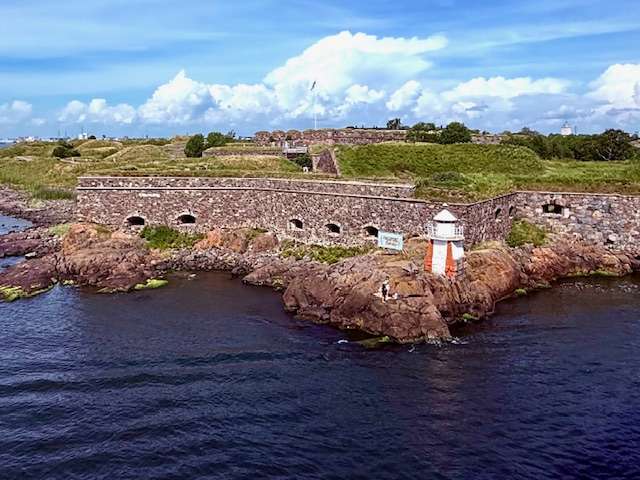
We arrived in July of 2025, sailing through a narrow channel with views of the fortress, pictured below, unfolding around us. We visited the Stone Church, which was the highlight of the tour, the Sibelius Monument, and a few other places.
Stone Church
The Stone Church in Helsinki is one of the highlighs for taking the Helsinki Ferry Route. The Church is literally carrved into a circular rock formation that provides the walls of the church. The copper dome above the church makes a striking landmark in the city center.
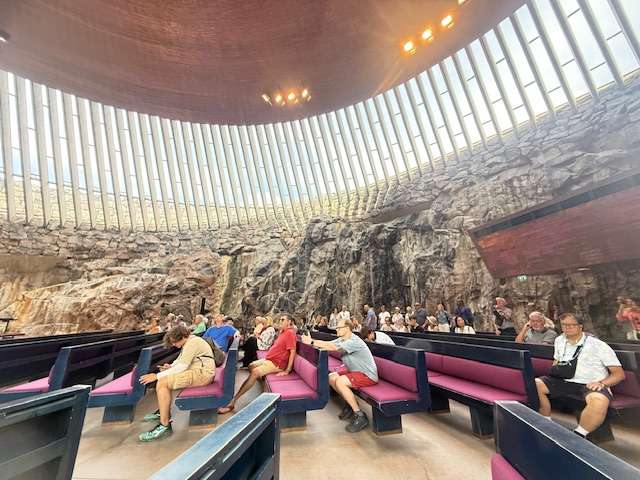
Here is a picture of Cos standing next to one of the stone walls.

Sibelus Monument
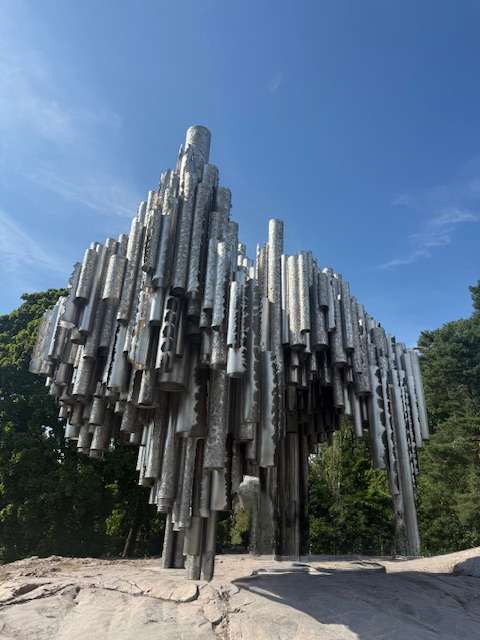
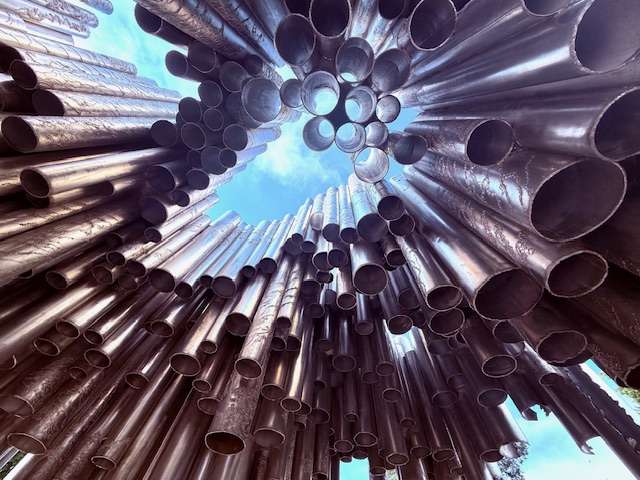
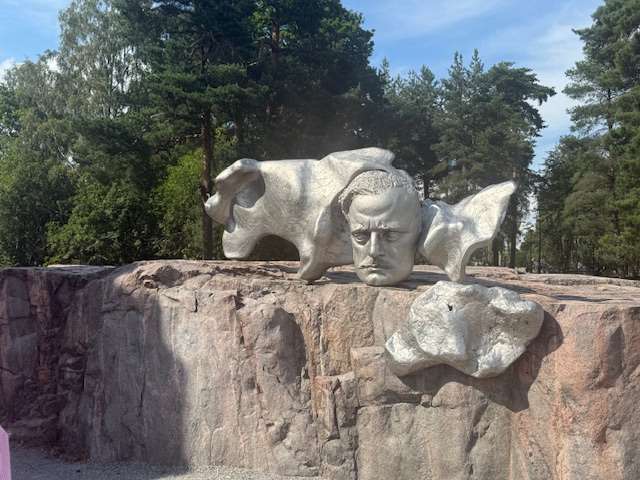
The Sibelus Monument was a highlight of our tour around Helsinki. The Sibelius Monument, located in Sibelius Park in Helsinki, is a striking tribute to Finnish composer Jean Sibelius, featuring over 600 steel pipes arranged in a wave-like pattern.The Sibelius Monument is situated in Sibelius Park (Sibeliuspuisto) in the Töölö district of Helsinki. The park provides a serene setting for visitors to enjoy the sculpture and its surroundings.
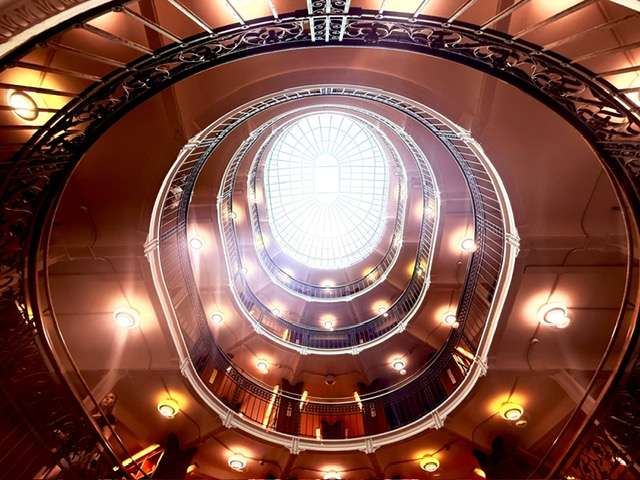
Lutheran Cathedral/National Library
The Lutheran Cathedral in the City Center is an impressive building. The rotunda has a beautiful domed ceiling.
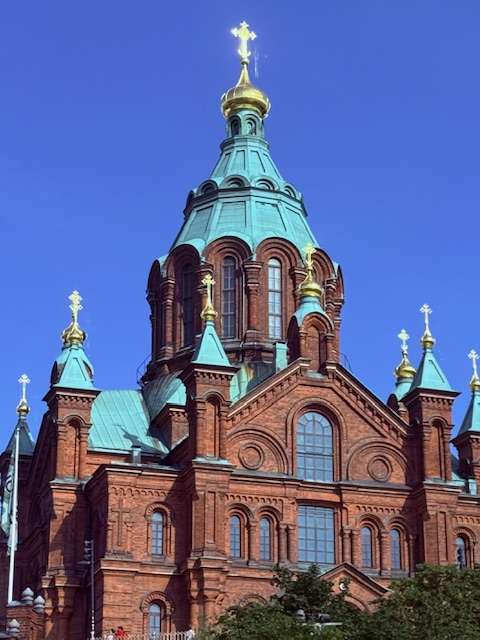
Passed Orthodox Church, Market Square & the Public Sauna
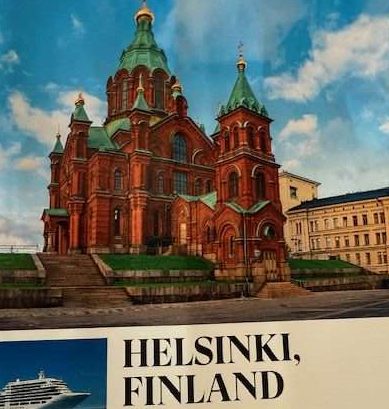
We completed our sightseeing trip in Helsinki byt passing the Beautiful Orthodox Church, the market square and the public sauna. Here is a picture of the Orthodox Church:
The Surprising Differences Between Sweden vs Finland
Have you ever wondered how two neighboring countries in Scandinavia, with simiar flag designs, Finland vs Sweden, differ from each other in surprising ways?
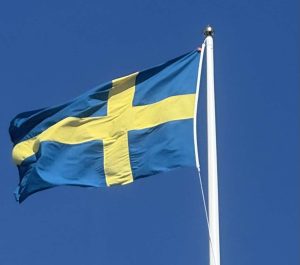
From their economies and education systems to work culture and healthcare policies, the distinctions between these two nations offer a fascinating glimpse into their unique identities. Join us as we explore the distinct differences between Sweden and Finland in key areas such as outdoor activities and social etiquette. By examining these aspects, you’ll gain a deeper understanding of the nuances that shape these two societies and perhaps even be inspired to plan a visit to experience them firsthand.
Sweeden vs Finland: Economy
One area where Sweden and Finland diverge significantly is their economies. Despite both countries being known for their strong welfare systems and high standard of living, there are key differences in how their economies are structured and what drives their economic growth. Let’s delve into the unique characteristics of the economic landscapes in Sweden and Finland before exploring how these factors impact other aspects of society, such as education systems.
Sweden and Finland have robust, export-oriented economies, but Sweden has a larger overall GDP (2 times higher), and a slightly higher GDP per capita ($57K vs $53K in 2024). Both nations have strong welfare systems and focus on innovation and technology. While both experienced financial crises in the 1990s, they implemented similar reforms and have since achieved strong macroeconomic performance.
-
Larger Economy:
Sweden’s GDP is significantly larger than Finland’s, ranking as the 23rd largest globally, while Finland is 43rd.
-
Diversified Industries:
Sweden has a highly diversified economy with strong global industry groups in areas like automotive (Volvo), telecommunications (Ericsson), and retail (IKEA).
-
Export-Oriented:
Sweden’s economy is heavily reliant on exports, with a strong focus on manufactured goods and technology.
-
High Standard of Living:
Sweden is known for its high standard of living, extensive welfare benefits, and well-educated workforce.
-
Strong in Specific Sectors:
Finland excels in areas like technology, particularly in the forest industry, metal and engineering, and electronics.
-
Economic Complexity:
Finland has a high level of economic complexity, indicating a capacity to produce a wide range of sophisticated goods and services.
-
Education System:
Finland is renowned for its high-quality education system, often ranking at the top globally.
-
EMU Membership:
Finland is part of the Eurozone (European Monetary Union), while Sweden is not, but this difference doesn’t seem to have a major impact on their macroeconomic performance.
-
High GDP per capita:
Both countries have a high GDP per capita, indicating a high level of wealth and economic prosperity.
-
Resilient Economies:
Both have demonstrated resilience in the face of global economic shocks, with strong performance in areas like growth and inflation.
-
Focus on Innovation:
Both Sweden and Finland place a strong emphasis on innovation and technological development, which are key drivers of their economies.
-
Social Welfare Systems:
Both countries have robust social welfare systems, providing comprehensive social security and public services to their citizens.
- Overall Size: Sweden’s economy is larger in terms of total GDP.
- Specific Industry Strengths: While both have diverse economies, Sweden has stronger global brands in certain sectors, while Finland excels in areas like forest products and electronics.
- EMU Membership: Finland is part of the Eurozone, while Sweden is not.
Sweeden vs Finland: Education Systems
In Sweden, the education system is largely decentralized, with municipalities responsible for the delivery of education. This approach allows for a certain level of flexibility and adaptability to meet the needs of students in different regions. In contrast, Finland’s education system is highly centralized, with a national curriculum and strict standards that apply to all schools. This has contributed to Finland’s reputation for having one of the best education systems in the world, with high academic achievement and low levels of educational inequality. Despite these differences, both countries prioritize education as a key driver of societal progress, emphasizing the importance of lifelong learning and equal access to quality education for all. Understanding the unique characteristics of their education systems provides valuable insights into the wider societal and cultural differences between Sweden and Finland, setting the stage for a deeper exploration of their work cultures.,
Sweeden vs Finland: Work Culture
Work culture in Sweden and Finland also displays a few distinct differences. In Sweden, there is a strong emphasis on work-life balance, with shorter work hours and generous parental leave policies. Swedes value collaboration and consensus-building in the workplace, striving for equality and inclusion among colleagues. On the other hand, Finland places a high value on punctuality and efficiency, with a strong focus on individual responsibility and accountability. Finnish work culture reflects a sense of independence and self-reliance, with a preference for clear communication and direct feedback.
Understanding these differences in work culture provides insight into how each country operates in the professional sphere, influencing everything from decision-making processes to employee relations. This unique aspect of Swedish and Finnish society sets the stage for a deeper exploration of their healthcare policies, which also reflect their respective values and priorities.,
Sweeden vs Finland: Healthcare Policies
When it comes to healthcare policies, Sweden and Finland take divergent approaches that align with their distinct societal values. In Sweden, healthcare is publicly funded and accessible to all residents, emphasizing equality and universal coverage. The Swedish healthcare system focuses on preventive care and patient-centered approaches, with a strong emphasis on promoting overall well-being. On the other hand, Finland’s healthcare system also offers universal coverage but places a greater emphasis on individual responsibility and self-care. Finnish healthcare policies prioritize efficiency and innovation, striving to provide high-quality care through a combination of public and private providers.
These differing approaches to healthcare reflect the broader societal values of each country, shaping the way healthcare services are delivered and accessed by residents. Understanding these distinctions provides valuable insight into the unique characteristics of Swedish and Finnish societies, offering a glimpse into how their healthcare policies mirror their cultural identities.
This nuanced perspective extends to the outdoor activities that Swedes and Finns engage in, showcasing how their preferences for work, healthcare, and leisure activities are intertwined with their cultural values.,
Sweeden vs Finland: Outdoor Activities
The outdoor activities that Swedes and Finns engage in further highlight the contrast between these two Nordic countries. Swedes are known for their love of skiing, hiking, and camping in the pristine wilderness of their country, while Finns often prefer activities such as ice fishing, snowmobiling, and sauna bathing. These recreational pursuits not only reflect the natural landscapes and climates of Sweden and Finland but also reveal the importance of connecting with nature in both societies. This emphasis on outdoor activities sets the stage for exploring the social etiquette that shapes interactions between individuals in these distinct cultures.,
Sweeden vs Finland: Social Etiquette
In both Sweden and Finland, social etiquette plays a significant role in shaping interactions between individuals. Swedes are known for their emphasis on punctuality and respecting personal space. It is common for them to greet each other with a firm handshake and make direct eye contact while speaking. Small talk is also a common practice in social situations, as it helps to establish rapport and build relationships.
On the other hand, Finns value honesty and authenticity in their interactions with others. They tend to be more reserved and appreciate silence, as they believe that actions speak louder than words. When it comes to greetings, a simple nod or a smile is often enough to acknowledge someone. Finns also value personal space and may feel uncomfortable with too much physical contact.
Despite these differences in social etiquette, both Swedes and Finns share a commitment to being polite and respectful in their interactions. Understanding and respecting these cultural norms can help bridge the gap between the two societies, fostering better communication and mutual understanding.
Conclusion
In exploring the distinct realms of economy, education, work culture, healthcare, outdoor activities, and social etiquette, it is evident that Sweden and Finland differ significantly despite their close geographical proximity. These differences shape the essence of each society, offering a unique experience for visitors and residents alike. As you consider these disparities, remember that cultural exploration is a journey worth embarking on. Whether you plan to travel to these fascinating countries or simply wish to learn more about them, keep in mind the intriguing contrasts that make Sweden and Finland truly one-of-a-kind destinations. As you embrace the diversity of these neighboring nations, remember the words of Finnish composer Jean Sibelius, who said, “Pay no attention to what the critics say; no statue has ever been put up to a critic.” Experience the beauty of Sweden and Finland firsthand, and let their unique differences inspire your own discoveries.
0 Comments