
In this installment of their 72-day Asian adventure, Cos and Robin delve into the smallest of Japan’s five main islands, Shikoku Island. They share their unique experiences, cultural discoveries, and hidden gems. Join them as they journey through the Orient, offering insights and travel tips for fellow explorers. This post will teach you about the Japanese Island of Shikoku and its famous Shikoku pilgrimage, the Shikoku 88 Temple Pilgrimage, a unique Japan Pilgrimage Trail. You will also learn about the Shikoku Tours you can take around the Island. In addition to the Island of Shikoku Japan, this post will focus on the cities of Kochi Japan, and Tokushima Japan.
Contents
Shikoku Island
The island is known for its stunning natural beauty, including mountains, rivers, and coastlines. Mount Ishizuchi, standing at 1,982 meters, is the highest peak on Shikoku. Shikoku’s northern region faces the Seto Inland Sea, while its southern part opens to the Pacific Ocean. Compared to the rest of Japan, Shikoku Japan is the smallest of Japan’s Islands, as there are no huge metropolitan areas, with the largest city, Matsuyama, having a population of slightly more than 500,000 people.
Map of Japan Highlighting Shikoku Island

Shikoku Island is divided into four prefectures: Ehime, Kagawa, Kochi, and Tokushima Japan. The largest city on the Island is Matsuyama with the famous Matsuyama Castle. While on the island, we visited two other major cities, the city of Tokushima and Kochi Japan. They were both Hidden Gems. Tokushima City is situated in the northeastern part of the island, near the Naruto Strait, famous for its tidal whirlpools. Kochi City is on the southern coast, along the Pacific Ocean, known for its beautiful scenery, beaches and historical sites.
Map of Shikoku Island

The island offers a mix of ancient pilgrimage trails, modern art, and breathtaking natural scenery. Some of its highlights include:
- Naoshima – A small island famous for its contemporary art museums and installations.
- Iya Valley – A remote valley known for its dramatic cliffs and vine bridges.
- Mount Ishizuchi – The highest peak on Shikoku, offering incredible hiking opportunities.
The island also boasts cultural treasures like the Shikoku 88 Temple Pilgrimage, a spiritual journey connecting 88 Buddhist temples. This pilgrimage attracts visitors from around the world seeking reflection and adventure. If you’re looking for a unique travel experience, Shikoku is a fantastic destination!
Getting Around Shikoku Island
While there is no Bullet Train on Shikoku Island, there is an extensive set of train lines that can make public transport a feasible option to tour the island. The Island’s trains are operated mainly by JR Shikoku and run between most of the Island’s major cities. a rental car is also a good option to get around the country. Walking the Shikoku 88 Temple Pilgrimage Trail is also an option, however many of the Pilgrims actually use transportation to get from temple to temple.
Japan Pilgrimage Routes
Japan is home to several ancient pilgrimage trails, offering a blend of spiritual significance, breathtaking landscapes, and historical depth. Here are some of the most famous of the Japan pilgrimage routes:
1. Kumano Kodo
- A UNESCO World Heritage Site, one of only two pilgrimage routes globally with this status. The Camino de Santiago in Northern Spain is the other. See our Northern Spain Post for more information.
- Located in the Kii Peninsula in the Kansai Region on Japan’s main Island of Honshu, it has been walked by emperors and samurai for over 1,000 years.
- Features lush forests, sacred shrines, and traditional villages.
2. Shikoku 88 Temple Pilgrimage
- A 1,200-km route circling Shikoku Island, visiting 88 Buddhist ancient temples.
- Associated with Kūkai (Kobo Daishi), the founder of Shingon Buddhism.
- Pilgrims traditionally wear white robes and carry a walking staff.
3. Nakasendo Trail
- A historic Edo-period route connecting Kyoto and Tokyo.
- Used by samurai, merchants, and travelers in the 1600s–1800s.
- Features preserved post towns like Magome and Tsumago, offering a glimpse into Japan’s past.
4. Dewa Sanzan
- A sacred Shugendo pilgrimage across three mountains: Mt. Haguro, Mt. Gassan, and Mt. Yudono.
- Represents birth, death, and rebirth, deeply tied to mountain worship.
- Pilgrims often wear white robes and undergo spiritual purification rituals.
5. Chichibu 34 Kannon Pilgrimage
- A 100-km pilgrimage near Tokyo, visiting 34 temples dedicated to Kannon.
- Dates back to the 13th century, offering a mix of urban and rural landscapes.
Each of these trails offers a unique experience, whether you’re seeking spiritual reflection, historical exploration, or scenic hiking.
Shikoku 88 Temple Pilgrimage
Shikoku Island is famous for the Shikoku Pilgrimage trail. This 750 mile trail connects 88 Buddhist temples and provides a spiritual journey through stunning landscapes.
The Shikoku 88 Temple Pilgrimage is also known as the “Shikoku Henro,” and is a historic as well as a spiritual journey. It is a circular route connecting each of the 88 Buddhist temples. Each temple has its own unique history and significance. This Japan pilgrimage trail is deeply tied to Kūkai (Kōbō Daishi), a revered monk who founded Shingon Buddhism in Japan.
Traditionally, pilgrims hike the entire route, which can take about 40 to 50 days to complete. Here is a picture of the first pilgrim we ran into:
 However, modern pilgrims often use bicycles, cars, or buses to navigate the journey. We watched a number of well-dressed pilgrims, including one women with high-heel gold shoes, jump in a van as they left the temple. We could be pilgrims like that.
The pilgrimage is not only a religious endeavor but also a chance for personal reflection and connection with nature. Along the way, pilgrims experience the warm hospitality of locals, known as “osettai,” who often offer food, shelter, or other forms of support.
The route is divided among Shikoku’s four prefectures
⦁ Tokushima Japan: Temples 1–23, where the journey typically begins.
⦁ Kochi Japan: Temples 24–39, known for their scenic coastal views.
⦁ Ehime: Temples 40–65, featuring historic sites and natural beauty.
⦁ Kagawa: Temples 66–88, where the pilgrimage concludes.
Japan Pilgrimage Trail: Hiking Trails
The Shikoku 88 Temple Pilgrimage Route offers some incredible hiking trails, blending spiritual tradition with natural beauty. The full pilgrimage spans 1,200 km and connects 88 Buddhist temples, but many hikers choose to explore specific scenic sections rather than completing the entire route.
Notable Hiking Trails on the Shikoku 88 Temple Pilgrimage
- Fujiidera to Shosan-ji (Temple 11–12) – A challenging mountain trail with ancient cedar trees, isolated springs, and shrines.
- Kochi Coastal Route (Temples 24–39) – Stunning ocean views, great for those who enjoy seaside hiking.
- Ehime Highlands (Temples 40–65) – Features forests, rivers, and traditional villages, offering a peaceful hiking experience.
- Muroto Peninsula (Temple 24) – A rugged coastal path with breathtaking views of the Pacific Ocean.
The pilgrimage is often compared to Spain’s Camino de Santiago, attracting hikers from around the world. Whether you’re looking for spiritual reflection or simply a beautiful trek, Shikoku has something special to offer.
While we were in Tokushima we visited two of the temples, Tairyū-ji, #21 and #19 Tatsu-ji.
Whether undertaken for spiritual reasons, cultural exploration, or personal growth, the Shikoku Pilgrimage offers a profound and transformative experience.
Shikoku Pilgrimage Map
Here is a map of the Shikoku 88 temples pilgrimage that make up this Japan Pilgrimage trail:

Tokushima Japan
Tokushima is a charming city located on Shikoku Island in Japan. It serves as the capital of Tokushima Prefecture and is known for its rich cultural heritage and scenic beauty. Tokushima is easily accessible by air and train, making it a convenient destination for travelers. It’s a city that beautifully blends tradition, nature, and modernity.
Here is a picture of our ship and the welcoming Tokushima Japan rainbow blowup.

The city is famous for the Awa Odori Festival, a vibrant dance festival held every August that attracts visitors from all over Japan and beyond. During this time, the streets come alive with colorful costumes, traditional music, and energetic dancing.
Geographically, Tokushima is situated at the mouth of the Yoshino River and features a mix of flat plains and mountainous areas. One of its iconic landmarks is Mount Bizan, which offers stunning views of the city and is a popular spot for cherry blossom viewing in spring and autumn foliage in fall.
Shikoku Tours: Tokushima Japan Canals
For a unique perspective, visitors can take a boat tour around the city’s rivers and canals. The city’s rivers and canals feed the rice growing fields which are located all over the city and the region.

The city also has historical significance, with sites like the Tokushima Castle ruins and its accompanying museum, which provide insights into the region’s past. There are also historically famous Buddhist Temples. We visited two, Tairyū-ji and Tatsue-ji.
Japan Pilgrimage Trail: Tairyū-ji
Tairyuji Temple, also known as Tairyū-ji, is a Koyasan Shingon temple located in Anan City, Tokushima Prefecture, Japan. It is Temple #21 on the famous Shikoku 88 Temple Pilgrimage, a spiritual journey that attracts visitors from all over the world. The temple grounds are filled with ancient trees, creating a mystical ambiance. It is said that the temple’s name, “Great Dragon Temple,” originates from a miraculous image guarded by a great dragon that appeared in this location in ancient times.

The temple is situated near the summit of Mount Tairyuji, at an elevation over 2,000 feet, offering breathtaking views and a serene atmosphere. The main deity worshipped here is Kokuzo Bosatsu. Kobo Dashi, who is revered as the founder of the Shingon School of Buddhism (see below for details) carved a statue of this deity that is revealed to the public every year on January 12th.
Here are pictures of some of the other statues at the temple:


To reach the temple, visitors can take the Tairyu-ji Ropeway, which is the longest ropeway in western Japan, spanning approximately 2,775 meters. The ride takes about 10 minutes and provides stunning mountain views.

Once you reach the temple landing area you will an additional one hundred and five steps to reach the main temple building.

When you return back on the ropeway, there is a beautiful garden and a very nice Japanese Bridge at the entrance.

Japan Pilgrimage Trail: Tatsue-ji
Tatsue-ji Temple is the second temple we visited. Both temples had a spiritual sense that was impactful. The Tairyu-ji Temple, because of its mountain-top presence and the Tatsue-ji Temple because of the very lovely internal altars which we were not allowed to photograph. However, the Tatsue-ji Temple had some lovely eternal features, including the garden that we did photograph. The first picture is a statue of Kukai.


All said, both temples were worth visiting to learn about the history of the temples and to meet the pilgrims.

Kūkai
The Tairyuji Temple honors Kūkai, also known as Kōbō Daishi. He was a Japanese Buddhist monk, scholar, poet, and calligrapher who lived from 774 to 835 CE. He is best known for founding the Shingon school of Buddhism, a form of esoteric Vajrayana Buddhism that emphasizes rituals, mantras, and mystical teachings

Kūkai traveled to China in 804 CE to study Buddhism under the master Huiguo, who recognized him as a gifted disciple and passed on his teachings. Upon returning to Japan, Kūkai established Shingon Buddhism, built temples, and gained imperial support for his teachings. He also contributed to Japanese art, literature, and education, and is credited with influencing the development of Japanese calligraphy and possibly even the kana syllabary used in Japanese writing today.
His legacy remains strong, and he is revered as one of Japan’s most important Buddhist figures. His monastery on Mount Kōya became a major religious center, and he is associated with many legends and miracles. Followers of Shingon Buddhism often refer to him as Odaishi-sama, meaning “The Grand Master”.
Japan Pilgrimage Trail: Shikoku Tours
Shikoku offers a variety of guided tours that explore its natural beauty, cultural heritage, and famous pilgrimage route. Here are some options:
Popular Shikoku Japan Tours
- Shikoku Adventure Tour – Includes cycling the Shimanami Kaidō, climbing Mt. Ishizuchi, canoeing the Niyodo River, and rafting the Yoshino River.
- Shikoku Pilgrimage Tour – Walk or drive through the 88 Temple Pilgrimage, experiencing the spiritual journey of Shikoku.
- Shikoku Castles & Culture Tour – Visit historical castles, traditional villages, and cultural landmarks.
- Best of Shikoku Taxi Tour – A private vehicle tour covering the island’s top attractions.
- Luxury Accommodation Tour – Stay in high-end ryokan and kominka, experiencing traditional Japanese hospitality.
One of the fun tours we found was a Viator tour that included an e-bike to do the Shikoku 88 Temple Pilgrimage by E- Bike Tour. Check it out here.

Kochi Japan
Kochi is the second city we visited on Shikoku Island. Kochi is the capital city of Kochi Prefecture, located on the southern coast of Shikoku Island in Japan. It is known for its rich history, vibrant culture, and stunning coastal scenery.

Highlights of Kochi Japan
Here is a list of the main attractions to visit while in Kochi:
- Kochi Prefectural Botanical Garden — A beautiful place to visit up in the mountains.
- Kochi Castle – One of Japan’s few remaining original castles, offering panoramic views of the city.
- Katsurahama Beach – A scenic beach famous for its statue of Sakamoto Ryoma, a key figure in Japan’s Meiji Restoration.
- Hirome Market – A lively food market where you can try Katsuo no Tataki, Kochi’s signature dish of seared bonito.
- Chikurinji Temple – A historic temple on Mount Godaisan, part of the Shikoku 88 Temple Pilgrimage.
Kochi has a warm, subtropical climate, making it a great destination for outdoor activities. The city also hosts the Yosakoi Festival, a dynamic summer dance festival that attracts performers from all over Japan.

The people of Kochi Japan were really excited to see us. Not a lot of cruise ships stop at Kochi, so they brought out all the flags for us, both morning arrival and night departure. This has got to be one of the biggest flags in the world.

We had not planned an excursion In Kochi Japan as it was a late replacement port on our cruise. Nevertheless, we visited two places that were exquisite: The Kochi Prefectural Makino Botanical Garden and The Kochi Castle.
The Kochi Japan Prefectural Makino Botanical Garden
The Garden is about a thirty minute ride, up a mountain, from the port. It is an absolutely wonderful place to visit on a nice day, which we had. The views from the Garden overlooking the city were spectacular.

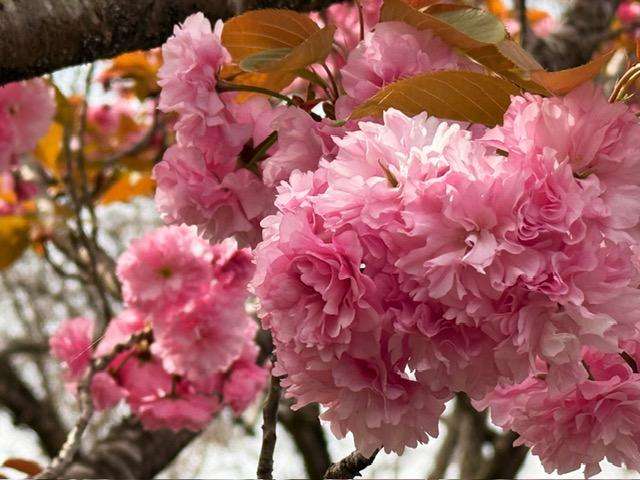
The Cherry Trees had pretty much completed their blooms, but other plants were in full bloom.


Walking around the garden we saw some incredible orchids and other plants.


We also even saw one cherry blossom tree that was hanging on. It had triple buds which might have helped it.
Inside the Greenhouse
We found a strange figure guarding the entrance to the greenhouse. 
However, the plants in the greenhouse were even more spectacular than those outside..


Shikoku Tours: Kochi Castle
The Kochi Castle was our second stop on our beautiful day in Kochi. The Castle is located on a tall hill in the center of town. It is one of only 12 castles in all of Japan that are the original castles that were built back in the Shogun era.

Both the main castle building, known as a keep, and the main gate are originals.

The Castle has a very nice garden.

The Castle was built by Yamauchi Katsutoyo who was the first Lord of the Tosa Domain, now the Kochi Prefecture. His family ruled Tosa for over 270 years.
The Statue of Katsutoyo’s Wife
There is a lovely story regarding how Katsutoyo got his power. His wife spent her entire dowry so that he could have a powerful horse. Because of the horse, Katsutoyo was recognized and became the most powerful warlord in Japan.

The Statue of Itagaki Taisuke (1837-1919)
Taisuke was a leader in the Meiji restoration which replaced the shogunate with a new modern government. He was giving a speech and was stabbed by an assassin. He is famous for this dying statement, “Itagaki may die, but liberty will not”.

Other Japanese Pilgrimage Trails
If you are interested in other famous Japanese Pilgrimage Trails, you may want to look into the Kumano Kudo Trail. Kumano Kodo is the name given to a network of five pilgrimage trails—Nakahechi, Kohechi, Iseji, Oheji, and Omine Okugaken in the Kii Peninsula on the Kansai Region. To read about the Kansai Region, please see our post Best of Kansai Japan, Kobe, Osaka and Kyoto Itinerary.
To learn more about all the Japanese Pilgrimage tours, including the Kumano Kodo, we suggest you visit Burcan Busarr’s Newsletter Post on the topic: Taking the Long Road: Pilgrimage Routes of Japan.
Conclusion
As the smallest of Japan’s five main islands, Shikoku Island is not the easiest island to reach or to get around. The Bullet Train has not reached the Island. Nevertheless, it has a great history and a wonderful unique culture. It is well worth a visit.
0 Comments