

How many days do you need to visit Rome? An excellent question, Cos has made eight separate trips to Rome, and he still doesn’t feel that he has seen the whole city. Nevertheless, 5 days in Rome should give you a good feel of the Eternal City, especially if you plan on taking private excursions from Rome or visiting other parts of Italy during your vacation in Italy. If you plan to visit different cities in Italy, we suggest you also read our post, “Planning a Trip to Italy.”
Here is Cos and Robin simply enjoying a walk across the Tiber River with the Vatican Dome and Saint Peter’s Basilica in the background.

Contents
- 1 Rome Itinerary 5 Days
- 2 Day 1: Ancient Rome – Colosseum, Forum, Palatine, Capitoline Hill
- 3 Day 2: Vatican City & St. Peter’s Basilica
- 4 Day 3: Centro Storico – Trevi, Spanish Steps, Piazza Navona & the Jewish Ghetto
- 5 Day 4: Ancient & Renaissance Highlights – Capitoline Museums, Borghese, Archaeological Sites
- 6 Day 5: Day Trip or Leisure & Wrap-Up
- 7 Practical Tips for First-Time Visitors
- 8 How Many Days Do You Need in Rome? Why 5 Days Is Enough Time
- 9 Consider Taking a Cruise From the Rome Cruise Port
- 10 Looking Back & Looking Forward
- 11 Quick Reference: 5-Day Itinerary at a Glance
- 12 Final Thoughts
Rome Itinerary 5 Days
The challenge you face in planning your “Rome Itinerary 5 Days” visit is that there are so many things to do in Rome, many of the sights require advance tickets with reservation times, and yet the most enjoyable aspect of Rome is simply walking around and taking in the city. When we visited in November 2025 (a great time to visit), we first had ChatGPT plan a half-day walking tour of the town. Our hotel was conveniently located just a block away from the Palazzo del Quirinale, making it an ideal home base for starting a walking tour of Rome.
Rome — the Eternal City. For millennia, it has been a centre of empire, art, faith, legend, and everyday life. With five days at your disposal, you can explore the grand sweep of its history and its hidden corners as well. This itinerary gives you enough time to savour landmark sites — the Colosseum, Vatican City, and Roman Forum — as well as wander its cobbled lanes, dine in lively neighbourhoods like the Jewish Ghetto and Trastevere, and even take in a charming day-trip. There will be fountains, piazzas, ancient stones, Renaissance galleries, and gelato breaks (vital). So lace up comfortable walking shoes, bring a refillable water bottle, and let’s set off through Rome, one hill and one plaza at a time.
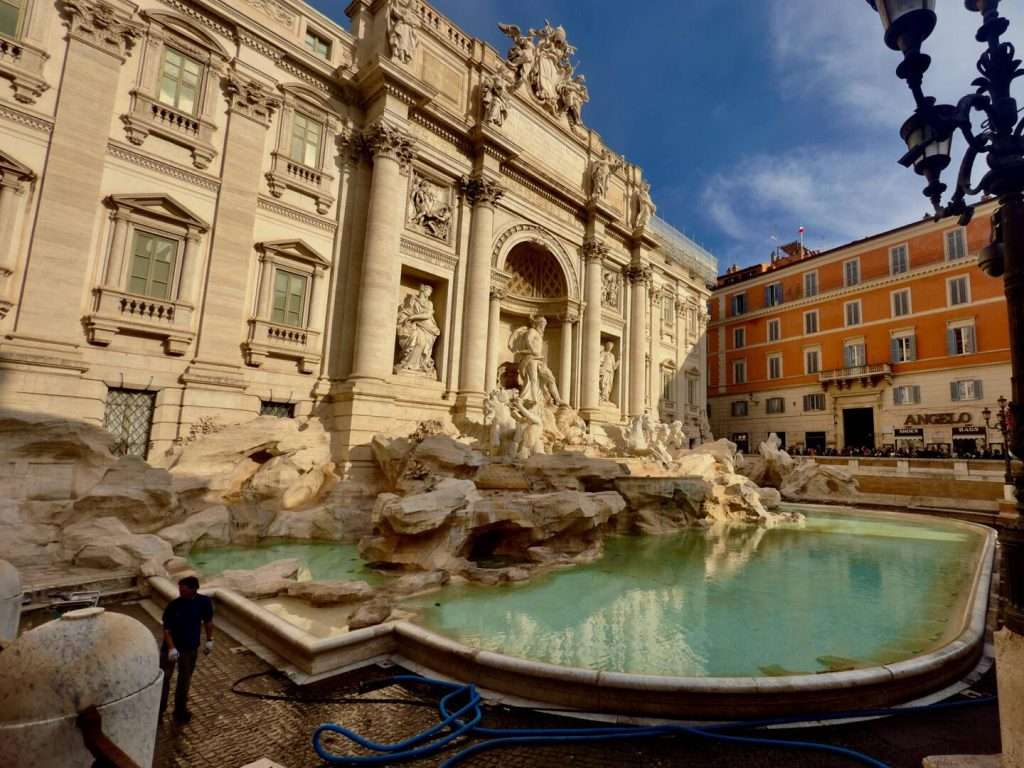
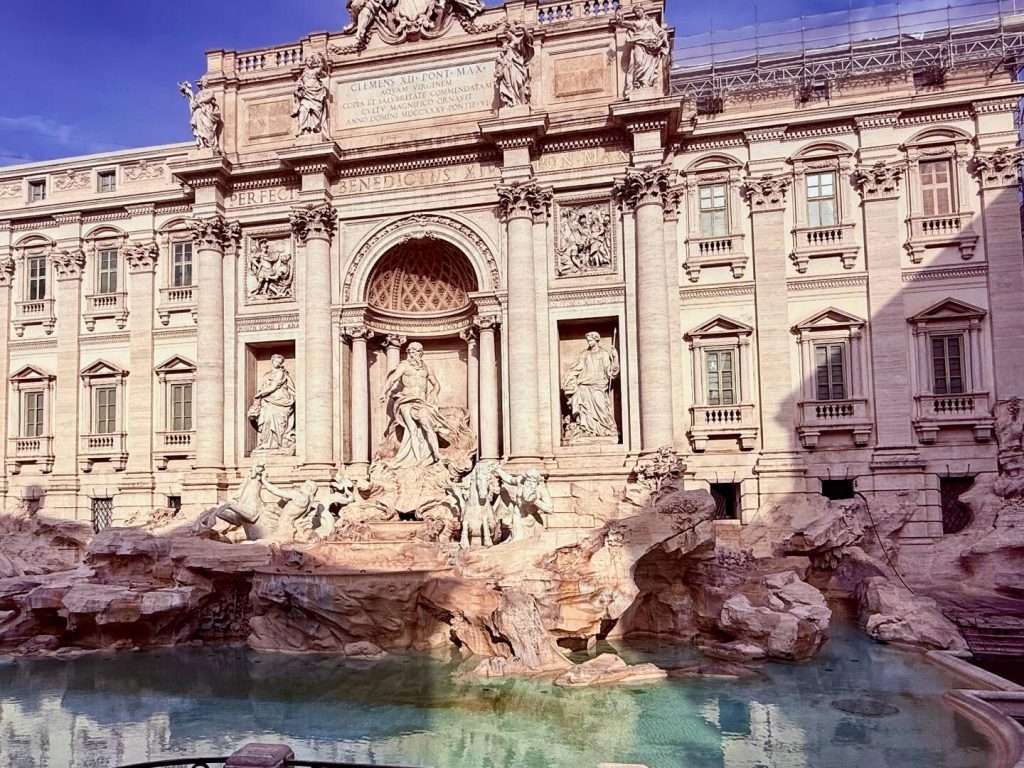
A Must Stop – Trevi Fountain
During our walking tour, a quick stop at the Trevi Fountain worked out great, as we were staying just five minutes from the famous fountain, a must-visit any time you are in Rome. Unfortunately, you won’t be able to see everything on your “Rome Itinerary 5 Days” visit. Hence, legend has it, that a stop at the Trevi Fountain is necessary, as throwing a coin backwards over your shoulder into the fountain will guarantee your return. It has worked eight times for Cos. One recommendation: go early in the day, as the crowds will build around the fountain.
Day 1: Ancient Rome – Colosseum, Forum, Palatine, Capitoline Hill
Early start & tickets
Begin your Rome adventure early. Book your timed entry for the Colosseum in advance — this avoids long lines and gives you a head start when the early-morning light is soft and the crowds are thinner. According to local guides, early morning is among the best times to visit significant sites like the Colosseum. Wear comfortable shoes, as you’ll be walking over ancient stones and up slight rises. Rome’s seven hills (including the Palatine and Capitoline) mean the terrain is rarely flat for long.
The Colosseum
Walking into the Colosseum, you step into the amphitheatre where Romans cheered, gladiators fought, and the empire presented itself to the world. With your pre-booked ticket, move through security and take a moment to stand in the arena, imagining the roar of the crowd. Then explore the tiers and walk the circumference, picturing the vast scale. Many itineraries call this the “Caesar Shuffle” — from the Colosseum to the Roman Forum.
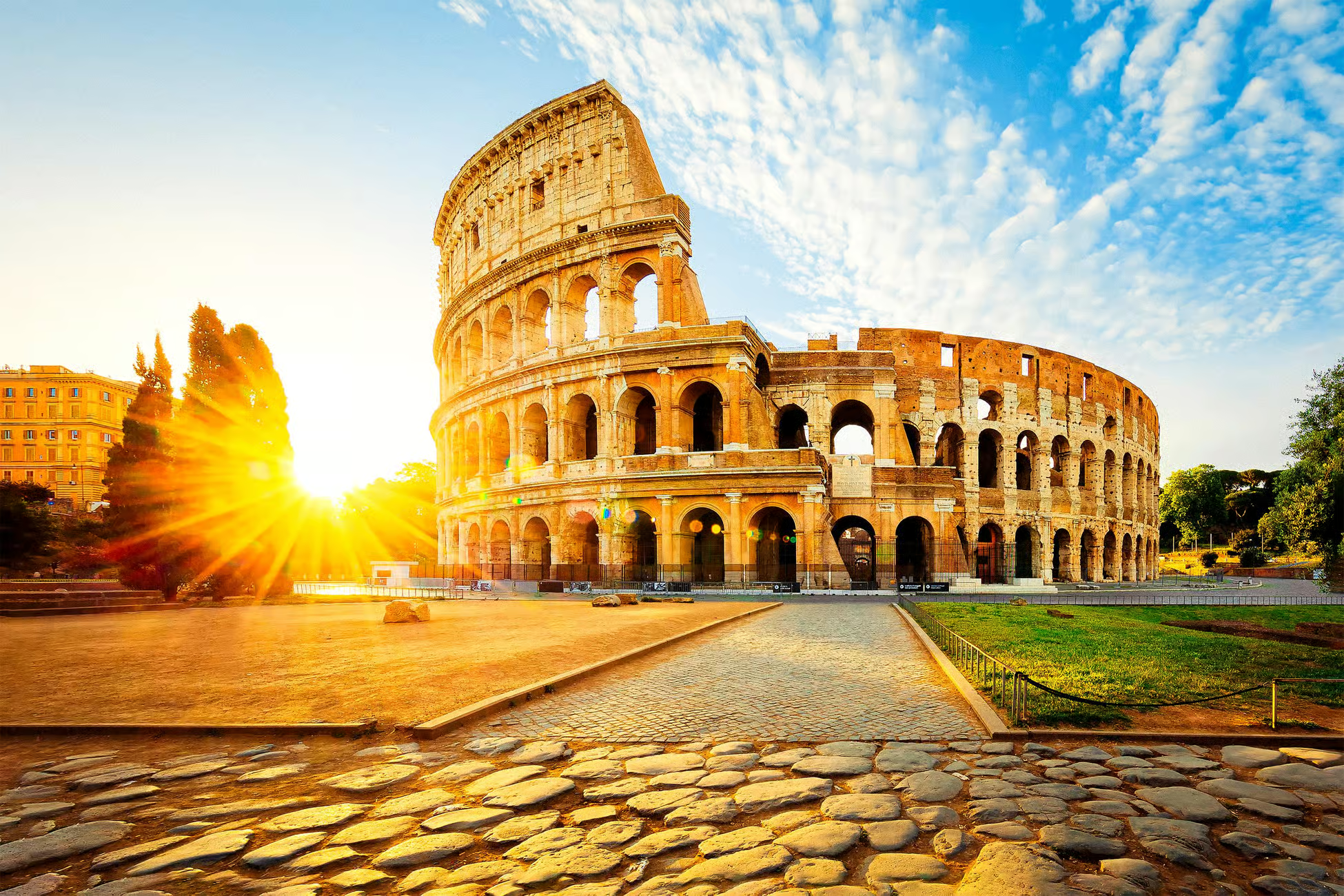
Booking Colosseum tickets in advance is crucial. You might want to consider booking a tour guide who can help you skip lines and provide excellent commentary. We recommend Get Your Guide.

Interested in traveling and taking a tour? Get Your Guide is the best place to find the best tours and the best guides in most places around the world. Find out for yourself, click below.
Roman Forum & Palatine Hill
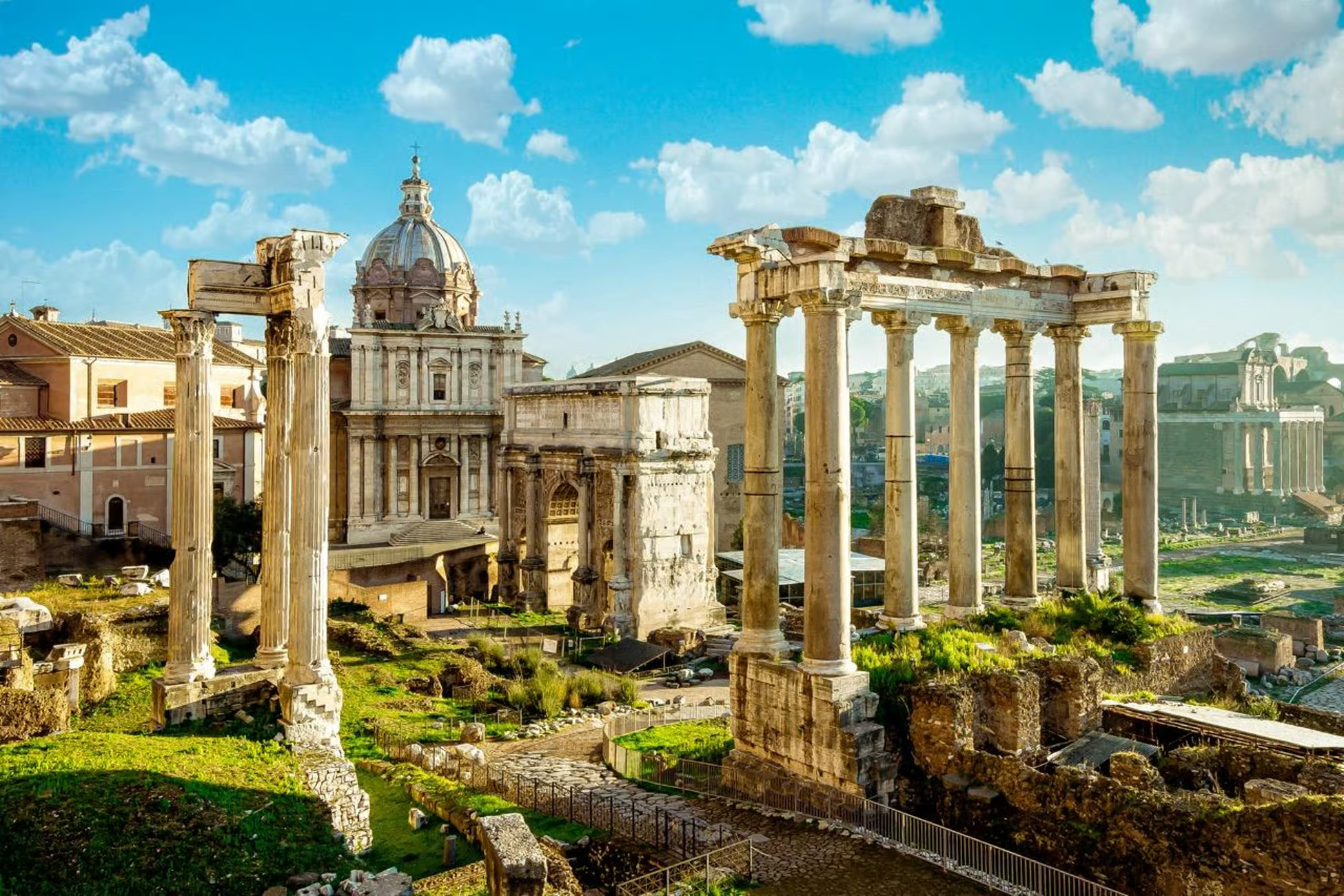
From the Colosseum, follow the path into the Roman Forum — the heart of ancient Rome: temples, basilicas, triumphal arches and the ruins of the “everyday” civic life of the empire. Climb to the Palatine Hill to see the remains of the emperor’s palaces and take in views of the Circus Maximus and the Forum valley.
Piazza Venezia & Capitoline Hill
After the Forum, ascend to the Capitoline Hill — one of Rome’s seven hills — and visit the Capitoline Museums (Musei Capitolini). This is one of the oldest publicly accessible art collections in the world, housed on a hill above the ancient city. From the piazza, you’ll get a sweeping view of Rome’s ruins, rooftops, and domes.
Afternoon free time
After such intensity, take the afternoon to wander lightly: visit the nearby area around the Pantheon, stroll down Via del Corso, stop for gelato, and rest your feet. This gives you balance — you’ve done the heavy “ancient” work, and now you ease into the rhythm of Rome.
Evening dinner
For dinner, consider a trattoria near your hotel or explore the Monti or Trastevere neighborhoods. Because you’re still on your first day, keep dinner relaxed and early — you’ve got much more to cover.
Day 2: Vatican City & St. Peter’s Basilica
Early morning start
Arrive at the Vatican early, aiming to arrive just as the doors open or shortly after. The combination of the Sistine Chapel, the Vatican Museums and St. Peter’s Basilica is one of the most popular circuits in Rome — so avoid mid-morning rush if possible. Dress code alert: Please cover your shoulders and knees in the Basilica and Museums.
Vatican Museums & Sistine Chapel
Start with the Vatican Museums. The rooms are dense with art — Egyptian mummies, Renaissance frescoes, Raphael’s rooms, and finally the Sistine Chapel, where Michelangelo’s ceiling and The Last Judgment await. A guided tour is highly recommended here: it helps orient you among the vast collection and saves time. Check the official website for reservations.


St. Peter’s Basilica & Square
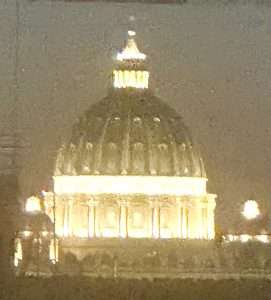
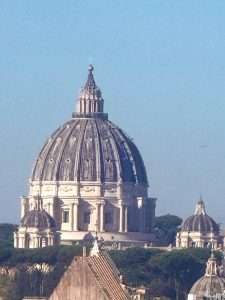
After the museums, exit into St. Peter’s Basilica and spend time in the vast nave, admiring Michelangelo’s Pietà, Bernini’s canopy over the altar, and the dome above you. Then wander around St. Peter’s Square — its giant colonnades embrace visitors and pilgrims alike.
For a memorable vista, consider climbing the dome (if open) for panoramic views of Rome and the Vatican.


Castel Sant’Angelo (optional)
If you still have energy, continue across the Ponte Sant’Angelo to the Castel Sant’Angelo. What began as Emperor Hadrian’s mausoleum later evolved into a fortress and a papal haven. From the terrace, you’ll get a dramatic sunset view over the Tiber and St. Peter’s. Many itineraries include this as an evening stop.
Walking Tour in Trastevere (optional)
If you decide to skip Castel Sant’Angelo, consider going to Trastevere early in the afternoon for a fantastic walking tour. Visit the Basilica of Santa Maria in the Piazza of Santa Maria. Traditionally considered one of the oldest churches in the city, dedicated to the Virgin Mary, it has served as a cardinal titular church since the 3rd century. Have a cappuccino in the Piazza and then walk over to the Orto Botanico di Roma.
From the Botanico, you can hike up the hill to the Janiculum Hill, where you will get a fantastic view of the city. The Janiculum is a hill in western Rome. Although it is the second-tallest hill in the contemporary city of Rome, the Janiculum does not figure among the traditional Seven Hills of Rome, as it lies west of the Tiber and outside the ancient city’s boundaries.
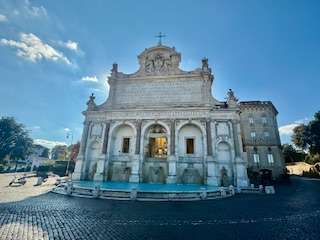
The Fontana dell’Acqua Paola, often called “Il Fontanone” (“the big fountain”), sits on Janiculum Hill (Gianicolo) just above Trastevere, and is one of the most iconic Baroque fountains in Rome. Built in 1612 by Pope Paul V, it marks the terminus of the restored Acqua Paola aqueduct.
Evening & Best Restaurants in Trastevere Rome
After your Vatican day, cross the river to the best restaurants in Trastevere Rome, for dinner. Trastevere comes alive at night, with charming alleys, wine bars, and a variety of pasta and pizza restaurants. Some of our favorite restaurants are:
- Osteria Caco de Pepe – The home of Rome’s famous dish. Literally cheese and pepper, many restaurants make this fantastic dish.
- Sabatini – Located in Piazza di Santa Maria, in the center of Trastrvre
- Nannarella –One of the most popular restaurants in Trastevere. Good food and reasonable prices. Usually, a line to get in,
Dawn and coffee
Begin the third day early (ideally before 9 a.m.) at the Trevi Fountain. Arriving early means fewer crowds and better light for photos. According to local guides, fountains and piazzas are best enjoyed early, before the mass of tourists. We arrived early and took the fantastic photos shown at the start of this post.
Throw your coin over your shoulder — let the tradition carry you: one coin to return to Rome, two to find love, three to marry.
Spanish Steps & Piazza di Spagna
From Trevi, walk or hop a short taxi to the Spanish Steps (Piazza di Spagna). Sit on the famous Barcaccia fountain at the base of the stairs, then climb the steps to Trinita dei Monti church and enjoy the view of the rooftops. The area around Via Condotti offers stylish shops if you have energy for browsing.
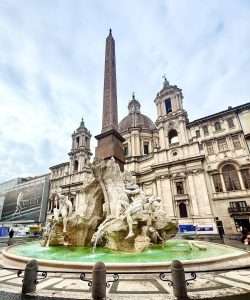
Move back into the heart of the city to the Piazza Navona — one of Rome’s grandest squares. Admire the Fountain of the Four Rivers and catch a street performer if you’re lucky. Then stroll to nearby Campo di Fiori, where the market and lively cafés await.
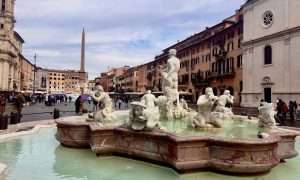
From there, or in the late afternoon, walk into the Jewish Ghetto, a narrow lane lined with ancient ruins, including the Theatre of Marcellus, and a unique atmosphere where Rome’s Jewish community has lived for 2,000 years.
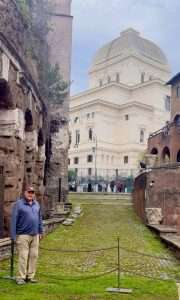

Jewish Ghetto – dinner stop
The Jewish Quarter (Ghetto) invites a dinner of Roman-Jewish cuisine: artichokes alla giudia, fried cod, and pasta e fagioli. It’s rich in history and offers a remarkable change of pace from the tourist-heavy dining scene.
Evening walk & drinks
After dinner, wander along the Tiber embankment or across to Trastevere to enjoy a riverside aperitivo. The mood is relaxed, the lights are golden, and the cobbled streets invite exploration.
Day 4: Ancient & Renaissance Highlights – Capitoline Museums, Borghese, Archaeological Sites
Morning: Capitoline Hill & Museums
Start the day at the Capitoline Hill (if not visited on Day 1) and explore the Capitoline Museums. The terraces and views are incredible — they overlook the Roman Forum and the city beyond.
Take time in the museum halls: bronze statues, busts of emperors, and the artwork of Rome’s power.
Villa Borghese & Borghese Gallery
For some fresh air and greenery, continue to the Villa Borghese park. Rent a golf cart or bike if you like — the gardens are sprawling and the library museum (Borghese Gallery) is set inside a historic villa. Later, dedicate time to the Galleria Borghese, a masterpiece house museum situated within the Villa Borghese gardens. Pre-book time slots (they regulate entry) and treat yourself to Bernini’s sculptures and Caravaggio’s paintings.
Fontana di Trevi revisit or Spanish Steps
Return to the Trevi Fountain or Spanish Steps for a relaxed revisit, perhaps with gelato in hand. This is a good half-day of revival: less intense than the full tours of other days, and ideal for lingering. If you’re so inclined, explore Santa Maria Maggiore (one of Rome’s major basilicas) or lesser-known archaeological sites like the Circus Maximus.
Evening: Trastevere & Dinner
For dinner, head to Trastevere early and book a table at a top spot: local food, warm ambience, and a genuine Roman neighbourhood feel. It’s your chance to soak in the casual Roman rhythm: narrow alleys, lanterns, and friendly trattorias.
Day 5: Day Trip or Leisure & Wrap-Up
Option 1: Day Trip
If you’re keen to explore beyond central Rome, pick a day-trip: With the previous seven trips to Rome under his belt, Cos definitely wanted to explore a little outside the walls of Rome. He and Robin considered private excursions from Rome and selected a tour to Tivoli, featuring the famous Villa d’Este fountains and Hadrian’s Villa.
Hadrian’s Villa
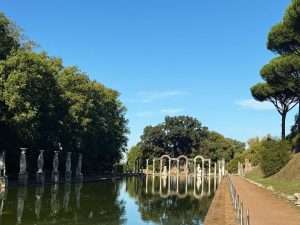
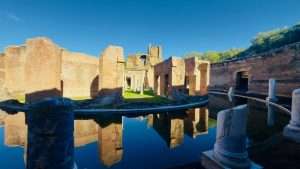
Hadrian (Publius Aelius Hadrianus) was one of ancient Rome’s most cultured and visionary emperors. He ruled from AD 117 to 138, during what many historians consider the empire’s “golden age.” Built around AD 118–134, Villa Adriana was Hadrian’s vast retreat from Rome — a personal paradise of palaces, gardens, pools, and pavilions. Located about 20 miles east of Rome in Tivoli, it was not just a “villa” but an imperial city in miniature — covering over 250 acres (larger than the entire Vatican City today). Even in ruins, Villa Adriana remains extraordinary — a UNESCO World Heritage Site and one of the most complex architectural projects of the ancient world. Two of the most impressive remains are shown below:
-
The Canopus Pool: a long, reflecting canal flanked by statues and caryatids, representing Hadrian’s love of Egypt.
-
The Maritime Theatre: an ingenious circular pool and island villa accessible only by drawbridge — thought to be Hadrian’s private retreat.
Villa d’Este
Villa d’Este is one of the most enchanting places in all of Italy, and it pairs beautifully with Hadrian’s Villa in Tivoli. Villa d’Este is one of the most dazzling examples of Renaissance architecture and garden design in the world. In 2001, UNESCO declared it a World Heritage Site, calling it “a masterpiece of human creative genius.”
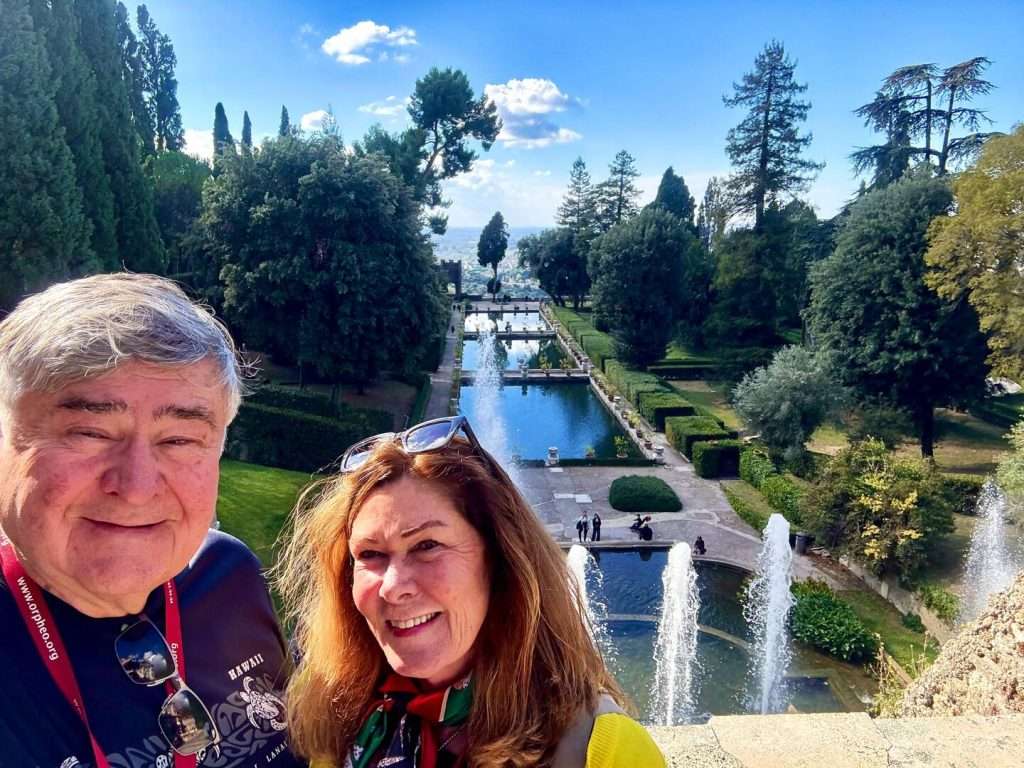
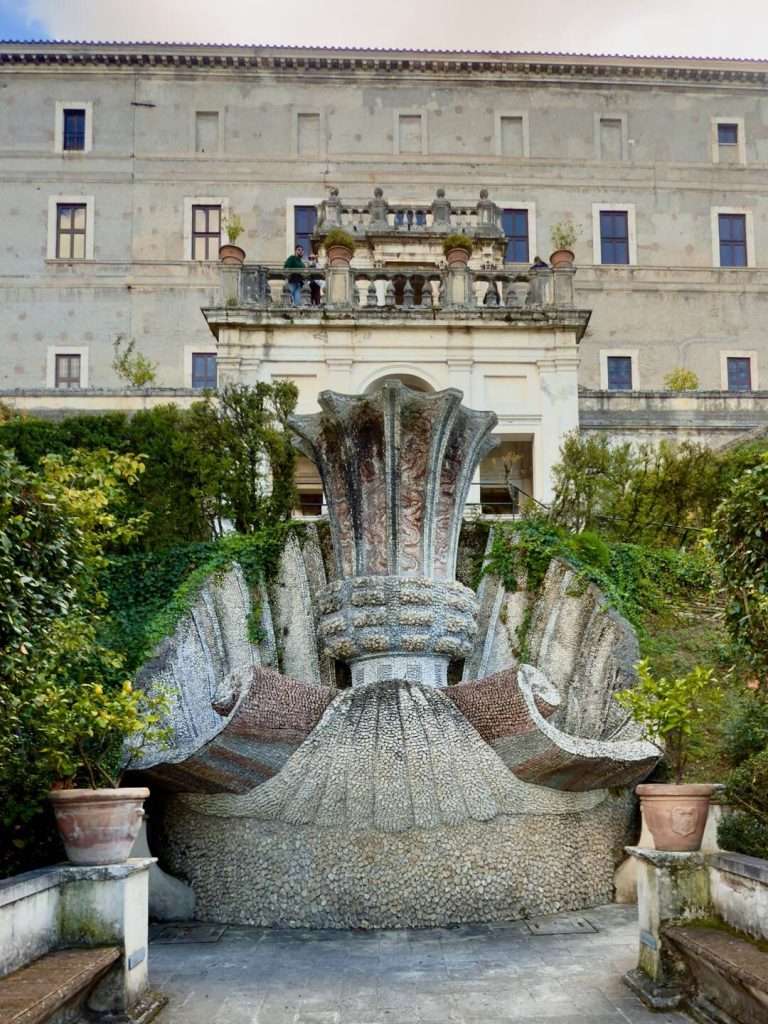
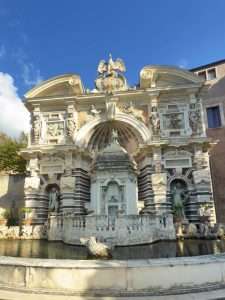
The tour was great, and they relied on Get You Guide with a last-minute booking.
Interested in traveling and taking a tour? Get Your Guide is the best place to find the best tours and the best guides in most places around the world. Find out for yourself, click below.
This tour was an excellent choice. He also wanted to venture to Ostia Antica to see the ancient port-town ruins. Unfortunately, that trip never happened as the tour company cancelled at the last minute. Be careful when you book tours. If you book them too far in advance, if they don’t get enough people, they might cancel on you. Nevertheless, a day trip adds depth to your visit — a retreat from city bustle and a chance to explore sweeping landscapes or the gardens of Roman villas.
Option 2: Leisurely wrap-up in Rome
If you prefer staying in Rome, use Day 5 to revisit favourite spots, explore the Jewish Quarter in more depth, shop, or meander the streets you’ve already come to love. Perhaps take a walking tour — guided or self-guided — in the early morning to avoid the rush and savour the city on foot. Local guides emphasise walking tours for first-timers to reveal the layers of Rome.
Suggested morning
-
Early stroll along the Tiber or a quiet coffee in Trastevere before the crowds.
-
Return to the Pantheon or Piazza Venezia for last-minute photos.
-
Stop at Santa Maria Maggiore or another basilica that piqued your interest earlier.
-
Lunch at a neighbourhood trattoria away from the major tourist hubs — for your final meal in Rome, pick something memorable: fresh pasta, Roman wine, gelato afterwards.
Afternoon
Take a taxi or tram to the airport or station, reflecting on five days of history, art, fountains, laughter, and gelato. You’ve walked the hills, seen emperors’ palaces, basilicas, gallery treasures, and vibrant neighbourhoods. Rome rewards the traveller who slows down, looks up and listens to the stones.
Evening
If your flight or train is later, enjoy a final evening in Rome: a riverside stroll, a gentle aperitivo, perhaps people-watching at Piazza del Popolo, or one last visit to the Trevi Fountain under lights.
Practical Tips for First-Time Visitors
Booking & skipping lines
Book your tickets ahead of time for high-demand sites (Colosseum, Vatican Museums, Galleria Borghese). Even “skip-the-line” tours require security checks and time in queues. Local guides suggest visiting fountains and piazzas early and using mid-afternoon slots for major museums.
Checking site opening hours ahead is vital — some close as early as mid-afternoon. Wear comfortable shoes, bring a refillable water bottle (many fountains offer fresh, cold water), and carry a small day bag.
The best way to explore Rome is on foot. The historic centre is dense, with cobbled streets and hills. Use the major roads as aids (Via del Corso, Via Nazionale), but don’t hesitate to wander the alleys — that’s where discoveries happen.
For a faster and less tiring option, consider hiring a golf cart for a couple of hours (especially in Villa Borghese or for a panoramic loop); however, walking remains the richest experience.
Avoiding long lines & crowds
-
Arrive early at major attractions.
-
Visit popular fountains and squares before 9 a.m. for the best photo opportunities and fewer crowds.
-
For the Vatican and Colosseum, consider later afternoon tours (when fewer peak-morning groups are present) or early morning entry.
-
Stay centrally located (Monti, Prati, or near the Pantheon) so you can return to your hotel for a rest midday if needed.
Dining & neighbourhood picks
-
Trastevere is perfect for dinner nights — lively yet relaxed, excellent food and atmosphere.
-
The Jewish Ghetto offers a different flavor — local history, Roman-Jewish cuisine, and a quieter pace.
-
Always book dinner for later in the evening (8-9 p.m.), as restaurants tend to fill up.
-
Lunch can be lighter and quicker — gelato, espresso, open-air cafés between sights.
Dress & etiquette
-
In churches and basilicas, cover your shoulders and knees.
-
Respect quiet zones inside museums and religious spaces.
-
Tipping is not obligatory but appreciated — rounding up or leaving a few euros shows gratitude.
-
Gelato shops may charge by weight if you’re carrying larger cones; a fresh cone always tastes better when enjoyed seated on a bench overlooking a piazza.
How Many Days Do You Need in Rome? Why 5 Days Is Enough Time
Five days give you the perfect mix of high-intensity sightseeing (ancient Rome, Vatican) and slower exploration (neighbourhoods, fountains, gardens). Many travel resources confirm that this timeframe allows first-time visitors to cover the major sites and still have margin for spontaneous moments. You won’t feel rushed, and you can return home feeling you’ve really been there, not just ticked boxes. But you’ll also leave room for next time — because with Rome, one visit never feels like enough.
Consider Taking a Cruise From the Rome Cruise Port
Rome had become a significant port for cruise ships. Well, not actually the Rome cruise Port. The Port of Civitavecchia is commonly referred to as the Rome cruise port, located approximately 80 km (50 miles) northwest of central Rome. You can get there from central Rome by train or by private car If arriving by train, you will need to take a local shuttle bus to your cruise ship’s terminal. If you arrive by private vehicle, ensure your driver is authorized to go to the shi’s terminal, or you will also need to take the local shuttle bus. In any case, leave plenty of time for the ride from the central city to the Rome Cruise Port in Civitavecchia. If you want to learn more about cruises, please see our Popular Cruise Lines post.
Looking Back & Looking Forward
As your final evening draws near, take a moment of reflection: sit in a café in Trastevere or on a bench by the Tiber, and drink in the ambiance, the lights, the throwing of coins into the Trevi, the echoes of treats and history in every corner. You’ve seen emperors’ arenas, popes’ basilicas, fountains that inspired dreamers, and alleys where Romans still live.
And you’ve gained something more than photos — you’ve absorbed a sense of place. The cobbled stones, the layered past, the mix of grand and intimate, all will stay with you.
Perhaps you’ll return one day — more ancient sites, for sure, more fountains, more trattorias, and more of Rome’s rich, rewarding life. Until then, you’ll carry “Rome” in your steps, your memories, and your heart.
Quick Reference: 5-Day Itinerary at a Glance
| Day | Morning | Afternoon | Evening |
|---|---|---|---|
| 1 | Colosseum → Roman Forum → Palatine Hill | Capitoline Hill & Museums | Relaxed dinner near Monti or return to the hotel |
| 2 | Vatican Museums & Sistine Chapel | St. Peter’s Basilica & Square | Trastevere or Prati dinner |
| 3 | Trevi Fountain → Spanish Steps → Villa Borghese (optional) | Piazza Navona → Jewish Ghetto | Dinner in the Ghetto or riverside walk |
| 4 | Capitoline (if not done) → Galleria Borghese & Villa Borghese | Free stroll / revisit favourite spot | Big Trastevere dinner night |
| 5 | Day Trip (Tivoli or beyond) or leisurely revisit Rome | Shopping, gelato, final wanderings | Final dinner and farewell stroll |
Final Thoughts
Rome is effortless in its grandeur and nuanced in its details. From the roar of arenas to hushed basilicas, from the flamboyance of fountains to the serenity of hidden gardens, this city invites both awe and ease. With five days structured but flexible, you’ll capture much of what first-time visitors dream of — and leave space for your own discoveries, subtle pauses, and unscripted moments. Go early, stroll, eat well — and let the Eternal City enchant you.
Buon viaggio e buona scoperta!
0 Comments