

Contents
- 1 Visiting Places in Seoul South Korea
- 2 The South Korean Flag Unfolded
- 3 Why Visit Seoul, South Korea
- 4 Weather Seoul South Korea
- 5 Religion in South Korea Unfolded
- 6 8 Best Places to Visit in Seoul South Korea
- 6.1 Best Places to Visit in Seoul South Korea: #1 Jogyesa Buddhist Temple
- 6.2 Best Places to Visit in Seoul South Korea: #2 Presidential Palace, The Blue House
- 6.3 Best Places to Visit in Seoul South Korea: #3 Korea’s National Museum
- 6.4 Best Places to Visit in Seoul South Korea: #4 Unique Street Art
- 6.5 Best Places to Visit in Seoul South Korea: #5 The Five Grand Palaces of Seoul
- 6.6 Best Places to Visit in Seoul South Korea: #6 The War Museum
- 6.7 Best Places to Visit in Seoul South Korea: #7 Art and Design in Korea
- 6.8 Best Places to Visit in Seoul South Korea: #8 Myeong-dong
- 7 Incheon South Korea, the Gateway to Seoul
- 8 Golf in South Korea
- 9 Conclusion
Visiting Places in Seoul South Korea
In this installment of their 72-day Asian adventure, Cos and Robin share their unique experiences, cultural discoveries, and hidden gems. As part of their 72-day “Whispers of the Orient” Tour in 2025, they were fortunate to spend five days land-based in Seoul, Korea, and one day in the port city of Incheon. They were pleasantly surprised by the friendly people and the sophistication of the cities. It was a nice break from the 48 days they spent on cruise ships.
They were also impressed that, unlike Tokyo, Seoul is much more laid-back, and the pace of life is much more normal and “Western-like.” Yet, it still supports many of the peaceful and respectful concepts we find across the entire Asian culture.
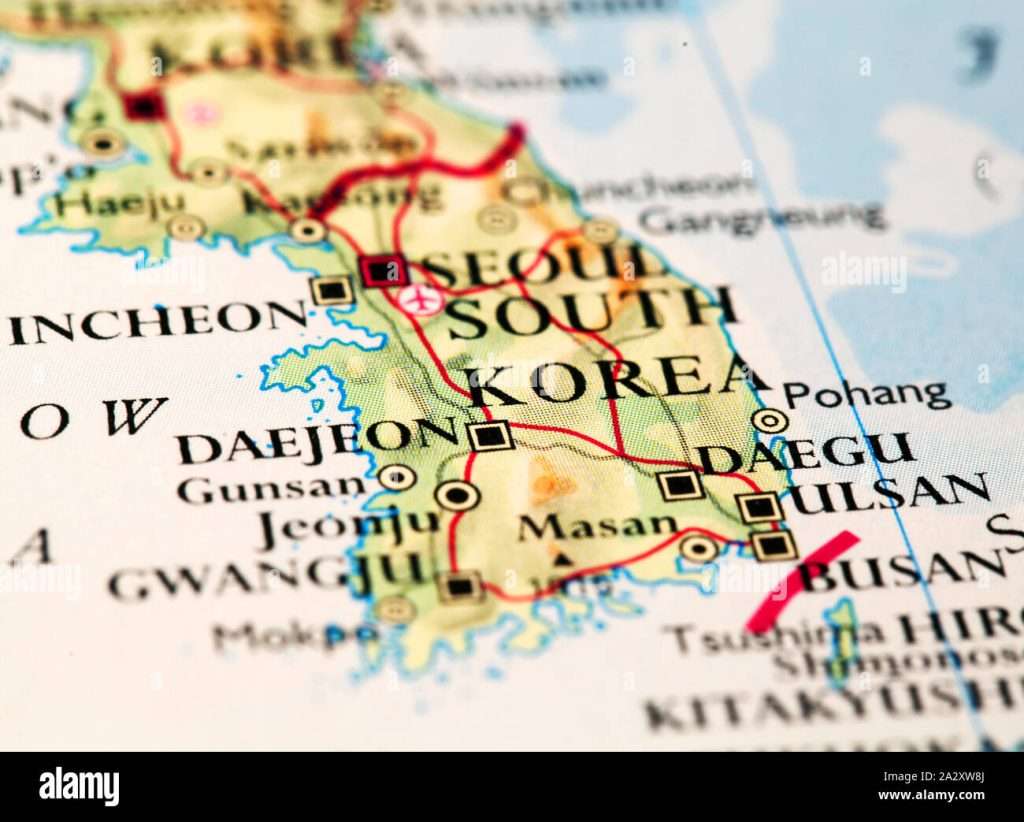
Following is a Tourist Map of Seoul South Korea. Not very specific, but it at least will let you see where Seoul, Incheon and Busan are located.
Tourist Map of Seoul South Korea
The South Korean Flag Unfolded
This representation of the South Korean flag is made with strings neatly tied and painted to resemble the flag.

The four black trigrams on the South Korean flag—known as the Taegeukgi—come from the I Ching (Book of Changes), an ancient Chinese text that influenced many East Asian philosophical traditions, including Korean thought. Each trigram represents a fundamental principle of balance and nature:
- Geon): Heaven, strength, creativity
- (Gon): Earth, harmony, receptivity
- (Li): Fire, passion, vitality
- (Gam): Water, intelligence, adaptability
These elements align with the broader yin-yang and Five Elements (Wu Xing) concepts found across East Asian cultures, emphasizing harmony, duality, and cycles of change. The central red and blue Taegeuk symbol reinforces this idea, showing the balance of opposing forces—similar to the yin-yang.
So yes, these symbols absolutely connect to deeper Asian design and philosophical concepts. Quite a powerful emblem for a nation, don’t you think?
Why Visit Seoul, South Korea
Seoul, the vibrant capital of South Korea, is a city that seamlessly blends tradition and modernity, making it a must-visit destination.
Seoul is a dynamic, high-tech city that seamlessly blends ancient traditions with modern innovation. Whether you’re into history, food, shopping, or nightlife, Seoul has something for everyone.
Top Reasons for Visiting Places in Seoul, South Korea
- Historic Landmarks – Explore Gyeongbokgung Palace, the Bukchon Hanok Village, and the War Memorial of Korea to dive into Korea’s rich past.
- Vibrant Nightlife – Seoul’s nightlife is legendary, with Itaewon, Hongdae, and Gangnam offering everything from karaoke bars to underground clubs.
- Cutting-Edge Technology – Experience futuristic architecture like the Lotte World Tower, home to the world’s fastest double-decker elevator.
- Amazing Food Scene – From street food markets to Michelin-starred restaurants, Seoul is a food lover’s paradise.
- Shopping & Fashion – Discover trendy boutiques in Myeong-dong, traditional crafts in Insadong, and high-end brands in Gangnam. Unfortunately, we didn’t do any shopping, so you are on your own if you are a shopper. You will find everything you may want here, along with western prices.
Seoul is a city that never sleeps, offering endless entertainment, cultural experiences, and breathtaking sights.
Here are some highlights that Cos and Robin personally experienced.
Rich History and Culture
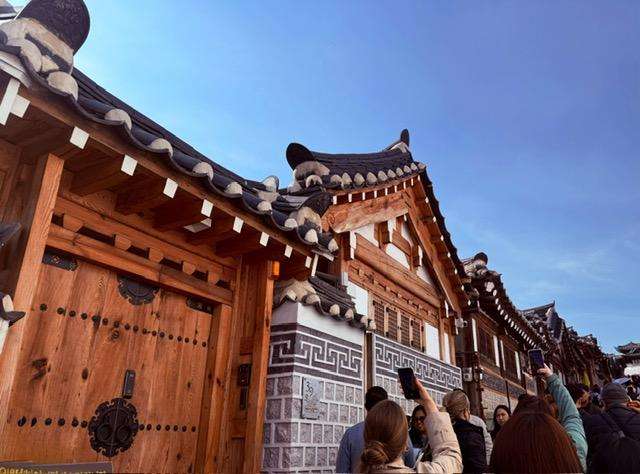
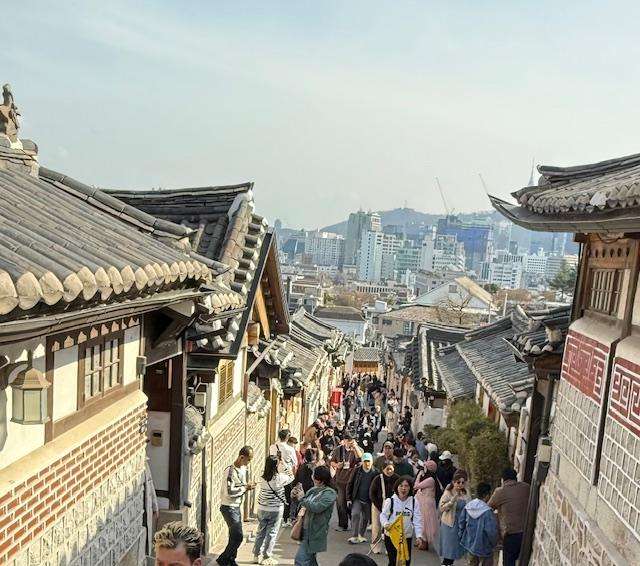
The “Best Places to Visit in Seoul South Korea,” include ancient palaces like Gyeongbokgung and Changdeokgung, or wander through Bukchon Hanok Village to see traditional Korean homes. The city is also home to fascinating museums and cultural performances.
Here are some pictures from our walk thru Bukchon Hanok Village:
Modern Architectural Marvels
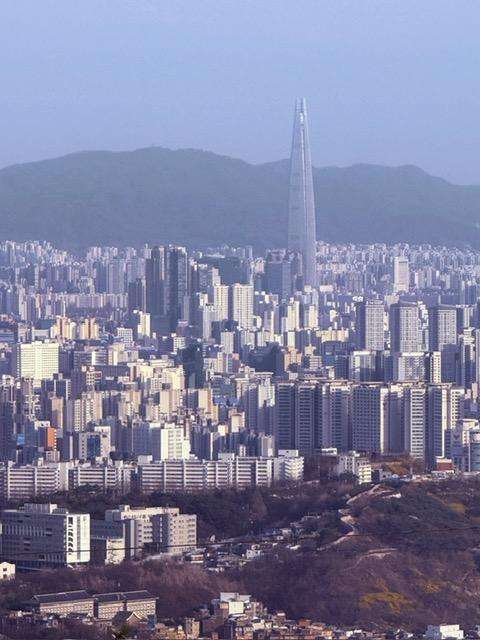
Seoul’s skyline is dotted with impressive architecture, like the iconic Lotte World Tower and N Seoul Tower. The city is also a hub for cutting-edge technology and innovation. Here is a picture of the Lotte Tower from an observatory above the city:
Seoul’s Pop Culture and Entertainment Unfolded
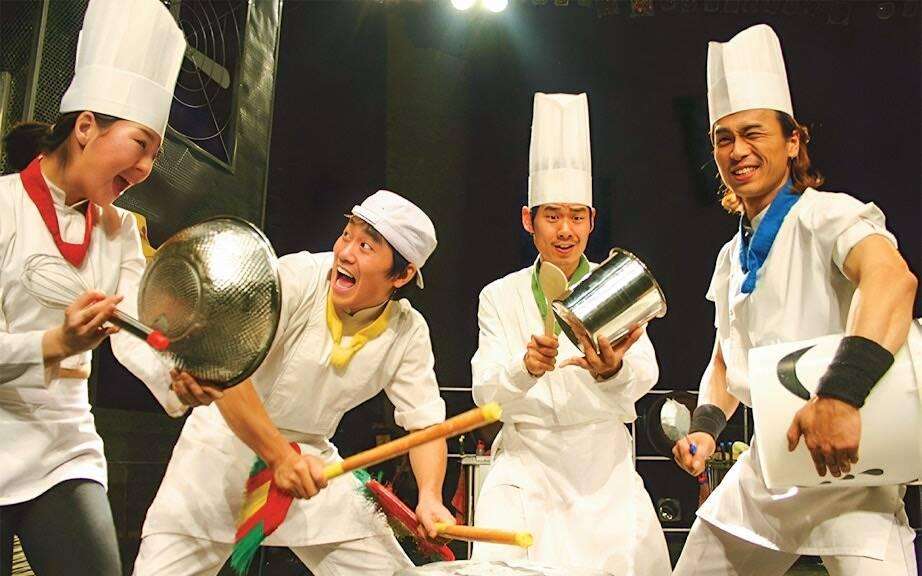
We aren’t into the Gangnam scene or K-Pop, but we visited a crazy theatre, called the Nanta theater, where there are no spoken words. It is an old fashioned slapstick act about four chefs trying to meet an impossible one-hour deadline. :
Seoul’s Delicious Food Scene
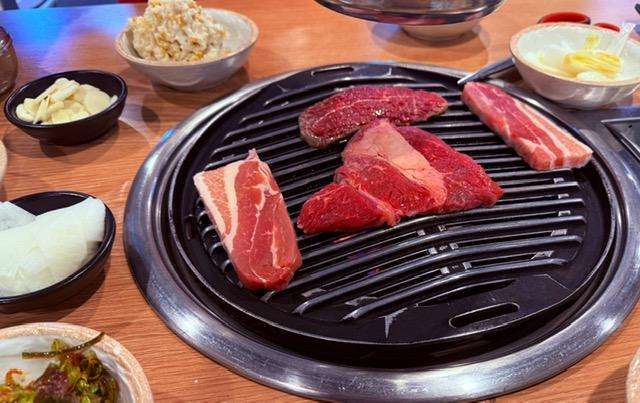
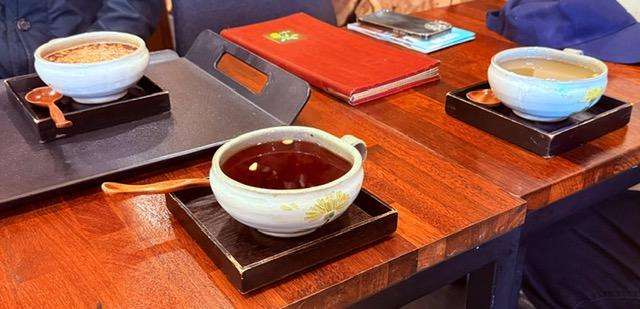
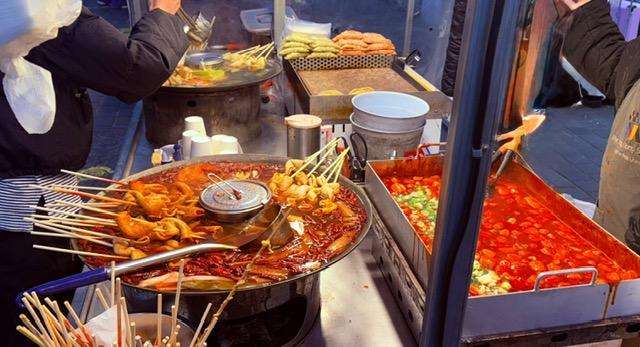
From sizzling Korean BBQ to street food delights like tteokbokki (spicy rice cakes) and gimbap (seaweed rolls), Seoul’s culinary landscape is a treat for food lovers. Don’t forget to try authentic kimchi. However, our favorite is Korean BBQ, and we were totally impressed when “Visiting Places in South Korea” to find an authentic Korean Tea Service. Also, when “Visiting places in South Korea,” give the street food a try. It looks great.
Visiting Places in Seoul South Korea: Korean BBQ

Korean Tea Service
And the Street Food also looked interesting:
Seoul has something for everyone, whether you’re a history buff, foodie, trendsetter, or nature lover.
Weather Seoul South Korea
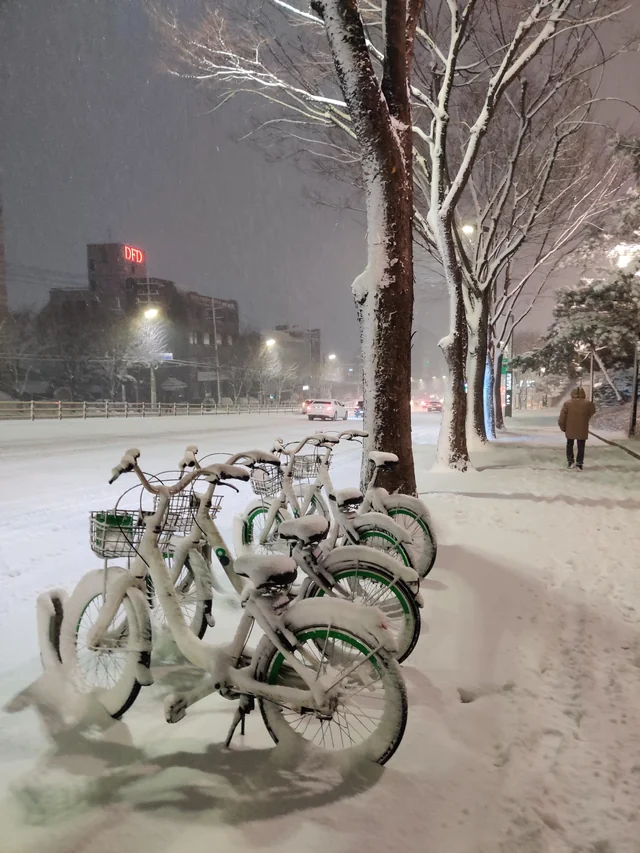
The biggest surprise for us was the weather in Seoul South Korea. Hard to believe it, but we actually had snow flurries while we were there in April. It caught us by surprise as we were not entirely prepared for the cold weather.
Religion in South Korea Unfolded
We were surprised to learn that Christianity, not Buddhism, is the primary religion in Korea. Remember this for your next trivia game. Christianity was introduced to Korea in the late 16th and early 17th centuries through Korean scholars who encountered Catholicism in China. The first Korean Catholic community was established in 1784
Protestant Christianity arrived later, in the late 19th century, brought by missionaries from the United States and other countries. Despite initial resistance and persecution, Christianity grew rapidly, especially during the 20th century, as it became associated with education, modernization, and social reform
Both Protestantism and Catholicism are widely practiced. Catholicism accounts for about 31% of the population, while Buddhism is practiced by about 17% of the population.
Confucianism, technically not a religion, introduced from China during the Three Kingdoms period, became deeply embedded in Korean culture, especially during the Joseon Dynasty (1392–1910). Back then it was adopted as the state ideology and Buddhism was frowned upon. While its influence as a formal belief system has waned, Confucian values—such as filial piety, respect for elders, and social harmony—continue to shape Korean society and interpersonal relationships.
8 Best Places to Visit in Seoul South Korea
During the 5 days that we spent “Visiting Places in Seoul South Korea,” we spent time in eight places that we felt were the “Best Places to Visit in Seoul South Korea.” Here are the eight places we recommend you should visit. We used two tour guides to help us find these place. We used Get Your Guide as the best way to locate these outstanding tours. Click here.

Visiting places in Seoul South Korea can be fun especially when you have a tour guide to help you. We recommend that you check our Get Your Guide to find the best tour guides in Seoul. We used them and had two great tours.
Best Places to Visit in Seoul South Korea: #1 Jogyesa Buddhist Temple
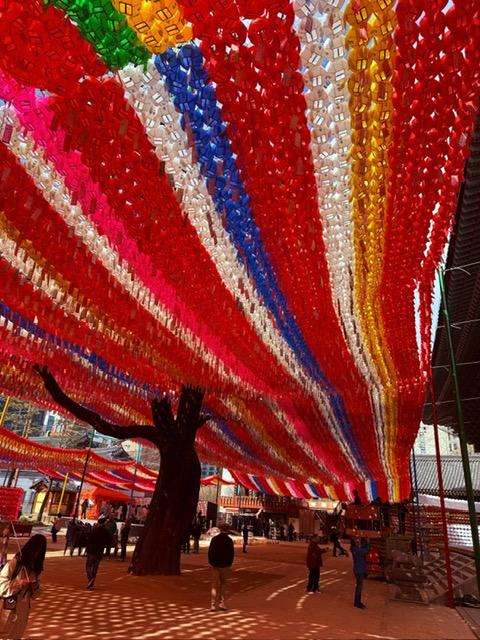
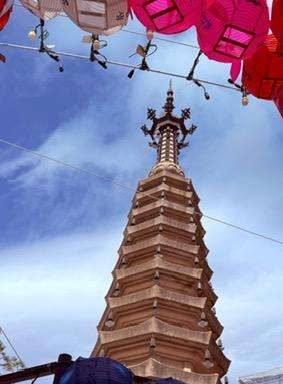
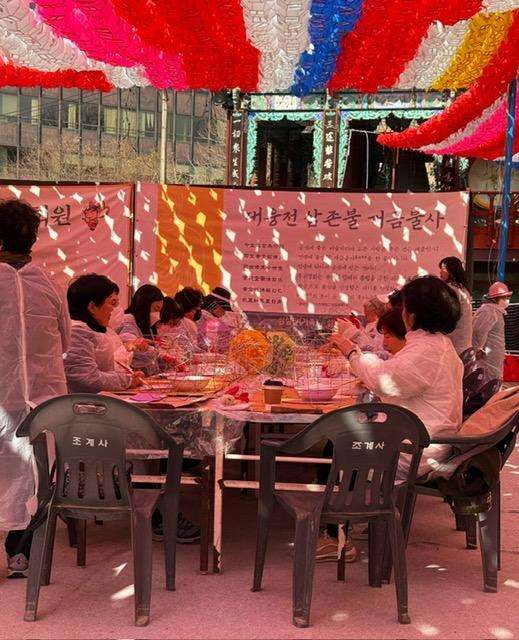
Nevertheless, despite Buddhism being in second place, the first place we visited on day one of our visit to Seoul was the Jogyesa Buddhist Temple. It was preparing to celebrate the birth of the Buddha in April. Here are some spectacular pictures of that temple.
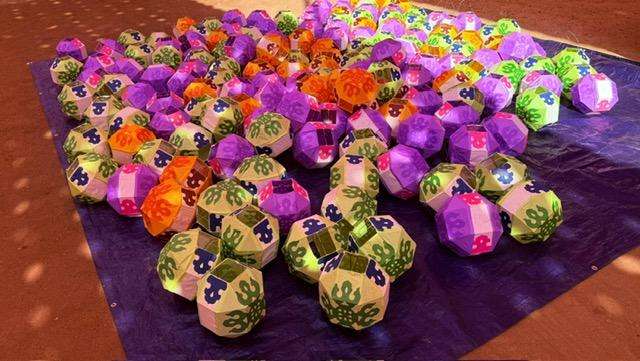
Here are the lanterns that are being sold and the hard-working people who are making them.
Best Places to Visit in Seoul South Korea: #2 Presidential Palace, The Blue House
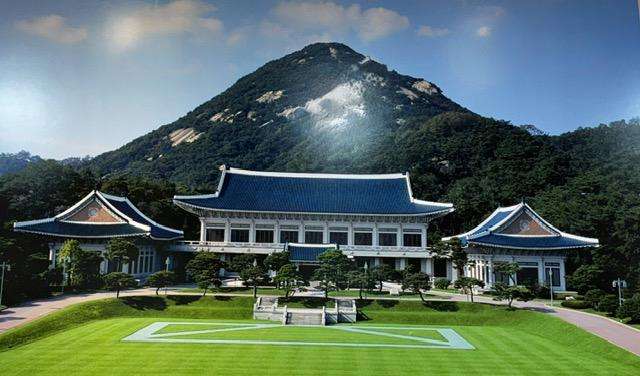
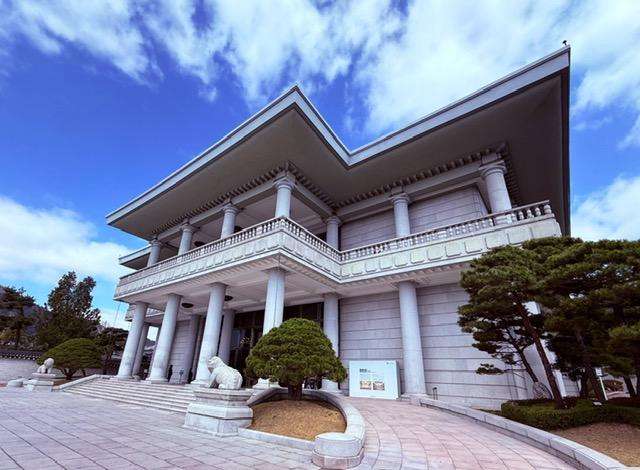
The second place we visited on our first day in Seoul, was the Presidential Palace, known as The Blue House. The Blue House, also known as Cheong Wa Dae, is a sprawling complex covering approximately 250,000 square meters (62 acres). It served as South Korea’s presidential residence until 2022 and is now open to the public as a park.
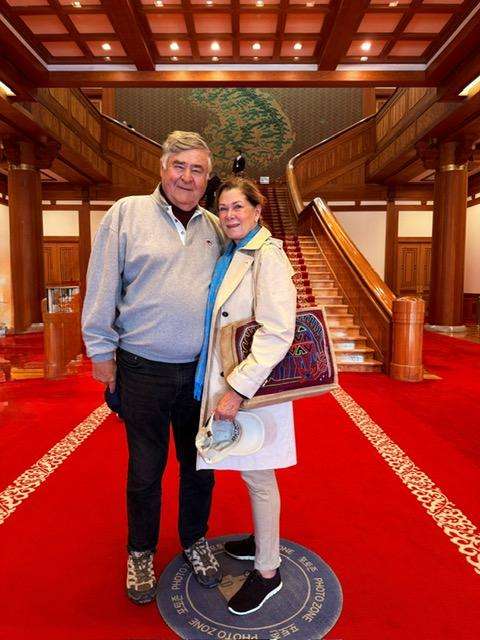
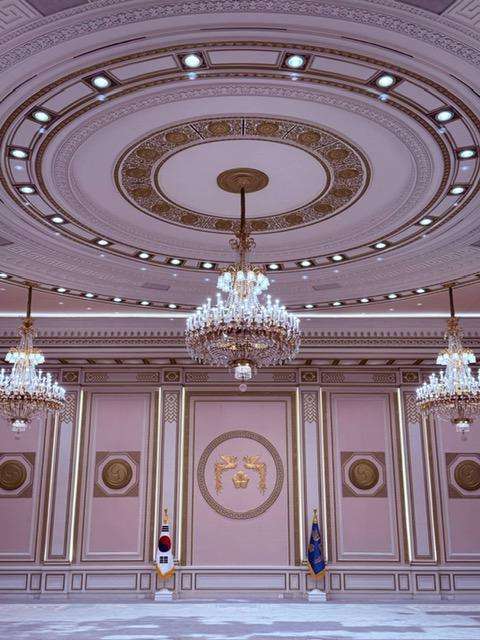
The inside of the Blue House is beautiful as are the two people standing in front of the main staircase.
In addition to the actual Blue House, where official business was held, there are a number of other buildings in the park, including the original Presidential Home.
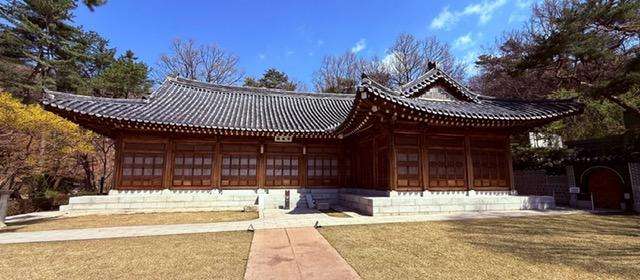
And a hall for holding events.
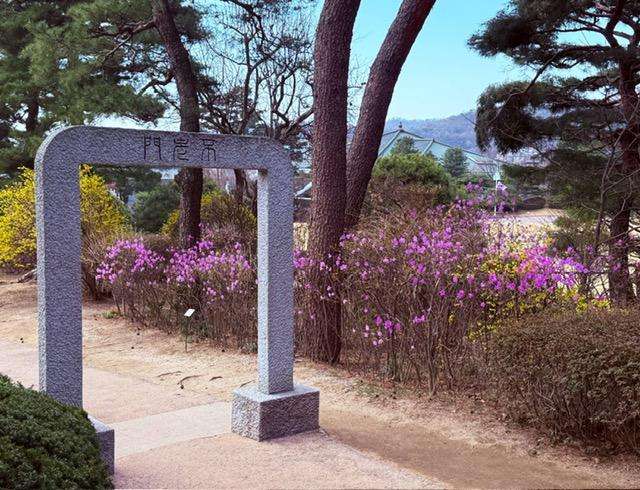
We loved the gate that claimed if you walked through it you would stop aging. It didn’t work.
Best Places to Visit in Seoul South Korea: #3 Korea’s National Museum
On day two of our visit to Seoul, we focused on the National Museum, which is a major world-class museum. The museum is the flagship museum of Korean history and art, located in Yongsan-gu, Seoul. Established in 1945, it houses over 310,000 pieces in its collection, with around 15,000 on display at any given time. The museum showcases artifacts from Korea’s prehistoric times to the modern era, including celadon pottery, paintings, and historical relics.
It offers free admission, and its operating hours vary: Monday, Tuesday, Thursday, Friday, and Sunday from 10:00 AM to 6:00 PM, while Wednesdays and Saturdays extend until 9:00 PM. Special exhibitions and educational programs are regularly held to engage visitors
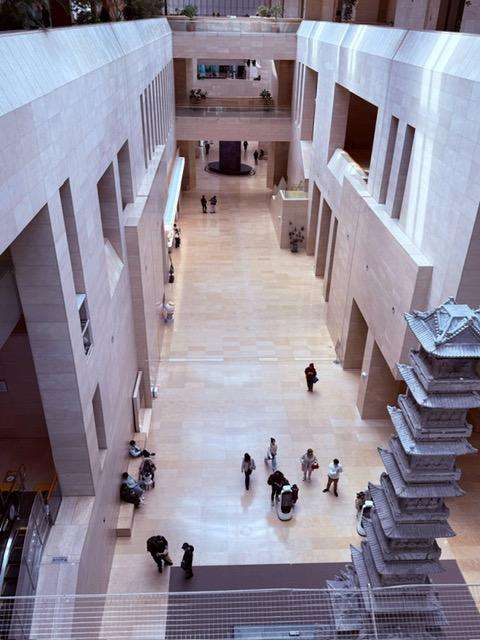
When we first entered we were met by the robotic docent.
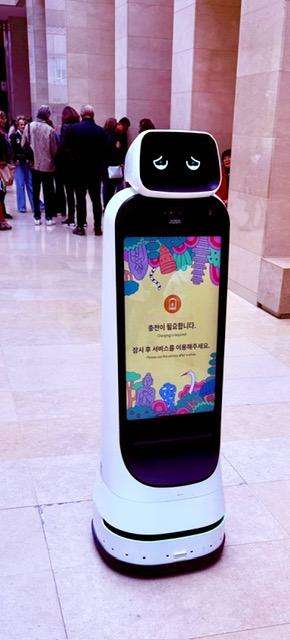
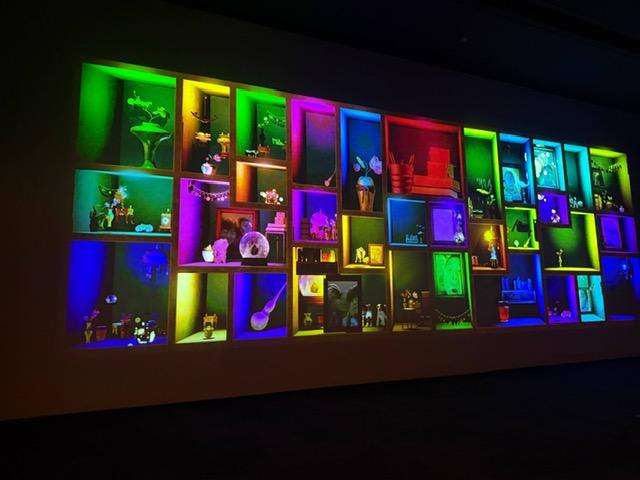
There were three or four of them that roamed the main floor. Children seemed to adore them. Keeping with South Korea’s focus on technology, the museum contained many immersive and technology driven exhibits. Here is one that we were able to manipulate:
History of Korea
The museum did a wonderful job of explaining the history of Korea. It started with prehistoric times, no dinosaurs, but plenty of prehistoric men and how they survived. We did see a few wooly mammoths. Buddhism was introduced into Korea in the 4th century and was a prominent religion for most of the next 1000 years.
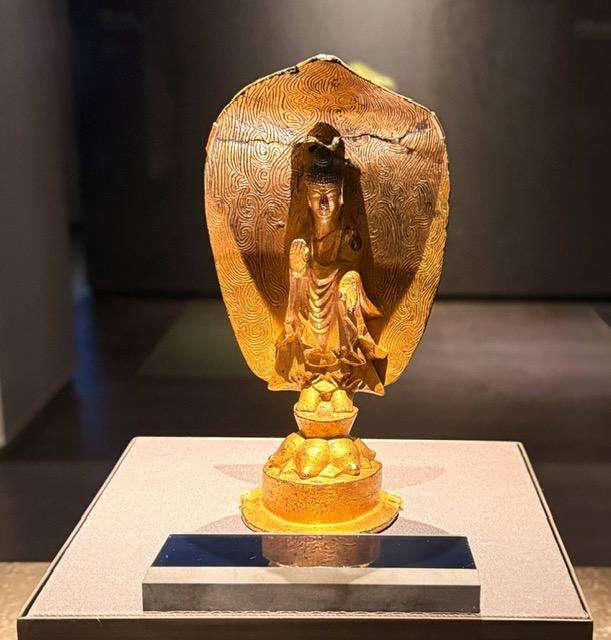
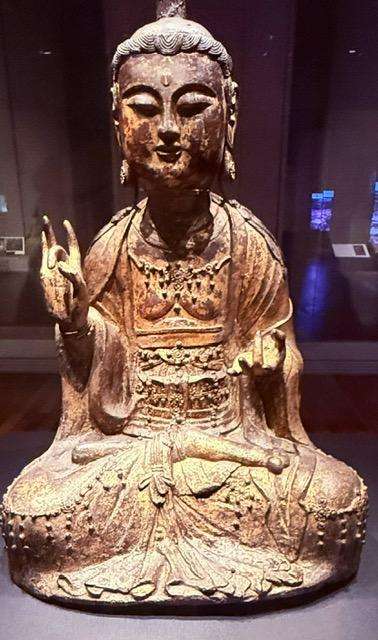
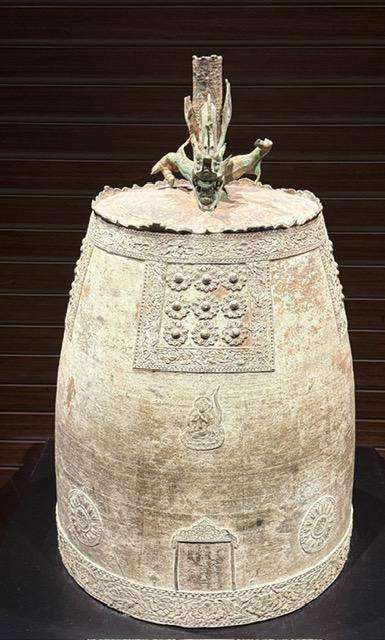
This bell from Buddhist times is beautiful:
The Joseon Dynasty
The museum also did a wonderful job in explaining the history of the Joseon Dynasty which ruled Korea for over 500 years (1392-1910). They built five grand palaces in Seoul a few of which we visited and we will discuss and provide details later.
However, the Joseon Dynasty did much to dampen the interest in Buddha. The Joseon’s were not follows of Buddha and instead worked hard to introduce Confucius beliefs into the Korean Society. This gave the scholars and missionaries who brought Christianity into Korea a window of opportunity. A big window, they ruled for over 500 years. This resulted in Korea being the one country in Asia where Christianity is the dominant religion.
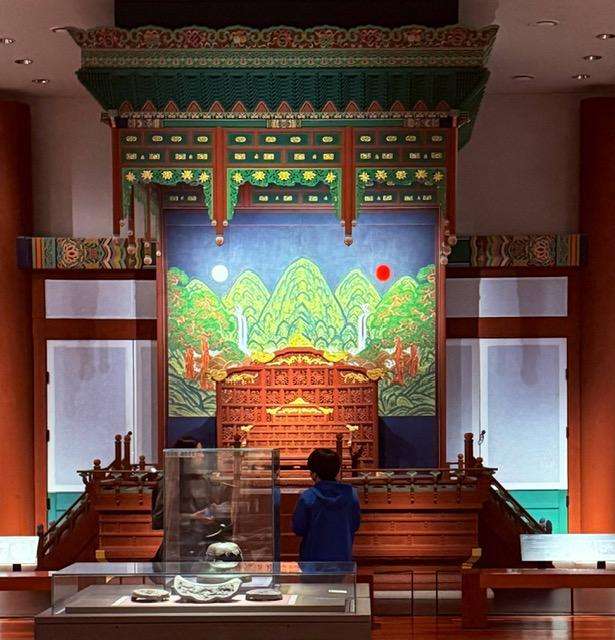
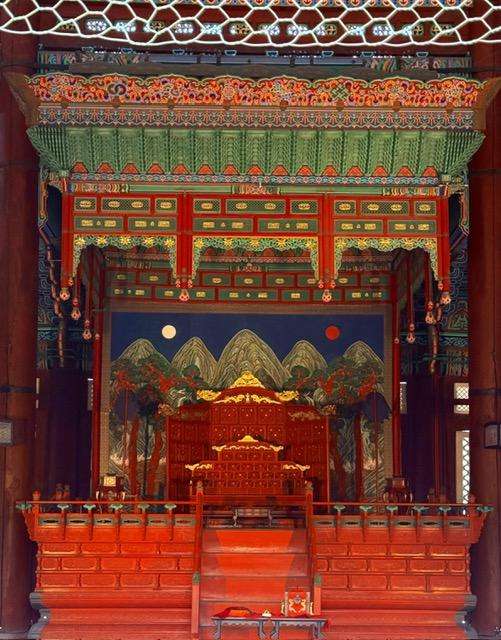
The museum had a number of exhibits that well represented the Joseon Dynasty. The following is a replica of the Emperor’s chambers. Pay careful attention to the painting on the back wall. You will see it again.
Best Places to Visit in Seoul South Korea: #4 Unique Street Art
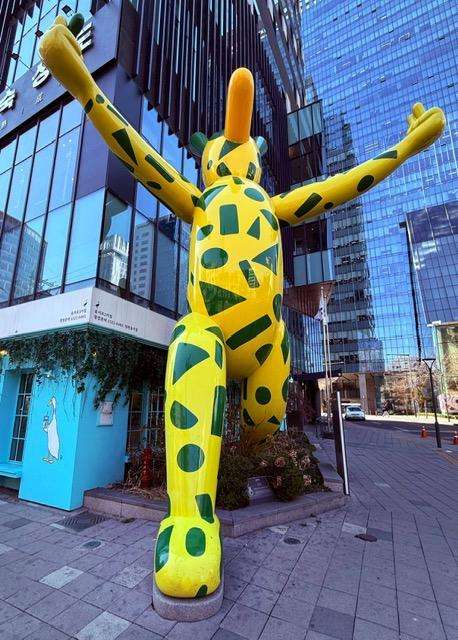
One thing that struck us as different was that in all our travels through the “Whispers of the Orient” Asian Tour there was very little street art in most of the countries, literally no graffiti. When we did come across street art it was usually of a unique style. This particular large statue is, we think, a giraffe.
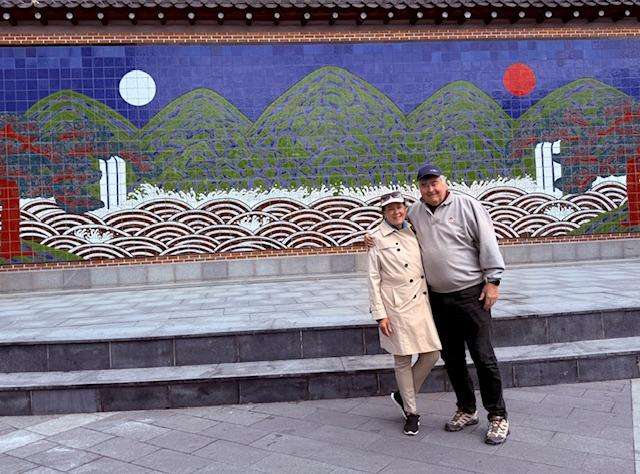
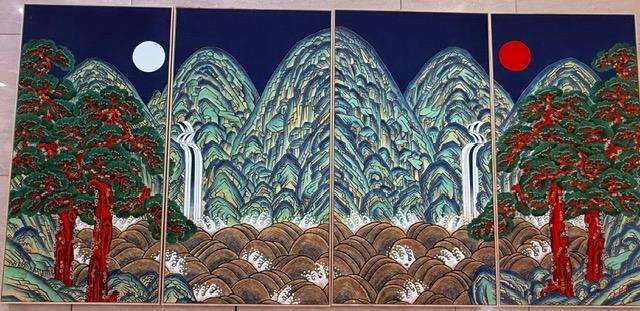
We did find a copy of the background scene to the Emperor’s suite which we have found in a number of places around the city. This was an outdoor stage which was used for performances and activities, e.g. Tai Chi. You might notice that we are somewhat warmly dressed, at least this was the best we had to combat the cold.
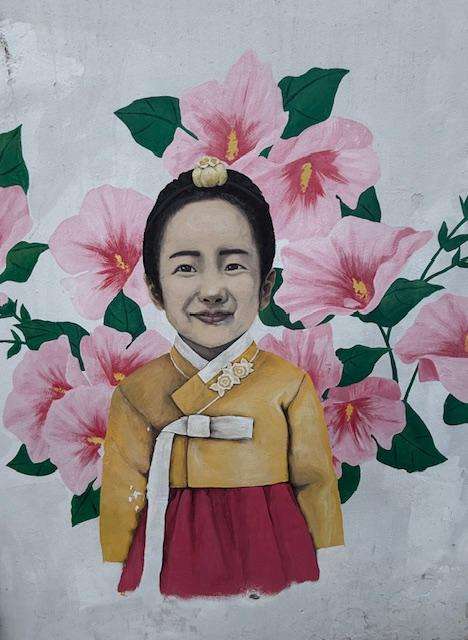
Also, we found this one painting on a wall that was very beautiful:
Best Places to Visit in Seoul South Korea: #5 The Five Grand Palaces of Seoul
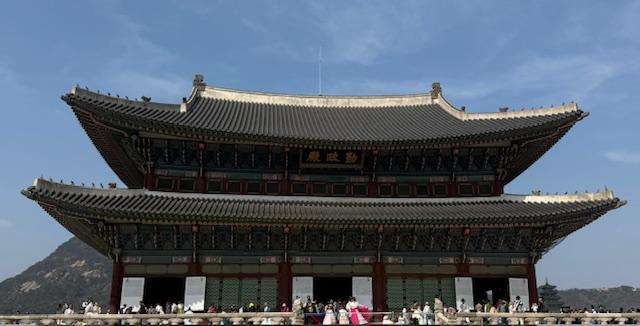
The five grand palaces of Seoul—Gyeongbokgung, Changdeokgung, Changgyeonggung, Deoksugung, and Gyeonghuigung—were built by the Joseon Dynasty, which ruled Korea from 1392 to 1910. These palaces served as the political and cultural centers of the kingdom, reflecting the dynasty’s commitment to Confucian principles and royal authority.
We visted Gyeongbokgung, the most significant palace. It was the first to be constructed after the capital was moved to Hanyang (modern-day Seoul). Over time, additional palaces were built to accommodate the changing needs of the royal family. They clearly has a lot of needs.
Changing of the Guard
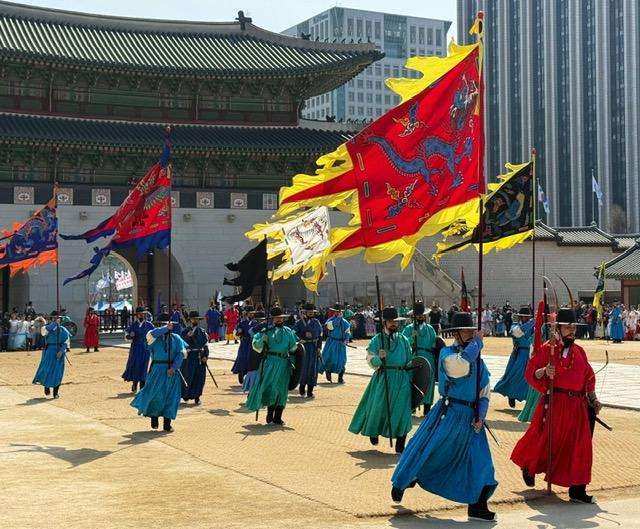
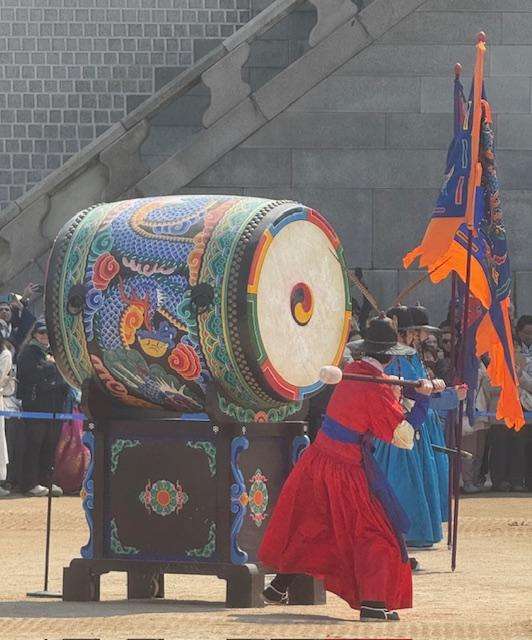
The highlight of our visit to the Gyeongbokgung Palace was the changing of the Royal Guard ceremony. It was very colorful.
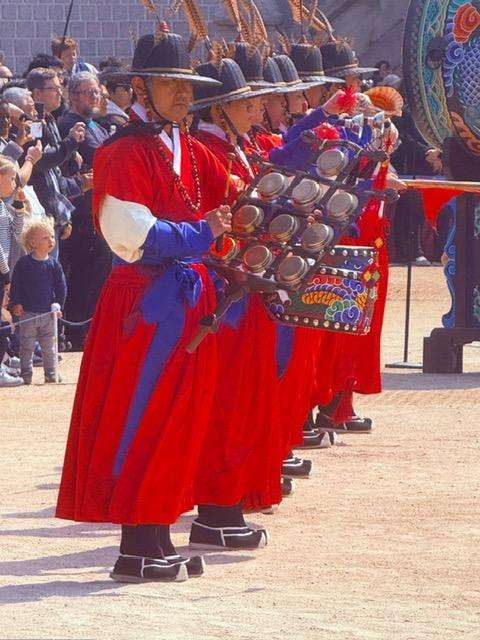
Perhaps, what was most impressive was the banging of the drum to start and finish the event. The drummer clearly took his job seriously. He can probably hit a golf ball a long way.
We would be remiss if we didn’t show you the real Emperor’s Chambers, all the other pictures and exhibits are simply replicas.
Oh, and for the record, here is one more copy of the background mountain scene that we found in the Ginseng Museum when we visited there. By the way, unless you really want to buy ginseng, you can pass up this museum, it is only about selling you ginseng.
Best Places to Visit in Seoul South Korea: #6 The War Museum
It would be remiss to discuss a visit to South Korea and not talk about the Korean War as well as all the other wars that Korea has faced over the years. Visiting the War Museum tells the full story.
First, being located at the tip of China, and a close mainland location to Japan, Korean’s have not only fought among themselves for many years, but fought the Chinese from the north and the Japanese from the east. The Joseon Dynasty did well to centralize the Korea into a common government for 500 years, but it ended in 1910 when the Japanese invaded and conquered the country.
Japanese control ended in 1945 with the end of WWII, and Korea was divided along the 38th parallel into North and South, since the Soviet Union influenced pushing the Japanese out of the northern part of the country and the U.S. did similarly in the South.
The Korean War
That separation lasted peacefully until 1950. The Korean War began on June 25, 1950, and ended with an armistice on July 27, 1953. It lasted just over three years.
The war started when North Korea, backed by the Soviet Union and China, invaded South Korea across the 38th parallel. This was driven by North Korea’s goal of reunifying the peninsula under communist rule. United Nations forces, led by the United States and 21 other countries, intervened to support South Korea, viewing the conflict as part of the broader Cold War struggle against communism.
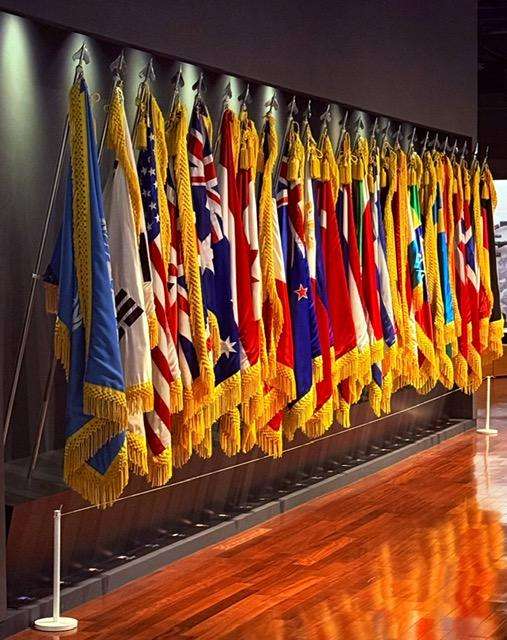
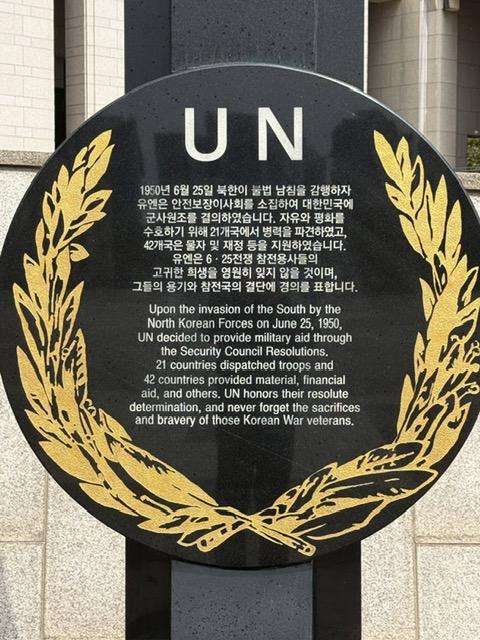
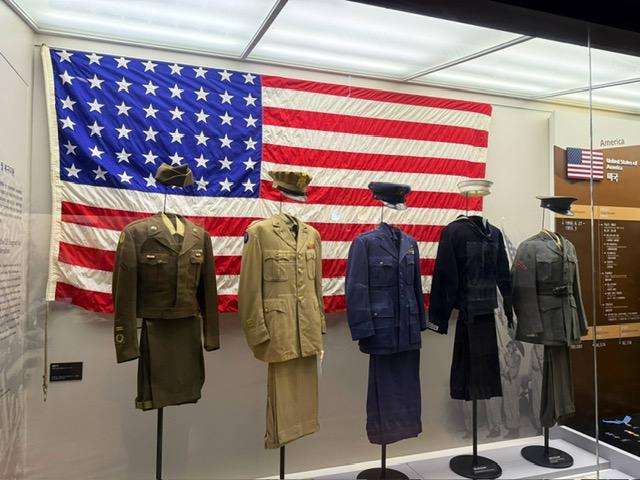
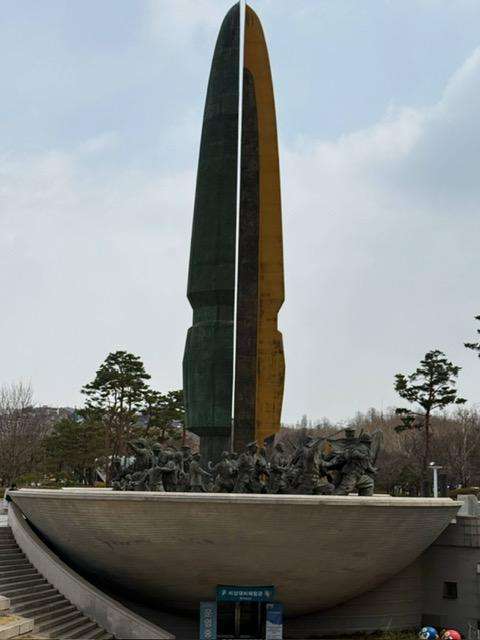
There are plenty of replicas of the weapons of the war, including tanks and large planes, and statues of soldiers charging the enemy;
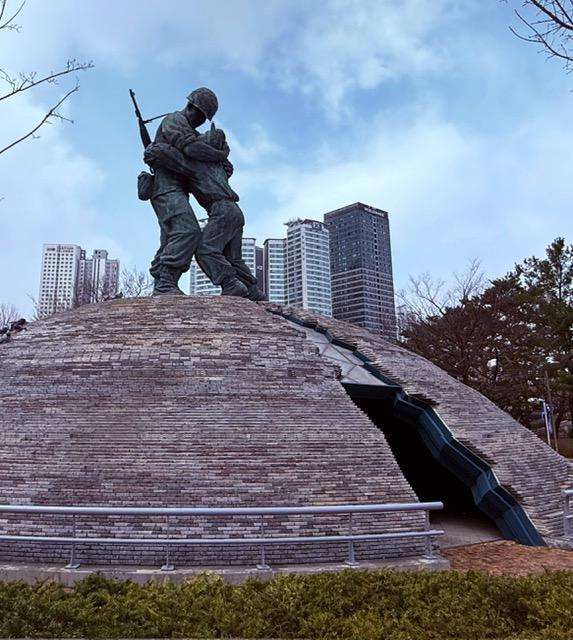
But what is most impactful from the museum are the memorials for those who gave up their lives defending the country,
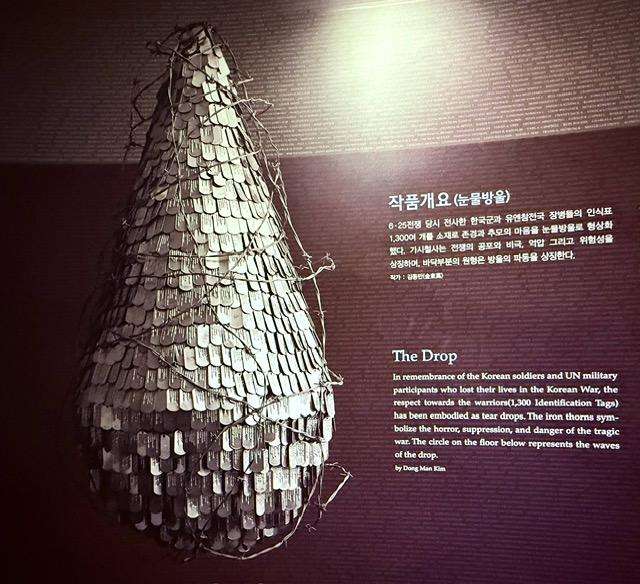
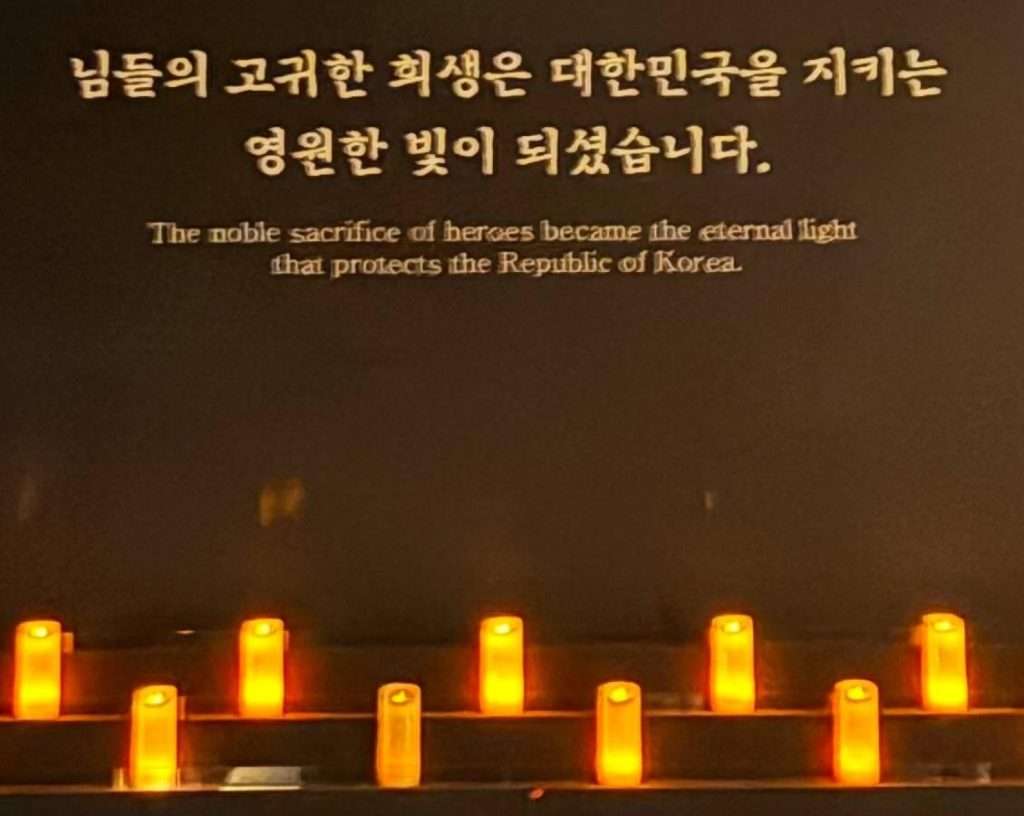
And the relationships caused by the split between Koreans in the North and the South. The first picture depicts an older brother from the South, embracing his younger brother from the North.
Best Places to Visit in Seoul South Korea: #7 Art and Design in Korea
Seoul and South Korea promotes a reputation as being design experts. This is most evident at the Dongdemun Design Plaza (DDP), a unique building in the heart of the city. The Dongdaemun Design Plaza (DDP) is a major cultural and architectural landmark in Seoul, South Korea. Designed by the renowned architect Zaha Hadid, it features a neofuturistic design with curving, fluid structures that make it one of the most visually striking buildings in the city.
Opened in 2014, DDP serves as a hub for fashion, design, and exhibitions, hosting events like Seoul Fashion Week and various international art showcases. It also includes a museum, design store, and rooftop park, making it a must-visit destination for both tourists and locals.
Located at 281 Eulji-ro, Seoul, DDP is easily accessible via the Dongdaemun History & Culture Park Station on Seoul Subway Lines 2, 4, and 5
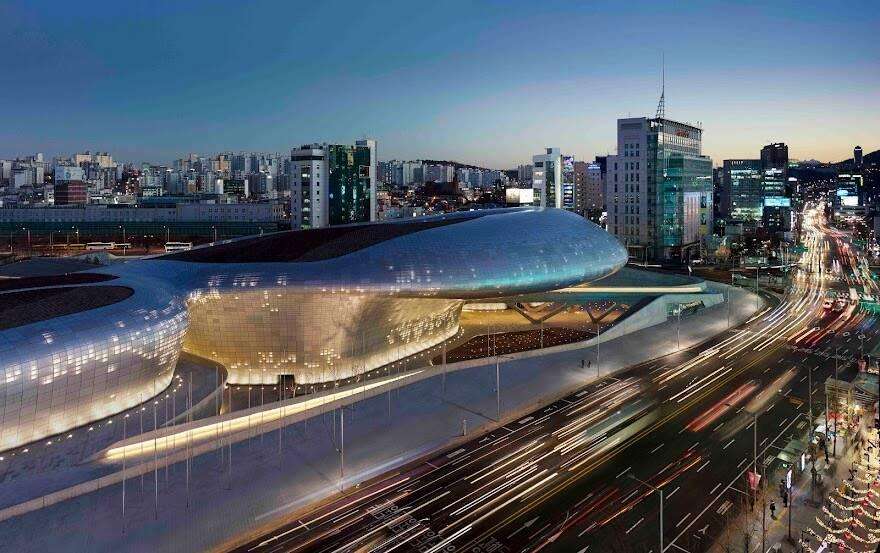
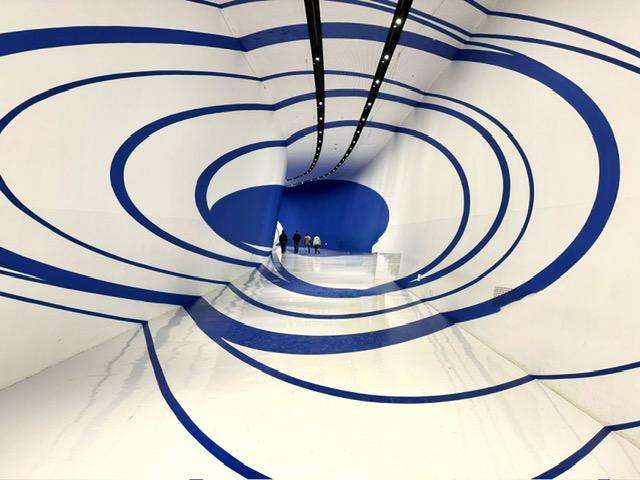
Walking through the building there are plenty of examples of unique design styles. We were most impressed by the art work in the Design Plaza’s circular walkway, actually much more impressive than walking around the circular walkway in the Guggenheim Museum in New York City. For more information about NYC’s Guggenheim Museum please see our post “31 Unique and Cool Museums in NYC”.
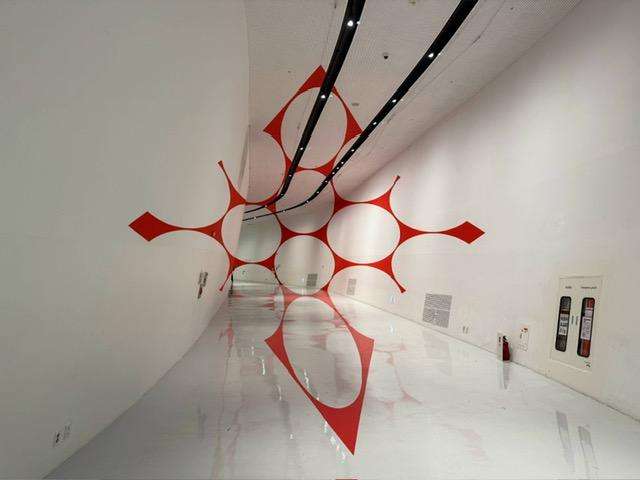
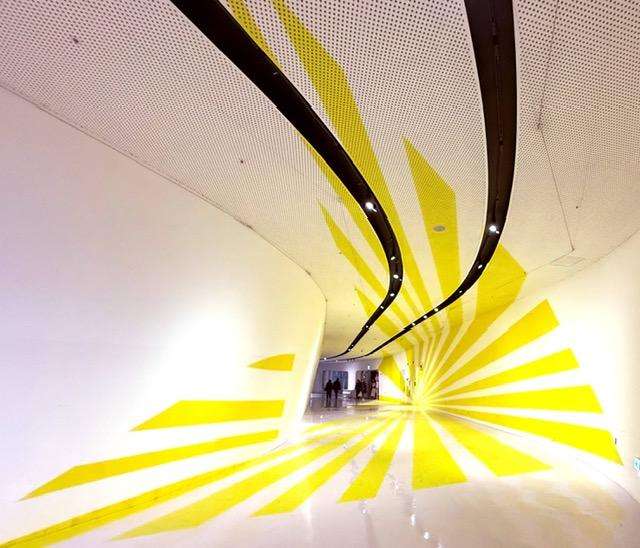
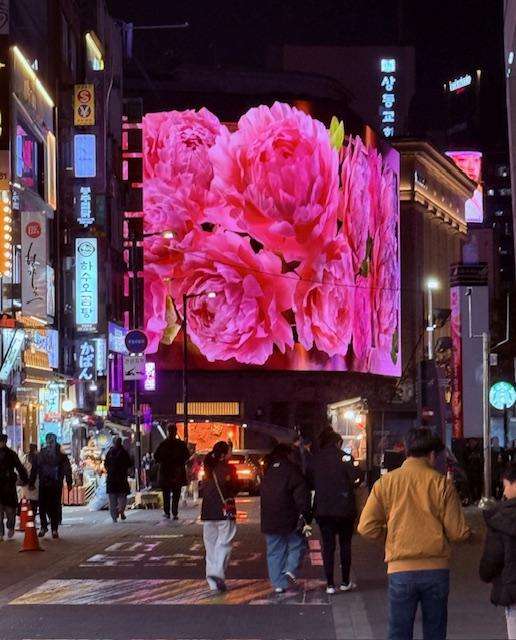
Here are other examples of unique art and design from Korea why are visible in Seoul. The large circular screen showing the flowers on the street in Myeong-dong, where we stayed, in reminiscent of Times Square in New York City.
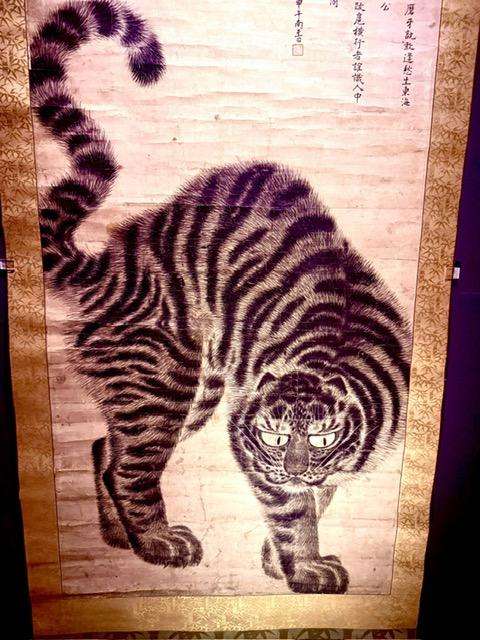
Tigers: Familiar Art in South Korea
Tigers hold a deep cultural significance in South Korea, appearing in folklore, art, and even the nation’s founding myth. The Siberian tiger, also known as the Korean tiger, was once native to the Korean Peninsula but is now extinct in the wild in South Korea due to hunting and habitat loss. Despite their absence, tigers remain a symbol of strength and protection in Korean culture. The Siberian tiger is South Korea’s national animal, and conservation efforts continue in neighboring regions like Russia, where the species still survives.
Best Places to Visit in Seoul South Korea: #8 Myeong-dong
Myeong-dong is one of Seoul’s most famous shopping and tourism districts, known for its fashion, cosmetics, and street food. Located in Jung District, it’s a bustling area filled with department stores, boutiques, and international brands. Visitors flock to Myeong-dong for its vibrant street food scene, offering delicacies like Korean fried chicken, tteokbokki (spicy rice cakes), and hotteok (sweet pancakes). The area is also home to Myeong-dong Cathedral, a historic landmark, and Myeong-dong Theater, which hosts performances.
Shopping enthusiasts can explore Noon Square, Lotte Department Store, and Shinsegae Department Store, along with numerous Korean and international fashion brands. We stayed in Myeong-dong during our five days in Seoul and we really enjoyed the central location it provided to some of the “Best Place to Visit in Seoul South Korea.”
Incheon South Korea, the Gateway to Seoul
On our last day in South Korea, before we bordered our cruise ship to return to Tokyo, we moved our base of operations over to Incheon. We call Incheon, the Gateway to Seoul, because if you fly or cruise to Seoul, you will first past through Incheon, as both the airport and cruise port are located there.
Unfolded: Why Incheon, South Korea is Important
- Historical Significance: Incheon played a key role in Korea’s modernization, opening its port in 1883 to international trade. It was also the site of the famous Incheon Landing Operation during the Korean War, which helped turn the tide of the conflict.
- Economic Powerhouse: Incheon is home to South Korea’s first free economic zone, attracting major global companies, including Samsung.
- Major Transportation Hub: Incheon International Airport is one of the busiest and most advanced airports in the world, making it a gateway to Northeast Asia.
We stayed in the Songdo area of Incheon South Korea which is a modern planned city built on reclaimed land. It is officially known as Songdo International Business District (Songdo IBD), and is a planned smart city built on 600 hectares of reclaimed land along Incheon’s waterfront. It was designed as a high-tech, eco-friendly urban hub, incorporating smart infrastructure, green spaces, and sustainable development. The project began in the early 2000s and was largely completed by 2015, though development continues.
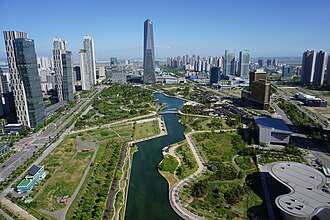
The Incheon National University (INU), Incheon, South Korea—formerly known as the University of Incheon—is located in Songdo International Business District. INU is home to approximately 13,000 students, offering a diverse academic environment with a focus on global education, research, and innovation.
Golf in South Korea
Golf in South Korea is thriving with over 800 golf courses across the country. Golf is incredibly popular, and many courses offer stunning landscapes, from coastal cliffs to mountainous terrain.
Top Golf Courses in South Korea
- The Club at Nine Bridges – Located on Jeju Island, this exclusive club is one of Korea’s most prestigious courses.
- South Cape Owners Club – A breathtaking cliffside course on Namhae Island, designed by Kyle Phillips.
- Jack Nicklaus Golf Club Korea – A championship-level course in Songdo, known for hosting international tournaments.
- Whistling Rock Country Club – A scenic and challenging course with dramatic elevation changes.
- Pinx Golf Club – Another Jeju Island gem, offering beautiful ocean views and a top-tier golfing experience.
Golf Culture in South Korea
- Popularity: Golf is a status symbol in Korea, with many private clubs requiring memberships.
- Screen Golf: Due to limited space, indoor golf simulators are widely used, making golf accessible year-round.
- Tournaments: South Korea has produced world-class golfers, including Park Sung-hyun, Ko Jin-young, and Kim Si-woo. Many female golfers from South Korea dominate the LPGA tournaments.
Jack Nicklaus Golf Club Incheon South Korea
Next door to the Incheon National University, is the Jack Nicklaus Golf Club of Korea. It is one of the best places to play golf in South Korea.
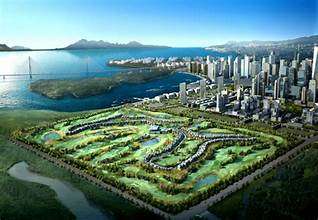
The course was designed by Jack Nicklaus, one of the greatest golfers in history, and his team. It features an 18-hole championship layout that spans over 7,400 yards, offering a challenging yet rewarding experience.
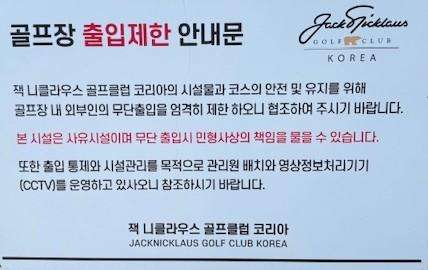
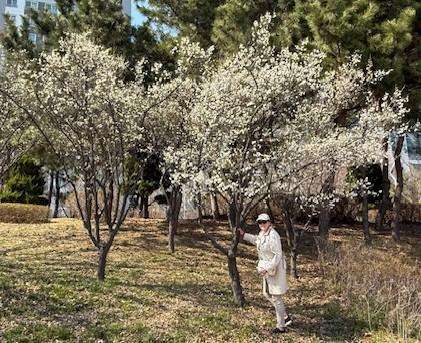
We walked the periphery of the Jack Nicklaus Golf Club In Incheon searching for the main gate which we never found. However, we did find some beautiful cherry trees.
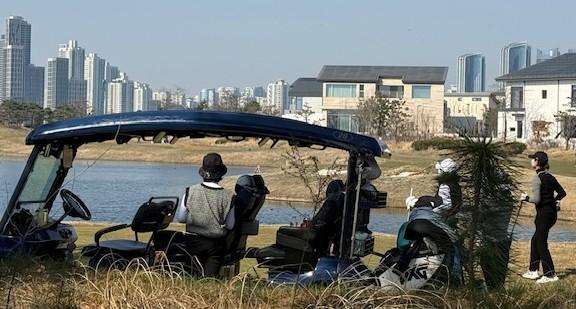
We did find some golfers on the course. They had a truly modern and fancy golf cart.
In 2015, the Jack Nicklaus Golf Club Incheon was the first golf course in Asia to host the President’s Golf Tournament. The American team beat the International Team by one point marking the 6th sequential win for the American Team.
Conclusion
In conclusion, exploring the vibrant city of Seoul is truly a unique and rewarding experience that should be on everyone’s travel bucket list. From its rich culture and history to its modern and futuristic vibes, Seoul offers something for every traveler. As we’ve discussed, the city has so much to offer, from delicious street food and dynamic shopping to breathtaking architecture and stunning natural scenery.
As we departed Seoul and Incheon South Korea, we were impressed with the port as viewed from the cruise ship, providing us further desire to return someday in the future.
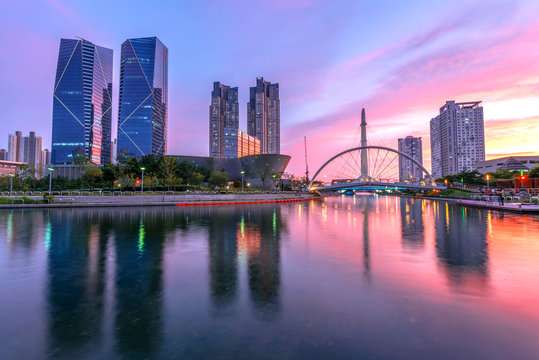
So why wait? Book your trip to Seoul and see for yourself why it’s a must-visit destination. As the saying goes, “The world is a book and those who do not travel read only one page.” And in the words of travel icon Anthony Bourdain, “Open your mind and get ready to be blown away.”
Happy travels.
Travel smarter, dine better and explore deeper: we’d love to share our handpicked insights and exclusive guides in our monthly newsletter below.
0 Comments