

Contents
- 1 Best Time to Go to Hokkaido Japan: Sapporo (Otaru) & Hakodate
- 2 Best Time to Go to Hokkaido Japan Depends on Weather
- 3 Are the Winter or Summer Seasons the Best Time to Go to Hokkaido Japan?
- 4 Trips to Hokkaido Japan: Our Itinerary
- 5 Northern Japan Cities: Sapporo (Otaru)
- 6 Back on the Ship, Celebrating our Anniversary
- 7 Trips to Hokkaido Japan: Hakodate
- 8 Best Time to Go to Hokkaido Japan: Time to Be Leaving on our Cruise Ship
- 9 Conclusion
Best Time to Go to Hokkaido Japan: Sapporo (Otaru) & Hakodate
If you are wondering when the “Best Time to Go to Hokkaido Japan” is, you have come to the right place. This post will tell you about the “Best Time to go to Hokkaido Japan,” and provide surprising information about the cities of Sapporo (Otaru), and Hakodate.
The climate of Hokkaido, Japan, is much colder than the rest of Japan. We visited in early April, and it was still bitterly cold—no sign of the famous Sakura, the Cherry Blossoms. Nevertheless, the two northern Japanese cities we visited, Otaru and Hakodate, both had incredible stories. Hopefully, you will find them as interesting as we did and plan a visit on your next trip to Japan.
Map of Northern Japan
This map of Northern Japan focuses on both Hokkaido Island and the Tohoku region on Honshu. In early April 2025, we visited the Northern Japan Cities of Sapporo (Otaru) and Hakodate on Hokkaido and Akita in the Tohoku region on Honshu. However, please visit our separate post on Akita to hear about that city, we are going to focus on the “Best time to go to Hokkaido Japan” in this post.

Best Time to Go to Hokkaido Japan Depends on Weather
Hokkaido is the northernmost island of the four main islands that make up the core of Japan. The Hokkaido Island Japan climate is a humid continental climate with pleasant, warm summers and very cold winters. As a result, the best time to go to Hokkaido Japan will vary based on what you plan to do. Here’s a quick breakdown of its seasonal weather:
Hokkaido in Winter (December–February)
Expect heavy snowfall, especially in high-altitude areas. Hokkaido is a winter wonderland. Temperatures can drop as low as -12°C (10°F). This is Perfect for skiing and hot springs. Heavy snowfall creates ideal conditions for winter sports, and the famous Sapporo Snow Festival takes place.
Hokkaido in Spring (March–May)
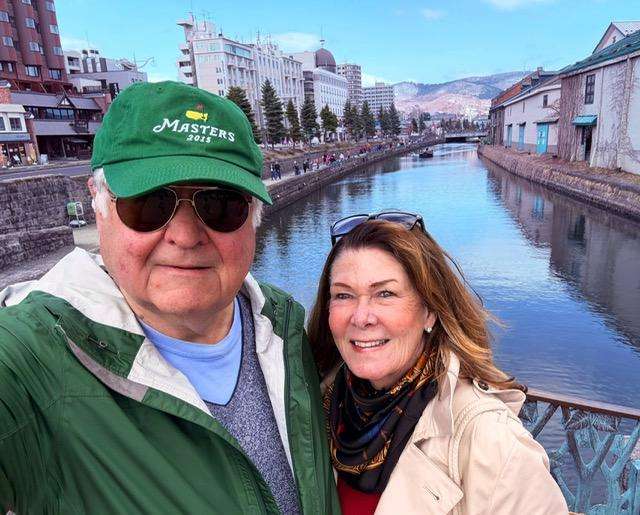
You will find cool temperatures, with cherry blossoms blooming later than in the rest of Japan. You can catch the cherry blossoms in late April. We visited in early April, and from the picture below you can get a sense of the cooler weather.
Hokkaido in Summer (June–August)
Unlike other Eastern Asian countries, Northern Japan in the Summer is pleasant and monsoon-free, with temperatures ranging from 15°C to 25°C (59°F to 77°F). Lavender fields in Furano are a highlight. This is the best time for outdoor activities like hiking and sightseeing.
Hokkaido in Autumn (September–November)
Once again, you will encounter cooler temperatures with vibrant Autumn foliage. Hokkaido has some of Japan’s earliest autumn colors, making it a beautiful time to visit. September is the wettest month. However, the Hokkaido Island Japan climate largely escapes typhoon season, making it a great destination year-round.
Are the Winter or Summer Seasons the Best Time to Go to Hokkaido Japan?
Hokkaido is a year-round destination, but the best time to go to Hokkaido Japan depends on what you want to experience. If you enjoy skiing and snowboarding then the winter months are a perfect time to visit. However, if you prefer mild temperatures, then either the spring of fall will be a better choice. If you’re looking for mild weather, July, October, and February are actually great choices. .And finally, if you are a lover of the outdoors and you enjoy hiking and other summer activities, we suggest you visit anytime between June and August.
Trips to Hokkaido Japan: Our Itinerary
The two towns that we planned to visit on the Island were Sapporo and Hakodate. We were able to visit Hakodate. However, on the west coast our cruise ship docked in the town of Otaru. Sapporo is inland and an hour-plus drive from the port. Given our decision to limit the number of all-day excursions that we were doing on this cruise, we opted for the shorter three-hour tour around Otaru which was superb. Unfortunately, Sapporo will remain on our bucket-list.
Best Way & Best Time to Go to Hokkaido Japan
Hokkaido, Japan’s northernmost island, is accessible by several travel options depending on your preference for speed, cost, and experience. Here are the best ways to take trips to Hokkaido Japan:
- By Air: The fastest and most convenient way is flying into New Chitose Airport (CTS) near Sapporo. There are direct flights from Tokyo (Haneda/Narita), Osaka, and even international cities like Hong Kong, Seoul, and Taipei.
- By Train: The Hokkaido Shinkansen connects Tokyo to Hakodate via the undersea Seikan Tunnel. The journey takes about 4 hours to Hakodate, and further train connections can take you to Sapporo. Travel around Japan is easiest taking the Shinkansen Bullet train. Foreign visitors can purchase a Japan Rail Pass which is a great way to take the train and save some money.
- By Ferry: If you prefer a scenic route, ferries operate from Aomori and Niigata to ports in Hokkaido, such as Tomakomai and Hakodate.
- By Car: You can drive from Honshu to Hokkaido via ferry services that allow vehicles, but this is a longer and more adventurous option.
- By Cruise Ship: This is how we got to visit the Island. However, very few cruise ships find the best time to go to Hokkaido Japan. Also, if Sapporo is your desired location to visit, the trip from Otaru where the ships dock to Sapporo is over an hour drive.
Each method offers a unique experience, whether you want speed, scenery, or adventure. Which one sounds best to you?
Northern Japan Cities: Sapporo (Otaru)
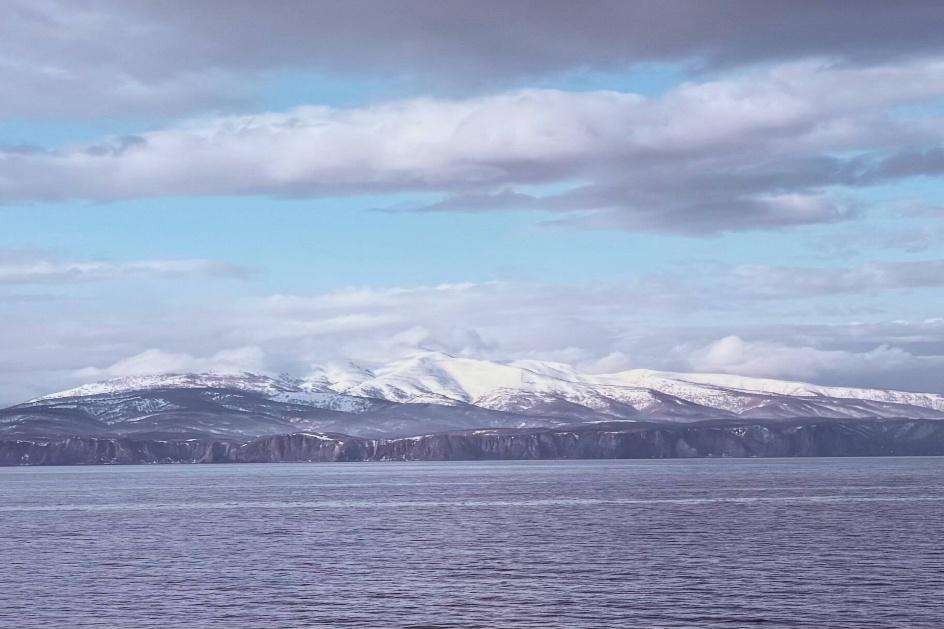
Two of the Northern Japan cities, Otaru and Sapporo, are on the western side of Hokkaido Island. They are located in a very wintery climate as should be clear from some of our pictures which were taken in early April. Unfortunately, Cherry Blossom blooms had not yet started in these locations.
Best Time to Go to Hokkaido Japan: Winter Festivals
Sapporo, the better known of the two Western cities, is probably best known for its eponymous beer. Sapporo. the capital of Hokkaido, Japan’s northernmost island—has maintained the youthful and open atmosphere of the 1972 Olympic Winter Games, drawing international visitors for its annual Snow Festival and its world-famous ramen. Those seeking out the full diversity of Japanese cuisine will want to visit. Sapporo is a city with a ramen-inspired theme park, and embraces and pampers foodies.
Trips to Hokkaido Japan: Otaru Japan Attractions
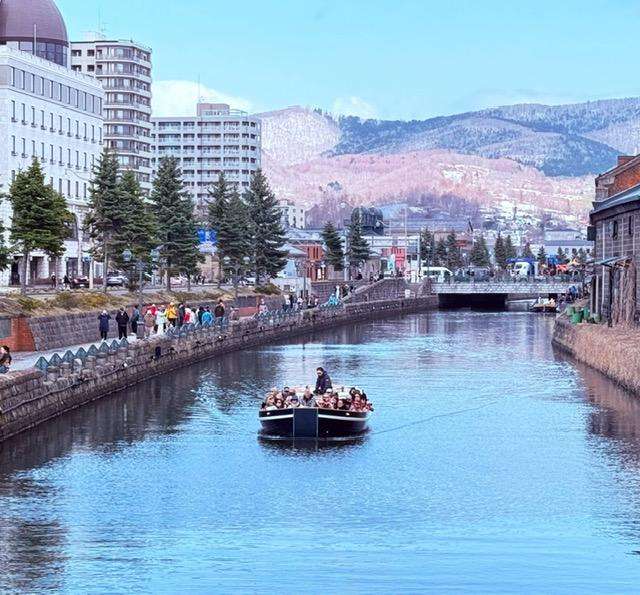
The City of Otaru has a beautiful port which is where our ship docked. You can literally walk a block or two, and you are in the heart of the city. The main attraction in the city is the market street and the canal.
There is also a ski resort which is a short drive from the city. The more well known ski resort is in Sapporo.
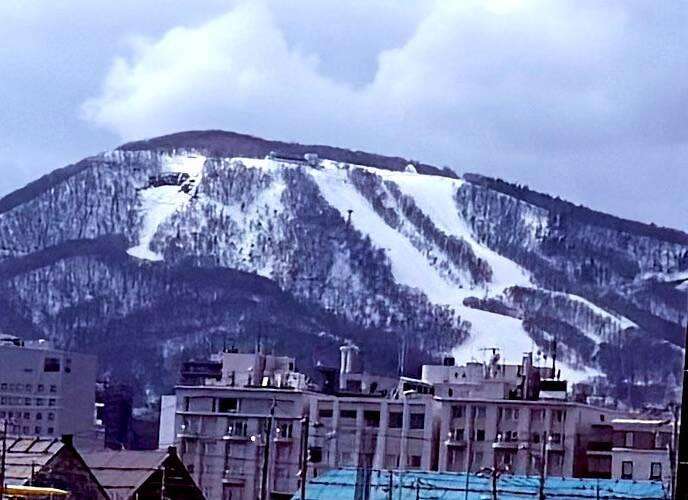
Otaru is clearly a city that is focused on tourism, either cruisers like ourselves, or skiers.
Why Visit Otaru
Otaru, Japan, is a charming coastal city in Hokkaido known for its romantic ambiance, rich history, and delicious food. It is also an entry point to visit Sapporo. Here are a few reasons why it might be worth a visit:
- Otaru Canal: This iconic canal is on of the best Otaru Japan Attractions; lined with old warehouses and gas lamps, it offers a picturesque setting both during the day and night. It’s especially beautiful when lit up in the evening. The top picture in this post is of Robin and Cos in front of the canal.
- Glassware and Music Boxes: Otaru is renowned for its intricate glass crafts and music boxes. The Otaru Music Box Museum is a delightful spot to explore.
- Fresh Seafood: Being a port town, Otaru is a haven for seafood lovers. The sushi here is incredibly fresh, and you’ll find plenty of seafood markets and restaurants to enjoy.
- Sakaimachi Street: This historical street is perfect for a leisurely stroll with its preserved architecture, boutiques, cafes, and souvenir shops.
- Skiing and Nature: In winter, Otaru offers access to great ski resorts. During other seasons, the surrounding mountains and coastline provide stunning scenery and outdoor activities.
- Festivals and Events: The Otaru Snow Light Path Festival in February is a magical experience, with candlelit lanterns and snow sculptures illuminating the city.
Otaru Japan Attractions: Sakaimachi Street
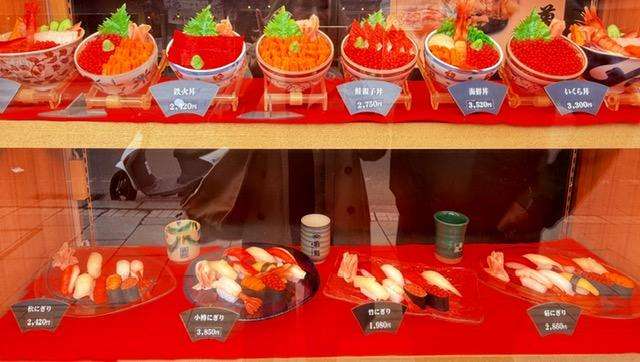
One of the best Otaru Japan attractions is Sakaimachi Street. It is just two blocks from the cruise port and is a wonderful shopping street in the center of town. There were a number of restaurants selling what appeared to be very fresh sushi. Robin was very impressed with the salmon caviar.
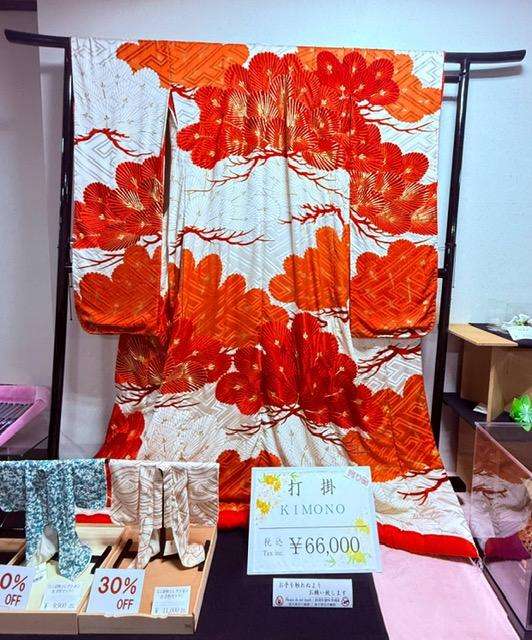
We ran across a place selling Kimonos. This particular one was a steal for 66,000 yen, or $446 in US dollars.
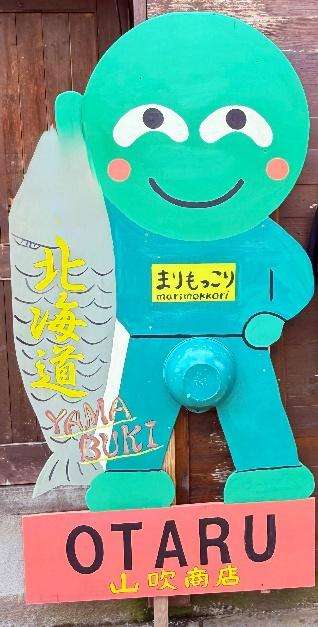
We are not good souvenir shoppers, so we stocked up on tooth paste and cough drops at the pharmacy. This friendly figure was the meeting point for our shopping spree.
Otaru Japan Attractions: The Home of the Aoyama Family
After our walk along Sakaimachi Street our excursion took us to the Old Aoyama Villa.
The Aoyama family was one of the leading herring fishing tycoons in Otaru, Hokkaido, Japan, during the Taisho era. They amassed great wealth through the herring trade and built the Old Aoyama Villa, a lavish residence showcasing exquisite craftsmanship and artistic design. At one point they had hundreds of fishermen working for them. The house was very large by Japanese standards, and was very artistically designed.
The villa, constructed over six years, features handmade glass panes, intricate woodwork, and original paintings. It now serves as a historical site and restaurant, offering traditional herring cuisine. The Aoyama Family Structures for Herring Fishing in the Historical Village of Hokkaido also provide insight into their fishing operations and lifestyle.
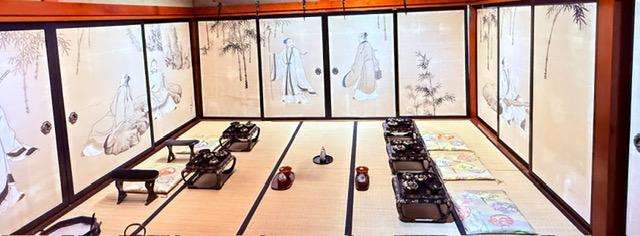
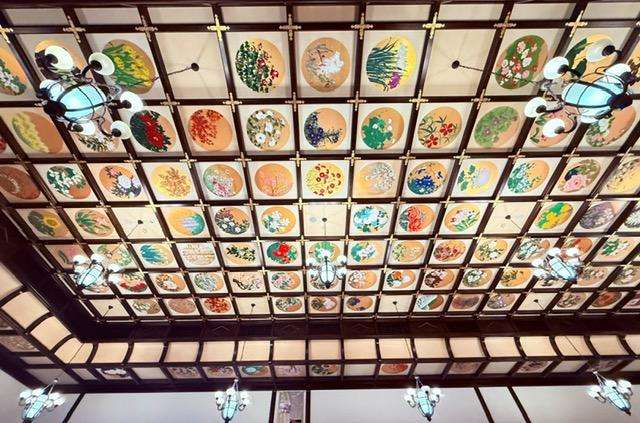
Here are pictures from some of the beautiful rooms in the villa.
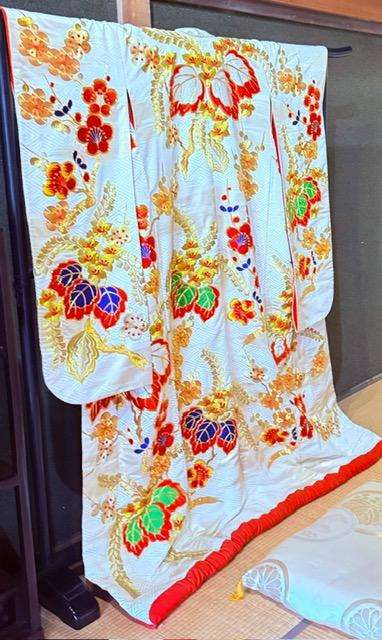
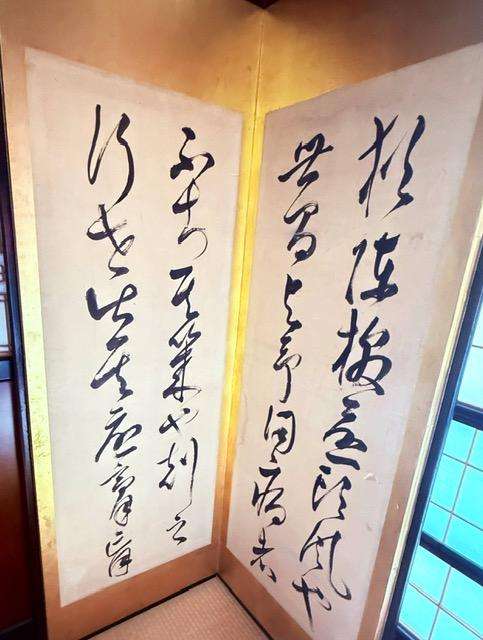
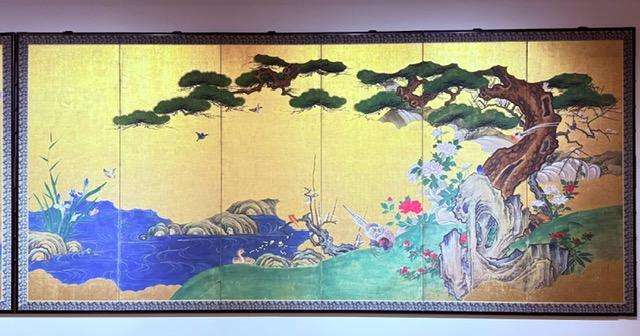
The tea room and the ceiling were particularly attractive.
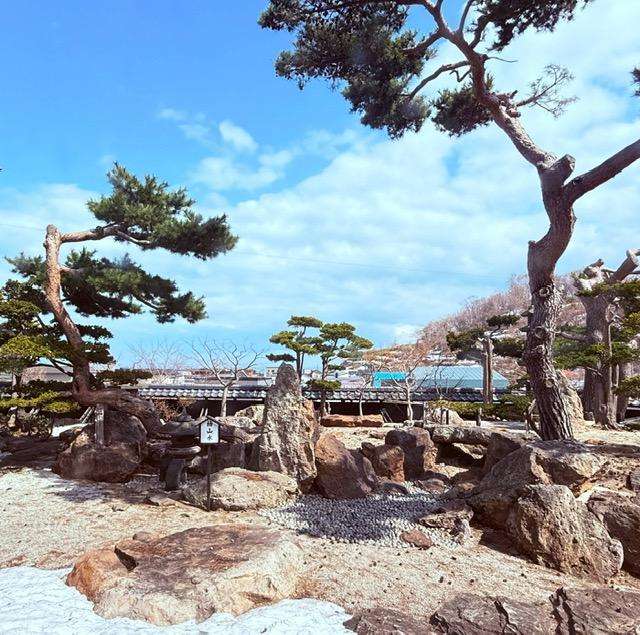
Since we visited in early April, plants had not started growing, but the garden clearly looked like it had potential.
Back on the Ship, Celebrating our Anniversary
We got back on our ship, and had an anniversary celebratory drink on the stern. We had a grand view of the ship’s flag and the Port of Otaru.
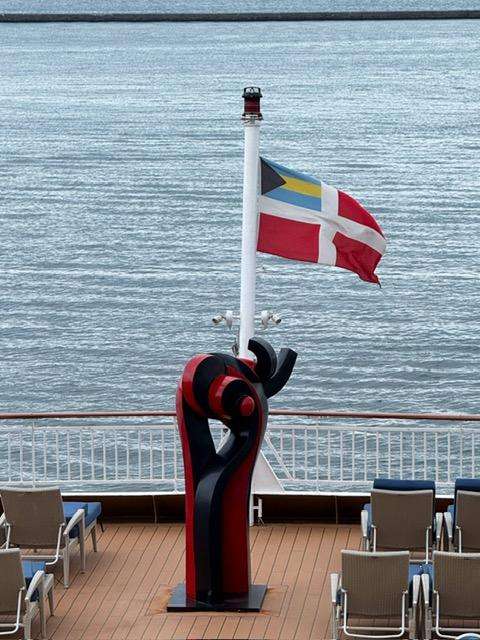
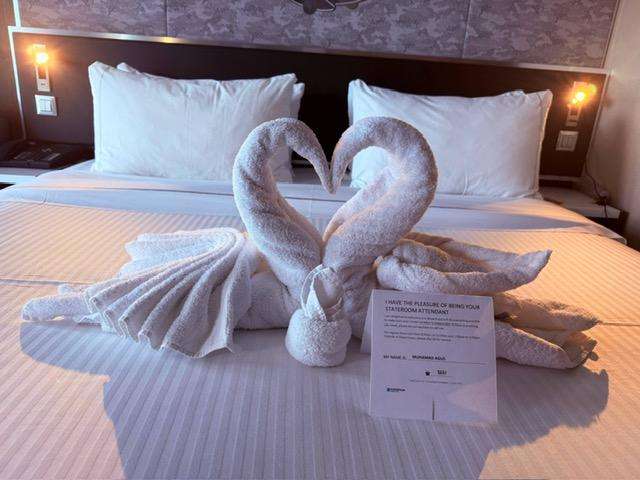
Okay, maybe it was just the ships flag which contains a small Bahamas insignia on the top left side of the Norwegian Flag. Anyway, our room steward had prepared a nice surprise for us when we returned to our room.
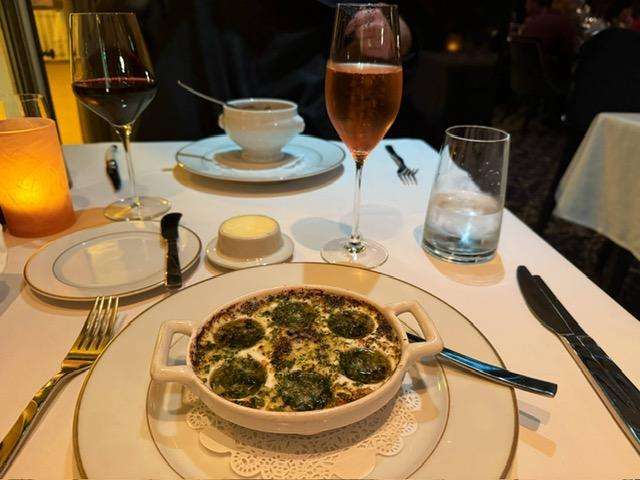
That night we had a wonderful, romantic dinner in the Le Bistro Restaurant. Robin was having escargots and Cos was having onion soup. Tres French!
Trips to Hokkaido Japan: Hakodate
The next day our cruise ship stopped in Hakodate also on the northern island of Hokkaido. Hakodate is a small city, but is famous as being the first port to open up to trading with the rest of the world after Japan’s period of Isolation.
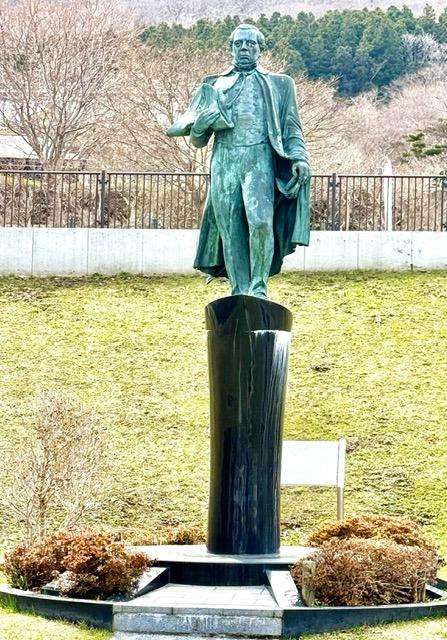
Commodore Perry is recognized as the person who forced Japan to open up after the long period of isolation. He visited Hakodate after sailing with four war ships into Tokyo Bay. The people honor him for helping modernize the country and for visit Hakodate.
Japan’s Isolation
Previously, Japan had isolated itself from the rest of the world, for over 200 years. Japan’s period of isolation, known as Sakoku, lasted from 1639 to 1853 during the Edo period under the Tokugawa shogunate. This policy restricted foreign trade and relations, allowing only limited contact with the Dutch, Chinese, and Koreans through designated ports like Nagasaki.
The isolation was driven by several factors:
⦁ Fear of Western Influence: The Tokugawa shogunate viewed Christianity, introduced by European missionaries, as a threat to its rule. This led to the persecution of Christians and the banning of the religion.
⦁ Political Stability: After years of feudal warfare, the shogunate sought to maintain internal peace and prevent foreign interference.
⦁ Economic Control: Limiting foreign trade allowed the shogunate to regulate commerce and protect Japan’s economy.
The policy ended when Commodore Matthew Perry’s expedition forced Japan to open its borders to Western trade in 1853, and a peace treaty was signed between the United States and Japan the following year.
Touring Hakodate
Hakodate is a relatively small city as it is surrounded by water and the mountains, limiting the area for growth. However, despite its smaller size we did find some fun things to do.
Morning Market
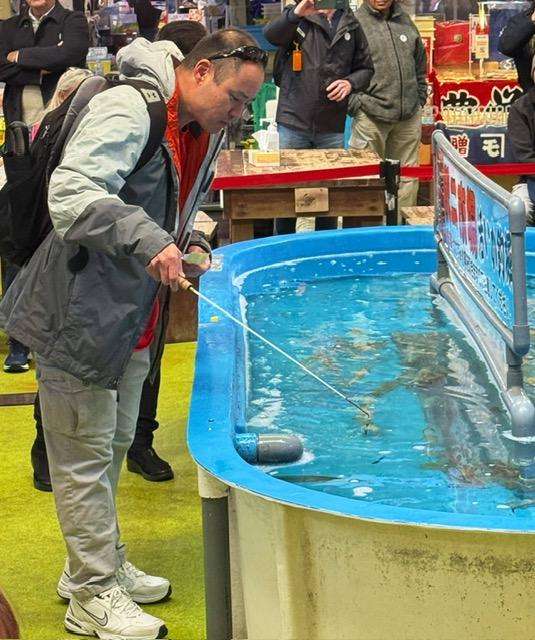
The first place we visited was the morning market. We made a quick walk around the market which was located very close to the cruise port. Most of the major places we visited in Hakodate, like the morning market, can be easily reached. Taking an excursion tour like we did, is not necessary to see the sights. The market is unusual because of the wide assortment of sea food and the way it is offered to the public. The first interesting place we saw is where you fish for your meal in this squid tank.
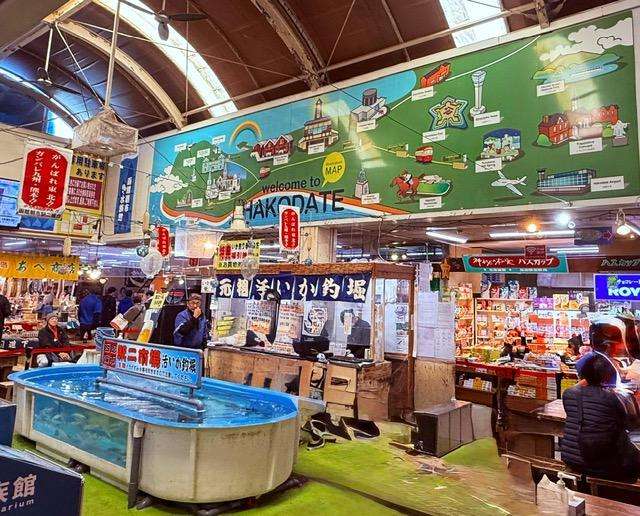
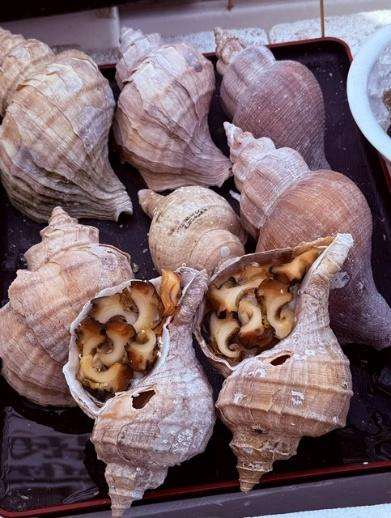
Whelks were another item that were readily available, and the crabs were anxious to escape their doom.

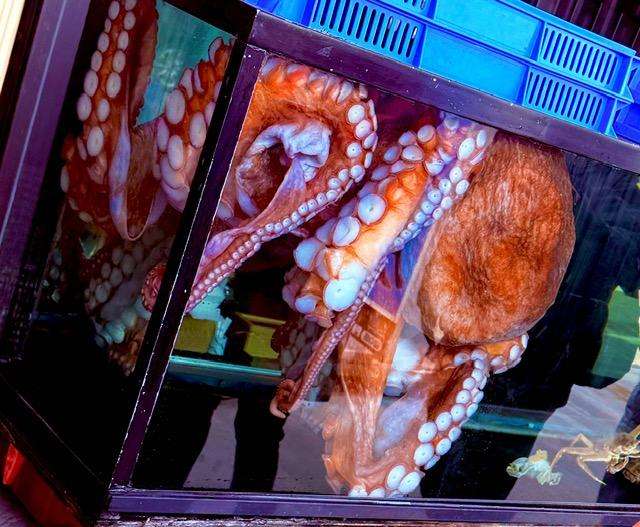
But the most unusual was the very large octopus that was putting on a performance for the crowd. He seemed to ignore the small crab that was trying to get away.
Trips to Hokkaido Japan: The Motomachi District in Hakodate
Our next visit was to the Motomachi District which starts near the Cable Car Station and ends in the Motomachi Park where the Commodore Perry Statue resides. This is an area where many people use to live, and some still do. But the highlight was the number of religious buildings including a Buddhist Temple, a Catholic, Anglican and Orthodox Christian Church.
Buddhist Temple
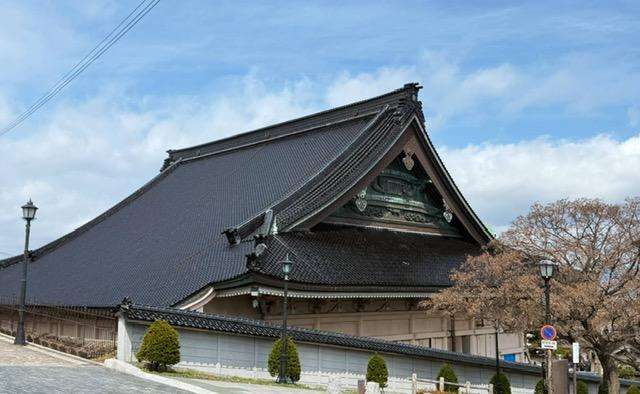
The Myofuku-ji Temple is located near the Hakodate Ropeway cable car entrance in the Motomachi district. It’s a peaceful Buddhist temple with a rich history, making it a great stop before or after your ride up Mt. Hakodate.
Catholic Church
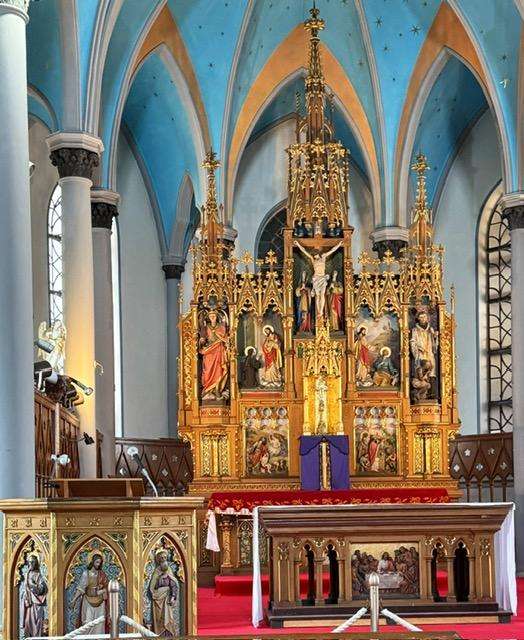
This particular Catholic Church is important as all the statues and altars in the church were gifts directly from the Pope. The church had burned down many times, and each time the church was rebuilt by the dedicated priests and followers.

Russian Orthodox Church
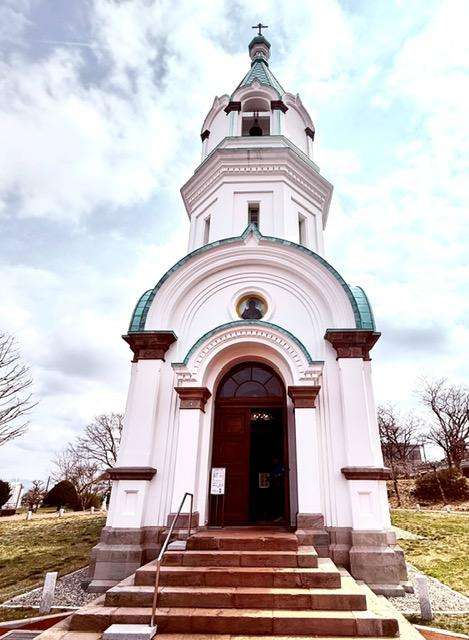
The Russian Orthodox Church in Hakodate, officially known as the Holy Resurrection Orthodox Church of Hakodate, is one of Japan’s oldest Orthodox churches. It was originally established as a chapel in 1859 when Russia set up a consulate in Hakodate. The current church, built in 1916, features a Russian Byzantine architectural style and is designated as an Important Cultural Property of Japan.
Locals affectionately call it “Gangan-dera” or “Ding-dong temple” because of the distinctive sound of its bells. The church remains active today, offering services and preserving its historical significance

British Colonial Public Hall
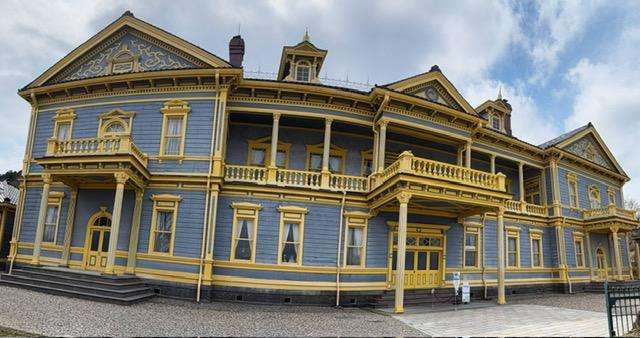
Another building that was very impressive in the Motomach District was the former old Public Hall that was built in a British colonial style completed in 1910.
The Old Public Hall of Hakodate Ward is a stunning example of colonial architecture in Hakodate, Japan. Completed in 1910, it replaced the old town hall that was lost in the Great Fire of Hakodate in 1907. The building features European influences blended with Japanese design elements, making it a unique historical landmark.
The hall has hosted Imperial family members and continues to be used for concerts and events. Visitors can enjoy panoramic views of Hakodate Bay from its balconies and even dress in classic aristocratic attire for commemorative photos. Today, it is used for performances and other events.
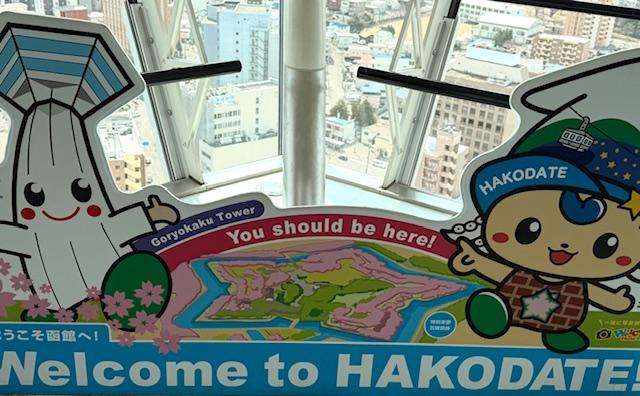
Next Stop: Goryokaku Tower and Hakodate Magistrate’s Office
The Goryokaku Tower and Hakodate Magistrate’s Office are two of Hakodate’s most significant historical landmarks.
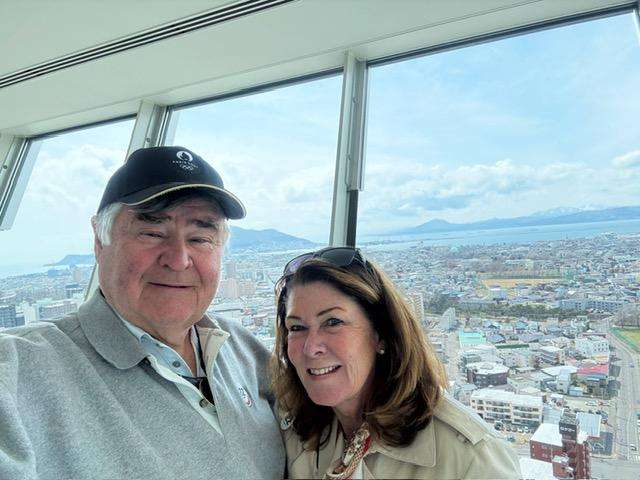
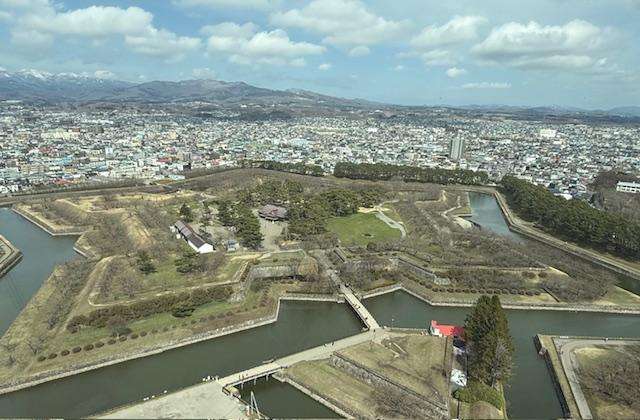
- Goryokaku Tower: Standing at 107 meters, this observation tower offers a panoramic view of the star-shaped Goryokaku Fort, which was built in the late Edo period. The tower provides exhibits on the history of the fort and the Boshin War, making it a great spot for history enthusiasts.
- Hakodate Magistrate’s Office: Originally constructed in 1864, this building served as the administrative center for the Tokugawa shogunate in Hokkaido. It was dismantled in 1871 but later restored in 2010 to its original design, showcasing traditional Japanese architecture.
Both sites are located within Goryokaku Park, which is famous for its 1,600 cherry trees, making it a breathtaking spot during Sakura season. Unfortunately, given that Northern Japan is much colder than the rest of Japan, the Cherry Blossoms hadn’t arrived when we were there in early April, 2025
The Hakodate Magistrate was the leading government official in Hakodate during the end of the Shugunate era and the start of the new Meiji Regime. The Magistrate office was established to maintain governance over the Hakodate region because of the open port.
The construction of Fort Goryokaku was built to provide a defensive capability in the open port. The Magistrate’s office and residence were built inside the fort. The fort was a five start European design, the first such fort built in Japan.
The observation tower was built in the 21st century and provides a magnificent view of the fort and the entire city of Hakodate.
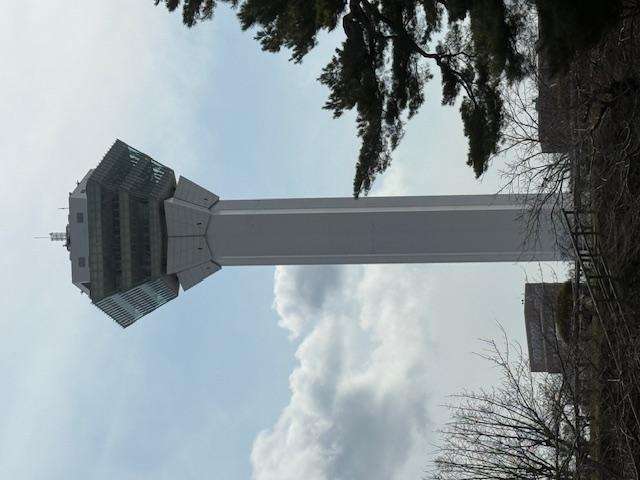
Hakodate Magistrate’s Office
The Hakodate Magistrate’s Office was originally built at the foot of Mt. Hakodate. However, its location was deemed disadvantageous for defense, and it was decided to move it more inland. The star shaped pentagonal configuration was deemed the best way to defend the office.
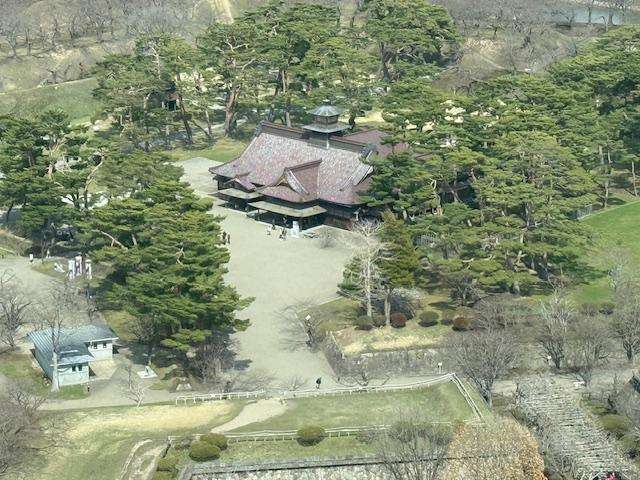
The office was built with a true Japanese style.
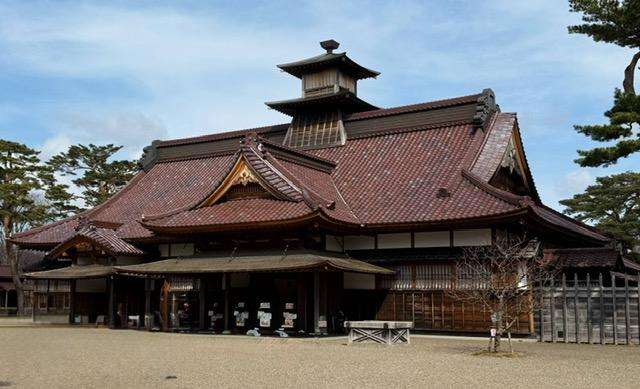
The building was not used after 1871, most of the building were destroyed and the area became a park. Reconstruction started in 2006 and completed in 2010. It is worth a visit to understand the history of the Meiji Restoration and how it impacted this part of Japan. For more information, please read about our visit to the Museum of the Meiji Restoration in Kagoshima.
Best Time to Go to Hokkaido Japan: Time to Be Leaving on our Cruise Ship
As we got back of NCL’s Spirit, our cruise ship, and we started to depart Hakodate, it was clear that visiting Akita, Otaru (Sapporo) and Hakodate was well worth the journey.
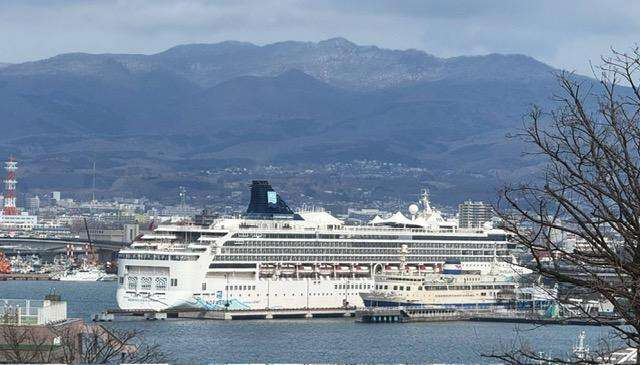
Taking these “Trips to Hokkaido Japan” each told an interesting story. Whether it was the Namahage tradition in Akita (see separate Akita post), Shopping Street in Otaru or the Magistrate’s Office and struggles in Hakodate, we learned a lot about the different cultures and the “Best Time to go to Hokkaido Japan.”
Sailing back to Japan’s eastern shore, we realized that we had just left a unique part of Japan. We strongly suggest that if you have the time, add Otaru (Sapporo) and Hakodate on the Island of Hokkaido and separately the city of Akita in the Tohoku Region on the large Island of Honshu to your Japanese travel plans. You’ll thoroughly enjoy these trips to Hokkaido Japan.
For more information we recommend you check out Trip Advisor.

Travel to the Northern Parts of Japan, and take a tour through Sapporo. Trip Advisor provides customer feedback about which tours are the best.
Conclusion
While it may be colder than the rest of Japan, Trips to Hokkaido Japan is well worth the travel time. For more information about other places to visit is Japan, please see our post Tips for travel to Japan.
Travel smarter, dine better and explore deeper: we’d love to share our handpicked insights and exclusive guides in our monthly newsletter below.
0 Comments